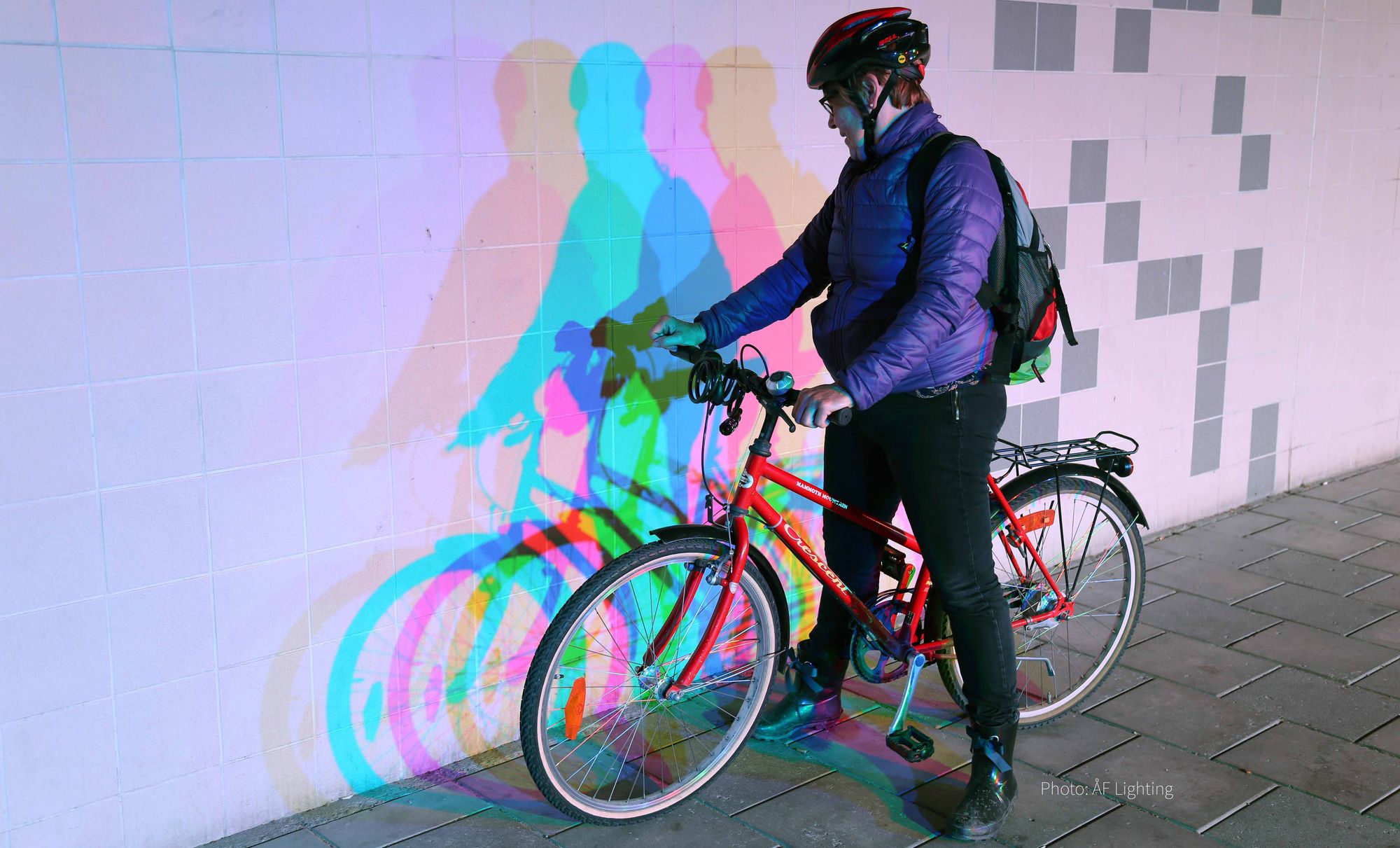
Branding a building and its surroundings with light is one of the most effective ways to increase the value of your property.
”It’s a good chain reaction. In many ways, the lighting determines our experience of the habitat, biologically and emotionally. If we get to live and work in environments with functional and beautiful lighting designs that support our actions and needs, we’ll feel vitalized and secure. A lighting design in symbiosis with the surrounding architecture is vital for creating attractive environments where people want to stay. It is really a good investment, that increases the value of the property for the owners whether it is a commercial property or a housing association. Hopefully, more people will be interested in renting from you or buying an apartment. And if you run a company it will most certainly contribute in strengthening its brand”, says Henrik.
The art of storytelling
Using the lighting design to enhance the architecture and the environments around it is a matter of storytelling.
”Lighting can be used to tell the unique story of the environmental context – not only about the architecture but about the nature that surrounds it. Look around for interesting elements to illuminate – a tree, a little hill, a cairn or – if you are in a former industrial area – something that reminiscent of the place’s history.”
No matter how good the story, functionality is the backbone of the lighting design.
Enhancing the environment is not only a matter of highlighting the character and the aesthetics of an area. To achieve the important feeling of belonging and security, the lighting design has to support the different activities going on by defining the moving patterns – from the actual building, gardens and courtyards to walkways and parking lots.

Involving the stakeholders
According to Henrik, the best way to succeed is to involve the people concerned by introducing them to the project, encouraging them to share ideas and letting them experience on site test designs. This is very common in social lighting design projects but is a way of working that is very beneficial no matter the circumstances.
”Make sure to invite everyone involved – property owners, facility management and residents – to a workshop to identify their needs. How is the space used today and how it is supposed to work in the future? What kind of lighting solution do they want – visually and emotionally? After a thorough valuation, the lighting designer can return to you with a first draft and invite the group to experience some test designs. You can do a lot in a digital lighting design program, but in the end, nothing beats an IRL-experience”, says Henrik.
”From my experience, including the stakeholders in the process and to let them see the project ‘come to light’ is a great way to increase the commitment and people’s understanding of lighting. Through the years I’ve had the benefit of doing a lot of workshops in collaboration with customers, consultants, lighting designers and architects. At the end we evaluate our ideas by building some simple mock ups and the outcome is always the same. When the light goes on, everyone’s like WOW!”
A wall of stories
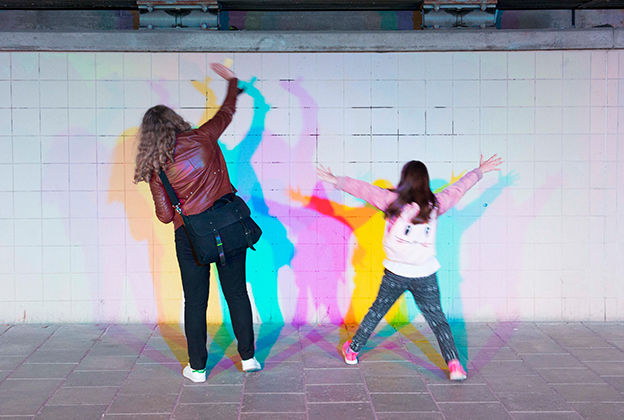
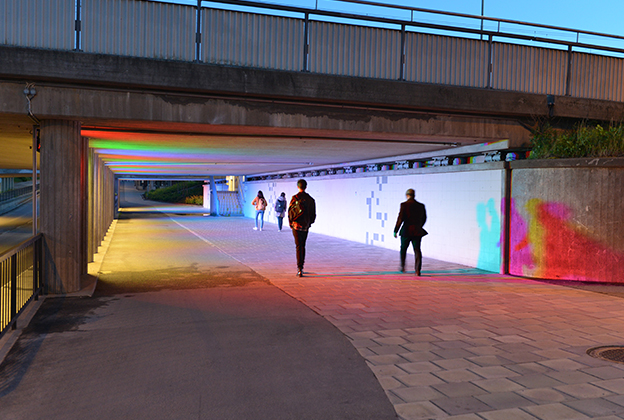
One of Henrik’s favourite lighting designs is the ”Story Wall” in the Swedish town of Eskilstuna, as it combines every aspect that he finds important: it enhances the environment and provides functionality by interacting the users in an ongoing process. A poorly used road tunnel has been brought to new lifewith the installation of red, green and blue luminaires throughout the tunnel. When the white light hits people passing by, it changes colour, creating a vibrant kaleidoscope of moving human shapes in different colours on the opposite wall.
”It is an amazing lighting design, based on a clever idea and beautifully executed by the lighting designers at consultant ÅF Lighting. The project is not connected to Fagerhult in any way, but it is really one of those truly creative solutions that one wish that you’d come up with yourself. The tunnel has been transformed into a fascinating and friendly place where people can feel safe, and I’m, sure it is more frequently used than before. It really captures the benefits of good lighting design in one simple and inspiring solution.”
Ask a lighting designer
When illuminating a property and its surroundings you’ll of course need a solid base in form of wall luminaires, ceiling luminaires and bollards, preferably from one luminaire family to achieve a coherent design expression.
”The more options available regarding light distributions, light sources and colours the more you can play with different expressions. In most cases I would also recommend to use some other luminaire types from the toolbox, like wallwashers, projectors and inground luminaires to create that little extra.”
When it comes to lighting design, nowadays we have unlimited options as the LED-technology has made advanced lighting solutions available for everyone.
“This is also our greatest challenge. Having so much to choose from, it is extremely important that we make the right choices. To create a lighting design with the right amount of comfortable non-dazzling light, with the right colour and temperature that enhances the different forms, textures and functions of the architecture and its surroundings – requires knowledge. It is also quite easy to ‘over optimize’, adding too much luminaires and effects, just because the stuff is approachable. This is why I always encourage my customers to hire a professional lighting designer, as it pays off in the long way – in terms of results and finances.”
Ideas from the lighting advisor:
1. Ambient light creates context
Ambient light is as important outdoors as indoors. By lighting vertical surfaces like walls and hedges orientation is facilitated, helping people with spatial cognition and improving the security experienced. This also applies on walkways where light should be directed not only directly on the ground but also on the sides of the walkway, to create a context.
2. Soft transitions at the entrance
When lighting entrances and portals it is important not only to light them at the inside. The walls surrounding them should also be lighted, leading the way to the entrance and creating a soft and pleasant transition in light levels.
3. Be picky when it comes to materials
An energy efficient LED-luminaire is of course a sustainable choice. But what’s the benefit of 100 000 hours if the materials isn’t up to it? Make sure that the luminaires you choose are suitable for the conditions where they will be placed regarding weather, corrosion and damage.
4. Avoid lighting pollution
Make sure that luminaires won’t be a disturbing factor in office or residential areas. For example, you wouldn’t want the light to shine into a bedroom at ground floor during night time. Also, be aware that lighting could have a disturbing effect on the wildlife – like bats and night-hunting animals.
5. Do a proper follow-up
Make sure that the luminaires and the light sources are installed in the right way and with the right angles. This is a part that is often neglected but may result in a lighting design not working out as expected. By choosing luminaires that are easy and fool proof to install, you can avoid the worst-case scenarios.
Relaterade nyheter

Omvänt mentorskap: ”Allt ledarskap handlar om människor”
Under det senaste halvåret har sexton ledare från bolag i Jönköpings län haft varsin mentor via programmet Omvänt Mentorskap. Det som gör det just »omvänt« är att mentorerna är yngre och i början av sina yrkeskarriärer medan adepterna är mer seniora. Kristoffer Emanuelsson, produktionschef på Fagerhult, och Maria Liljeqvist, enhetschef inom hemtjänst i Jönköpings kommun, är ett av mentorsparen. Hej Maria och Kristoffer! Nu är Omvänt mentorskap över, vad har ni haft fokus på i ert samarbete?Kristoffer: ”Vi har inte haft några specifika mål utan har reflekterat och pratat, och så har Maria kommit med inspel på hur jag kan tänka i min vardag.”Maria: ”Jag tycker vi har haft en tydlig tråd där vi utgått från Kristoffers frågeställningar och reflekterat kring dem.” Kristoffer, var det något särskilt som du ville lyfta – och som du tar med dig? ”Jag ville fokusera på hur jag kan engagera kollegor och vi landade i flera diskussioner kring feedback. Det är lätt att fastna i det klassiska »Bra jobbat!« men det kan behövas lite mer utvecklande kommunikation och det vill jag bli bättre på gentemot mina närmaste medarbetare.” Maria flikar in: ”Jag sa till Kristoffer; du får inte säga »Bra jobbat!« om du inte också utvecklar vad som gjordes bra. Det är så lätt att fastna där.” Omvänt mentorskap 1 Att bryta invanda mönster är kan vara en utmaning, hur har det känts att kliva utanför komfortzonen? Kristoffer: ”Redan vid anmälan så bestämde jag mig för att ge detta en verklig chans. Annars är det ju ingen idé! Jag tycker det är viktigt att poängtera att det till stor del hänger på ens egen inställning. Att man verkligen vill, och vågar vara lite obekväm. Vi har haft bra diskussioner och samtidigt väldigt roligt, och det är ju alltid viktigt.” Maria: ”Jag tycker Kristoffer har varit modig och vågat testa de metoder vi diskuterat. Det har gjort att vi hela tiden kommit vidare.” Maria, har du lärt dig något som du tar med dig – utöver din roll som mentor? Maria: ”Ja, absolut! Det är så tydligt, att även om vi jobbar i väldigt olika miljöer så handlar ledarskapet alltid om människor och individer, och hur vi leder dem. Det är en värdefull insikt. Dessutom har vi haft roligt, och jag har stärkts i min egen roll som ledare genom att ha en senior ledare som lyssnar, tar till sig och provar mina idéer och tankar om ledarskap.” Ni jobbar i vitt skilda branscher, har olika lång ledarerfarenhet och är nya bekantskaper för varandra – vad tar ni med er från det? Maria: ”Vi är ganska olika som personer, och det har varit intressant att reflektera kring det i olika scenarier och hur det påverkar ledarskapet. Vi har lärt oss mycket av varandra.” Kristoffer: ”Jag tycker det är viktigt att vara öppen med sina brister, och samtidigt våga tänka nytt. Och kanske lägga eventuella skillnader kring hur länge man har varit ledare eller ålder åt sidan – och fokusera på att själva samtalet ska bli bra. Maria har ställt en del tuffare frågor där jag känt mig lite obekväm, men det har fått mig att ifrågasätta gamla vanor och varför jag gör saker på ett visst sätt. Det har hon gjort väldigt bra.” Kristoffer, utifrån ditt perspektiv som adept – hur ser du på Omvänt mentorskap? ”Inledningsvis kändes det lite obekvämt, men jag tycker man ska ta chansen att söka. Jag kan verkligen rekommendera det. Att ha en mentor var intressant, och det omvända mentorskapet tycker jag var väldigt givande. Att ta sig tid för reflektion med någon som inte har koppling till min vardag öppnar för andra funderingar och frågor. Vi kommer absolut försöka hålla kontakten.”