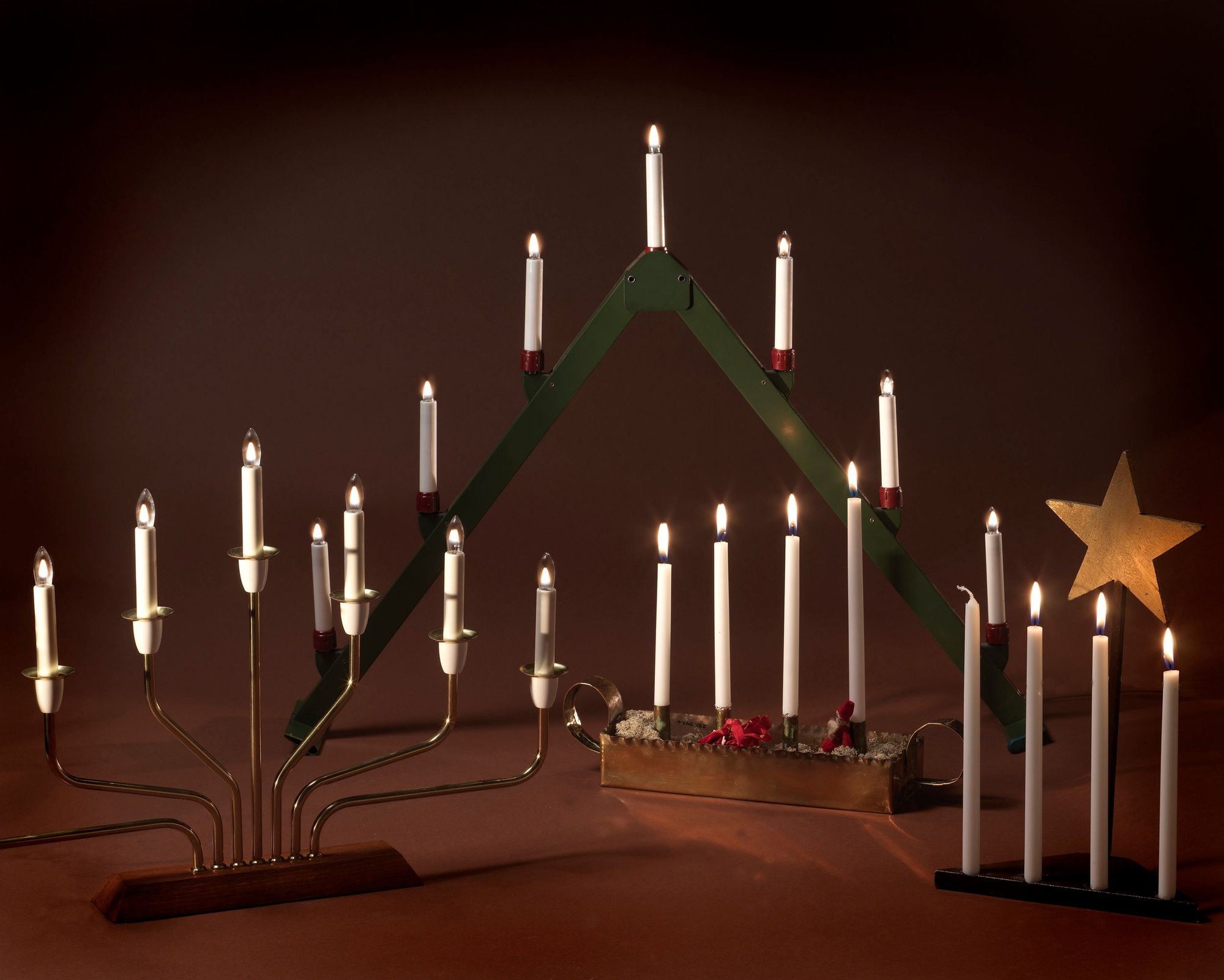
December is a true light feast in the western world. As people are decorating their homes and cities for the festive season nothing is spared when it comes to volts and wattages. But let’s be honest. The Christmas tree at Rockefeller Center has nothing on the Swedish electric Advent candelabra. If you visit Sweden in December, you’ll see them in armies, as there is at least one holding guard in every window.

The history dates back to the late 1800’s when the tradition of the Advent candelabra, was introduced in Sweden by the Ersta deaconry institution, explains Tora Wall, folklorist and postgraduate at Åbo Academy.
”At the first Sunday of Advent seven candles were lit in an Advent tree. At the second Sunday of Advent another seven candles were lit – and so on until Christmas.”
The custom had German origin but was quickly picked up by the Swedes and streamlined into a smoother solution with four candles in a holder. The first candle was lit on the first Sunday of Advent. At the second Sunday, it was accompanied by candle number two and so on until all four candles where burning, forming a decorative ”ladder” of lit candles in different heights. The custom is still an important part of Christmas celebrations in Swedish homes – and a major concern for the Swedish fire brigade. Every December, Swedish households are the targets of massive campaigns on the importance of blowing out the candles before leaving the room.
 ”When the electric light was introduced in Swedish households in the early 1900’s it was of great importance from a fire safety aspect. One can also imagine the ease of no longer being dependent on smoking and expensive candles”. Tora Wall, folklorist and postgraduate at Åbo Academy
The enthusiasm for the new technology sparked the Swedish innovation spirit, resulting in a plethora of more or less necessary lighting products. One of them was the adaptation of the Advent candelabra into an electrical version.
The electrical Advent candelabra was innovated by Swede Oskar Andersson in 1934. Oskar was employed at lighting manufacturer Philips in Gothenburg. In the early 1930s Philips had introduced electrical Christmas tree lighting. But the low voltage of the city’s electric mains resulted in many complaints and returns. Oskar got the bright idea to take the rejected electrical candles and install them into a traditional candleholder made of wood. The story tells that the Philips’ management was a bit reluctant to start with, but in 1937 the electrical advent candelabra was introduced on the Swedish market. It was a huge success. The 3 000 items manufactured were sold out instantly. The next year, production was doubled – with the same result.

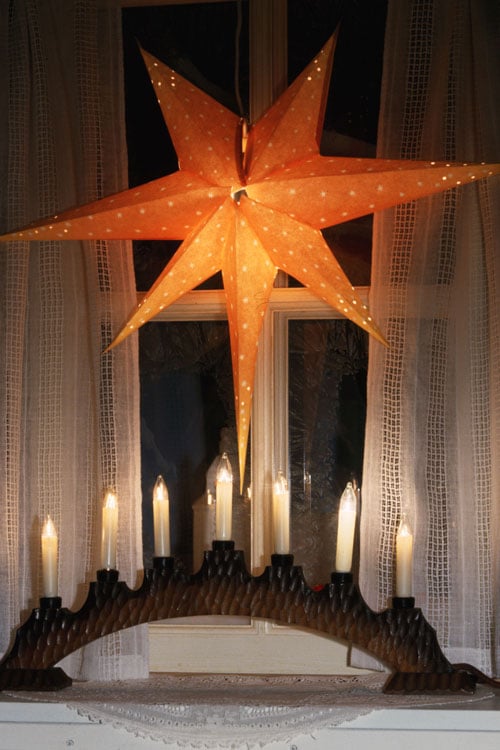
The Swedes loved this practical yet decorative invention and it is now used everywhere. A survey made in the 1990’s showed that 92 percent of the Swedish households took part in the tradition. It is also extremely common in office buildings where no window will be overlooked. This specially applies for big complexes like hospitals and government buildings. Driving the motorway you can watch the candelabra lining up in endless rows. And yes, even when you’re driving up the small road to Fagerhult’s head quarters you’ll see the same phenomenon – what else is to expect from a lighting company?
The concept turned out to be a real inspiration to Swedish designers, resulting in many playful designs over the years. For example, in the 1950’s Sten Bengtsson, designer at Fagerhult’s sister company Ateljé Lyktan, created a version based on another unique tradition – the Luciatåg. In the 1990’s designers Marie Lundgren-Carlgren and Kina Strandberg presented a new modernist take called ”The Firefly” that instantly became an object of desire for Swedish design nerds. In 2017, this Swedish classic celebrates 20 years and is often seen in stylish windows all year round.

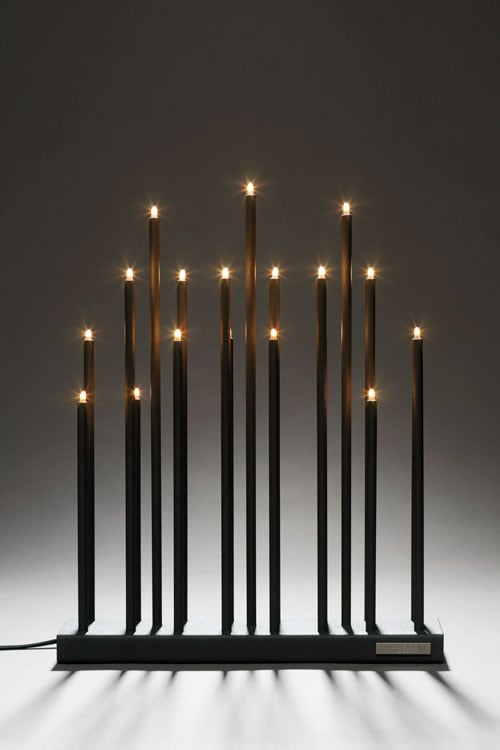
For a long time the electric Advent candelabra was strictly a Swedish tradition. Nowadays you might run into them in other parts of the world, thanks to Swedish export wonder and interior giant IKEA. The fact that the electric Advent candelabra became such a huge success in Sweden is rather easy to explain, Tora Wall says.
”In the country of its origin, innovations always tend to have a strong impact.”
There might be other factors as well, like the Swede’s devotion for lighting in general.
”Light has a strong symbolic importance in Swedish culture. It dates back to ancient times where our ancestors lit bonfires to celebrate a new year. Later on, pagan rituals and religious customs have merged into new traditions and it is difficult to derive the different light traditions to just one source. But in the end, I guess it is still about the light offering security and warmth. As simple as that.”
Sources: ”God Jul” by Lena Kättström Höök, Nordiska Museets förlag. Wikipedia.
Relaterade nyheter

Omvänt mentorskap: ”Allt ledarskap handlar om människor”
Under det senaste halvåret har sexton ledare från bolag i Jönköpings län haft varsin mentor via programmet Omvänt Mentorskap. Det som gör det just »omvänt« är att mentorerna är yngre och i början av sina yrkeskarriärer medan adepterna är mer seniora. Kristoffer Emanuelsson, produktionschef på Fagerhult, och Maria Liljeqvist, enhetschef inom hemtjänst i Jönköpings kommun, är ett av mentorsparen. Hej Maria och Kristoffer! Nu är Omvänt mentorskap över, vad har ni haft fokus på i ert samarbete?Kristoffer: ”Vi har inte haft några specifika mål utan har reflekterat och pratat, och så har Maria kommit med inspel på hur jag kan tänka i min vardag.”Maria: ”Jag tycker vi har haft en tydlig tråd där vi utgått från Kristoffers frågeställningar och reflekterat kring dem.” Kristoffer, var det något särskilt som du ville lyfta – och som du tar med dig? ”Jag ville fokusera på hur jag kan engagera kollegor och vi landade i flera diskussioner kring feedback. Det är lätt att fastna i det klassiska »Bra jobbat!« men det kan behövas lite mer utvecklande kommunikation och det vill jag bli bättre på gentemot mina närmaste medarbetare.” Maria flikar in: ”Jag sa till Kristoffer; du får inte säga »Bra jobbat!« om du inte också utvecklar vad som gjordes bra. Det är så lätt att fastna där.” Omvänt mentorskap 1 Att bryta invanda mönster är kan vara en utmaning, hur har det känts att kliva utanför komfortzonen? Kristoffer: ”Redan vid anmälan så bestämde jag mig för att ge detta en verklig chans. Annars är det ju ingen idé! Jag tycker det är viktigt att poängtera att det till stor del hänger på ens egen inställning. Att man verkligen vill, och vågar vara lite obekväm. Vi har haft bra diskussioner och samtidigt väldigt roligt, och det är ju alltid viktigt.” Maria: ”Jag tycker Kristoffer har varit modig och vågat testa de metoder vi diskuterat. Det har gjort att vi hela tiden kommit vidare.” Maria, har du lärt dig något som du tar med dig – utöver din roll som mentor? Maria: ”Ja, absolut! Det är så tydligt, att även om vi jobbar i väldigt olika miljöer så handlar ledarskapet alltid om människor och individer, och hur vi leder dem. Det är en värdefull insikt. Dessutom har vi haft roligt, och jag har stärkts i min egen roll som ledare genom att ha en senior ledare som lyssnar, tar till sig och provar mina idéer och tankar om ledarskap.” Ni jobbar i vitt skilda branscher, har olika lång ledarerfarenhet och är nya bekantskaper för varandra – vad tar ni med er från det? Maria: ”Vi är ganska olika som personer, och det har varit intressant att reflektera kring det i olika scenarier och hur det påverkar ledarskapet. Vi har lärt oss mycket av varandra.” Kristoffer: ”Jag tycker det är viktigt att vara öppen med sina brister, och samtidigt våga tänka nytt. Och kanske lägga eventuella skillnader kring hur länge man har varit ledare eller ålder åt sidan – och fokusera på att själva samtalet ska bli bra. Maria har ställt en del tuffare frågor där jag känt mig lite obekväm, men det har fått mig att ifrågasätta gamla vanor och varför jag gör saker på ett visst sätt. Det har hon gjort väldigt bra.” Kristoffer, utifrån ditt perspektiv som adept – hur ser du på Omvänt mentorskap? ”Inledningsvis kändes det lite obekvämt, men jag tycker man ska ta chansen att söka. Jag kan verkligen rekommendera det. Att ha en mentor var intressant, och det omvända mentorskapet tycker jag var väldigt givande. Att ta sig tid för reflektion med någon som inte har koppling till min vardag öppnar för andra funderingar och frågor. Vi kommer absolut försöka hålla kontakten.”