“It’s all go now. After years of discussions, preparations and product development, LED technology is commercially ready. Customers are more informed and discerning with both the efficiency and, increasingly, the light quality they expect from their LED investment,” says Leif Norrby, Product Development Director at Fagerhult.
During the 00s, the lighting industry switched arena from being a standard manufacturing focusing on conventional light sources to part of the electronics industry. Years of standard practice was rapidly transformed, Fagerhult for instance, started producing luminaires for fluorescent tubes in the 1950’s, as the migration from T5 to LED took place in little over a decade.
“We were offered a unique opportunity to use the new, more efficient T5 fluorescent tube which was also smaller. With our innovation-driven corporate culture – Fagerhult has always been open to new technology and materials – it was a challenge not to be missed,” Leif Norrby remembers.
The transition to T5 involved a number of technical lighting considerations.
“The louvre was the main focus. The existing reflector technology, based on double-parabolic louvres made of anodised aluminium, couldn’t benefit from the increased efficiency of T5. That’s why we chose to develop a completely new louvre based on the new light source.”
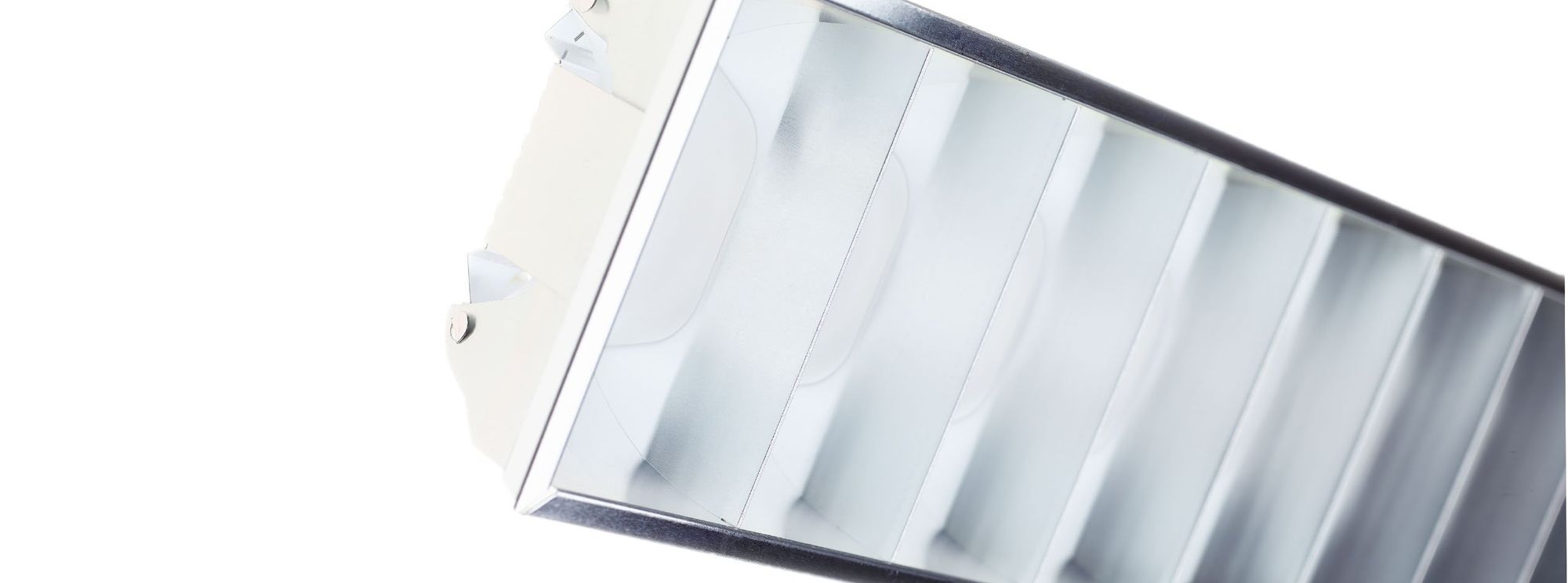
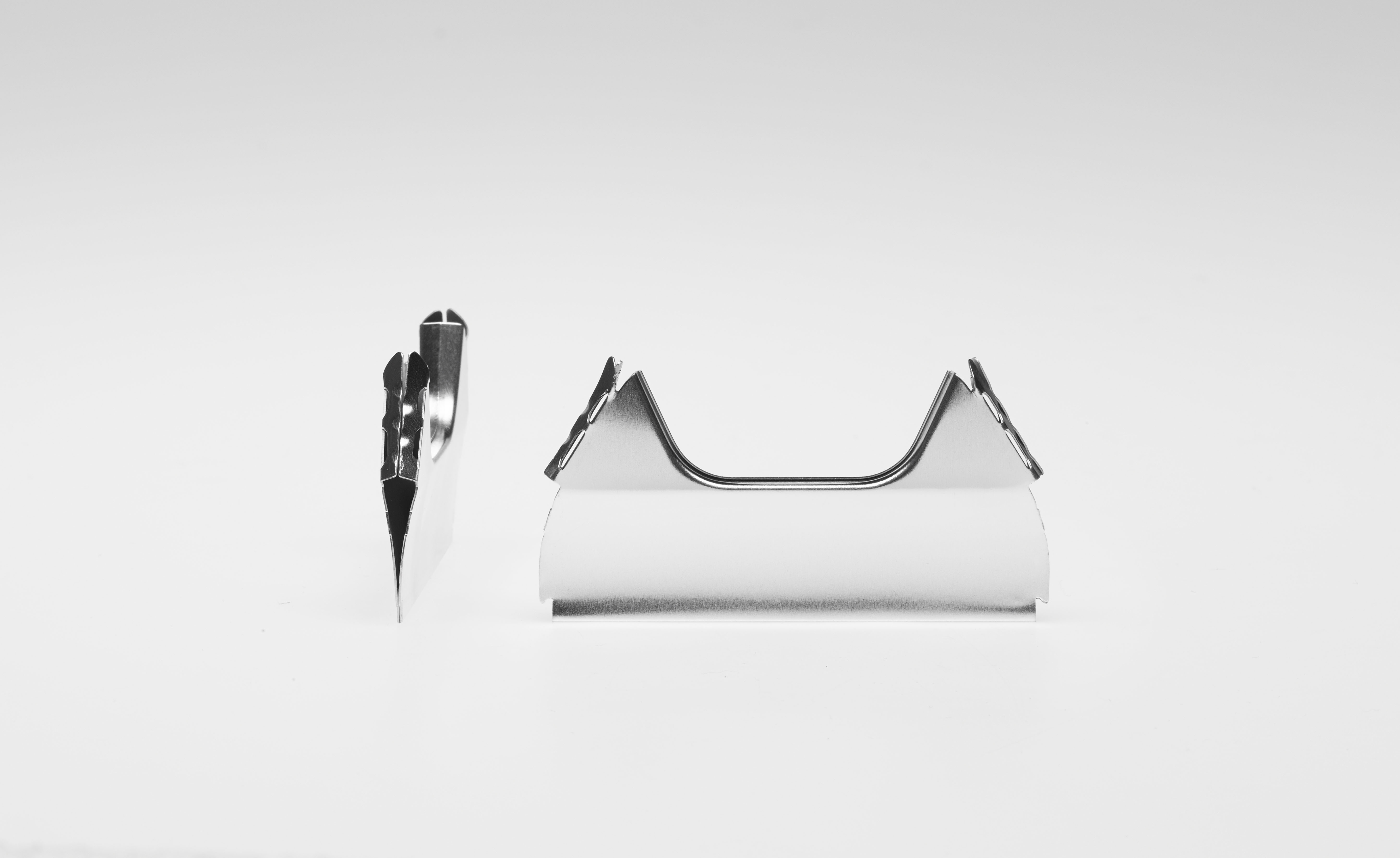
Fagerhult Beta LED lamellasThe innovative r5 louvre built on a new combination of a side and top reflector in addition to a cross reflector, the latter was the fulcrum for increased control of the light distribution. Using new manufacturing technology and a new metallised aluminium material called Miro, we succeeded in creating an efficient louvre that reinforced the all the benefits of the T5 light source. By using Miro, the reflection factor increased from 86% to 95%.
“Another crucial point was the temperature inside the luminaire. T5 performed best at 35°C, compared to T8 which performed best at 25°C. By building louvres and luminaires with inside temperatures adapted for T5, we increased the efficiency even further.
r5 was also developed to satisfy the more stringent cut-off requirements.
“We realised that a smaller, more intensive light source also involves a greater risk of glare. Visual comfort had long been part of Fagerhult’s signature and was not something on which we were willing to compromise.”
r5 was launched in 1998. The combination of T5 and electronic ballasts became a new standard in the market, but as early as in 2010 it was time for a new generation. When LED was first introduced as a light source it was primarily used in downlights. Fagerhult launched its first luminaires for general and work lighting in 2013.
“The r5 project taught us a lot. Just like T5 in its time, LED posed a real challenge. Both cases involved new, relatively unexplored light sources that were very light-intensive compared with the incumbent variety. We knew how difficult it was to take a new light source and dress it in an old suit. If existing louvres and reflectors do not have the capacity to control and manage the power of the light sources – which they didn't in either of these cases – you risk both the efficiency and, above all, the lighting comfort. The high intensity of LED brought matters to a head. This small, intensive light point risked dazzling people in a completely different way to the long, narrow fluorescent tube.”
 "Visual comfort had long been part of Fagerhult’s signature and was not something on which we were willing to compromise." Leif Norrby, Product Development Director at Fagerhult
There were a number of reasons to be wary. The early LED modules varied a lot in quality – from service life and deterioration to colour reproduction and colour temperature. The LED modules requirement for an efficient cooling mechanism also necessitated luminaires designed solely for use with LEDs. Otherwise you risk letting the fire go up the chimney with LED modules that will break in the future.
When Fagerhult rolled out the first big LED series, the focus was on luminaires developed from scratch. Just like other manufacturers, Fagerhult chose to work with microprismatic louvres to satisfy the requirements for energy efficiency and lighting comfort.
“Our aim has always been to create a double-parabolic louvre that can also improve performance and user experience. This is why we developed a new r5 generation customised for LED. Beta Opti makes use of the benefits of Medium Power LED and gives us completely new options for efficient and ergonomic control of general and work lighting.”
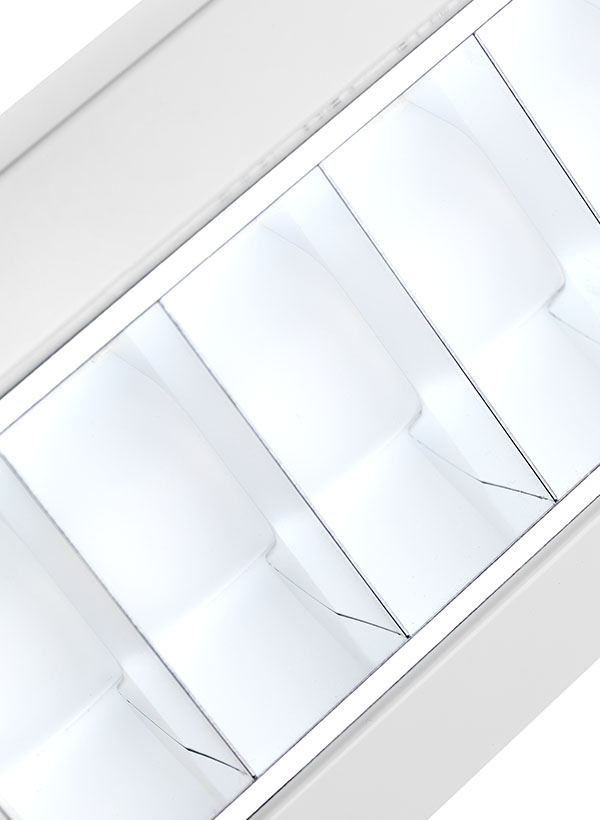
Beta Opti is based on a modified r5 cross-blade that, in combination with side reflectors and a diffusing film, provides complete control of the luminous flux. The efficiency has gone from 70 lm/W (T5) to approx. 120 lm/W and the aim is to achieve an even better value. The louvre has two different modules: one with direct light and one with an advanced combination of direct and wide-beam indirect light.
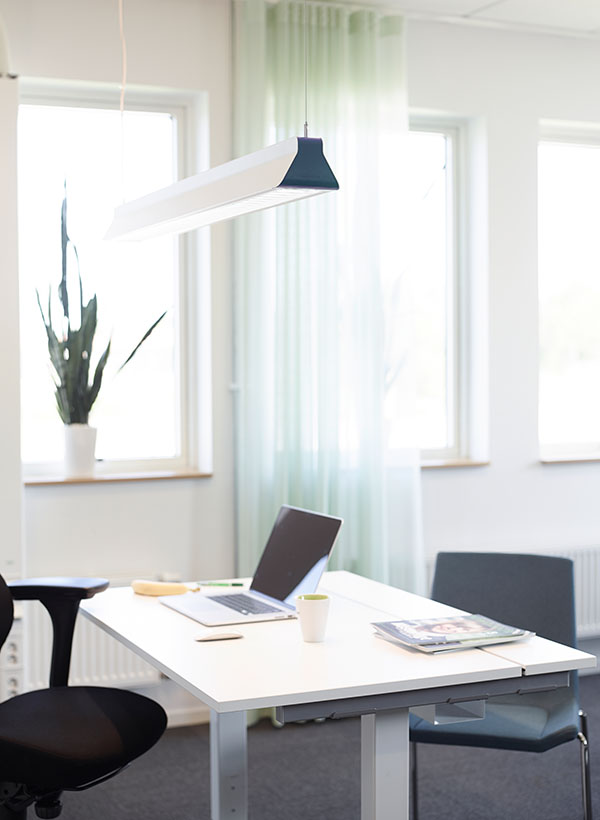
“The traditional long, narrow luminaire shape is based on fluorescent tubes. With LED the prerequisites were different and that’s why we’ve tried to create a uniform light for long surfaces as well. The luminaires with Beta Opti satisfy the cut-off requirements in EN 12464-2 and I would claim the lighting comfort is better than when using conventional light sources. Aesthetically speaking, a double-parabolic louvre is also a welcome alternative to the microprismatic and opal louvres.”
The launch of the Beta Opti reflector is Fagerhult’s signal that LED technology is ripe for full-scale implementation. However, Leif Norrby expects the development to continue at the same intensive pace, but with increased focus on quality.
“On average, a new more energy and cost-efficient LED version is launched every eight months. This is a development with which we have to keep up. Lighting will also be an important part of the new digital infrastructure where connectivity and Internet of Things are key concepts. It is a complex process that we follow with great interest. In the future I think lighting manufacturers should expect our assignments to be further displaced – we will become more valued as sub-consultants.”
“But our most important assignment in the future is to maintain visual comfort. It’s so easy to get carried away and allow yourself to be swept up by the quick development of efficiency and performance. LED is an unbelievably intensive light source and we must remember that in everything we do. We cannot let a hundred years of experience go down the drain. Technology exists to serve man.”
Relaterade nyheter

Från idé till verklighet – ingenjörskonst i varje vikning
Hållbarhet är inte längre ett val utan en nödvändighet, och all innovation behöver inledas med frågan: Kan vi göra detta på ett annorlunda vis? För Fagerhults utvecklingsavdelning blev just den frågan fröet till Wrapped – världens första pendelarmatur i papp. Traditionellt byggs pendelarmaturer med en stomme av aluminium, vilket är en etablerad, hållbar och trygg metod. Teamet bakom Wrapped ville dock utforska en annan väg, och se om de kunde skapa en armatur som både har optimal prestanda, och minimal miljöpåverkan. Efter noggrant arbete föll valet på Solid board, ett förnybart och återvunnet kartongmaterial som i tidigare projekt använts till dolda komponenter i belysningsarmaturer. I det större perspektivet är Wrapped mer än en armatur – den är framåtblickande och tänjer kreativitetens gränser. Under utvecklingsprocessen saknades färdiga lösningar att luta sig mot, och designteamet har arbetat från grunden. Varje moment, från konstruktion till montering, har granskats noggrant, och resultatet är en armatur som är både tekniskt tillförlitlig och hållbar. Gallery: Wrapped details Stommen är tillverkad i upp till 65 % återvunnen papp och viks ihop med hög precision och exakta utskärningar. Teknisk elegans Wrappeds armaturkropp består av två huvuddelar: en inre och en yttre stomme som tillsammans gör armaturen stadig och stabil. Den yttre stommen hålls ihop av en spant, tillverkad av 100 % återvunnet aluminium efter konsument. Den håller det vikta pappen på plats och ser till att armaturen håller formen. Gavlarna är tillverkade av 100 % återvunnen plast efter konsument och fästs helt utan skruvar. Kopplingsdosan fästs på plats och drivdonet monteras med hjälp av små klämmor, även de tillverkade av återvunnen plast efter konsument. LED-kortet monteras på linsen och skyddas av ett lock av papp. Hela ljusmodulen låses på plats med hjälp av bländskyddet, och slutresultatet är en sömlös konstruktion som genomsyras av smarta lösningar. Design med ett syfte Fredrik Beckius, Design Engineer på R&D, sammanfattar processen:– Det var en utmaning att arbeta med ett material som vi aldrig tidigare hade använt för en pendelarmatur. Komponenterna kunde inte monteras på vanligt sätt och vi var därför tvungna att hitta alternativa lösningar. Martin Gustafsson, också Design Engineer på R&D, tillägger:– Vi ville hitta ett sätt att tillverka armaturen på ett kostnadseffektivt sätt, både för oss och för våra leverantörer. Varje designkomponent måste fylla mer än ett syfte. Hela armaturens design genomsyras av multifunktionalitet. Det handlar inte bara om estetik eller hållbarhet – det handlar om ingenjörskunskap och att varje del räknas. Citat: Martin Gustafsson Hållbarhet utan kompromisser Wrapped tillverkas i Fagerhult, Habo, av återvunna och förnybara material. Produktidén är sprungen ur svensk innovation, med rötter i tidigare hållbara produkter som Multilume Re:Think och Kvisten. Till skillnad från många produkter med hållbarhetsfokus är Wrapped självklar i det tysta – och hållbar i sitt DNA. Med exakta utskärningar, stabil konstruktion och rigorösa tester under hela processen uppfyller Wrapped alla kvalitetskrav, utan att kompromissa med hållbarheten.
Fexibla kontoret – Framtidens innovativa belysningsdesign
Kontoret är en plats i ständig förändring, och oavsett hur lokalerna, inredningen och verksamheten ser ut är belysningen en viktig del av arbetsmiljön. Vägen till en bra belysning kan dock vara snårig och ineffektiv, och många faktorer måste stämmas av under byggprocessen mellan fastighetsägare, inredningsarkitekter och belysningsplanerare. Med Fagerhults skensystem Control Track Versa tar det flexibla kontoret ett viktigt steg mot en mer hållbar och flexibel belysning. Cecilia Niva är produktchef och har ansvarat för utvecklingen av systemet. Målet har varit att låta framtidens belysning för innovativa kontor ta form, och nu dyker det upp nya möjligheter till cirkulära affärsmodeller. – Dubbelskenan skapar en helt ny frihet när det gäller belysningsdesign och gör att ljuset kan anpassas efter användarnas önskemål och behov. Man kan enkelt kombinera indirekt och direkt ljus och uppnå 300 lux med enbart uppåtriktad belysning. Skenan skapar rätt grundnivå, helt oberoende av armaturerna, och möjliggör fler styrlösningar. Man kan till exempel ha vanliga uppåtriktade armaturer som tänds när någon befinner sig i rummet, medan det direkta ljuset på arbetsplatsen bara tänds när någon sätter sig där, säger Cecilia Niva. Cecilia citat Idag kasseras många armaturer redan innan hyresgästen flyttar in eftersom fastighetsägaren vill färdigställa lokalerna samtidigt som hyresgästen gärna planerar eller ändrar belysningen och inredningen i ett senare skede. Control Track Versa bygger på ett 230V-system, vilket innebär att varje armatur har sitt eget drivdon. Systemet kan därför växa och förändras utifrån behov, och armaturerna kan återanvändas på helt nya sätt. – Vi vet att många har efterfrågat och kommer att uppskatta detta. Vårt fokus har alltid varit att skapa ett skensystem som separerar infrastrukturen och armaturerna och gör installationen och användningen oberoende av varandra. Det innebär fördelar i fråga om både hållbarhet och flexibilitet, fortsätter Cecilia Niva. Flex office block FAGERHULT PRODUCTION OFFICE Flexibiliteten ökar också tack vare en mer effektiv användning av armaturerna. Skensystemets användarvänlighet och mångsidighet gör att varje armatur kan flyttas, anpassas och återanvändas flera gånger under hela deras livscykel. – Långvarig användning förbättrar hållbarheten över tid och i takt med att verksamheten och inredningen förändras. Det kreativa utrymmet för belysningsdesigners, arkitekter och inredare ökar också. Kreativitet och flexibilitet Under utvecklingen av Control Track Versa har ett av målen varit att göra det enklare för belysningsdesigners, arkitekter och inredare att planera belysning och skapa trivsamma och välfungerande miljöer. Skensystemet kan beskrivas som en verktygslåda för belysning eftersom varje belysningskomponent är fristående och man kan skapa ljusmiljöer och effekter på ett mer flexibelt sätt. Med armaturen VIL blir de uppåtriktade och nedåtriktade armaturerna helt oberoende av varandra eftersom de kan monteras i hela rader, vilket resulterar i ett jämnt upplyst tak i utvalda områden. Till skillnad från ett 48 V-system behövs inga nya beräkningar när armaturer läggs till eller flyttas längs skenan. – På ett sätt blir skenan en egen infrastruktur som möjliggör oändliga kombinationer och stor flexibilitet. Det ger nya möjligheter att enkelt kombinera indirekt och direkt ljus utan omfattande belysningsplanering eller större beslut innan hyresgästen flyttar in. Det blir också enklare för fastighetsägare och hyresgäster att underhålla, uppdatera och skapa bra belysningsmiljöer över tid, avslutar Cecilia Niva.