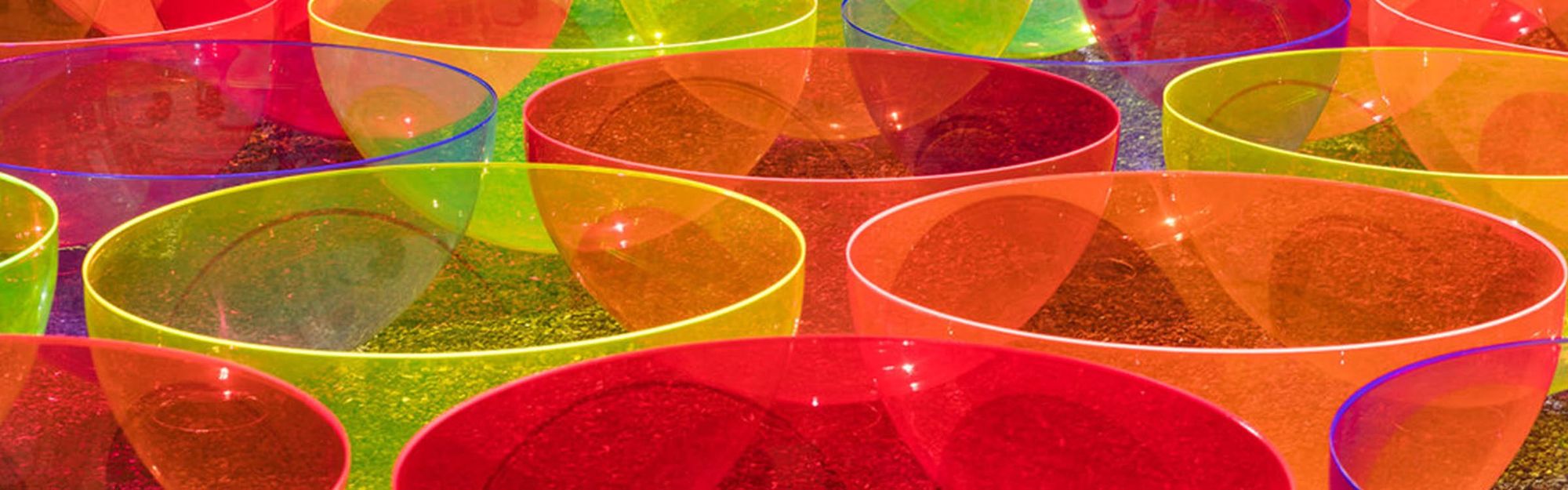
When talking to artist Liz West, a new world opens up. A world full of light, colours, structures, impressions, and feelings. Something that is present all around us every day but might not be noticed by all. But West notices and finds the inspiration for her work sometimes in the most unexpected places.
– I find my inspiration everywhere, West explains. I am super-sensory, so my head is quite a busy place. Whenever I go anywhere, I take in everything. It means that I don’t miss a thing, which can be quite overwhelming. I do not remember everything, but I remember the important things, the things that inspire me. Maybe a subtle reflection; in a piece of glass, a monumental structure, a piece of music that I hear – or the way someone dresses or do their hair. It could be anything. It is the world as a whole that inspires me.
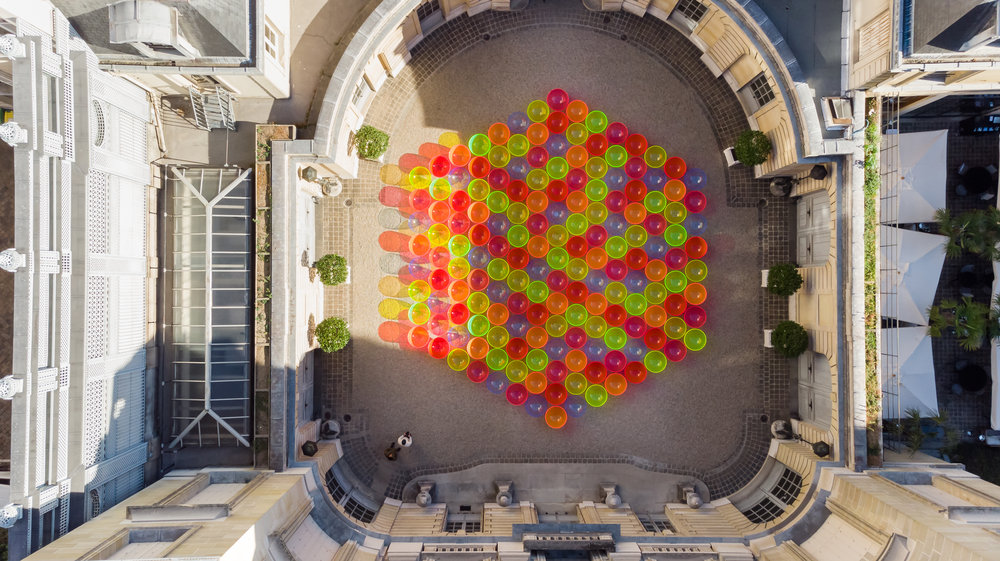
Art was always present
To work with colour and light was a natural progression for West. Even as a small child, she was interested in things that were “luminous and vivid”. Both her parents are artists, and the house was always full of creativity. More importantly, there were always materials available to play with. And that is what she did.
– My work has come from a very organic, natural place, says West. I am just intrinsically passionate about colour and light. As a student I tried to make work about all sorts of things, and I discovered quite quickly that I wanted to make work that had a brightness, vividness, and glow to it. When I made an art-series of colour projected into space I realized in a lifechanging moment that “ahaaa, it is luminous colour that I am interested in!”. A whole atmosphere is made through that coloured light. So, that was the answer to what I needed to do next.
West was born and raised, northern England. A place she describes as a bit colder, and with occasional brilliant summers. She recalls being quite affected by the seasonal changes, and the light changes during the day.
– One of my greatest inspirations is the way natural light changes during the seasons, West declares. In the UK we have different seasons, which are a very beautiful thing to observe. The light strength and direction changes throughout the day; I really wanted to utilize the sun as the light source, and then start making work with natural light - that was a big turning point for me.
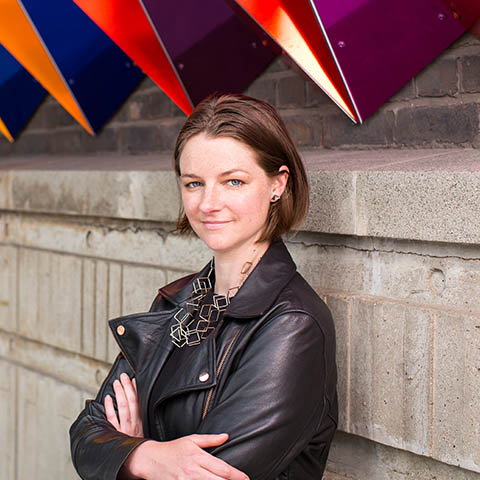 "I like illusions, and any sort of material that can create a space that can heighten someone’s sensory and perception is great." Liz West, artist
Technological advances - or obstacles?
West has worked actively as a full-time artist for more than a decade, and her pieces have always had a more analogue touch regarding material and technology. She is passionate about the craft, and the details leading up to the result of an installation. West almost exclusively works with fluorescent lights, when using artificial light in her art and almost never any sensors or programming.
– I find the LED’s a bit problematic; West explains. The technology is moving at quite a pace, and what you can do today in lighting is quite remarkable. However – as an artist – I like real things. Real material, something analogue. So, when I think of artificial light it is the fluorescent lamp for me. It is a much more tangible light, more immersive. The colours you can achieve with a fluorescent light are through filters wrapped around them and so you have a limited amount of coloured filters. Mix those filters, overlap them, and you create new colours.
West elaborates further:
– I think you see LED’s being misused, or mistreated in art. They can have a subtlety to them, but when artists use them for the first time on a project, they are not using their full capabilities. What I try to achieve in my work is an immersive space, and I want to supersaturate that space. Although there are millions of possible colours that you can get with an LED, what I am actually left with is that top row with a 100 % saturation, and that is not millions of colours. It is probably tens or hundreds. So, actually the tones and the hues that you can achieve through the physical filtering, is much more intense than LED.
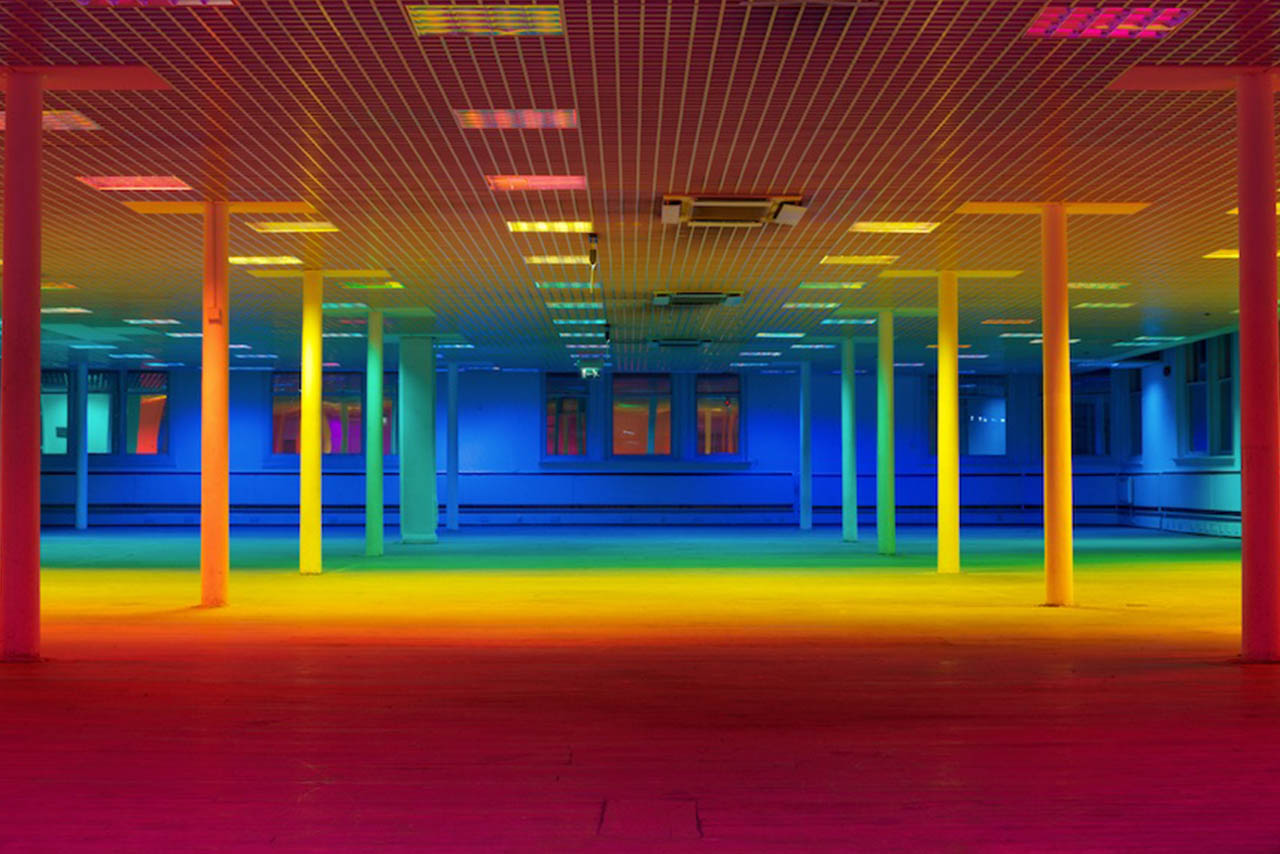
Don’t conform – create
The passion of which West describes her work, and her relation to light and colour is contagious. Her fascination with the interrelationships between colour and light is tangible in her art, quite physically for the visitor to experience.
– I’m obsessed with materials – whether that is luminaires or physical things like glass or mirrors - I like illusions, West says. And any sort of material that can create a space that can heighten someone’s sensory and perception is great.
When observing her peers in the lighting design industry, she is concerned about the possibilities to create something new – rather than to conform.
– As an artist, I exist more in the artworld - which is quite small compared to the lighting world, West explains. I find the lighting world very nurturing and all-inclusive, which is a lovely thing. But when I have looked at designs made in the lighting design world, they can be a bit boring. I have often thought to myself “come on!”. These are lighting designers, and I couldn’t see the creativity in the work. I think it is because a lot of lighting designers and architects must conform to a brief, for so much of their career. And I strive do the exact opposite of that. Sometimes I want to shake up lighting designers and tell them to get their pens and pencils out and be a bit looser and more creative in their approach. I believe we should be able to play more, I think that is a great thing.
Liz West - work and exhibitions
If you wish to get to know more of Liz West colourful world, please visit her website: http://www.liz-west.com/
If you wish to see some of her installations in real life she has two upcoming art installations:
• Hyvinkää Art Museum, Finland ( “Physical Reality”)
• The Wilson, Cheltenham, UK (“Colour-ways: Light works by Liz West”).
Relaterade nyheter

Omvänt mentorskap: ”Allt ledarskap handlar om människor”
Under det senaste halvåret har sexton ledare från bolag i Jönköpings län haft varsin mentor via programmet Omvänt Mentorskap. Det som gör det just »omvänt« är att mentorerna är yngre och i början av sina yrkeskarriärer medan adepterna är mer seniora. Kristoffer Emanuelsson, produktionschef på Fagerhult, och Maria Liljeqvist, enhetschef inom hemtjänst i Jönköpings kommun, är ett av mentorsparen. Hej Maria och Kristoffer! Nu är Omvänt mentorskap över, vad har ni haft fokus på i ert samarbete?Kristoffer: ”Vi har inte haft några specifika mål utan har reflekterat och pratat, och så har Maria kommit med inspel på hur jag kan tänka i min vardag.”Maria: ”Jag tycker vi har haft en tydlig tråd där vi utgått från Kristoffers frågeställningar och reflekterat kring dem.” Kristoffer, var det något särskilt som du ville lyfta – och som du tar med dig? ”Jag ville fokusera på hur jag kan engagera kollegor och vi landade i flera diskussioner kring feedback. Det är lätt att fastna i det klassiska »Bra jobbat!« men det kan behövas lite mer utvecklande kommunikation och det vill jag bli bättre på gentemot mina närmaste medarbetare.” Maria flikar in: ”Jag sa till Kristoffer; du får inte säga »Bra jobbat!« om du inte också utvecklar vad som gjordes bra. Det är så lätt att fastna där.” Omvänt mentorskap 1 Att bryta invanda mönster är kan vara en utmaning, hur har det känts att kliva utanför komfortzonen? Kristoffer: ”Redan vid anmälan så bestämde jag mig för att ge detta en verklig chans. Annars är det ju ingen idé! Jag tycker det är viktigt att poängtera att det till stor del hänger på ens egen inställning. Att man verkligen vill, och vågar vara lite obekväm. Vi har haft bra diskussioner och samtidigt väldigt roligt, och det är ju alltid viktigt.” Maria: ”Jag tycker Kristoffer har varit modig och vågat testa de metoder vi diskuterat. Det har gjort att vi hela tiden kommit vidare.” Maria, har du lärt dig något som du tar med dig – utöver din roll som mentor? Maria: ”Ja, absolut! Det är så tydligt, att även om vi jobbar i väldigt olika miljöer så handlar ledarskapet alltid om människor och individer, och hur vi leder dem. Det är en värdefull insikt. Dessutom har vi haft roligt, och jag har stärkts i min egen roll som ledare genom att ha en senior ledare som lyssnar, tar till sig och provar mina idéer och tankar om ledarskap.” Ni jobbar i vitt skilda branscher, har olika lång ledarerfarenhet och är nya bekantskaper för varandra – vad tar ni med er från det? Maria: ”Vi är ganska olika som personer, och det har varit intressant att reflektera kring det i olika scenarier och hur det påverkar ledarskapet. Vi har lärt oss mycket av varandra.” Kristoffer: ”Jag tycker det är viktigt att vara öppen med sina brister, och samtidigt våga tänka nytt. Och kanske lägga eventuella skillnader kring hur länge man har varit ledare eller ålder åt sidan – och fokusera på att själva samtalet ska bli bra. Maria har ställt en del tuffare frågor där jag känt mig lite obekväm, men det har fått mig att ifrågasätta gamla vanor och varför jag gör saker på ett visst sätt. Det har hon gjort väldigt bra.” Kristoffer, utifrån ditt perspektiv som adept – hur ser du på Omvänt mentorskap? ”Inledningsvis kändes det lite obekvämt, men jag tycker man ska ta chansen att söka. Jag kan verkligen rekommendera det. Att ha en mentor var intressant, och det omvända mentorskapet tycker jag var väldigt givande. Att ta sig tid för reflektion med någon som inte har koppling till min vardag öppnar för andra funderingar och frågor. Vi kommer absolut försöka hålla kontakten.”