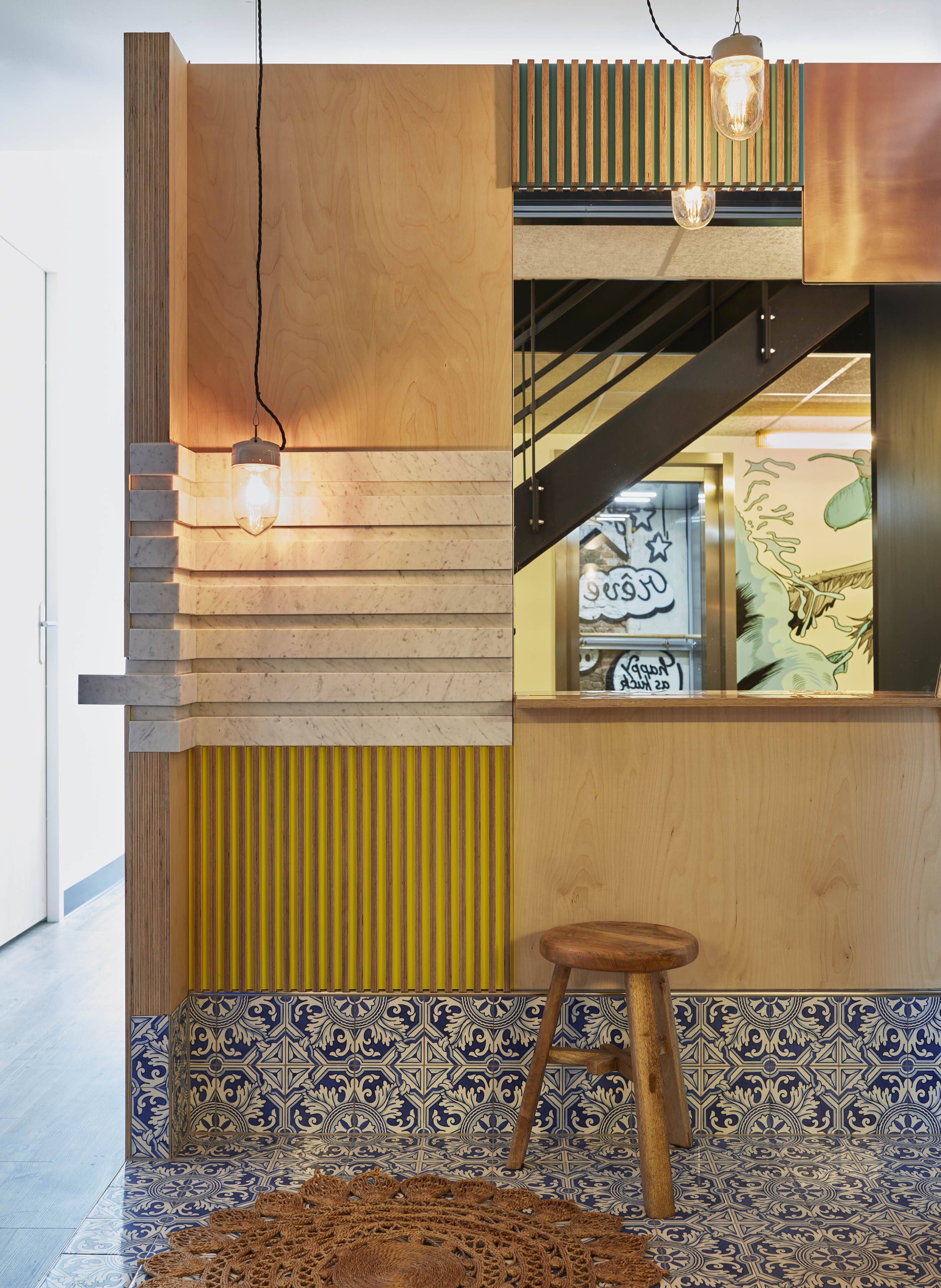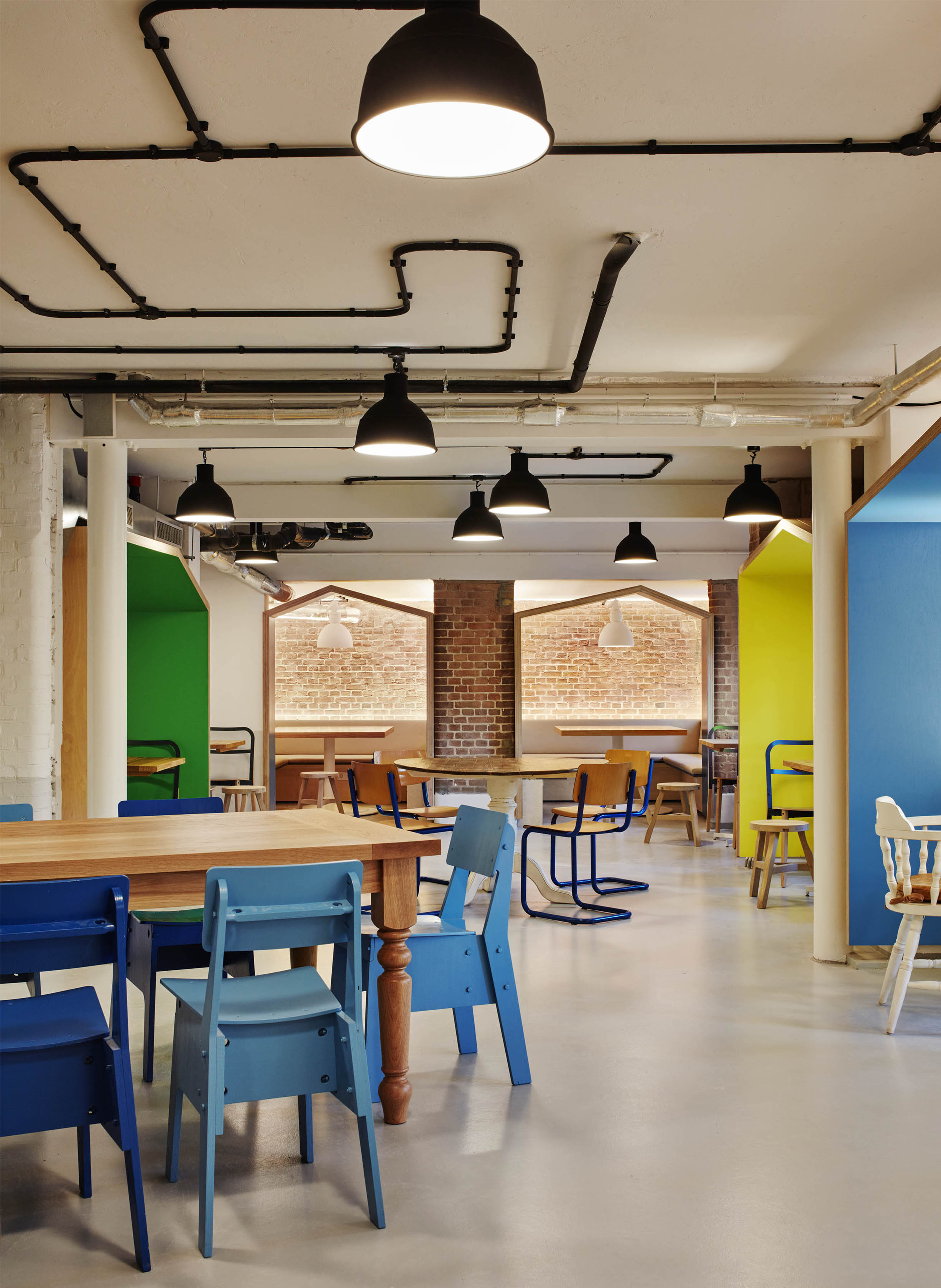
Reclaimed, repurposed or replicated, original lamps are, today, a feature of hipster hangouts and banker bars from Antwerp to Zurich and an obvious fit with loft living though oddly rare in the workplace itself. But as far back as the 1920s, the Bauhaus designers Marianne Brandt and Hans Przyrembel recognized the aesthetic value inherent in what others saw as workaday, unremarkable and purely functional. This appreciation grew in part from the ethos of the design school, which aimed to reunite manufacturing and the applied arts.
The multitalented artist, sculptor and designer Brandt joined the school in 1923, where she studied under László Moholy-Nagy in the metal workshop, as did Przyrembel. She rose to become the workshop’s director and designed numerous lamps including the 1924 counter-weighted, industrial ceiling lamp for Körting & Mathiesen, an instant classic that immediately went into mass production.
 ‘the relationship between the directly lit and the unlit areas of a room, plus lighting of such strength that the reflected light is sufficient to illuminate unlit areas.’ Poul Henningsen
The architect Walter Gropius also chose the lamp for his own dining room; its design – encompassing use and ornament – transcended barriers between work and home and in doing so challenged concepts of class, job and what would, far later, become known as work/life balance.
It was not only in Germany between the wars that these notions were being interrogated. Edward Hopper’s 1927 painting Automat examines their down-side: a woman sits alone at a table in a restaurant where the food comes from vending machines; behind her a window reflects lines of ceiling lights redolent of high-bay factory lighting, a metaphor for alienation. In the 1960s movie The Apartment Jack Lemmon’s little man character works in a huge, soulless open-plan office with seemingly infinite ranks of cubicles under an endless grid of lights; the office as assembly line, the worker as anonymous component. It is a backdrop that is still quoted without any sense of irony in standard office fit-outs designed to comply with the letter if not the spirit of regulations and guidelines on workplace lighting.
Their main fault is uniformity and, more often than not, concentrating on the quantity not the quality of the lighting. The result is all too frequently a sterile work environment that imbues mild sensory deprivation and a feeling of loss of control.
In 1924, though, the Danish designer Poul Henningsen said that, ‘the whole trick is not directly illuminating more of a room than is strictly necessary. The pendant form of industrial lighting appealed to Brandt and others because it provides both ambient and task lighting.

Matyas Szaplonczai of Busho Studio Budapest collects vintage industrial lighting.
Credit Busho Studio.
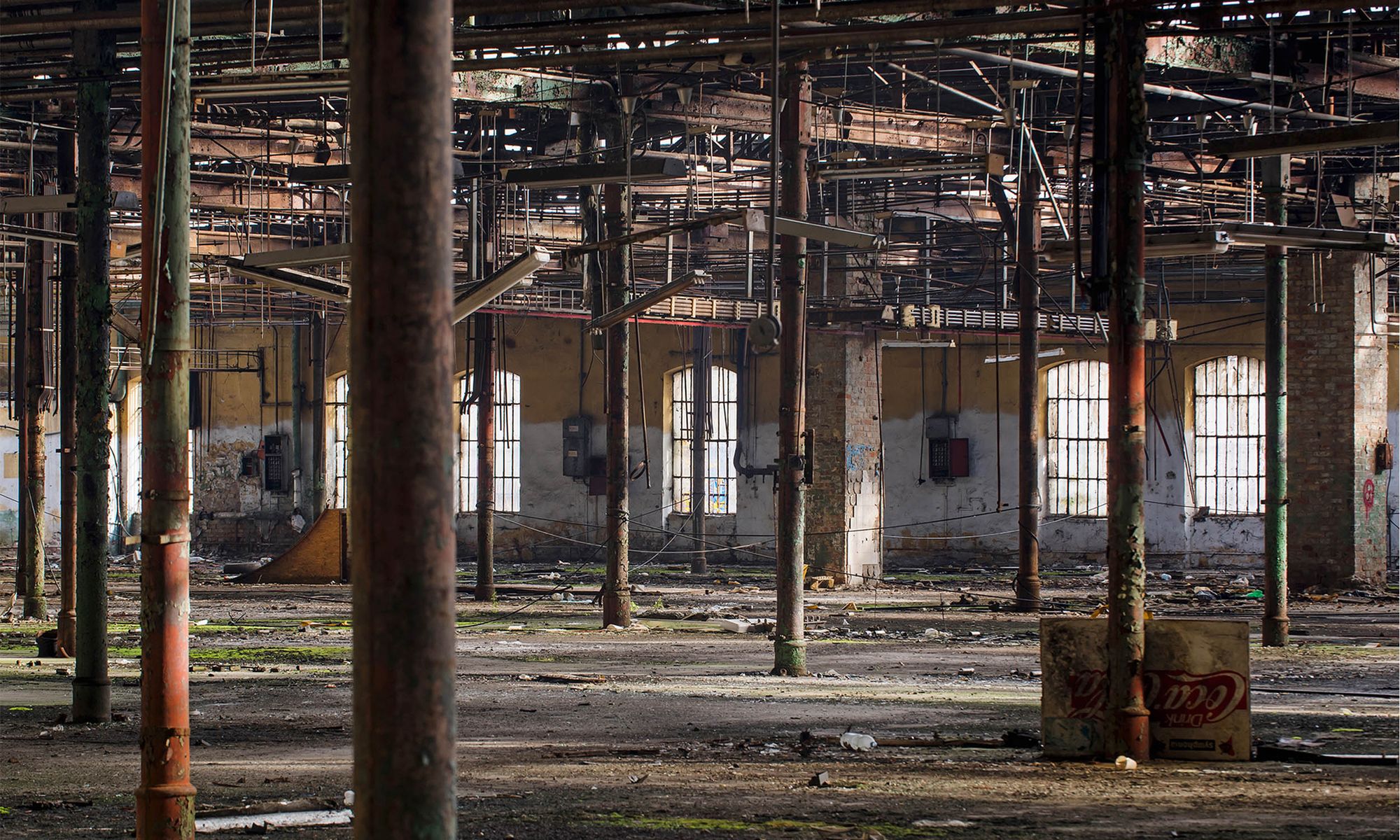
Either side of the Atlantic, a trade is growing in Soviet era factory lighting salvaged from old bus depots, mines and processing plants in Eastern Europe. They were conceived by anonymous ‘artist-constructors’ ordered to concentrate on utility, adaptability and longevity.
Like the even rarer surviving examples of original industrial lighting from the West, they were rugged and utilitarian, free of pointless elaboration. They were also constructed in ‘honest’ materials such as aluminium, Bakelite and copper, which speak of the dignity of labour and the value of the worker of hand or brain.
If the revival and re-use of these designs rests of nostalgia that is no bad thing; a century ago nostalgia was a diagnosis of morbid home-sickness but psychologists have since come to see it as a source of comfort. Industrial-style pendant lighting thus offers to ameliorate or provide an antidote to the blandness of most modern office lighting, one with the potential to satisfy the contemporary needs of office workers in terms of form and function.