The visual quality of the luminaire
The visual quality of the luminaire is important, both to our customers and to us, but it is sometimes difficult to specify. We therefore conduct thorough visual evaluations, focusing on what it is like to look at the luminaire.
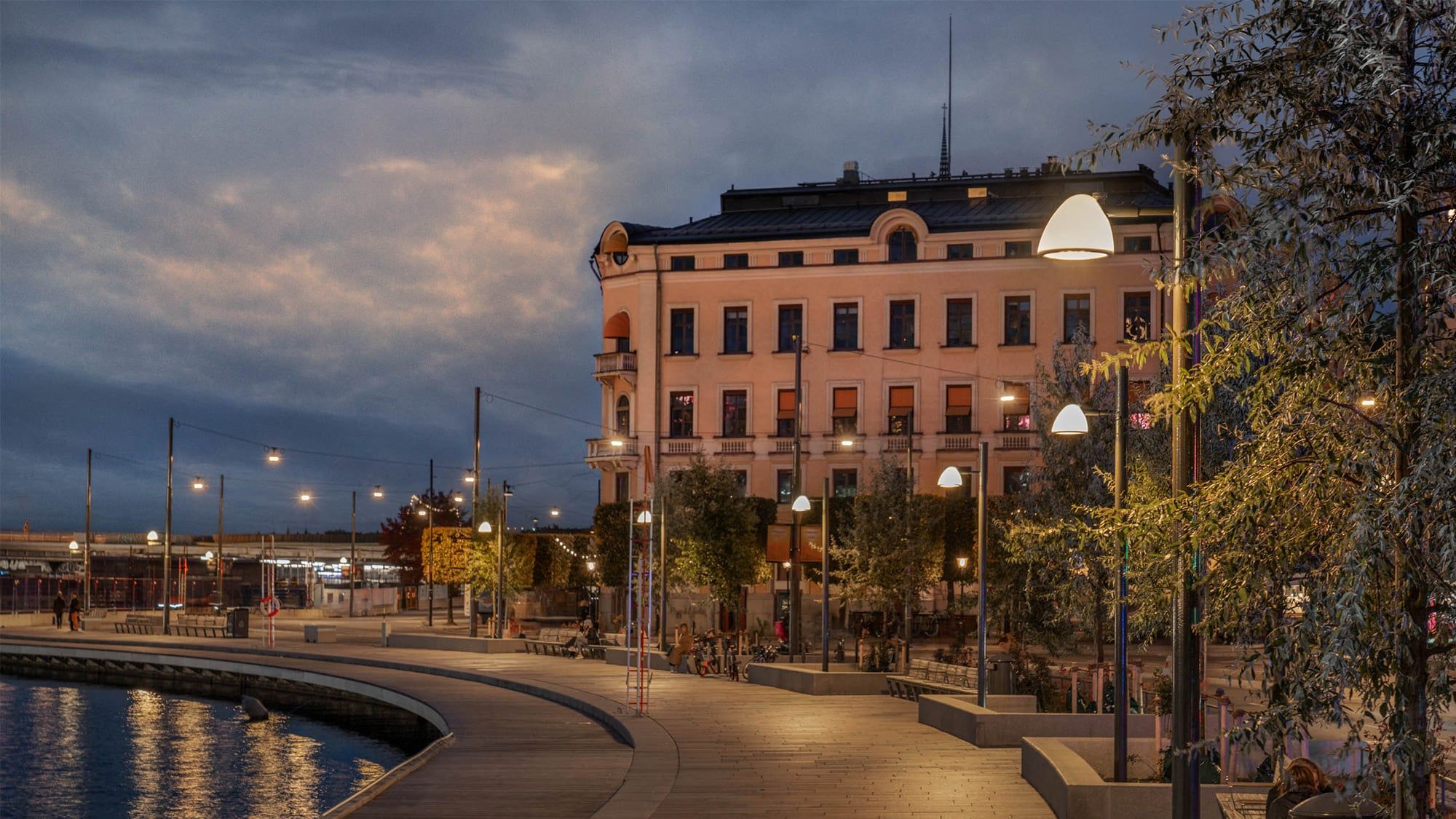
Assessment of visual quality
Our aim is to ensure that the luminaire offers high visual quality and is suitable in a range of environments. We want to create a harmonious balance between the light and the luminaire housing, and to avoid distracting elements or glare.
When evaluating the visual quality of the luminaire, the following steps are taken:
- The luminaire must be set to an appropriate light output.
- The luminaire must be installed in the manner in which it is intended to be used: recessed luminaires must be installed in suspended ceilings, bollards must be installed at the correct height above the ground, and so on.
- The luminaire must be viewed from the angles from which it will be seen.
Examples of effects we want to avoid:
Intense points/areas of light (“hot spots”)
The luminaire should be comfortable to look at and free of any intense points of light or larger areas of excessively bright light. In addition, we don’t want people to be looking directly into the illuminated area.
Discomfort glare
With open luminaires, especially those for compact and intensive light sources with high luminous flux, it is generally the light source itself or a mirror image that causes the glare effect. One way to reduced discomfort glare is to use matt reflectors and large-area luminaires.
Uneven luminance and busy patterns
Some luminaires can give rise to unwanted effects such as uneven luminance and busy patterns. With carefully designed optics, we can create smooth transitions between light and dark areas. Luminaires may meet the technical requirements for light planning (e.g. average luminance and UGR), but this does not necessarily mean that they provide uniform illumination. We place great emphasis on visual assessment in order to identify problems of this type.