Light distribution
Good light distribution is all about providing the right light in the right place, in the right amount and with minimal glare. By controlling how the light is distributed, we create visual comfort, functionality and energy efficiency – at the same time as avoiding unnecessary light spill and making the room feel more balanced.
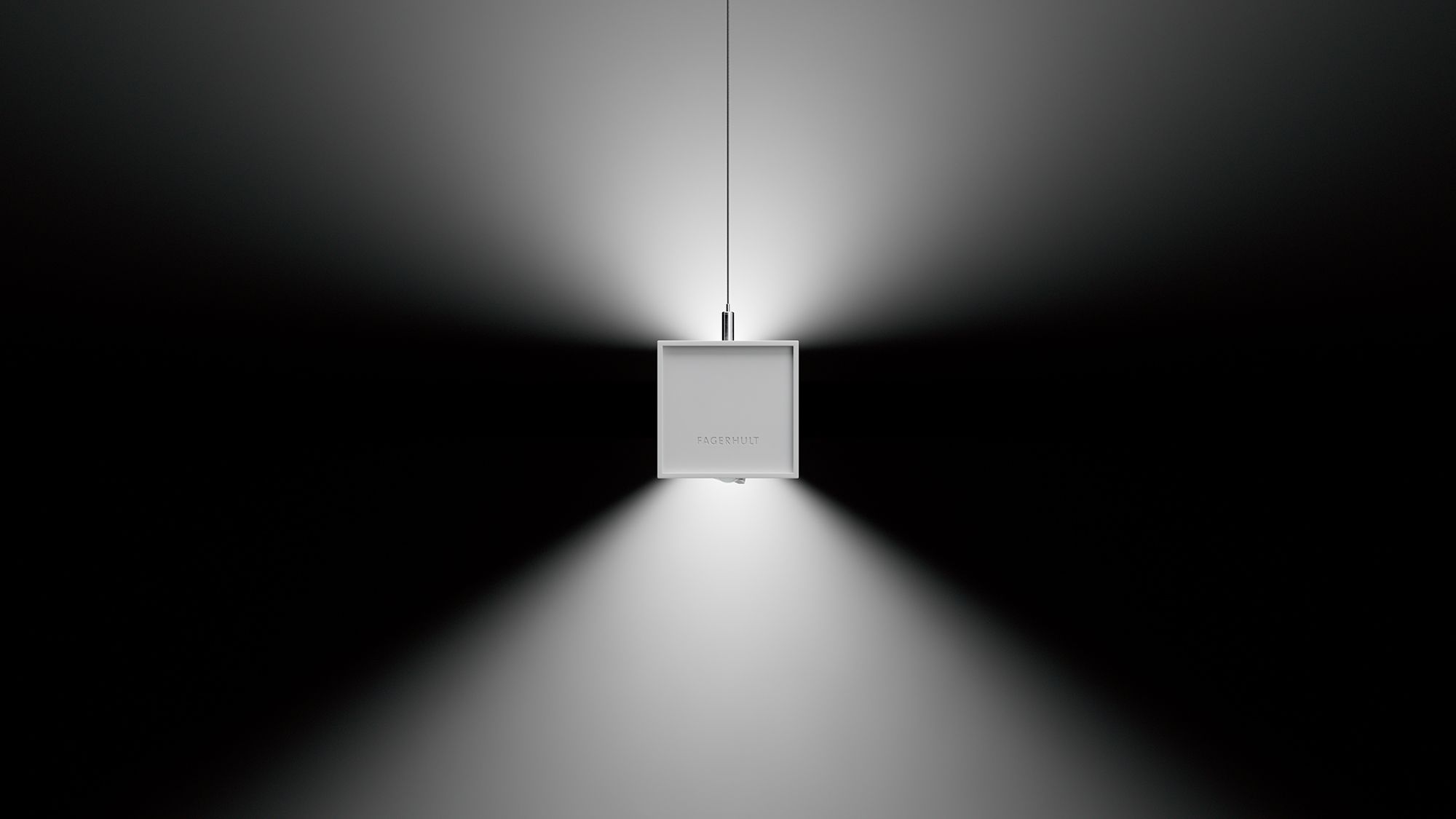
Light is three-dimensional
It is important to think three-dimensionally when it comes to light distribution. A polar diagram only shows the light distribution in two planes.
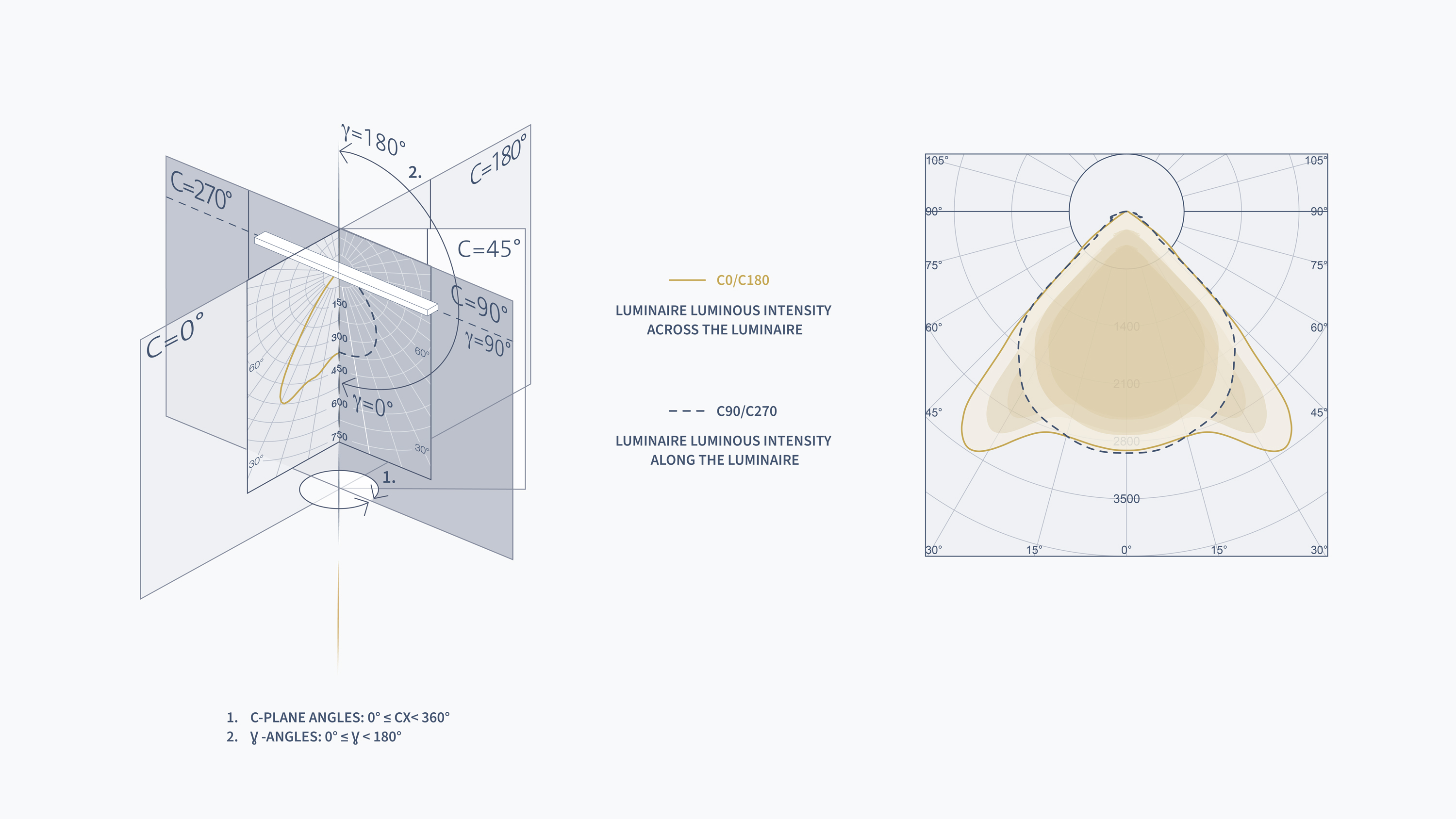
The brightness of a luminaire is often expressed in candelas or thousands of lumens. The light data file to the left is structured using C-planes and gamma angles, which represent the three-dimensional light from a luminaire. The polar diagram to the right shows the longitudinal and transverse curve of the light. What happens between these two curves is not visualised, but is available in the lighting data files (LDT and IES).
Types of light distribution
Common types of light distribution are direct, direct/indirect and indirect. A distinction is also drawn between symmetrical and asymmetrical light distribution.
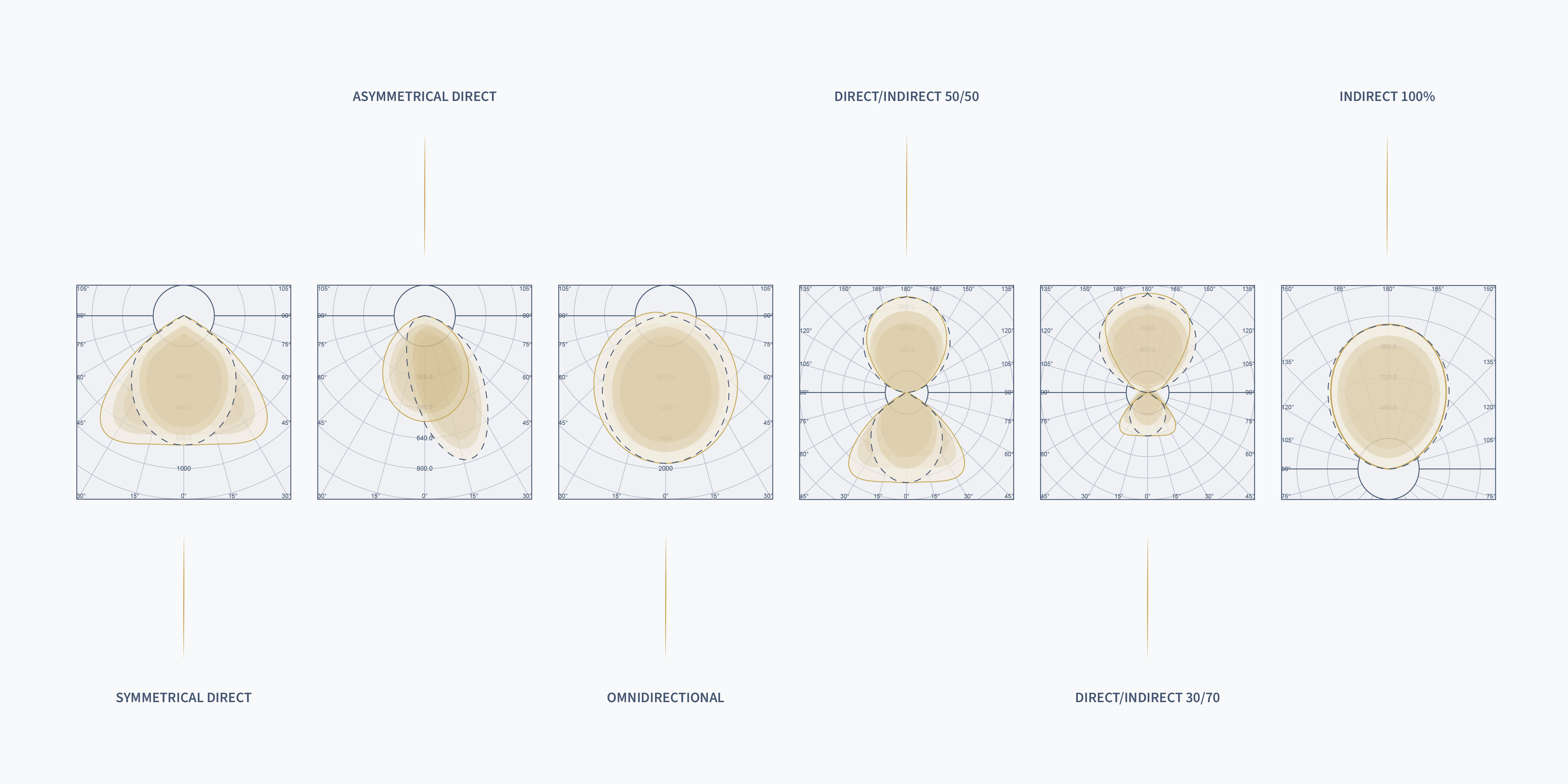
Different luminaires provide different types of light distribution
Recessed luminaires often provide direct, symmetrical and/or asymmetrical light distribution. Luminaires with asymmetrical light distribution are used to illuminate and provide good uniformity across a large, vertical surface which also create ambient light – light that surrounds us. Luminaires with asymmetrical light distribution are seldom the primary light source in a room. Suspended office luminaires, on the other hand, provide direct/indirect or indirect light distribution.