How reflectors work
The reflector directs the light to the correct spot and creates the desired light distribution. The shape and surface of the reflector determine how the light is directed.
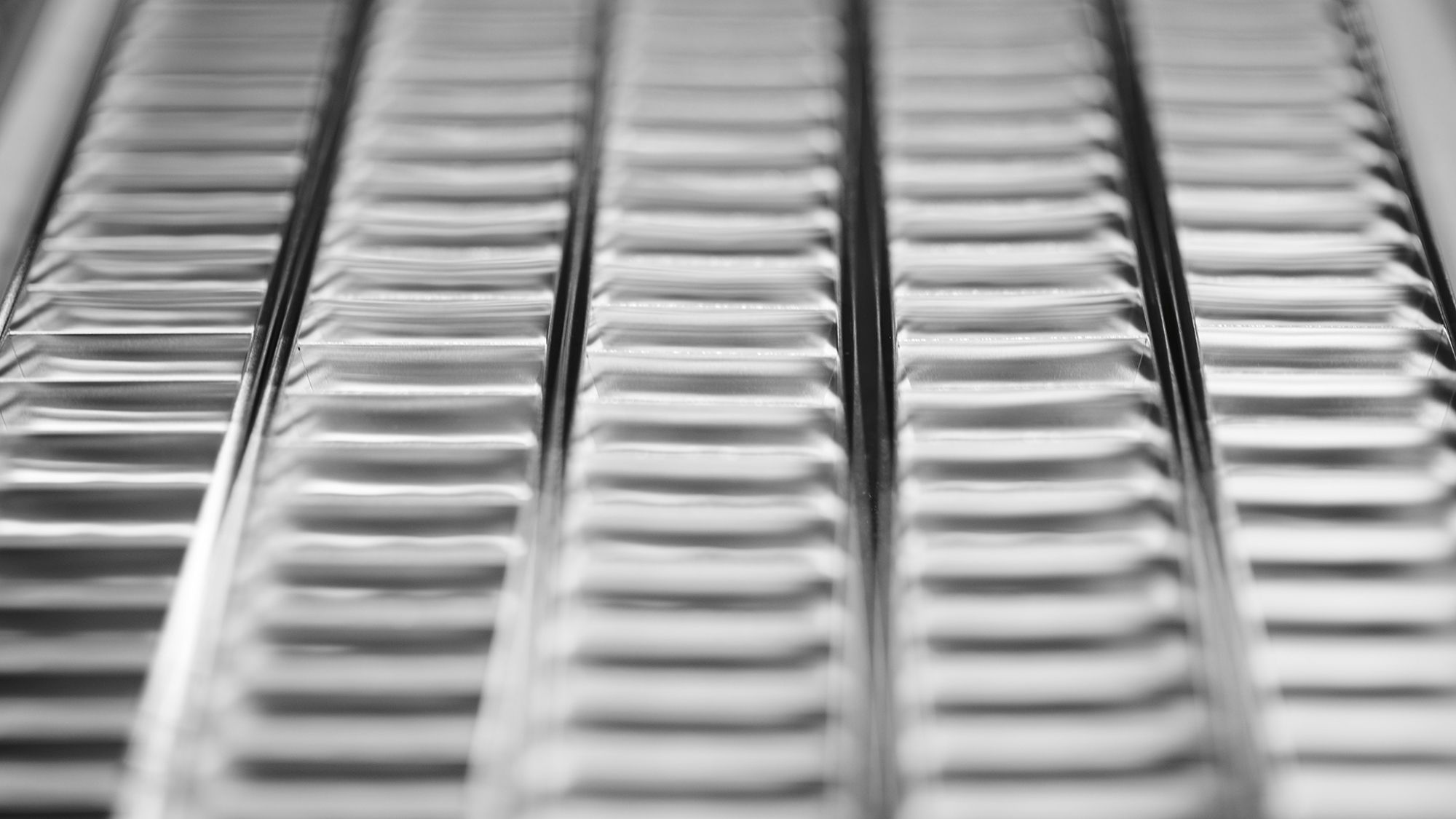
The shape of the reflector determines where the light is reflected
The shape of the reflector is often based on a parabola, a circle or an ellipse, and has the single greatest impact on light performance. It can also consist of straight, concave or convex surfaces (as shown in the figure below). The desired end result is usually created by a combination of these geometries.
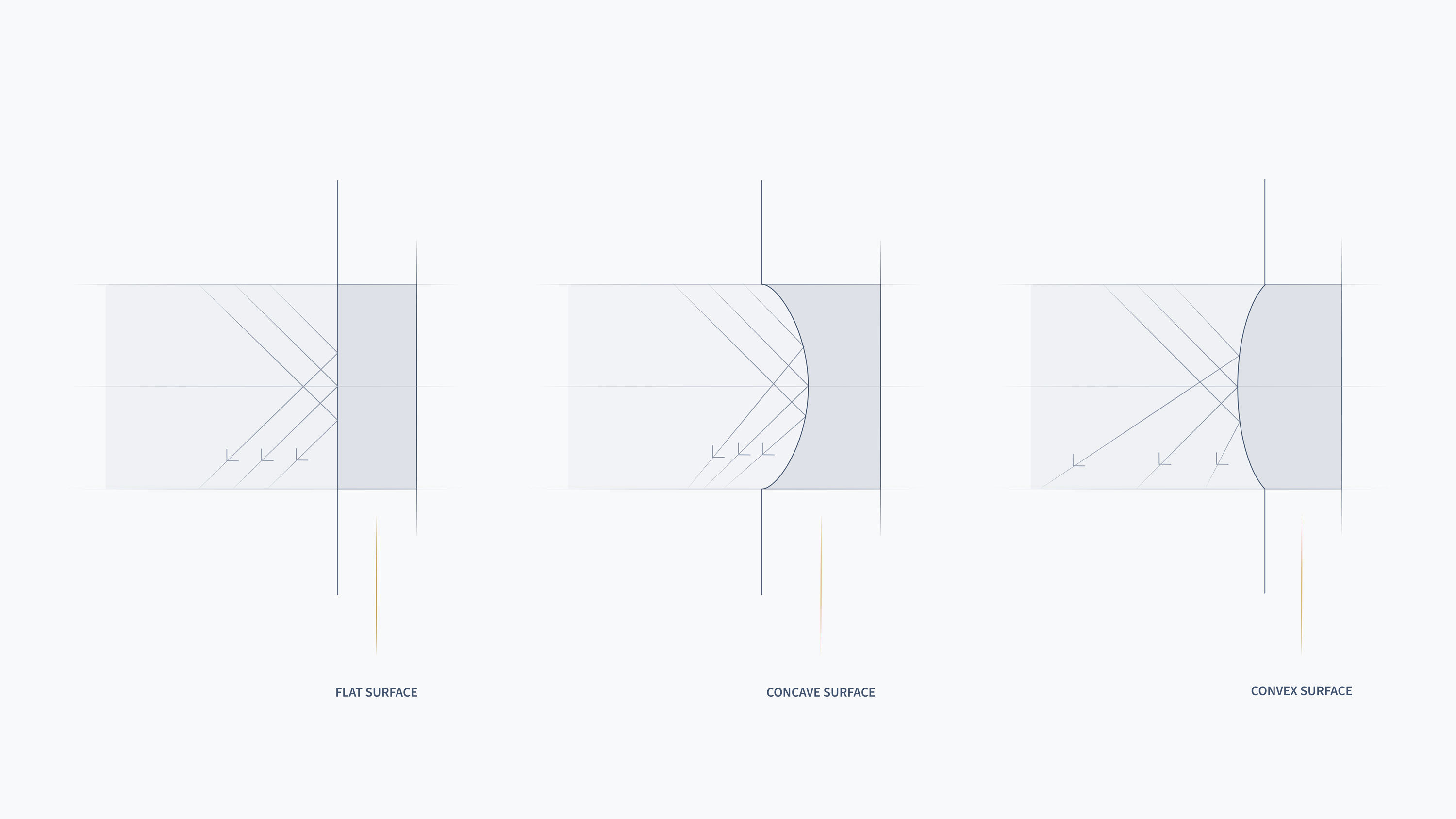
Mirrored reflection of parallel beams that strike a flat surface (parallel rays), a concave surface (convergent rays) and a convex surface (divergent rays).
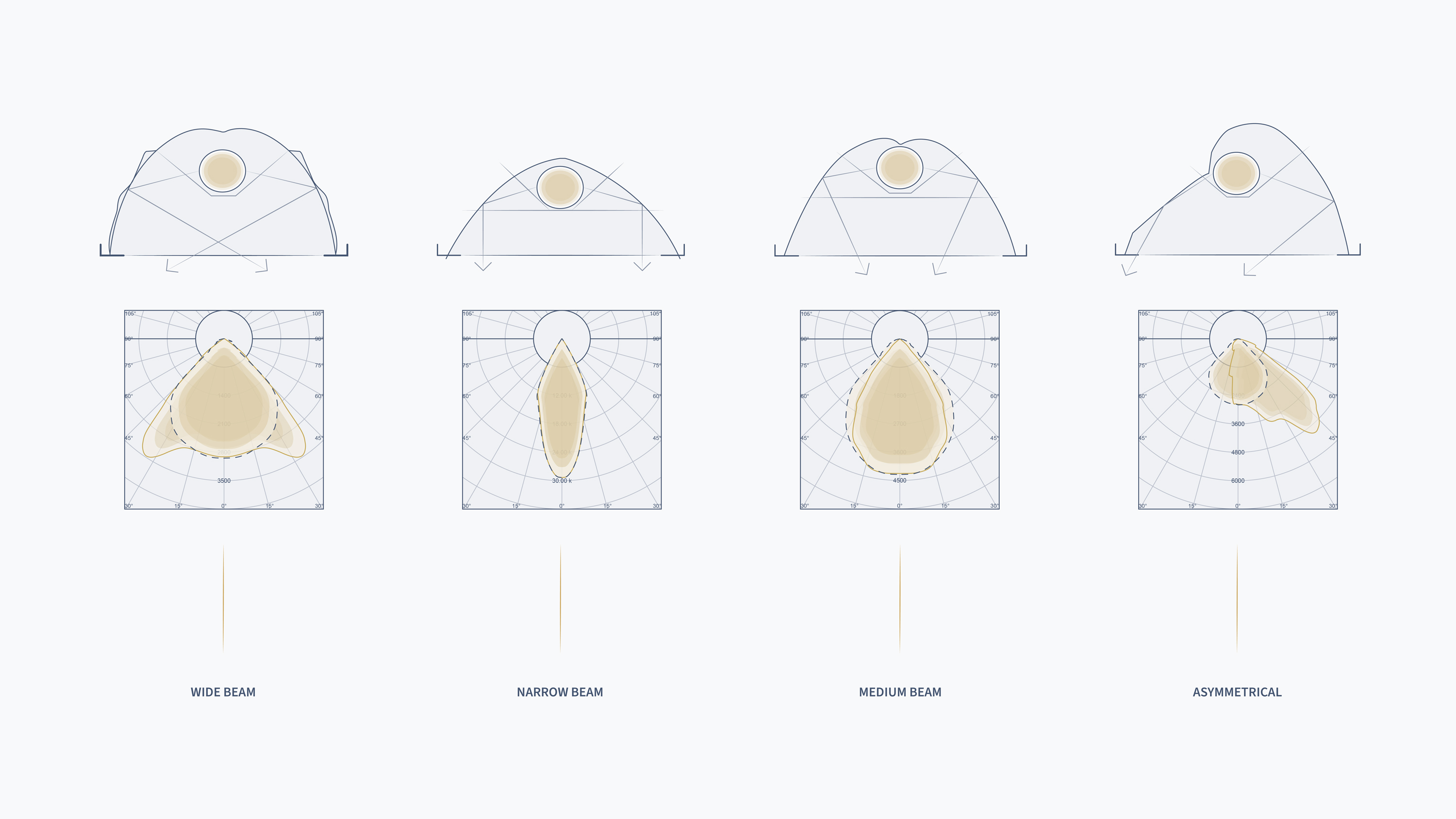
Reflectors usually have an intersecting beam path, which means that the light reflected from one side contributes to the opposite side of the light distribution. The figure below shows a number of reflectors for linear applications with intersecting beam paths. An associated basic light distribution is shown under each type of reflector. However, it is the combination of the reflector’s shape and its surface that produces the desired result.
The surface of the reflector determines how the light is reflected
The reflector is usually made of coated aluminium or plastic. The surface coating may also consist of metallisation or paint, depending on requirements as regards energy efficiency and visual expression.
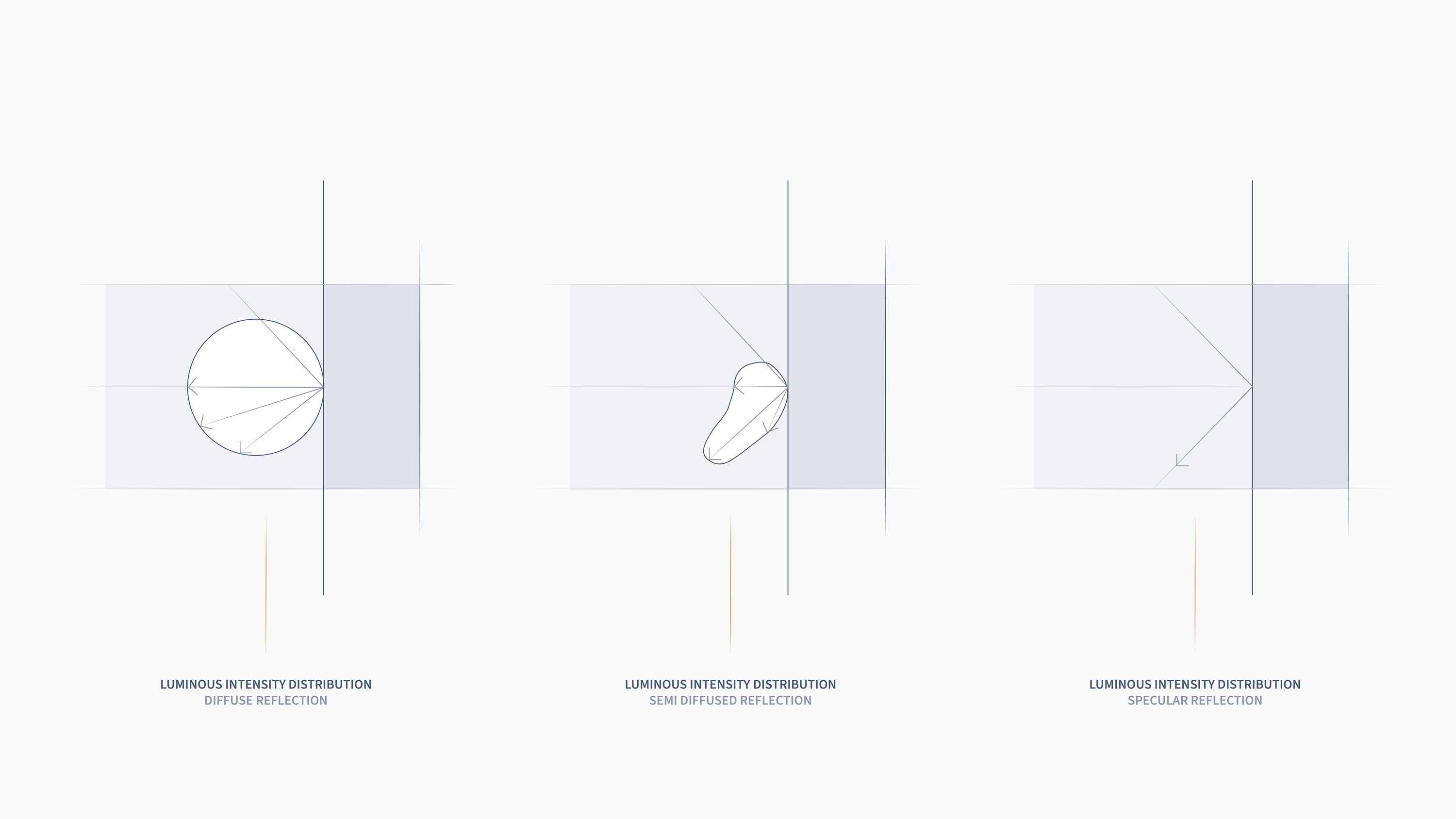
When light hits a surface, it can be reflected either completely or partially
The proportion of the light that is reflected depends on the surface’s reflectance – for Fagerhult’s reflectors, this is typically between 80% and 98%. In addition to the amount of reflected light, the way the light is scattered (diffusion) also plays an important role. Diffusion describes the way the light spreads out after reflection. There is a range:
- Mirrored surfaces: Almost no diffusion; the light is reflected as if from a mirror (e.g. a high-gloss polished surface).
- Diffusing surfaces: The light is scattered in all directions (e.g. a matt white-enamelled surface).
For mirrored surfaces, the law of reflection applies: Angle of incidence = Angle of reflection for each light ray. This mirrored reflection is a key factor in the design of luminaires.