Every city wants to be one – but what is it? Opinions on how a “smart city” should be are as many as the aspirants, though there is an end result which counts for them all. By using modern technologies knitted together, the smart city is a step towards a more sustainable society.
The development is driven by urbanisation. In Metropolitan areas the concept is a way to meet the pressures resulting from an increasing population. The EU is an enthusiastic promoter of the movement and is running its own “Smart Cities Initiative” in order to accelerate the transformation of cities into fossil-free and low-resource communities.
Holistic approach
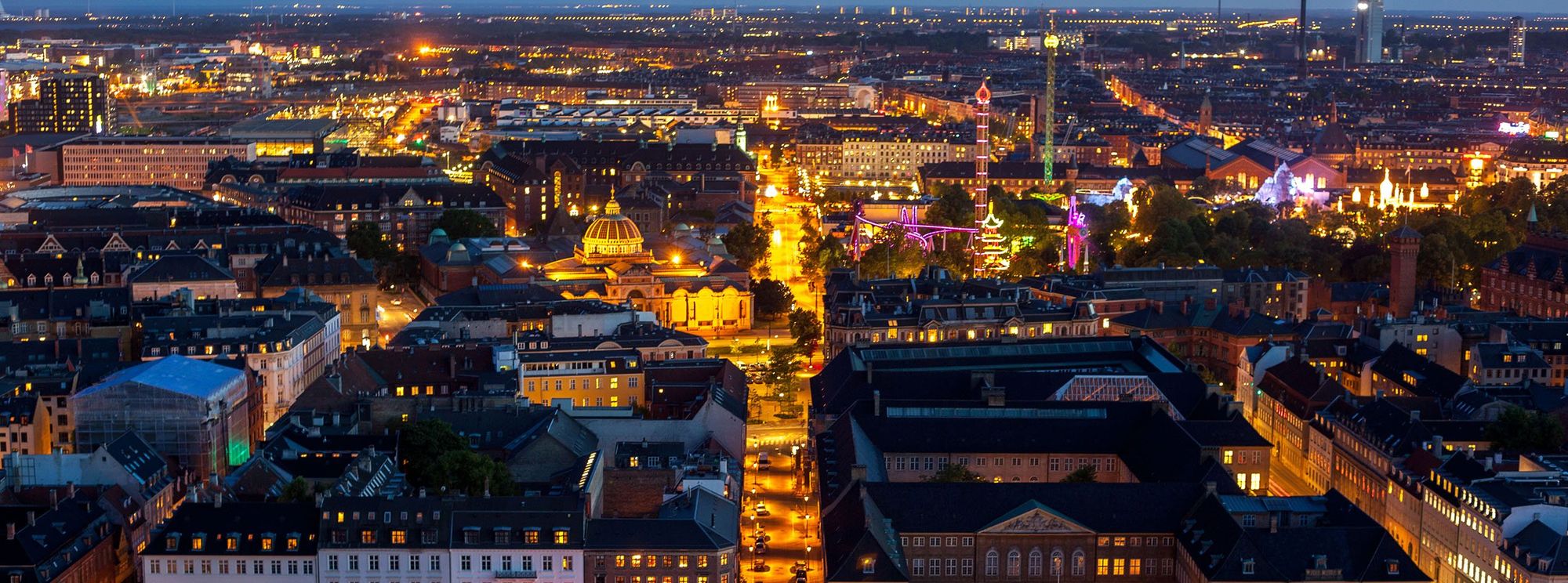
Copenhagen is considered a frontrunner and was recently awarded the Smart Cities Award for its “Copenhagen Connecting”-project.
“It’s extremely important that you don’t embark on this kind of project for technology’s own sake. A smart city should be created for the benefit of the citizens, to improve their quality of life. For Copenhagen this is also an important step to realise our vision of a C02-neutral city in 2025”, says Søren Kvist, spokesperson and Project Manager at Copenhagen Solutions Lab, the City of Copenhagens incubator for smart city initiatives.
Copenhagen Solutions Lab works cross-departmental with the city’s administration, in partnership with local and international companies and knowledge institutions. This task group provides a 360 sounding board to evoke and test new ideas, technologies and solutions to create a more liveable city in Copenhagen.
“The smart city cannot be seen solely as a matter for the community. We need to interact with many different stakeholders: universities, business life and companies related to energy, water, gas, telecom, sanitation and so on… The realisation of a smart city needs a holistic approach and we’ve found this is an easier way to communicate.”
Lighting as infrastructure
And even if the potential is endless, the connected society has to be born according to a plan. Before heading off, experts were hired to identify possibilities and socio-economic effects. Right now, Copenhagen Connecting is entering a new phase. A test area is built for evaluating different solutions and techniques.
“We’re not first to the ball, many of these technologies have been tried in other cities – but we need to make sure that they’ll work in our Nordic climate and environment”, says Søren Kvist.
An innovative twist is how Copenhagen is planning to use outdoor lighting as infrastructure for the smart initiative. Street lighting is everywhere and every luminaire is connected with electricity, something that’s crucial to get all this tech stuff working. In the coming years 20 000 existing streetlights will also be changed into LEDs.
“Of course it’s a good thing for the environment as they are very energy efficient. But it’s interesting how lighting is also turning into an infrastructure solution, as a vital part when building connectivity”, says Søren Kvist.
Every LED-module can be connected to the city’s IT-system where they can interact with each other. The lighting poles are also excellent for housing sensor equipment for water, wind and pollution as well as for traffic sensors.
“LED-luminaires also have an important advantage as they are always operating. They’re never totally switched off, only dimmed to extremely low levels. This means that other equipment will have power supply, regardless of the time of day.”

From traffic to flooding
The ideas are flowing.
“Traffic is a core subject. For example, we can use the system to generate data for traffic lights, in order to create green waves for car drivers, cyclists and pedestrians. This means reduced pollution related to red light starts and stops and a safer traffic environment with less accidents. But it also saves valuable time for our citizens. Parking is crucial. If the system can be used to guide drivers directly to a free parking lot, it will save a lot of driving, irritation and CO2”, Søren Kvist explains.
“Sanitation is another area that we are looking into. With the help of ‘intelligent trashbins’ we can keep the city clean and plan our routes in a more efficient way. Recently we’ve had some problems with heavy rains and flooding and this system could provide us with the information to guide our efforts”
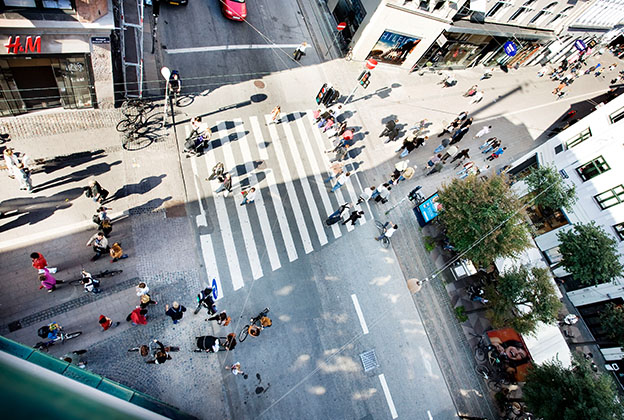
Some of the ideas are already up and running as the municipality of Copenhagen is gifted with an enterprising traffic department. For instance, one has developed a ‘green wave’ application helping commercial traffic to avoid red lights. Copenhagen is known for its well-developed cycling infrastructure and some routes are paved with LEDs shifting between red and green light. This helps the cyclists to keep the right speed and avoid unnecessary stops.
A sharing society
So, what can the lighting industry do to keep up the pace?
“Actually, I think the industry is doing a lot. After many years focusing solely on energy efficiency, producers have started to develop products adapted to network technology. I think it is important to continue on this path, focusing on connectivity and Internet of Things. For us it is also vital that developers within the lighting industry choose to work with open technology”, says Søren Kvist.
Open technology means flexibility and the possibility to share information for the greater good.
“Our vision is to generate open data that can be shared with local entrepreneurs and companies with business ideas that contribute to the smart city and peoples wellbeing. Of course, we carefully consider integrity issues at all times and living in a big data era we have to design all smart city solutions with citizens privacy rights in mind”.
Relaterede nyheder

Det fleksible kontor – en langsigtet investering for ejendomsejere
Som ejendomsejer er det ofte en kompleks opgave at imødekomme lejernes behov og samtidig skabe bæredygtig og smidig administration. Med Control Track Versa skabes der nye og bæredygtige muligheder for at effektivisere processen og tilbyde god belysning til lejerne. Petter Berg arbejder med forsalg til omfattende ejendomsprojekter hos Fagerhult i Oslo. Diskussioner med kunder og mere prominente ejendomsejere drejer sig ofte om problemet med at imødekomme flere interesser både under byggeprocessen, og efter lejerne er flyttet ind. "Der er ofte konflikt mellem forskellige aktørers interesser på bekostning af lyskvaliteten. Og så er der ingen, der er begejstrede over hverken processen eller resultatet, siger Petter Berg, Lighting Adviser Manager hos Fagerhult. Petter Berg quote Petter Berg har fulgt udviklingen af Control Track Versa tæt og ser muligheder for ejendomsejere i fremtiden. Ikke mindst kan de, der arbejder aktivt med genbrug og bæredygtighed og ønsker at skabe attraktive miljøer for eksisterende og fremtidige lejere, hurtigt opnå lønsomhed ved større projekter. "At kunne tilbyde lejere god belysning uden at udskifte hele systemet, hver gang nogen flytter, er en kæmpe bæredygtighedsfordel som ejendomsejer. Med Control Track Versa kan alle armaturer genbruges i hele deres levetid. Derudover kan selve skinnen få en ny form, hvis kontorets indretning ændres". Ejendomsejere kan drage fordel af fordelene ved Control Track Versa under opførelsen. Skinnen kan installeres tidligere under byggeriet og er helt uafhængig af den fremtidige indretning og lejers valg af armaturer. "Det gør en stor forskel, at installationen i princippet kan udføres når som helst og ikke er afhængig af, at lokalerne renses for byggestøv, eller at det sker, lige før ejendommen står færdig. Det er en genial måde at købe tid på", udtaler Petter Berg. Parallelt kan installationer foretages i faste områder som gange, elevatorer, toiletter og offentlige steder, der ikke påvirkes af lejernes valg. Med færre installationspunkter er installationen også hurtigere og nemmere. "Skinnen har et fleksibelt 230 V-system, så der er ikke behov for kabelstiger eller ekstra ledninger. Derfor er Control Track Versa også meget velegnet til åbne lofter. Da systemet er helt uafhængigt, er det også fremtidssikret. Hvert armatur kan suppleres med en sensor til intelligent lysstyring". Ifølge Petter Berg bygger Control Track Versa bro mellem el-rådgivere og indretningsarkitekter. Han ser tydeligt, at skinnen kan være meget nyttig i større byggeprojekter, hvor mange dele skal passe sammen. "Det bliver ofte rigtig godt, når vi arbejder sammen. Det er klart, at der er brug for en part, som forbinder bygherren, el-konsulenten og indretningsarkitekten, og det er her, Control Track Versa bliver vigtig for os hos Fagerhult".