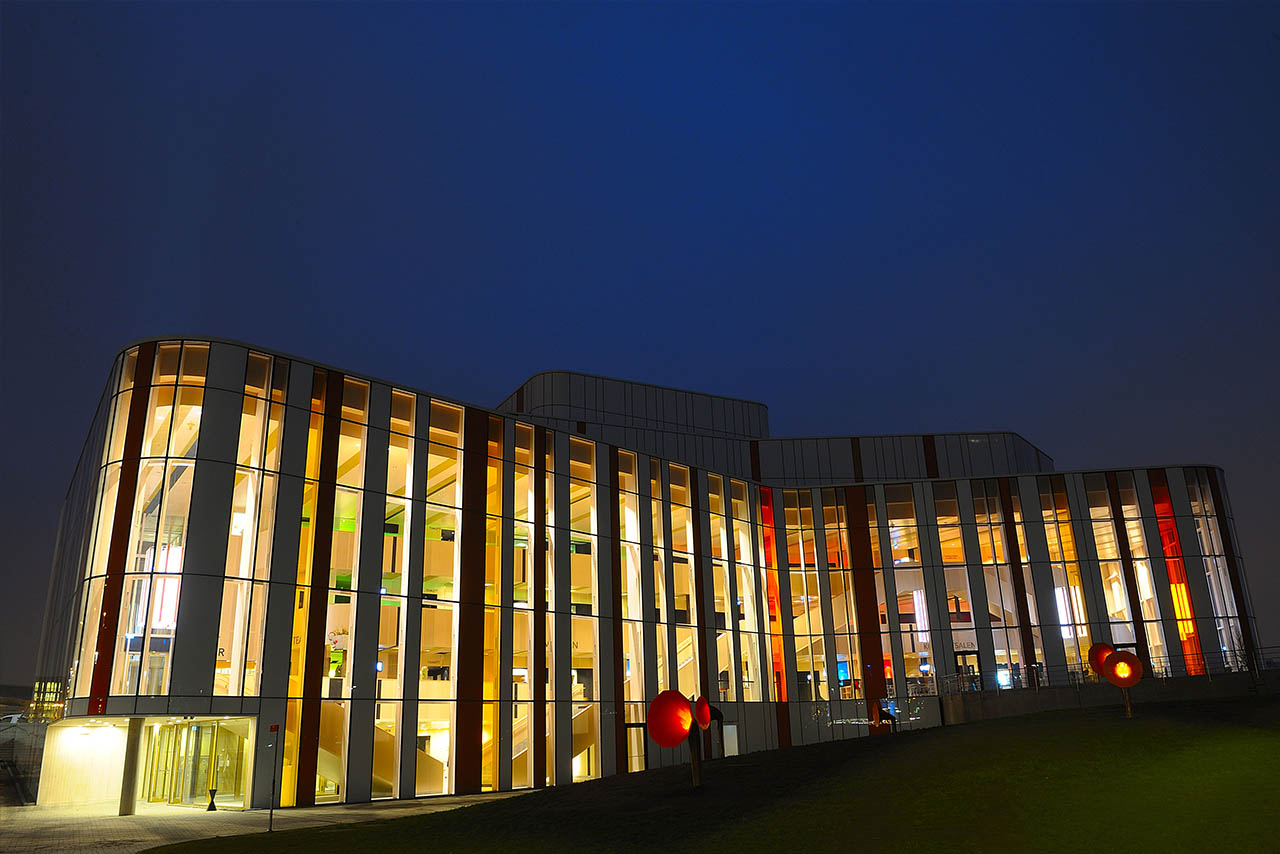
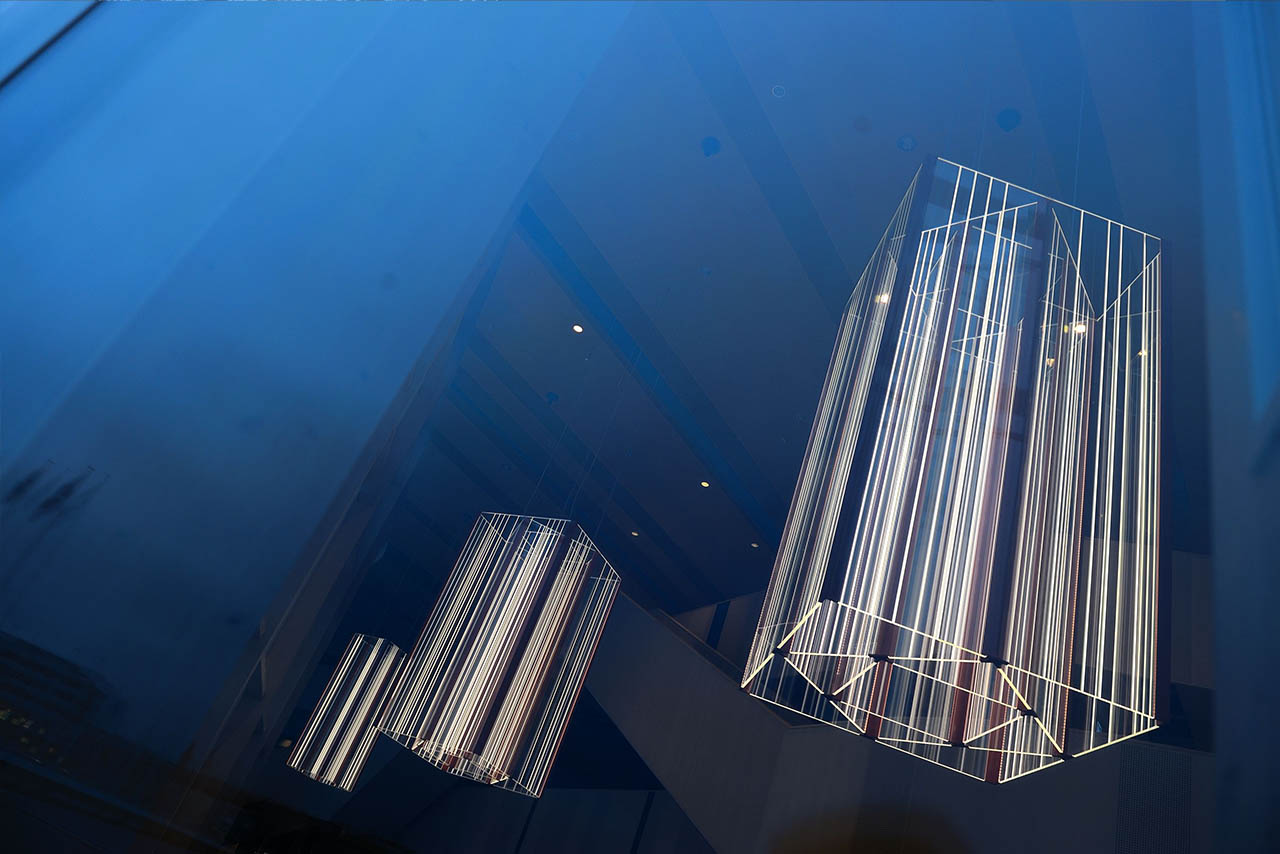
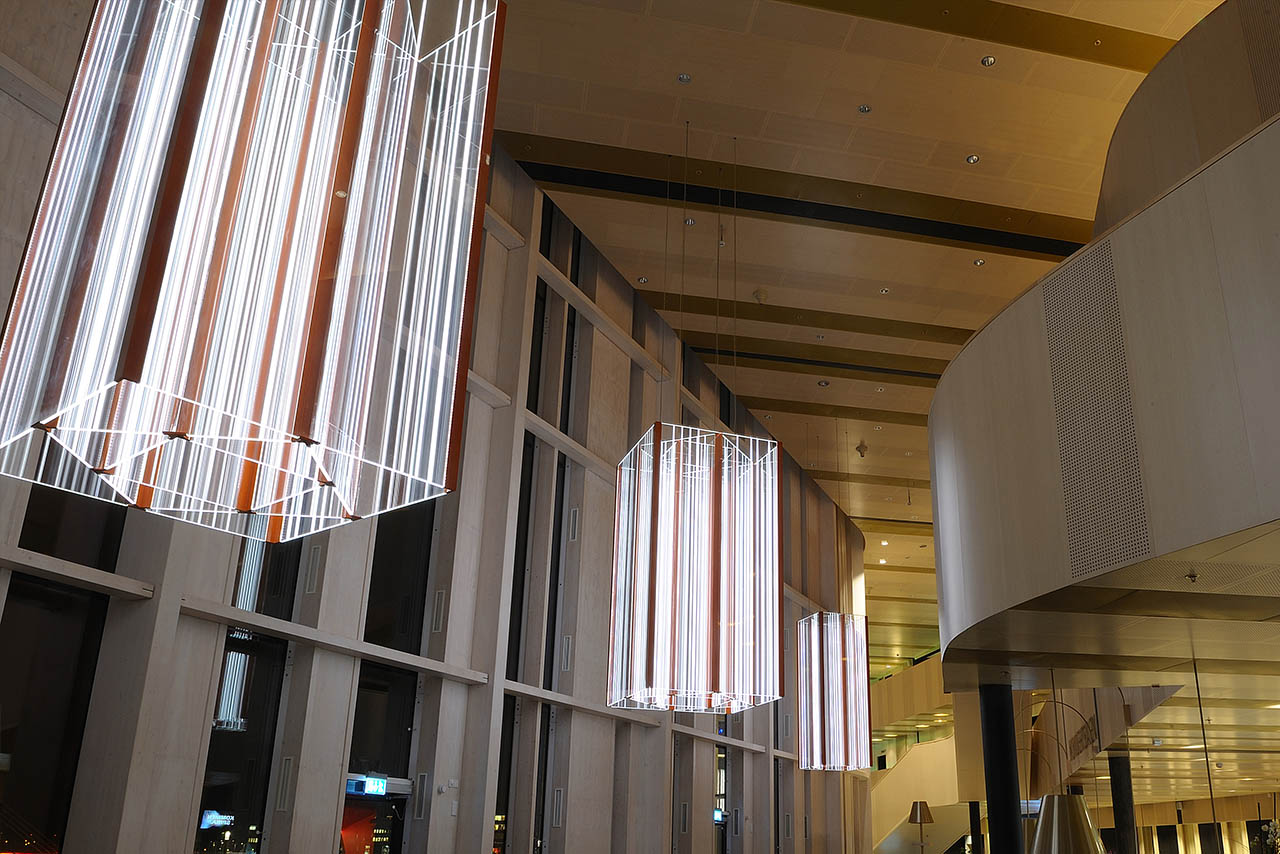
It's like a gigantic votive reflecting in the cold waters of a Nordic lake. The culture and concert hall Spira in Jönköping is all glass and light – crisp and bright during the day with a warm glow at night. Created by Gert Wingårdh, one of Sweden’s best known and successful architects, in collaboration with Jonas Edblad, Spira took its inspiration from the local heritage.
The long tradition of glassmaking is evident throughout, while the orange tinted glass panels pay tribute to Jönköping being the home of the Swedish match. This 15,000 square meter centre of culture has four stages and can host up to 1,700 visitors. From theatre and dance to classical music and jazz, Spira collates a wide repertoire of performing arts throughout the region.

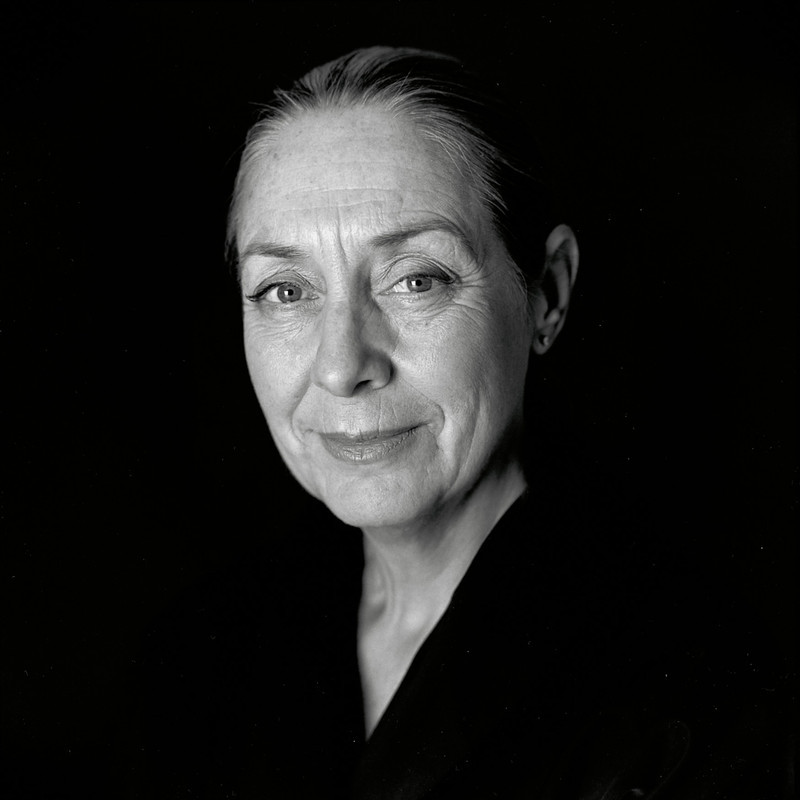
"When Gert Wingårdh asked me to get involved I was honoured, exited – and a bit scared”, admits Ingegerd Råman. ”Although glass is my element, I’d never worked with artificial light and luminaires before. Not in this way. The real challenge was the difference in scale. It’s so big. I’m used to work with millimetres, but this time the proportions were quite different”, she explains.
As the queen of Swedish crystal,famous for her collaborations with leading crystal brands, she knows her material. In 1995 she was granted a professor’s title by the Swedish govern-ment, in praise of her unadorned and functional design that always has a silver lining. She has collaborated with Wingårdh before, in a project for the Swedish Embassy in Washington and knows the drill.
"Gert had given me free reign, only saying that he wanted luminaires instead of traditional art work. I was very clear in my vision; I wanted the luminaire to be a piece of art in speaking with architecture.”
 "Spira is a building with a strong expression – the trick was to find my own formulation without opposing the house." Ingegerd Råman
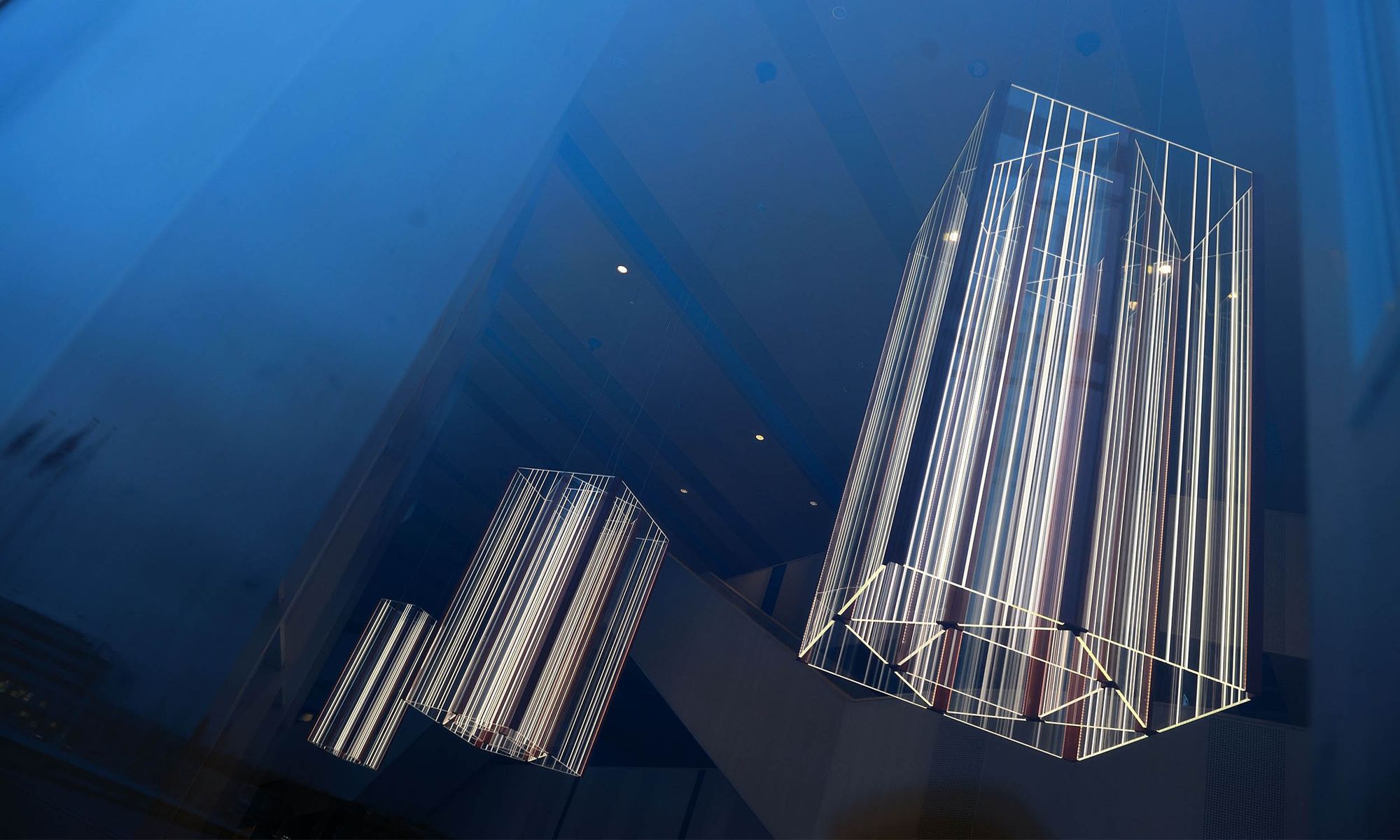
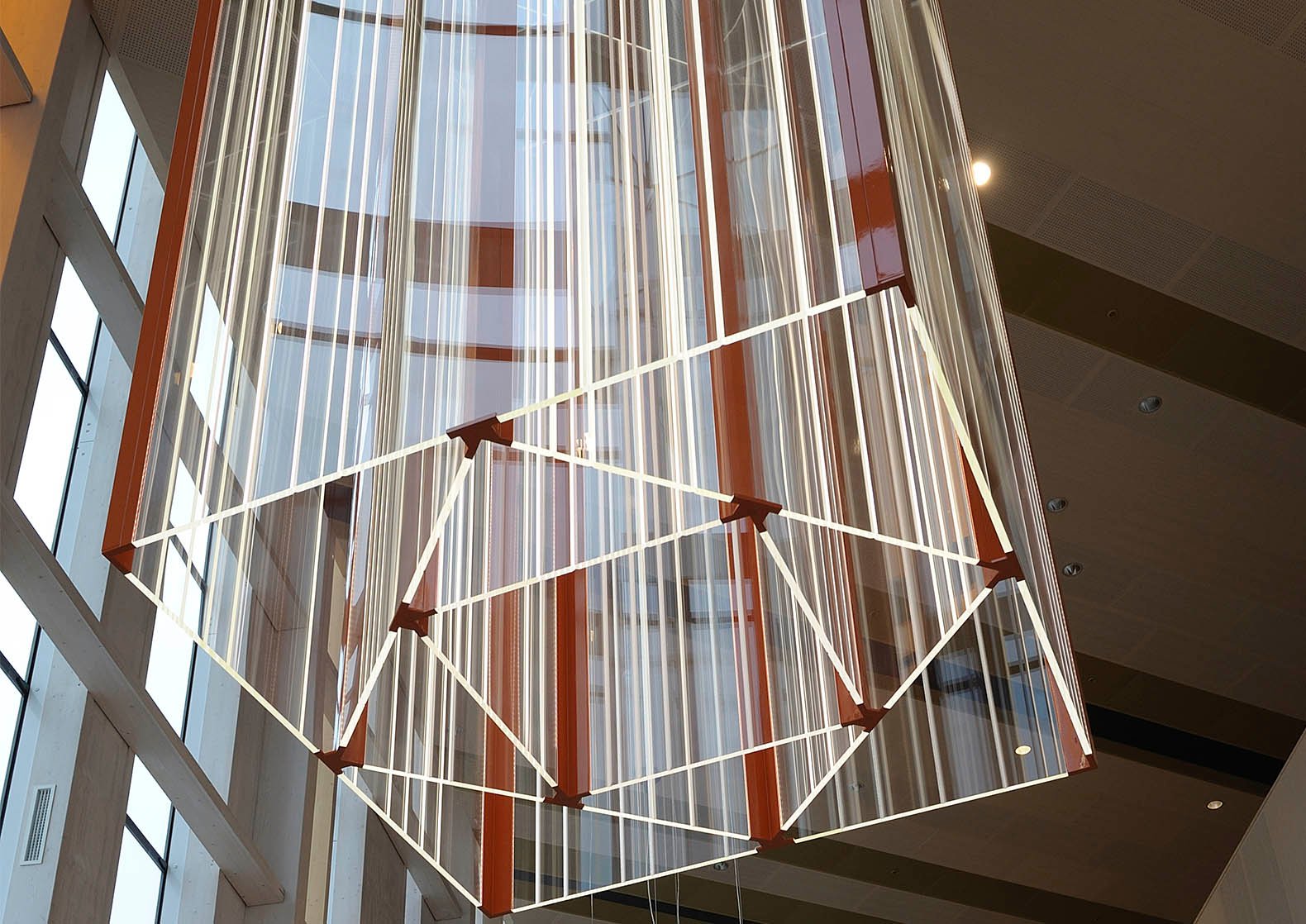
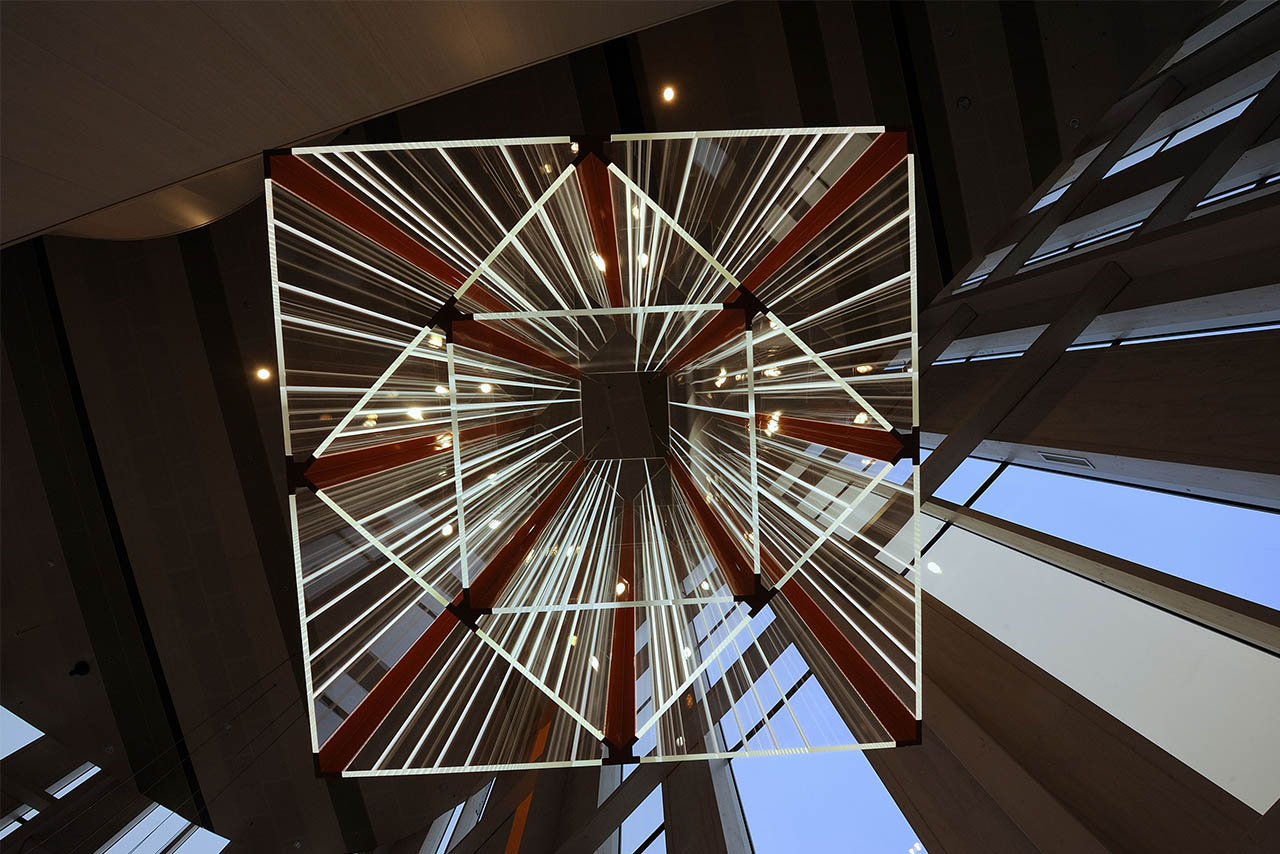
At an early stage, Ingegerd was introduced to Istvan Magyarovari, Engineering Designer at Fagerhult. Inspired by the new LED-technology he presented an innovative material solution. "Glass is extremely heavy and hard to handle in those kind of large scale installations. By using acrylic sheets with milled grooves, we could combine excellent light performance with the artistic expression”, says Istvan Magya-rovari. The LED-modules, hidden in – and by – Ingegerds design, distributes the light through the grooves in a way that reminds of cut glass.
"The hard part was to achieve the simplicity of the light lines. With this solution the light blends naturally with the fittings. With the LEDs hidden in the construction it is possible to look directly into the light without being blinded”, Istvan concludes.
Ingegerd Råman is delighted with the result and how the four luminaires have developed, creating streaks of light, moving as you walk through the room. When realising a project like this – balancing on the edge of new technology, exploring new materials and designs – collaboration is crucial. For Ingegerdand Istvan, who both are used to work with industrial serial production, the Spira luminaire was a true challenge. When combining their skills and expe-rience they stretched the boundaries of what’s possible. Although aesthetics was the main object, practicalities such as safe installation and operation couldn’t be overseen.
"It’s almost like magic. When standing under the luminaire you have a child’s perspective – looking right into the luminaire. But there’s nothing there but stripes and light." Ingegerd Råman
Together with involved partners and subcontractors every detail was formed to perfection. "I’m known to be quite stubborn”, Ingegerd laughs. "I wont take ‘can’t be done’ for an answer. It’s the designer’s objective to make the participants in a project go that extra mile. Of course, you have to be responsive and humble to other professionals – and you have to know the limits – but in a project like this, old truths should be challenged.”
In this case, Fagerhult actually formulated a new, innovative lighting technology. The principle of beaming LED-light into a reflector sheet, creating big, even surfaces of light, has been applied to the award winning Appareo-pendant. "To succeed with this kind of project – and now I’m talking both about the Spira luminaire and about the actual building – you need to have a foresighted project owner. A person with visions and the guts to stand up for it. This person existed in the Spira project in form of property manager Erik Pålsson”, explains Ingegerd Råman. "It’s people who dare, who make the difference.”
Aiheeseen liittyviä uutisia
600 valaisimen älykästä uudelleenkäyttöä Smedjanin pysäköintitalossa
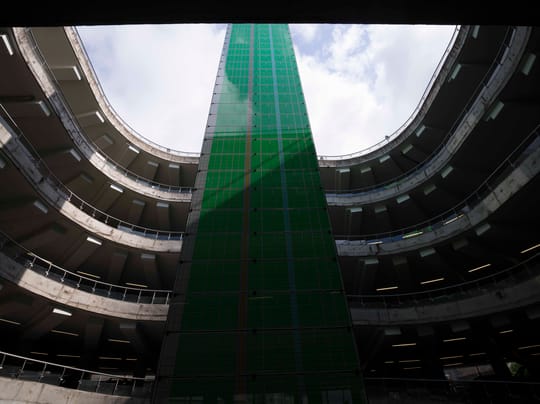
Kun Jönköpingissä sijaitsevan Smedjanin pysäköintitalon valaistus päivitettiin, kiinteistön omistaja päätti investoida uudelleenkäyttöön uuden ostamisen sijaan – ja ratkaisuna oli Fagerhult ReLight. Käyttämällä uudelleen 618 räätälöityä valaisinrunkoa, ilmastovaikutusta voitiin vähentää jopa 6,3 CO₂e-tonnilla uusiin materiaaleihin verrattuna. Smedjanin pysäköintitalo on suunnittelultaan uniikki. Siinä on spiraalimaiset ajoväylät ilman perinteisiä lattioita ja kattoon upotetut valaisimet. Valaisimet asennettiin pysäköintitalon rakentamisen yhteydessä 2000-luvun alussa, ja kun vanhat loisteputket korvattiin LED-valoilla, ilmeni ongelma: valaisinrungot oli tehty mittatilaustyönä ja sovitettu valubetoniin. ”Meidän piti löytää ratkaisu, joka toimisi olemassa olevien runkojen ja betonirakenteen mittojen kanssa, ja ReLight teki sen”, sanoo Jönköpingin kaupungin tekninen johtaja Martin Hulthe Landberg. Image gallery - Smedjan Helppoa uudelleenkäyttöä ReLightilla Projekti alkoi muutaman valaisimen lähettämisellä Fagerhultille, joka käytti niitä prototyypin luomiseen. Muutaman kehityskierroksen ja ideoiden vaihdon jälkeen uudet LED-sarjat olivat valmiita asennettaviksi. Asentajien oli helppo tyhjentää runko ja asentaa päivitetty valonlähde paikalleen – käyttämällä uudelleen olemassa olevat valaisinrungot ilman, että niitä tarvitsi purkaa betonirakenteesta. ”Työn aikana suljimme pysäköintitalon vaiheittain ja asennus sujui ongelmitta. Vaihdoimme kolmesta neljään valaisinta tunnissa.” Jokainen ReLight-projekti perustuu selkeään ydinideaan. Valaisimen ominaisuuksien, energiatehokkuuden ja valomukavuuden tulee täyttää samat korkeat laatu-, turvallisuus- ja kestävyysvaatimukset kuin uuden valaisimen. Pienempi kulutus ja parempi valo Jo ennen valaisimien päivittämistä käytössä oli valaistuksenohjausjärjestelmä. Myös se voitiin käyttää uudelleen ja integroida uuteen ratkaisuun. LED-valoihin vaihtaminen on vähentänyt energiankulutusta noin 30 % ensimmäisten kuuden kuukauden aikana käyttöönotosta. ”Valaistus muodostaa suuren osan energiankulutuksesta, joten vaihtaminen LED-valaistukseen vaikutti asiaan erittäin myönteisesti. Uskomme kulutuksen laskevan entisestään, kun teemme mittauksia koko vuoden ajalta ja hienosäädämme järjestelmää. Samalla saimme pysäköintitaloon paljon paremman valaistuksen, ja se on jo itsessään voitto.” Quote block - Martin Lisää projekteja tulossa Yhteensä 618 valaisinta käytettiin uudelleen, mikä tarkoitti, että 2 609 kg teräslevyä voitiin käyttää uudelleen. Tämä vastaa 6 288 kg:n CO₂e-säästöä – verrattuna saman materiaalimäärän tuottamiseen neitseellisestä raaka-aineesta. ReLight-ratkaisu on nyt tilattu toiseen pysäköintitaloon, ja kiinteistön omistaja näkee uudelleenkäytössä loistavan ia mahdollisuuden vähentää rakennustensa ilmastovaikutusta. ”Rungossa tai kaapeleissa ei yleenä ole mitään vikaa. Voimme säilyttää saman rakenteen ja standardin, säästää rahaa ja löytää kestävämmän ratkaisun. Se tuntuu erittäin hyvältä”, sanoo Martin Hulthe Landberg. Image galley 2 - Smedjan Smedjanin pysäköintitalo – ReLight numeroina 618 uudelleenkäytettyä valaisiminta 2,6 tonnia uusiokäytettyä materiaalia 6,3 tonnin CO₂e-säästöt.