![SKRYTA [slow design] - holding it together](https://www.fagerhult.com/cdn-cgi/image/width=2000,quality=80,fit=scale-down,onerror=redirect/globalassets/global/_news/2019/skryta-slow-design/header.jpg)
NOT SEAMLESS
Probably no one thought that lamps made of old donated jeans would be adorning the offices of the prestigious advertising firm Forsman & Bodenfors. And perhaps not the least Maria Zeilon, textile designer, and Lill O. Sjöberg, MFA designer, who together are SKRYTA [slow design]. Their shared interest in innovation and crafts has led them on a sustainability journey that they don't really know where will end. But they know where it starts.
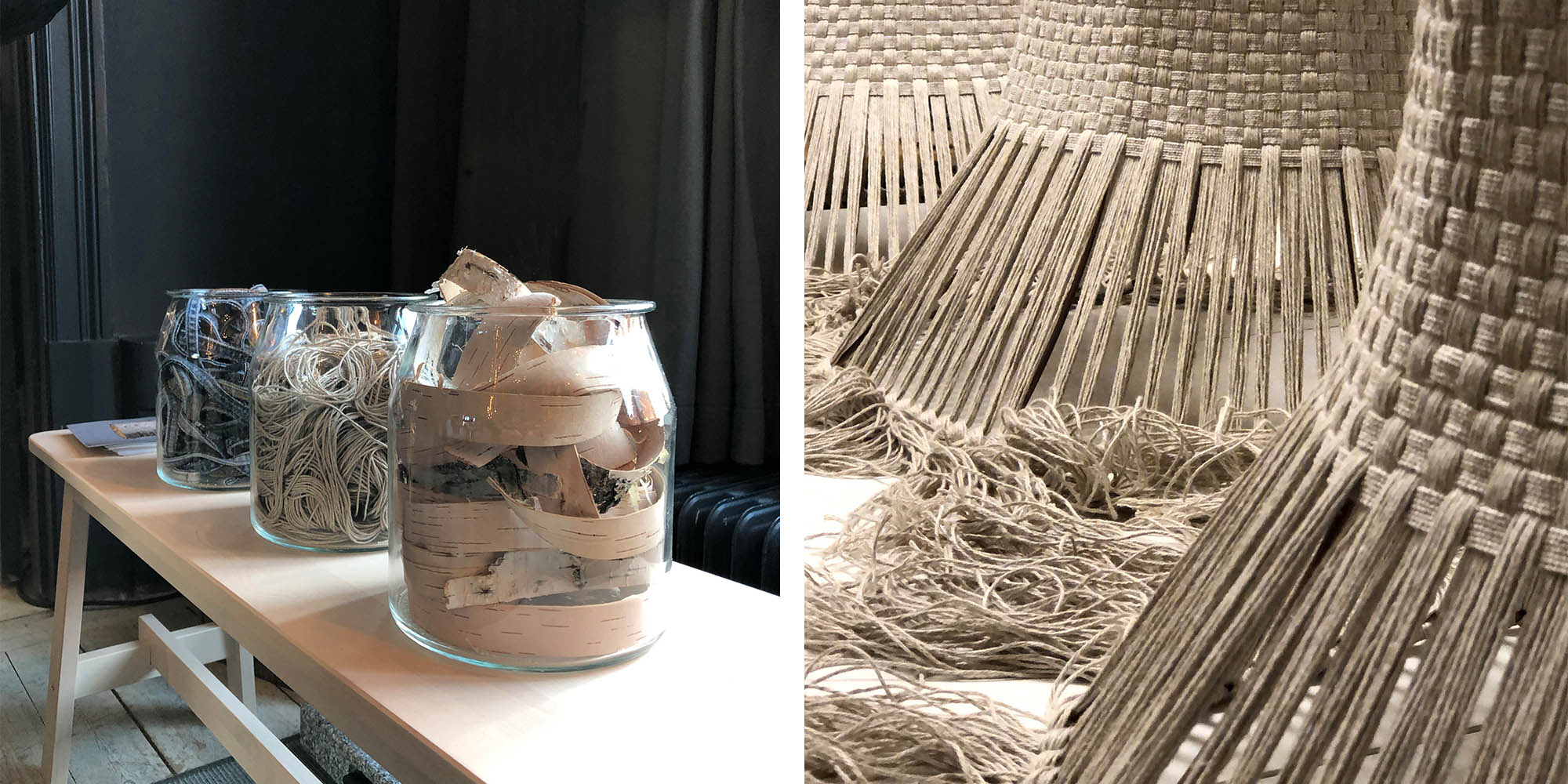
"We were asked to participate in a regional project in 2013–14, where waste material from the Red Cross's operations would be put to use," says Lill. "When asked, we both wanted this to be something that could be repeated, that would not just be a one-off event. Textiles are the material most donated and that are not always sold. We chose jeans to start with, and began experimenting with different patchworks with the fabric. We finally decided on denim seams, which we tried various ways braid, and from these tests, the first lamp shades emerged."
"In connection with this, we received an offer to work with the Swedish Prison and Probation Service in Borås, and we really wanted to give it a try," says Lill. "We were given access to a textile hall at the prison with a number of inmates. We established very good contact and succeeded with our project. We think it was because we turned things around and asked, 'what are they capable of doing?' instead of presenting something and saying 'can you sew this?' Our idea was well suited to the purpose of the whole project. The lamp was easy to make, they were had to work together and learn new techniques."
In each lamp there is a leather tag with a number so that you can see who made the lamp. From the start, SKRYTA was strict about the participants signing their lamps, so that they could feel pride and a sense of participation in what they had done.
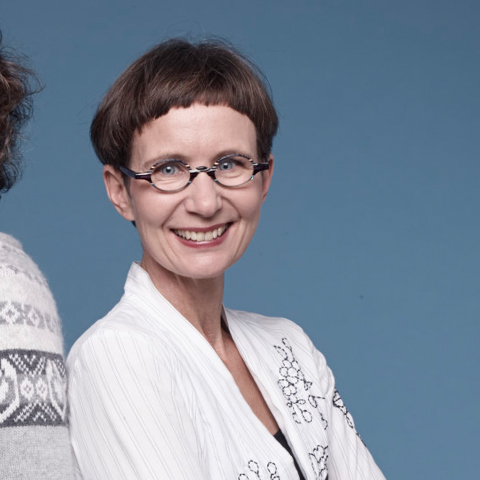 "The value for us in this work is greater than the monetary value. It can't be measured in money. " Lill O. Sjöberg, MFA designer
After the first project was finished and the Prison and Probation Service's textile workshop was closed down, the duo applied for another collaborative project. Maria had a contact at the help organisation Göteborgs Stadsmission, where there were workshops for job training, and the pieces then fell into place. Within a week of their first meeting with Stadsmission, they started making samples together. With SKRYTA's experience with the Prison and Probation Service, everyone involved was aware that certain demands could not be placed on those participating.
"And we continued with the reverse mindset – what can the participants do?" Maria explains. "So that it's always on the terms of the participants, which is incredibly rewarding. And without sacrificing the design."
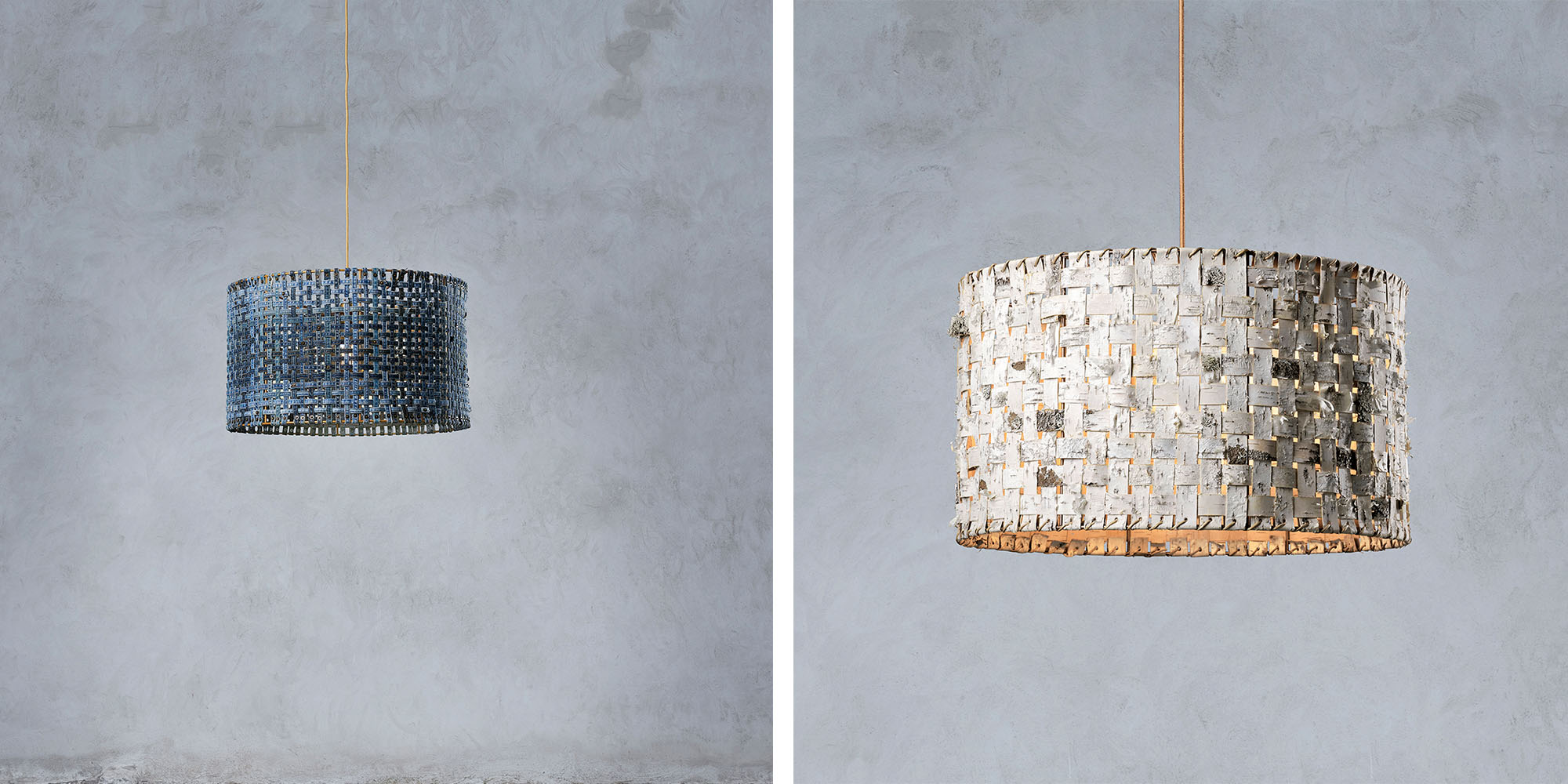
THE PROCESS OF A LAMP
When the designer duo adds new models to their collection, they work out the design, instructions and dimensions of the lamp shade. They then construct a lamp at a leisurely pace, taking their time. Job training is not rushed either.
"Making a lamp shade can take 6 to 9 hours, more or less a day's work if you have all the materials and tools in place," says Maria. "We think it should be like knitting, something that you can put aside and then take up again. With the start-up work for each new lamp shade version, we now have a fixed range. However, the products available can be adapted in colour and size to better suit various preferences. Each project is typically for 1 to 10 lamps. As production time can vary, production is just right for the way our company is set up."
"In addition to waste material, we also engage small local businesses. The company that makes the braids for the lamps, for example, is here in Gothenburg," says Lill. "We want to keep it that way for the entire process. It feels good when you've started thinking along those lines – how we can support the community and create awareness of the craft. It's another aspect of our product. We were quite nervous when we showed our lamps the first time, since delivery time is so long – things are a bit different. But it's just added our to story and reinforced our concept. You choose us because this is what you want."
GLOBAL AWARENESS
Among SKRYTA's suppliers are Göteborgs Stadsmissionen, an internationally known producer of birch-bark products in Fjärås and carpet manufacturer Kasthall in Kinna. All these local partners have provided insight and feedback that have helped the company move forward. Even far beyond Sweden's borders.
"We've had a showroom of sorts at Kasthall, where we installed the lamps for architect lunches but never taken them down," says Lill. "It's been an incredibly good platform for us, having the opportunity to show our wares to architects. We wanted their feedback – 'what do we need to think about?' They told us that we need to have more solutions than just E27, such as a light engine. We had to Google to find out what a light engine was! We found the Dino at Fagerhult and after that, we modified our lamp shade frame so that you could choose either the light engine or E27."
"We now have projects all over Europe with these lamps, and it has spread," says Maria. "We've just participated in an exhibition of Nordic sustainable companies at the Swedish Embassy in Berlin, which was great fun." There is completely different awareness nationally and internationally about this way of thinking.
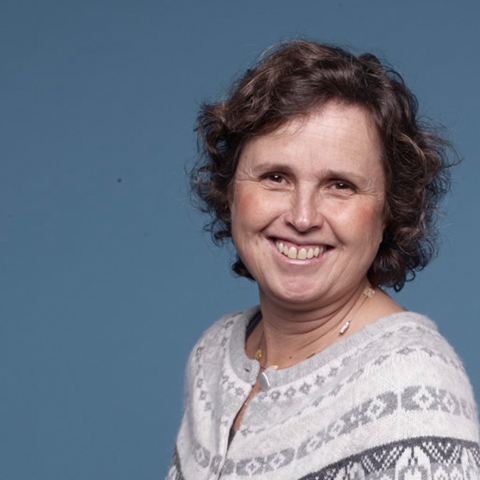 "We see it as a complement to other lighting. Our products are more about decoration, mood, embellishment – or storytelling." Maria Zeilon, textile designer
REUSE, REDUCE, RECYCLE
Although the duo has now been active with their work for almost 6 years, it is now that they are experiencing a real boost.
"During the past year, we're really seeing a different interest," says Maria. "The work we've put in is now starting to be more in tune with the rest of society. We were a bit ahead of our time – but now we're exactly where we need to be. For example, we won the sustainability award Nyttigaste Affären 2019 in collaboration with Ergon at Göteborgs Stadsmission with our socially sustainable business concept. (Link http://nyttigasteaffaren.se/2019-ars-vinnare/ )
"We're mostly targeting the public sector or businesses, and those who buy our products have no objections to our prices or production rates," says Lill. "That's because they've heard the story behind the lamp, and they consequently understand the value behind it. We want to be very clear about that, because we get a lot of requests from people who want to borrow our lights. But we want them to retain their intrinsic value, that they should not be taken out of their context."
In the future, SKRYTA would prefer to scale up the company rather than expand with other products.
"We've received queries from different customers who want larger quantities of our products, which means we have some decisions to make," says Maria. "We hope to work this out in a good way. But regardless of the project, we always try to be as circular as we can. We've even found a solution that allows us to reuse leftover materials from our lamps to make other lamps. That's probably the height of being circular!"
Gerelateerd nieuws
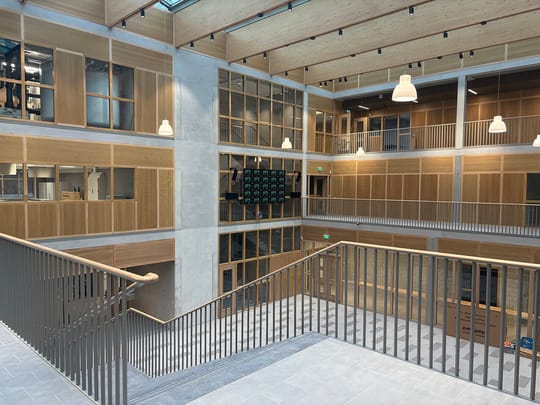
Schoonhovens College & Sporthal De Meent – Verlichting die rust, ritme en ruimte brengt
Het vernieuwde Schoonhovens College en de naastgelegen sporthal De Meent vormen samen een moderne leeromgeving waarin openheid, rust en functionaliteit centraal staan. De architectuur vroeg om een verlichtingsconcept dat deze kwaliteiten versterkt — licht dat ondersteunend is, nooit overheerst en naadloos aansluit bij het dagelijkse gebruik van leerlingen en docenten. Een lichtplan dat de onderwijsvisie ondersteunt Vanaf de ontwerpfase hebben we intensief meegedacht met architect en installatieadviseur om verlichting te creëren die het leren, bewegen en ontmoeten ondersteunt. Het uitgangspunt: licht moet bijdragen aan comfort, overzicht en veiligheid, in plaats van alleen verlichten. Rust en focus in de leslokalen De klaslokalen zijn ingericht met een rustige, gelijkmatige lichtverdeling die vermoeidheid vermindert en een prettig visueel klimaat creëert. Heldere werkvlakken, zachte overgangen en minimale verblinding zorgen voor een comfortabele leeromgeving gedurende de hele dag. Heldere routes en veilige verkeerszones De verkeersgebieden en algemene ruimten hebben een lichtbeeld dat direct overzicht geeft. Dankzij subtiele accenten en gelijkmatige downlighting bewegen leerlingen zich intuïtief en veilig door het gebouw, terwijl het licht de architectonische lijnen volgt. Verlichting afgestemd op specialistische functies Elke onderwijsvorm kent zijn eigen visuele behoeften. Daarom is voor de kooklokalen, technieklokalen, toiletten, technische ruimten en bergingen gekozen voor oplossingen die optimaal passen bij de functie — van hygiëne en robuustheid tot goede verticale verlichting en kleurweergave.Zo krijgt iedere ruimte precies het licht dat nodig is om prettig, veilig en efficiënt te werken. Een atrium dat verbindt Het grote atrium vormt het hart van het gebouw. De gekozen spanningsrailverlichting benadrukt de hoogte en openheid van deze centrale ruimte. Het licht volgt de architectonische structuur en creëert een uitnodigende sfeer voor ontmoeten, presenteren en pauzeren. Flexibiliteit is hierbij essentieel, zodat de school het atrium kan inzetten voor uiteenlopende activiteiten. Sporthal De Meent – licht voor dynamiek en prestaties De sporthal vroeg om een robuust en gelijkmatig lichtbeeld zonder schaduwen of hinderlijke reflecties. De oplossing zorgt voor optimale zichtbaarheid tijdens sportlessen en wedstrijden, met een plafondbeeld dat rustig oogt ondanks de hoogte en schaal van de ruimte. Een toekomstbestendig geheel Duurzaamheid en onderhoudsgemak waren belangrijke pijlers. De toegepaste verlichting draagt bij aan een energiezuinige exploitatie, lange levensduur en minimale onderhoudslast — essentieel voor een intensief gebruikt schoolgebouw. “Het atrium voelt nu echt als het hart van onze school. De flexibele verlichting versterkt de openheid van de ruimte en past zich moeiteloos aan bij activiteiten.”Wils van LeijdenProjectleider nieuwbouw a.i Schoonhovens College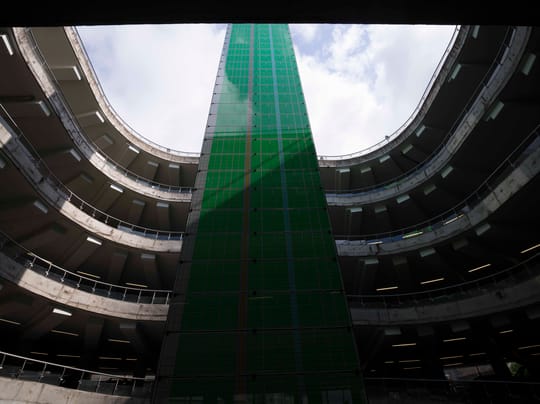
Slim hergebruik van 600 armaturen in parkeergarage Smedjan
Bij het upgraden van de verlichting in parkeergarage Smedjan in Jönköping in Zweden koos de eigenaar van het pand ervoor om te investeren in hergebruik in plaats van nieuwe armaturen aan te schaffen. De oplossing was Fagerhult ReLight. Door 618 op maat gemaakte armatuurframes te hergebruiken, kon de impact op het klimaat met maar liefst 6,3 ton CO₂e worden verminderd in vergelijking met nieuw ingekochte materialen. Parkeergarage Smedjan is uniek in zijn ontwerp, met spiraalvormige banen zonder traditionele vloeren en ingebouwde verlichtingsarmaturen in het plafond. De armaturen werden geïnstalleerd toen de parkeergarage begin jaren 2000 werd gebouwd. Toen de oude TL-buizen moesten worden vervangen door LEDs deed zich een probleem voor: de armatuurframes waren op maat gemaakt en aangepast aan het gegoten beton. "We moesten een oplossing vinden die werkte met de bestaande frames en afmetingen van de betonnen structuur, en ReLight maakte dat mogelijk," aldus Martin Hulthe Landberg, technisch beheerder bij de gemeente Jönköping. Image gallery - Smedjan Eenvoudig hergebruik met ReLight Het project begon met het opsturen van een paar armaturen naar Fagerhult, die ze gebruikte om een prototype te maken. Na enkele productontwikkelingsrondes en het uitwisselen van ideeën waren de nieuwe LED-kits klaar voor installatie. De installateurs konden eenvoudig het chassis vrijmaken en de verbeterde lichtbron op zijn plaats aanbrengen, waarbij de bestaande armatuurframes opnieuw werden gebruikt zonder dat ze uit de betonnen structuur hoefden te worden gehaald. "Tijdens de werkzaamheden hebben we de parkeergarage in fasen afgesloten en de installatie verliep soepel. We konden drie tot vier armaturen per uur wijzigen." Elk ReLight-project is gebaseerd op een duidelijke kerngedachte. De kenmerken, energie-efficiëntie en het lichtcomfort van het armatuur moeten voldoen aan dezelfde hoge normen voor kwaliteit, veiligheid en duurzaamheid als een nieuw armatuur. Lager verbruik en beter licht Zelfs voordat de armaturen werden geüpdatet, was er al een lichtregelsysteem. Ook dit kon worden hergebruikt en geïntegreerd in de nieuwe oplossing. Na de overstap op LEDs is het energieverbruik in de eerste zes maanden na ingebruikname met ongeveer 30% gedaald. "Verlichting is verantwoordelijk voor een groot deel van het energieverbruik, dus overstappen op LED had een zeer positief effect. We denken bovendien dat we een verdere verlaging zullen zien wanneer we over het hele jaar meten en we het systeem bijgesteld hebben. Tegelijkertijd hebben we een veel betere lichtomgeving in de parkeergarage gekregen en dat is al een winst op zich." Quote block - Martin Meer projecten op komst In totaal werden 618 armaturen hergebruikt, wat betekende dat er 2.609 kg plaatstaal kon worden hergebruikt. Dit komt overeen met een klimaatbesparing van 6.288 kg CO₂e – vergeleken met wanneer dezelfde hoeveelheid materiaal uit nieuwe grondstoffen zou zijn geproduceerd. De ReLight-oplossing is nu besteld voor een andere parkeergarage en de eigenaar van het pand ziet grote mogelijkheden om de impact van hun gebouwen op het klimaat te verminderen door hergebruik. “Er is vaak helemaal niets mis met het chassis of de kabels. We kunnen hetzelfde ontwerp en dezelfde standaard behouden, geld besparen en een duurzamere oplossing vinden. Dat voelt heel goed,” zegt Martin Hulthe Landberg. Image galley 2 - Smedjan Parkeergarage Smedjan - ReLight in cijfers 618 hergebruikte armaturen 2,6 ton gerecycled materiaal 6,3 ton CO₂e-besparing