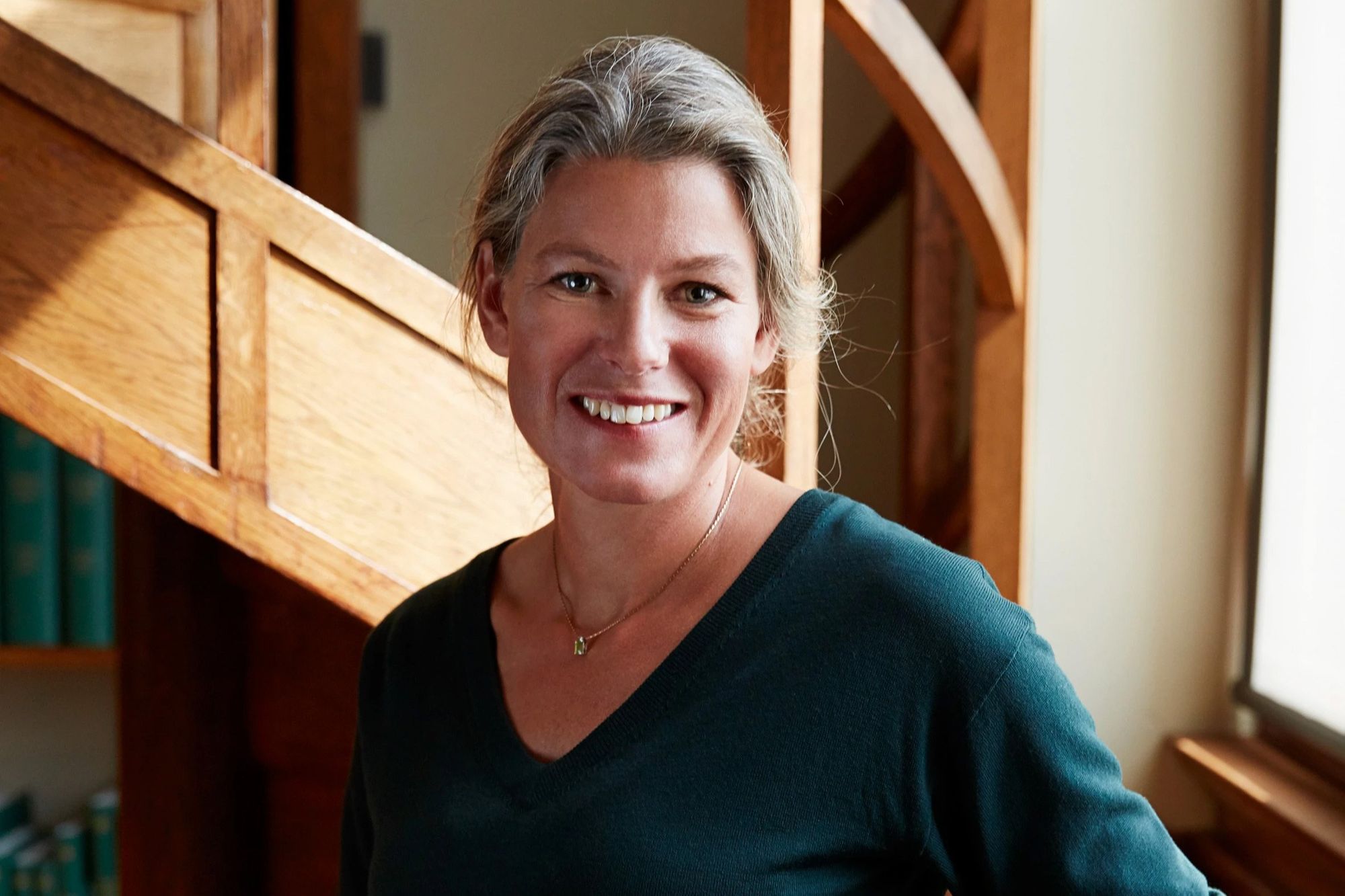
The Swedish designer and creative director Emma Olbers is on a mission – to design good products. Products that are good from all aspects, including being good for our planet. As one of the Swedish pioneers in sustainable design she is renowned as one of the furniture industry’s climate crusaders, an effort for which she has been awarded several prestigious awards.
”I believe that sustainability and product lifecycles are key concerns and core values that I strives to incorporate in my work. Those concerns can translate into using recyclable and reusable components, thinking carefully of which materials to use and of course avoiding the use of harmful substances in production altogether. An ultimate vision is to be able to create products and furniture that, after a long and rich furniture life, can go directly on the compost heap when they are scrapped”, she explains.
Where does it come from?
Born and raised in the Swedish countryside, Emma has a close connection to the agricultural tradition and the connection between natural resources and our everyday lives.
”I’ve always been environmental aware, but after attending a sustainability course at the Sustainable Fashion Academy in 2008, my commitment increased, and I started to work methodically in all my projects. It has been kind of a knowledge journey, trying to figure out facts and learning along the way. Concentration and determination needed”, she concludes.
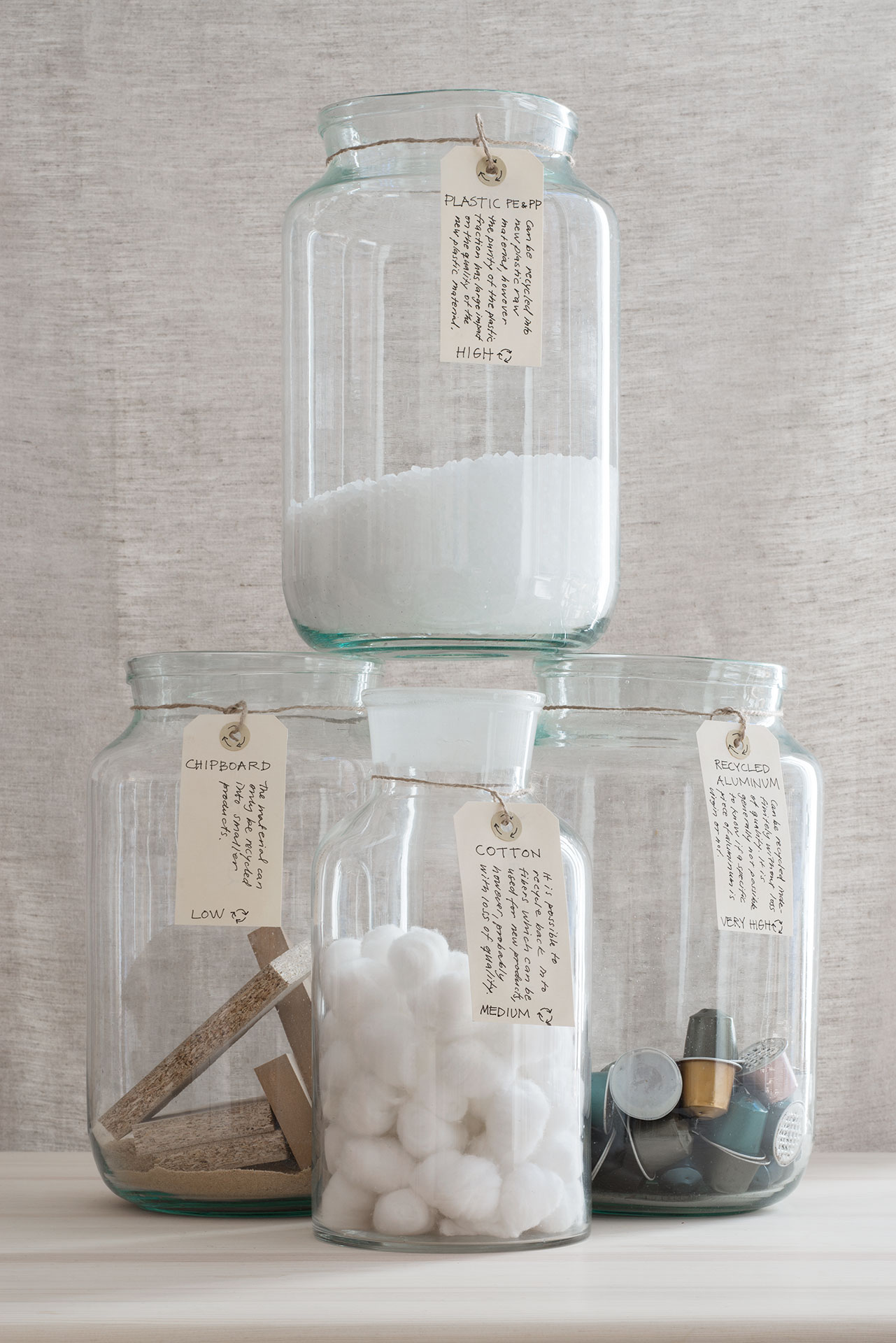
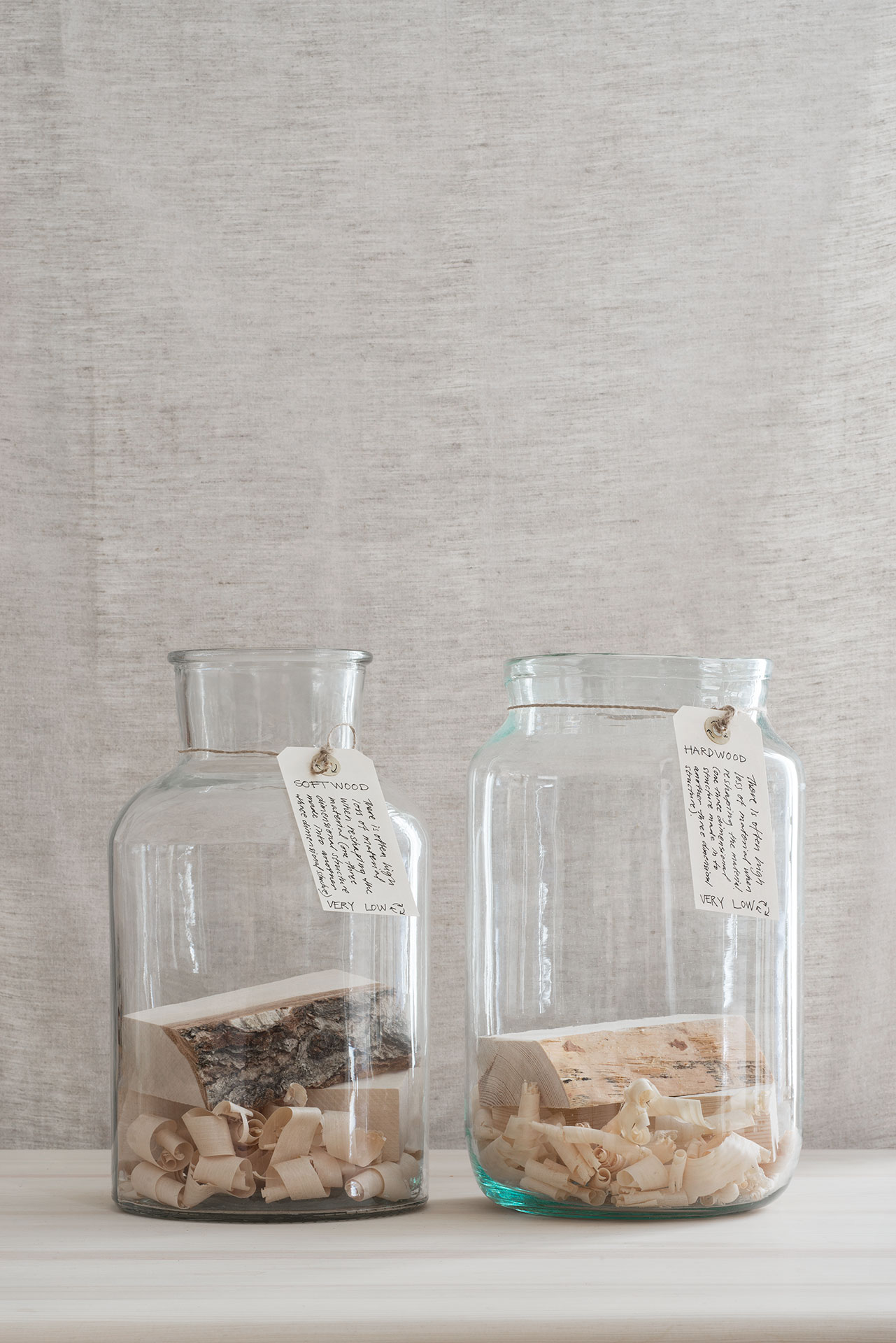
In 2015, while preparing the exhibition, ”Where does it come from, where does it go”, Emma decided to explore the different materials she is working with.
”It was planned as a trend exhibition, but I saw the possibility to share knowledge about how good furniture can contribute to sustainability and a better environment. I decided to team up with the Swedish Environmental Research Institute, IVL, and they helped me to do a life cycle analysis on the materials in my toolbox and to calculate and rank them according to their emissions of CO2e/kg material.”
While working with the exhibition, Emma learned that the most important we can do for the climate is to keep the carbon dioxide equivalents low. She decided to commit to the UN Paris Climate Summit’s goal to limit the global temperature rise to 1.5°C in her future work.
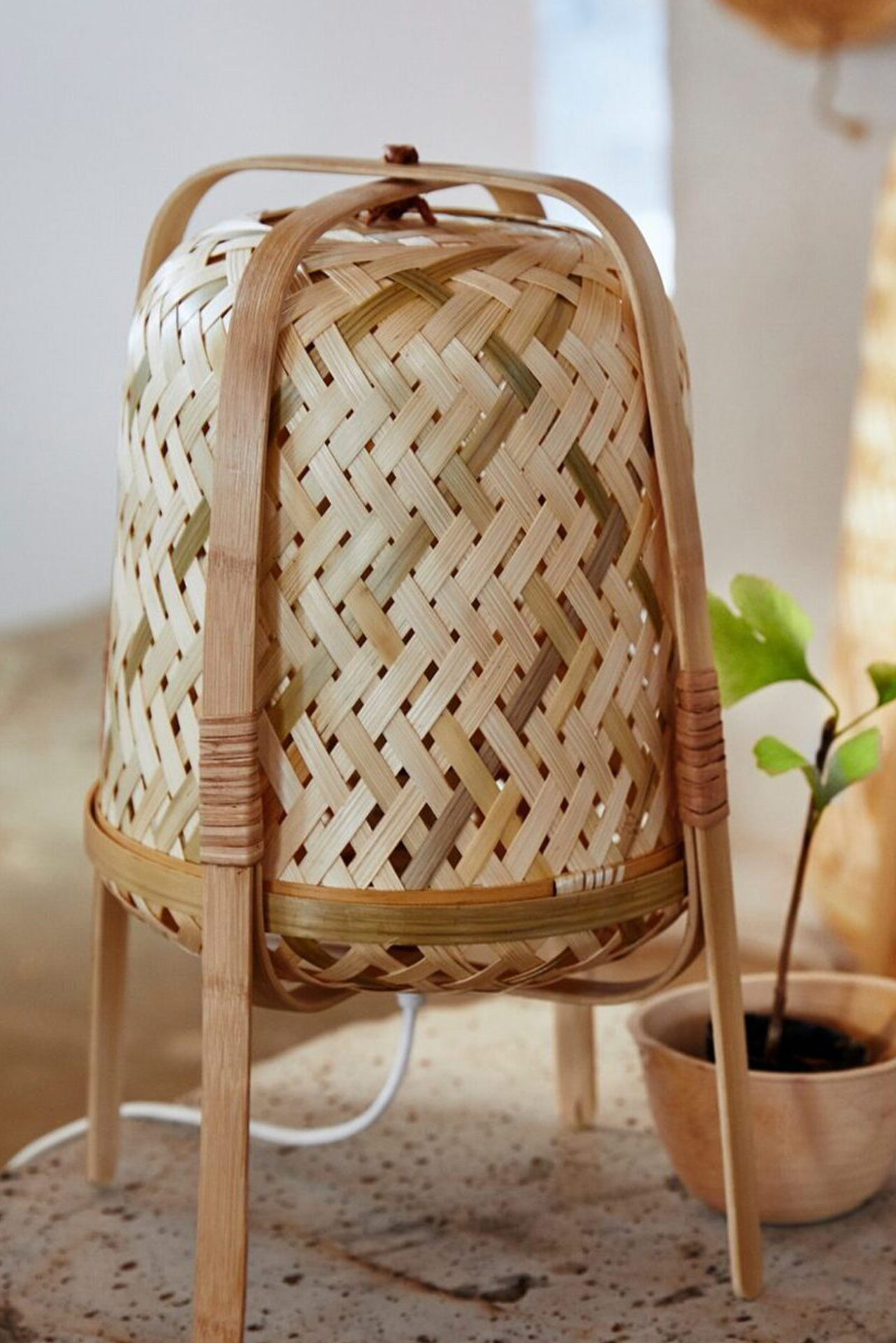
Bamboo lighting
”I discovered that certain wood, like birch and other leaf trees, had a less environmental impact. And bamboo, for example, turned out to be a positive material. When designing new products, I strive to use this knowledge, choosing materials that help minimize the furniture’s CO2 footprint. If I have to work with a material with a not so positive ranking, I make sure to use a very small amount. Actually, minimizing the quantity of material is important, no matter what kind of material you work with.”
Compared to lighting – where a great part of the environmental impact is related to the luminaire’s energy consumption while lit, furniture has its greatest environmental impact at the beginning and at the end of its lifespan. The choice of material is crucial, Emma states.
”From the perspective of being a designer, choosing the right materials and ensuring thoughtful production play a big part.”
For IKEA, Emma chose to design a new luminaire out of bamboo.
”When it comes to lighting, I think it is easy to just focus on the energy consumption, but of course, the body material also has a great impact. New technology also opens up for new ways to design lighting – not only regarding energy efficiency, but also when it comes to materials and production processes.”
 "I’ve always been backed by my customers and architects – now I experience that we also get more feedback from consumers. There is definitely a new awareness in the society." Emma Olbers, desginer and creative director
A national heritage
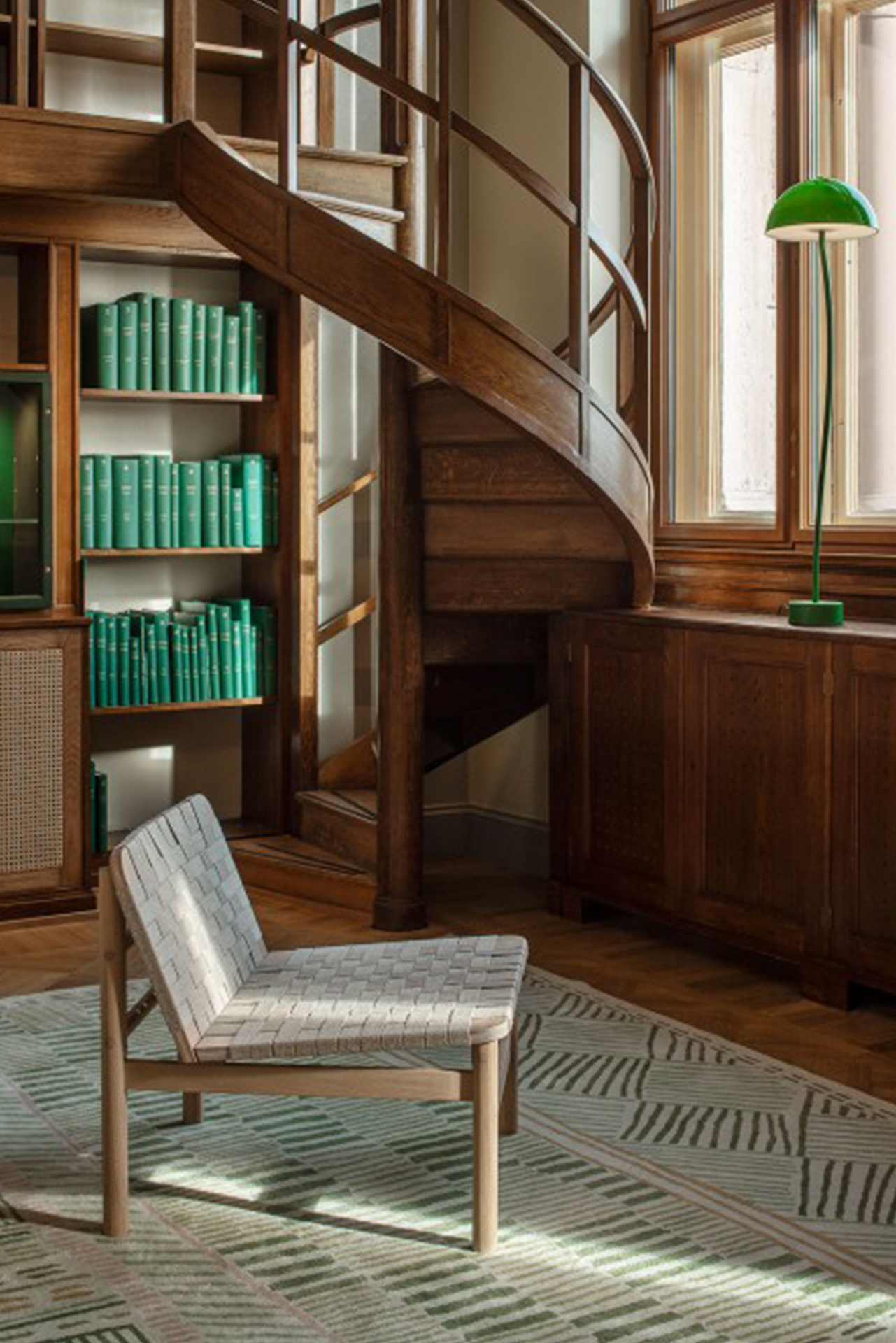
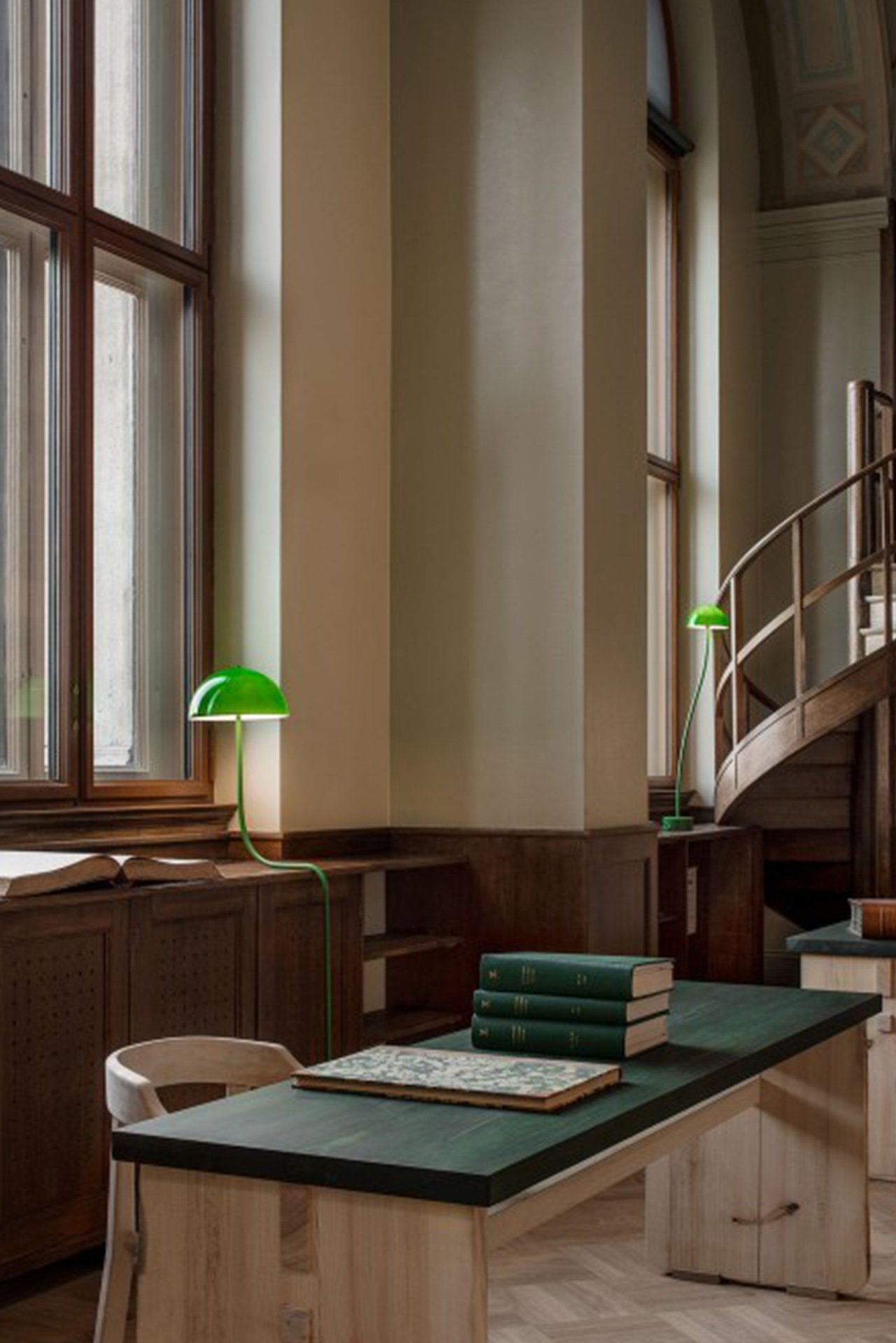
Emma’s methodology has also characterized one of her latest projects; redesigning the old library at the newly refurbished Swedish National Museum. A national heritage that now has been carefully refined with Emma’s contemporary Scandinavian design. Sustainability has run like a red thread throughout the project. Emma chose to use wooden materials with low CO2 footprints for the different chairs, and the seats were produced in fast growing climate positive hemp and seaweed. Carpets were produced in forest-based cellulose.
”As the library is a public environment, I once again had the opportunity to share the knowledge about different materials, their effects on the climate and how different surface treatments can be used to make the materials age beautifully. Using materials such as birch, and hemp and seaweed instead of leather in the seats helped us reduce CO2 emissions 300 times. Considering these chairs have a lifespan of 30 years it really makes a difference.”
Thoughts into action
Over the years Emma has been working with a number of different furniture producers – from multinationals such as IKEA, to small Swedish premium brands. From the start, she has experienced a positive attitude towards her sustainability initiative.
”I’ve always been backed by my customers and architects – now I experience that we also get more feedback from consumers. There is definitely a new awareness in the society and personally I think that there’s been an important change of attitude the last year. The impact of Swedish environmental influencer Greta Thunberg is a great example of this.”
It also seems like people are taking their thoughts into action.
”Buying second hand and mixing old furniture with new is a trend, as is investing in high quality furniture that has a long lifespan and can be inherited by generations. Personally, I love the thought of reusing old quality design furniture, myself I have some really nice 1960’s chairs in my office.”
This kind of long-term thinking can be applied on other industries.
”The fashion industry has started to reinvent itself, developing more sustainable solutions instead of suggesting that the customer should change the entire wardrobe four times a year. Swedish brand Filippa K, for example, has launched a Basics collection with classic basic items that will stand the wear of the eye and the everyday life for several seasons. The garments are produced in recycled or renewable materials.”
What to ask for
As a customer – what’s the most important requirement to set when investing in new interior design?
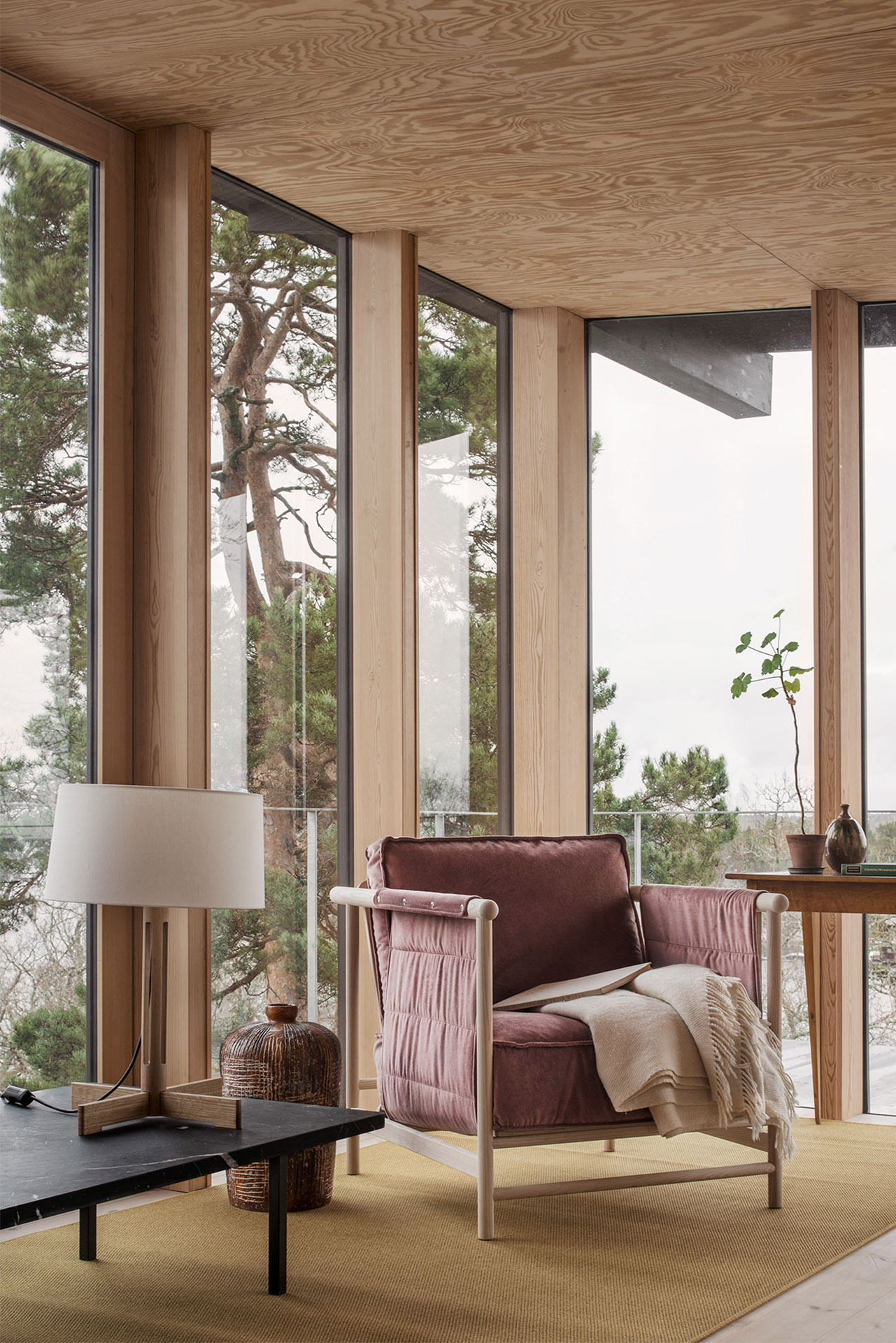
”No matter furniture or lighting, I think that the first step is to take the question seriously – and as said before, material is the key. When choosing furniture, the material stands for up to 50 percent of the environmental impact – I’d recommend you to take a look at the material index. Look for plant-based material like wood, or for recycled materials. Today many companies share this kind of information on their websites. Choose furniture with sustainable surface treatments that is easy to maintain and make the furniture age with pride. Ask the producer where the product is produced and if the energy used in the production facility is renewable. If there is a life cycle analysis available for the product it is a sign that the producer has made an effort.”
Gerelateerd nieuws

Als materiaal ertoe doet – Wrapped komt met een nieuwe kijk op duurzame verlichting
In een wereld waar elke gram materiaal en elke gram koolstofdioxide telt, duikt Wrapped op niet als een gewoon armatuur – maar als een statement. Het is Fagerhult's meest duurzame pendelarmatuur tot nu toe, en dat is niet per ongeluk zo gekomen. Elk detail, elke beslissing, elk materiaal werd gekozen met een duidelijk plan. Duurzaamheid begint vaak met een eenvoudige vraag: Waar is het van gemaakt? Voor Wrapped is het antwoord een trio materialen die elk hun eigen milieuverhaal met zich meedragen. Massief karton: een vertrouwde vriend Bij Fagerhult vond het eerste gebruik van massief karton in 2021 plaats met Multilume Re:Think. Maar voor Wrapped zijn we nog een stapje verder gegaan. Het materiaal bestaat uit een drielaagse constructie met een 100% gerecyclede kern, een hernieuwbare FSC-gecertificeerde toplaag en een dunne beschermende plastic folie. Een materiaal dat dus al voor 65% gerecycled is – en een 89% lagere CO₂-uitstoot heeft dan nieuw geëxtrudeerd aluminium. Fotogalerij: Massief karton Wrapped is gemaakt van biologisch massief karton, gerecycled aluminium en post-consumer gerecycled plastic. Plastic opnieuw vormgeven Plastic wordt vaak genoemd in gesprekken over duurzaamheid. Maar niet alle plastic wordt op dezelfde manier gemaakt. Wrapped gebruikt gerecycled consumentenplastic: het soort plastic dat al eerder een leven heeft geleid, misschien als shampoofles of voedselcontainer. Pre-consumer plastic daarentegen is anders, omdat het nooit eerder in de schappen heeft gestaan. Citaat: Josefin Carlsson Aluminium met een verleden Aan de binnenkant van Wrapped zitten twee structurele onderdelen die zijn gemaakt van 100% post-consumer gerecycled aluminium. Ook dit materiaal maakt deel uit van een circulaire infrastructuur – en heeft misschien ooit wel deel uitgemaakt van een Notor armatuur. In vergelijking met nieuw aluminium vermindert deze keuze de uitstoot met 83%. Ontworpen met minder - gemaakt om lang mee te gaan Duurzaamheid gaat echter niet alleen over wat je gebruikt - maar ook over hoeveel. Met slechts 900 mm is Wrapped korter dan een conventioneel pendelarmatuur van 1200 mm. Alleen al die vermindering van de afmetingen verlaagt de impact op het klimaat met 25%, zonder afbreuk te doen aan de verlichtingsprestaties van het armatuur. Josefin Carlsson vergelijkt de klimaatimpact van producten in het Fagerhult Experience Centre in Habo. Om de impact van Wrapped te begrijpen, helpt het om te kijken waar we vandaan komen. In 2021 had Notor 65, gemaakt van nieuw aluminium, een klimaatimpact van 34 kg CO₂e. In 2024, met 75% gerecycled aluminium, was dat getal teruggebracht tot 25 kg CO₂e. En Wrapped komt nu uit op slechts ongeveer 12 kg CO₂e. "Dat is een derde van de oorspronkelijke Notor 65 en de helft van de huidige uitvoering, en een stille revolutie, gemeten in kilogrammen CO₂e," zegt Josefin Carlsson. Na een lange levensduur; die wordt geschat op 100.000 uur, is Wrapped klaar voor een al even duurzame exit. Door het ontwerp is het eenvoudig te demonteren, waarbij elk materiaal recyclebaar is en klaar voor een volgend hoofdstuk in de circulaire economie.
De cirkel sluiten – en de levenscyclus van armaturen verlengen
Het concept van het opnieuw gebruiken van oude armaturen om materiaal en energie te besparen wordt steeds populairder. Om weer opnieuw te kunnen stralen heeft een verouderd armatuur soms alleen maar wat liefdevolle verzorging en technische vaardigheden nodig. We ontmoetten Emma Hallman, Mathilda Holl en Andreas Ekslätt, het team achter ReLight bij Fagerhult, om te praten over de uitdagingen die gepaard gaan bij het vinden van oplossingen om oude armaturen naar de toekomst te voeren. Bij Fagerhult beïnvloedt een diepgewortelde innovatiecultuur alle aspecten van het werk. Dit komt mogelijk voort uit de mentaliteit van oprichter Bertil Svensson om problemen op te lossen met soms kleine middelen - en nieuwsgierigheid en toewijding. In tegenstelling tot nu was duurzaamheid toen echt geen modewoord. Het bewust gebruiken van onze middelen en het streven naar een hoge kwaliteit zijn echter altijd hoekstenen geweest voor Fagerhult. Vandaag de dag heeft een nieuwe focus op circulariteit ons aangespoord om ons denken uit te dagen en ons bewust gemaakt van het vinden van duurzame oplossingen. De afdeling Bespoke Lighting Solutions (BLS) van Fagerhult ontwikkelt al vele jaren unieke armaturen en aangepaste oplossingen. Dus het opknappen en bijwerken van oude armaturen is niet onbekend voor ons. Maar de ambitie om oude armaturen opnieuw te gebruiken en te herbouwen om de klimaatimpact te verminderen is in de loop der tijd wel toegenomen. In dit proces worden het ontwerp en de technologie van gisteren bijgewerkt tot de vooruitgang van vandaag om te voldoen aan de eisen van morgen. Citaat ReLight uw oude armaturen Voor het ReLight-team van Fagerhult bestaan er geen ongebruikelijke vragen of onmogelijke oplossingen. Dagelijks behandelen ze vragen uit de markten van Fagerhult over speciaal ontwikkelde verlichtingsoplossingen voor projecten. Het is een complex proces, maar gedurende die tijd hebben ze geleerd dat sommige projecten ideaal zijn voor het hergebruik van oude armaturen in plaats van te investeren in nieuwe. “Voor ons vormen de kwaliteit van het armatuur op het gebied van verlichtingscomfort, veiligheid en esthetiek de kern van elk ReLight-project. We berekenen ook grondig of - en hoeveel - we de totale klimaatimpact van het armatuur gedurende de levenscyclus kunnen verminderen. Als aan al deze eisen is voldaan, beginnen we met het ontwikkelen en ontwerpen van een nieuwe kit”, zegt Emma Hallman. Binnen ReLight hebben we de uitgesproken wilskracht om materialen en energie te besparen en een milieu-inspanning te leveren door de armaturen te moderniseren. Niet alle oude armaturen gaan echter eeuwig mee; sommige zijn verouderd en dan is het beter om te recyclen dan te refurbishen. Img “Voor ons vormen de kwaliteiten van de armatuur op het gebied van lichtcomfort, veiligheid en esthetiek de kern van elk ReLight-project. Op verzoek berekenen we ook of – en hoeveel – we de totale klimaatimpact van de armatuur gedurende de hele levenscyclus kunnen verminderen”, zegt Emma Hallman. Bij Fagerhult zijn veiligheid en kwaliteit de rode draad die alle producten combineren. En ReLight is daarop geen uitzondering. Gedurende het proces zijn CE-markering en testen cruciale factoren. "Om de algehele kwaliteit te garanderen, wordt de vernieuwde armatuur vóór levering volledig CE-gemarkeerd. We willen ook de installatie ter plaatse zowel soepel als snel laten verlopen, en de nieuwe kit benadert een complete armatuur zo dicht mogelijk”, zegt Andreas Ekslätt.