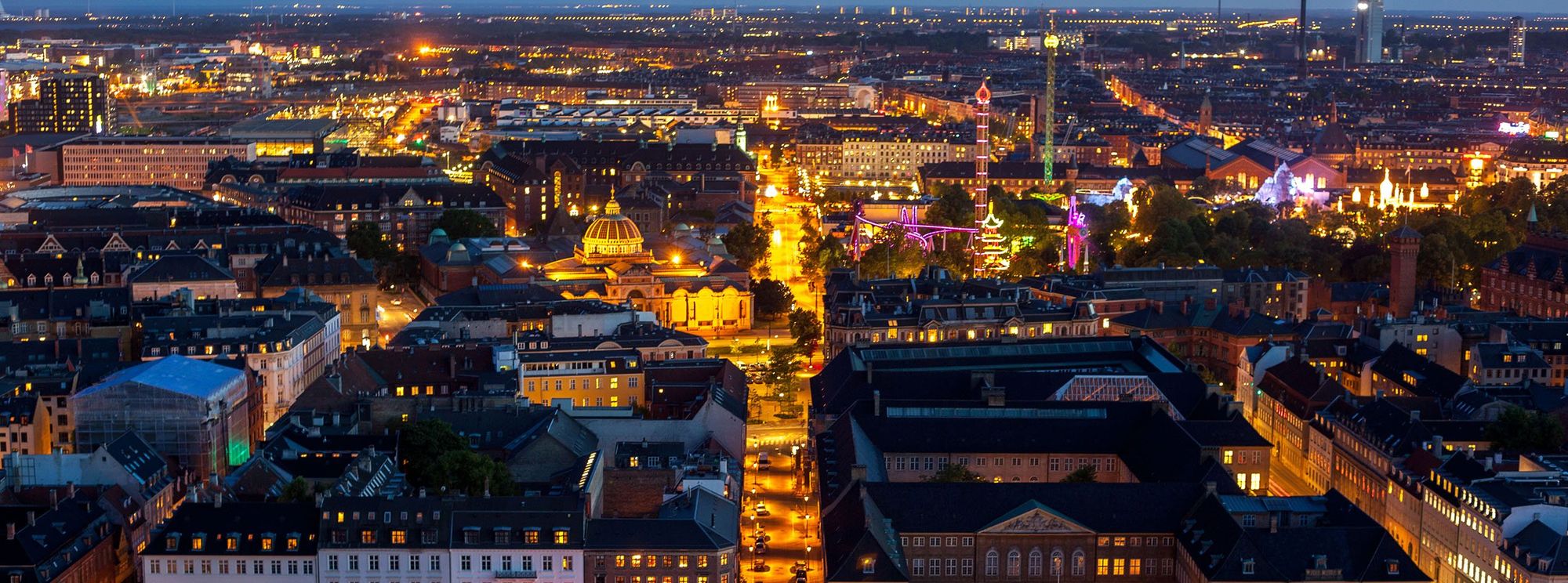
Every city wants to be one – but what is it? Opinions on how a “smart city” should be are as many as the aspirants, though there is an end result which counts for them all. By using modern technologies knitted together, the smart city is a step towards a more sustainable society.
The development is driven by urbanisation. In Metropolitan areas the concept is a way to meet the pressures resulting from an increasing population. The EU is an enthusiastic promoter of the movement and is running its own “Smart Cities Initiative” in order to accelerate the transformation of cities into fossil-free and low-resource communities.
Holistic approach
Copenhagen is considered a frontrunner and was recently awarded the Smart Cities Award for its “Copenhagen Connecting”-project.
“It’s extremely important that you don’t embark on this kind of project for technology’s own sake. A smart city should be created for the benefit of the citizens, to improve their quality of life. For Copenhagen this is also an important step to realise our vision of a C02-neutral city in 2025”, says Søren Kvist, spokesperson and Project Manager at Copenhagen Solutions Lab, the City of Copenhagens incubator for smart city initiatives.
Copenhagen Solutions Lab works cross-departmental with the city’s administration, in partnership with local and international companies and knowledge institutions. This task group provides a 360 sounding board to evoke and test new ideas, technologies and solutions to create a more liveable city in Copenhagen.
“The smart city cannot be seen solely as a matter for the community. We need to interact with many different stakeholders: universities, business life and companies related to energy, water, gas, telecom, sanitation and so on… The realisation of a smart city needs a holistic approach and we’ve found this is an easier way to communicate.”
Lighting as infrastructure
And even if the potential is endless, the connected society has to be born according to a plan. Before heading off, experts were hired to identify possibilities and socio-economic effects. Right now, Copenhagen Connecting is entering a new phase. A test area is built for evaluating different solutions and techniques.
“We’re not first to the ball, many of these technologies have been tried in other cities – but we need to make sure that they’ll work in our Nordic climate and environment”, says Søren Kvist.
An innovative twist is how Copenhagen is planning to use outdoor lighting as infrastructure for the smart initiative. Street lighting is everywhere and every luminaire is connected with electricity, something that’s crucial to get all this tech stuff working. In the coming years 20 000 existing streetlights will also be changed into LEDs.
“Of course it’s a good thing for the environment as they are very energy efficient. But it’s interesting how lighting is also turning into an infrastructure solution, as a vital part when building connectivity”, says Søren Kvist.
Every LED-module can be connected to the city’s IT-system where they can interact with each other. The lighting poles are also excellent for housing sensor equipment for water, wind and pollution as well as for traffic sensors.
“LED-luminaires also have an important advantage as they are always operating. They’re never totally switched off, only dimmed to extremely low levels. This means that other equipment will have power supply, regardless of the time of day.”

From traffic to flooding
The ideas are flowing.
“Traffic is a core subject. For example, we can use the system to generate data for traffic lights, in order to create green waves for car drivers, cyclists and pedestrians. This means reduced pollution related to red light starts and stops and a safer traffic environment with less accidents. But it also saves valuable time for our citizens. Parking is crucial. If the system can be used to guide drivers directly to a free parking lot, it will save a lot of driving, irritation and CO2”, Søren Kvist explains.
“Sanitation is another area that we are looking into. With the help of ‘intelligent trashbins’ we can keep the city clean and plan our routes in a more efficient way. Recently we’ve had some problems with heavy rains and flooding and this system could provide us with the information to guide our efforts”
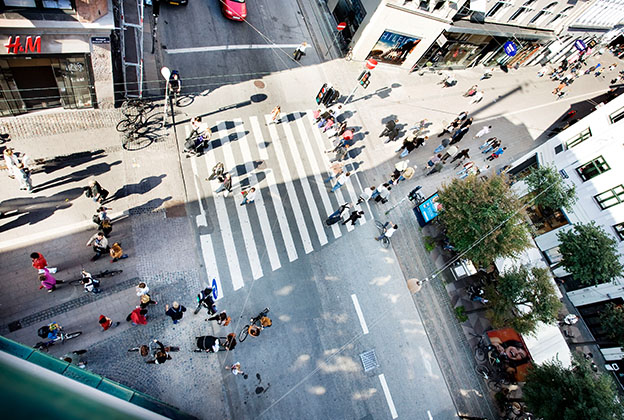
Some of the ideas are already up and running as the municipality of Copenhagen is gifted with an enterprising traffic department. For instance, one has developed a ‘green wave’ application helping commercial traffic to avoid red lights. Copenhagen is known for its well-developed cycling infrastructure and some routes are paved with LEDs shifting between red and green light. This helps the cyclists to keep the right speed and avoid unnecessary stops.
A sharing society
So, what can the lighting industry do to keep up the pace?
“Actually, I think the industry is doing a lot. After many years focusing solely on energy efficiency, producers have started to develop products adapted to network technology. I think it is important to continue on this path, focusing on connectivity and Internet of Things. For us it is also vital that developers within the lighting industry choose to work with open technology”, says Søren Kvist.
Open technology means flexibility and the possibility to share information for the greater good.
“Our vision is to generate open data that can be shared with local entrepreneurs and companies with business ideas that contribute to the smart city and peoples wellbeing. Of course, we carefully consider integrity issues at all times and living in a big data era we have to design all smart city solutions with citizens privacy rights in mind”.
Gerelateerd nieuws

Het flexibele kantoor – een langetermijninvestering voor vastgoedeigenaren
Als vastgoedeigenaar is het voldoen aan de behoeften van huurders en het opzetten van duurzaam en soepel beheer vaak een complexe opgave. Met Control Track Versa worden nieuwe en duurzame mogelijkheden gecreëerd om het proces te stroomlijnen en huurders goede verlichting te bieden. Petter Berg werkt met pre-sales voor uitgebreide vastgoedprojecten bij Fagerhult in Oslo. Discussies met klanten en prominentere vastgoedeigenaren draaien vaak om het probleem van het voldoen aan meerdere belangen, zowel tijdens het bouwproces als nadat de huurders zijn ingetrokken. “De belangen van de verschillende betrokkenen botsen vaak ten koste van de verlichtingskwaliteit. En dan is niemand tevreden over het proces of het resultaat”, zegt Petter Berg, Lighting Adviser Manager bij Fagerhult. Petter Berg quote Petter Berg heeft de ontwikkeling van Control Track Versa nauwlettend gevolgd en ziet toekomstige kansen voor vastgoedeigenaren. Vooral zij die zich actief met hergebruik en duurzaamheid bezighouden en aantrekkelijke omgevingen willen creëren voor bestaande en toekomstige huurders, kunnen snel winstgevendheid bereiken in grotere projecten. “Het is een enorm duurzaamheidsvoordeel om als vastgoedeigenaar huurders een goede verlichting te kunnen bieden zonder het hele systeem te hoeven vervangen wanneer iemand verhuist. Met Control Track Versa kan elk armatuur gedurende de gehele levenscyclus worden hergebruikt. Daarnaast kan de rail zelf een nieuwe vorm krijgen als het kantoor van ontwerp verandert.” Eigenaren van onroerend goed kunnen profiteren van de voordelen van Control Track Versa tijdens de bouw. De rail kan eerder tijdens de bouw worden geïnstalleerd en is volledig onafhankelijk van de toekomstige meubels en de armaturen die de huurder kiest. “Het feit dat de installatie in principe op elk moment kan worden uitgevoerd en niet afhankelijk is van het opruimen van bouwstof in het pand of dat het plaatsvindt vlak voordat het pand gereed is, maakt een groot verschil. Het is een ingenieuze manier om tijd te winnen”, zegt Petter Berg. Collage three rooms - same Versa solution Tegelijkertijd kunnen installaties worden geplaatst in vaste omgevingen zoals gangen, liften, toiletten en openbare ruimtes die niet worden beïnvloed door de keuzes van de huurders. Met minder installatiepunten verloopt de installatie ook sneller en eenvoudiger. “De rail heeft een flexibel 230V-systeem, dus er zijn geen kabelladders of extra bedrading nodig. Dit maakt Control Track Versa ook zeer geschikt voor open plafonds. Omdat het volledig onafhankelijk is, is het systeem ook toekomstbestendig. Elk armatuur kan worden aangevuld met een sensor voor slimme verlichtingsregeling.” Volgens Petter Berg overbrugt Control Track Versa de kloof tussen elektrotechnisch adviseurs en interieurontwerpers. Het is voor hem duidelijk dat de rail zeer nuttig kan zijn bij grotere bouwprojecten waar veel onderdelen op elkaar aan moeten sluiten. “Wanneer we samenwerken, pakt dat vaak heel goed uit. Het is duidelijk dat er een partij nodig is die de ontwikkelaar, elektrotechnisch adviseur en interieurontwerper verbindt, en dat is waar Control Track Versa nu een belangrijke rol speelt voor ons bij Fagerhult.”