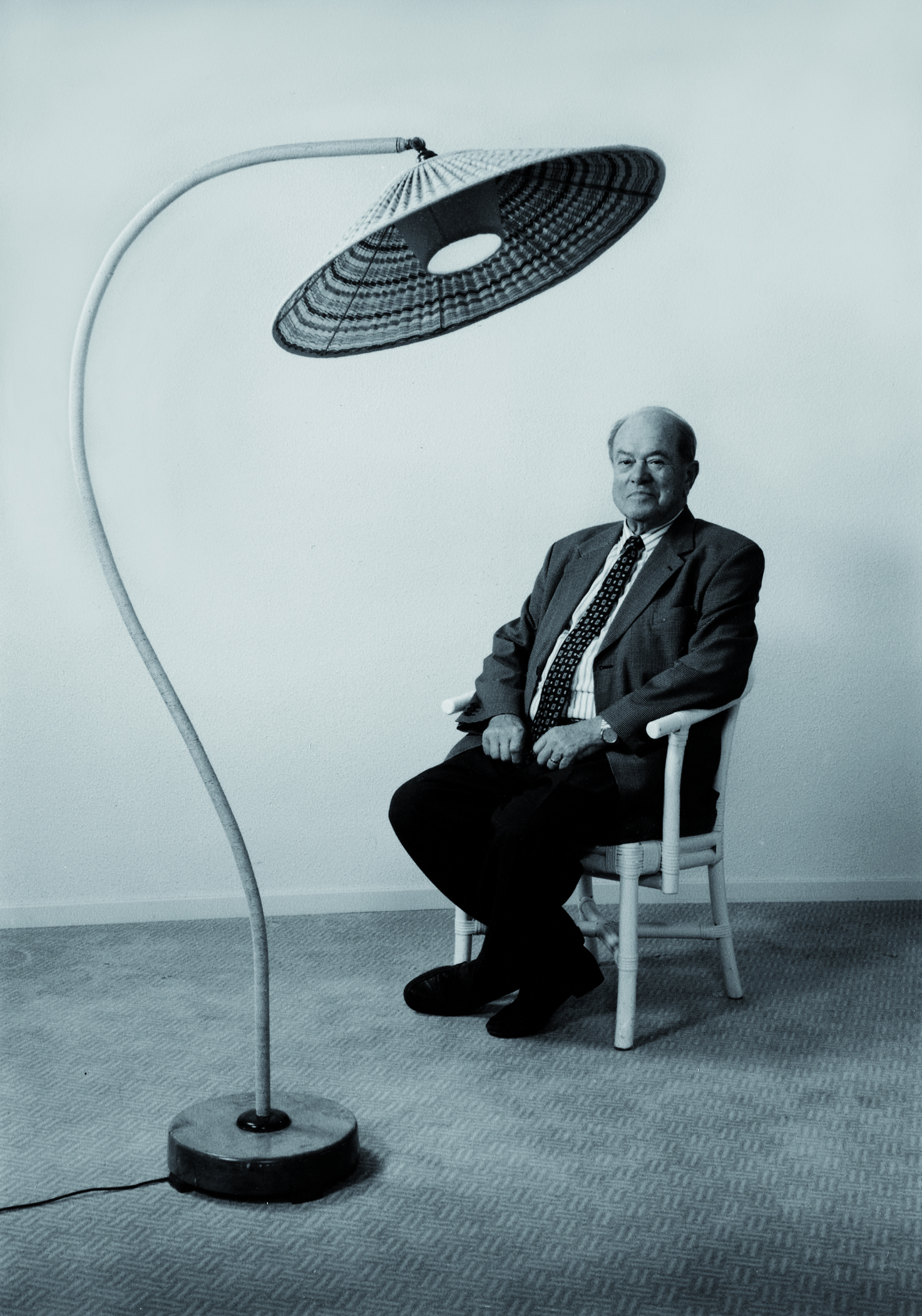
Our story begins at Christmas time. The year was 1943 and a young electrician, Bertil Svensson, had a brilliant idea for a Christmas gift for his mum. He bought an 18.6 mm light-gauge conduit, a bit of cord, a lamp holder and a mains plug from his employer. He asked a local carpenter to turn him a birchwood lamp foot, and found a 60 cm lampshade at the local department store. And then he sat down to assemble his very first light fixture.
The result, a floor lamp in the shape of a question mark, was a big hit, brightening his mother’s crafts room on long, dark winter days.
“Doing needlework by the light of a floor lamp was not very common in those days,” Bertil said. “I didn’t spend a lot of money making that lamp, and when I saw what similar ones cost in the shops, I got the idea that maybe I could make a living making lamps.”
“That was my whole idea. I had no thought at all about organisation, sales technique or distribution.”
That would soon change.
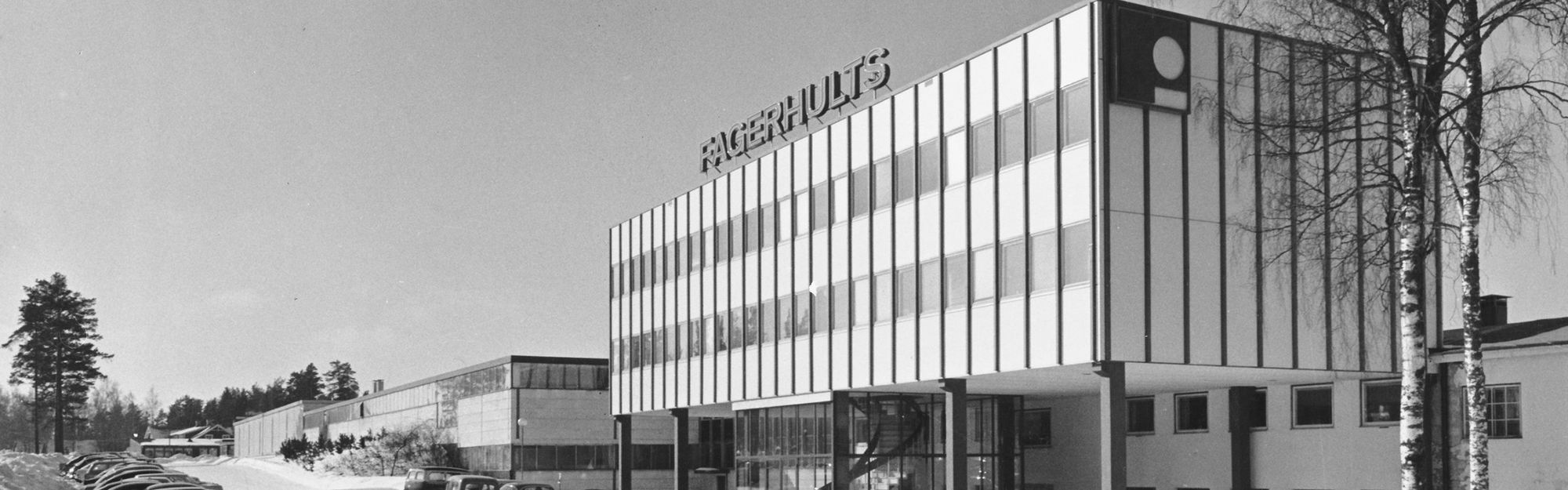
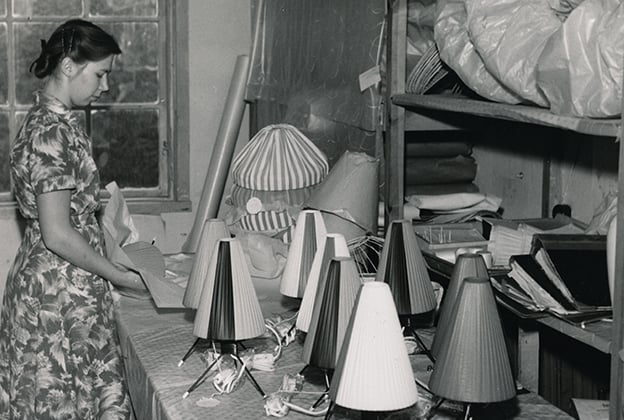
In 1945, Bertil Svensson teamed up with two childhood friends from Fagerhult. Helmer Andersson was a clever designer and production technician at Husqvarna. Harald Ulfenborg was a furniture manufacturer under the Ulferts brand. Together they started Fagerhults Lampindustri in an outbuilding on Bertil’s family farm in Fagerhult.
Bertil’s inventiveness, Helmer’s technological genius and Harald’s contacts in the furniture industry became the foundation of a highly successful home lighting company. It was not an easy time. Europe lay in tatters after the Second World War and it was hard to obtain materials. But thanks to its neutrality policy, Sweden was in fairly good shape, and soon its industry was running at full tilt.
In the beginning, Fagerhult focused on the home market, which was fuelled by the new Swedish welfare model. By autumn 1947, the company had outgrown the outbuilding and it moved to a newly built 98 m² factory. Since then that factory has been renovated and expanded more than 40 times, now boasting 55.000 m².
From the very first lamp, Bertil focused on meeting a human need and solving a problem. Using new materials and solutions, he had found a way to create added value for the user and profitability in his own production. An innovative approach that came to shape Fagerhult’s future activities and became a part of the company’s DNA.
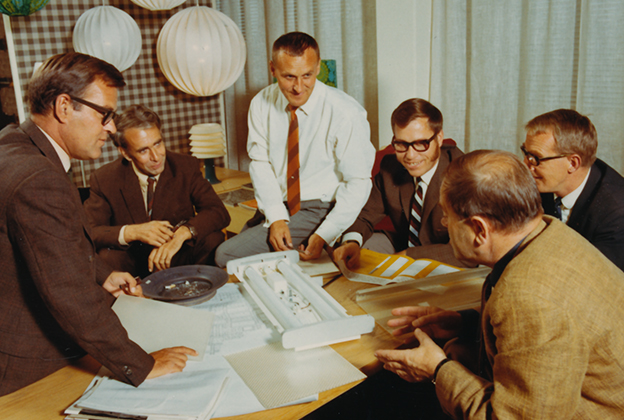
In 1948, Bertil discovered that there was a new light source – a fluorescent tube that produced a great amount of light at very low cost. Certain that this was the light solution of the future, he developed an entire collection of fluorescent-tube luminaires. A decade later, this paid off in Fagerhult’s first big prestigious order: 5.000 specially designed luminaires for the iconic functionalist National Tax Board building in Stockholm, “Skatteskrapan”. Fagerhult moved into the contract market, quickly becoming a key player in public interiors.
In the coming decades, the company grew steadily in the technical lighting field, although the focus remained on developing and manufacturing home lighting until well into the 1990s. By this time, Fagerhult’s signature traits of inquisitiveness and industriousness had resulted in several innovations that changed the lives of millions of people. The innovative plastic luminaire Fabian, of which more than 4 million were sold, and recessed downlights in the form of the popular Pleiad model, are just a few examples.
The courage to develop completely new luminaires based on relatively untested light sources is a shining trend throughout the years. When T5 fluorescent tubes were launched on the market, Fagerhult was one of the first companies to develop luminaires designed for the new light source. Fagerhult’s T5 luminaires combined the T5 light source, electronic controls and effective reflector materials that revolutionised the lighting industry and set a new standard for energy efficiency. When LED entered the scene 15 years later, the company followed the same path, generating as much light as possible, with no compromises.
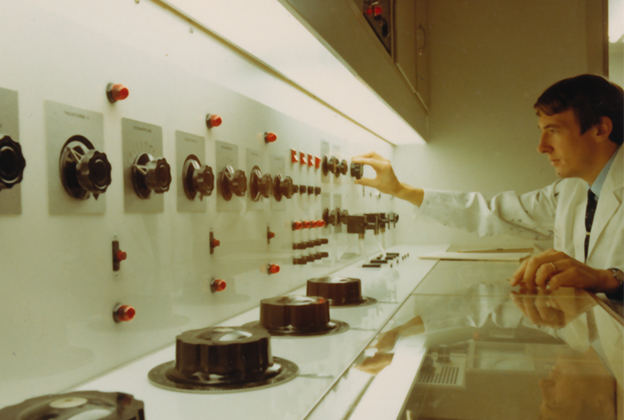
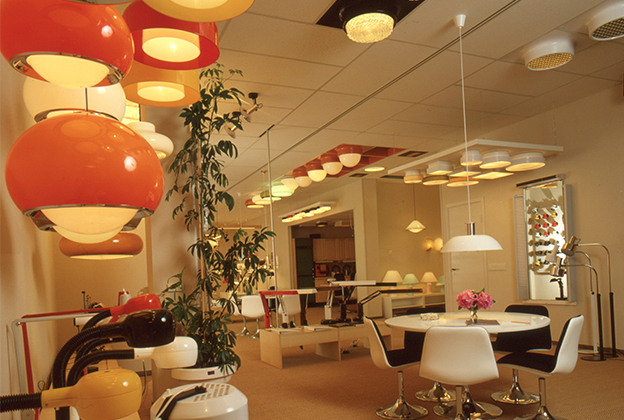
The current head of development at Fagerhult, Leif Norrby, has been a part of the journey since 1978. He states that this uncompromising drive to offer the most benefit for users is still the defining characteristic of Fagerhult luminaires:
“Delivering superior energy efficiency without compromising on glare reduction and visual comfort is our trademark. Working closely with leading research institutes has given us an advantage in developing proactive solutions – lights that make people happier, more alert and more active. Our sustainability concept doesn’t just cover energy conservation, environmental impact and working conditions; it embraces the entire human context.”
In 1969, Bertil – who had been the company’s CEO since 1949 – was invited to take over all shares in the company. This was the beginning of an international expansion that occurred both organically and through acquisitions. In the coming decade, Fagerhult established sales offices in Denmark, Norway, the Netherlands and Germany. It also bought out its Swedish competitor Ateljé Lyktan. In 1984, Bertil left the office of CEO.
A few years later, Fagerhult was acquired by the Swedish Almedahl Group. In 1993 it was time for the next acquisition, when the investment company Latour, under the leadership of the Douglas family, took over all shares in the corporate group. Latour gave Fagerhult another long-term and committed owner – and the Douglas family have remained a major owner even after Fagerhult’s introduction to the Stockholm Stock Exchange in 1997. Not long after that, Fagerhult established offices in the UK and the group for the first time surpassed SEK 1 billion in sales.
The turn of the millennium kicked off a rapid expansion, and in 2005 Fagerhult opened its big production facility in Suzhou in China. Through several aggressive acquisitions, Fagerhult became one of the big names in the European lighting industry, not just in terms of technical development, but also in market share. Thanks to the Finnish company, Fagerhult began making inroads in the Russian market, alongside establishments and acquisitions in Central and Eastern Europe.
Among the biggest acquisitions were Whitecroft Lighting in the UK, Project Lighting in Ireland, Waco in Belgium and Eagle Lighting in Australia. Two other interesting acquisitions – LampGustaf in Sweden with its subsidiary Elenco and LTS in Germany – came to be the cornerstones of Fagerhult’s extensive focus on shop lighting and outdoor lighting. The operations were divided into three business units with their own manufacturing and development: Fagerhult Professional, Fagerhult Retail and Fagerhult Outdoor.
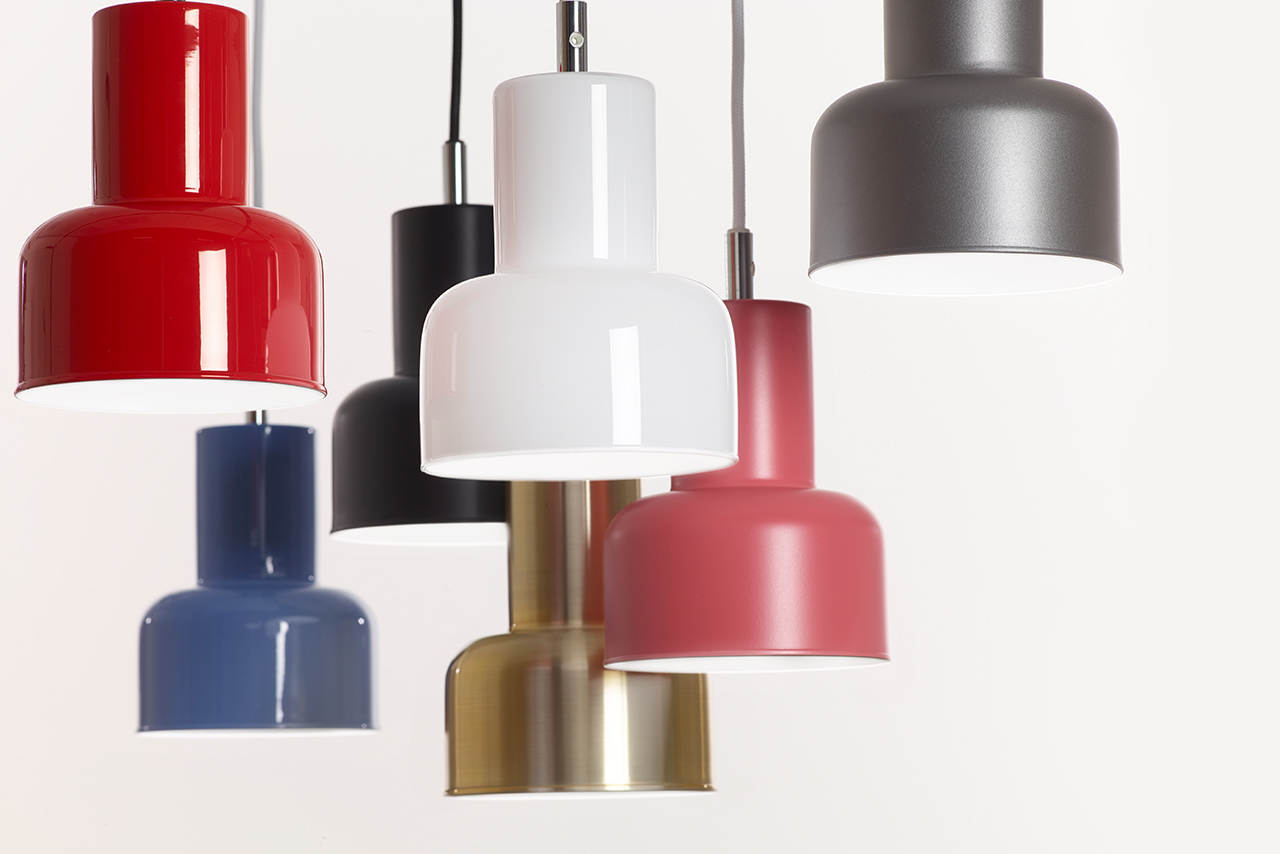
In September 2006, Bertil Svensson received an honorary doctorate at Jönköping University for his “distinguished life’s work as a national pioneer, entrepreneur and leading businessman in the lighting industry… and for important support to education and research in the lighting field”. Through the “Bertil & Britt Svensson Foundation for Lighting Technology” he supported new Swedish education in lighting technology, which would form the basis of the Lighting Academy. Just a few months later, in November, Bertil left this world at the age of 86. That same year, the Fagerhult Group surpassed sales of SEK 2 billion.
In 2015, what had started out 70 years earlier as a three-man company with sales amounting to SEK 13.000 had become a world-wide company with 2400 employees and sales approaching SEK 4 billion. All thanks to Bertil, his mother Elisabeth and her needlework basket.
Gerelateerd nieuws

Innovatie in elke vouw - Wrapped blinkt uit in engineering
Omdat duurzaamheid niet langer een keuze is maar een noodzaak, moet innovatie beginnen met de vraag: Wat als we het eens anders deden? Voor het R&D-team van Fagerhult werd die vraag de vonk achter Wrapped, 's werelds eerste pendelarmatuur gemaakt van karton. Traditioneel worden pendelarmaturen gemaakt met metalen frames, wat een duurzame, vertrouwde en veilige methode is. Maar het team achter Wrapped wilde ontdekken of ze een andere pad konden betreden. Ze besloten om met elkaar uit te zoeken of ze een armatuur konden maken dat niet alleen op topniveau presteerde, maar ook een minimale impact had op het milieu. Na grondige overwegingen speelt massief karton, een hernieuwbaar en gerecycled kartonmateriaal dat voorheen alleen werd gebruikt in verborgen onderdelen, nu de hoofdrol. Wrapped is meer dan een armatuur, het is een verkenning van vooruitstrevendheid en creativiteit. Zonder kant-en-klare oplossingen om zich op te baseren, moest het ontwerpteam vanaf nul beginnen. Elk element, van de constructie tot de montage, werd onder de loep genomen en het resultaat is een armatuur dat zowel technisch solide als milieubewust is. Gallery: Wrapped details De armatuurbehuizing is gemaakt van 65% gerecycled karton en kan ineen worden gevouwen door zeer nauwkeurige uitsparingen die perfect in elkaar passen. Engineering elegantie De behuizing van Wrapped bestaat uit twee belangrijke delen: de binnen- en de buitenbehuizing, beide ontworpen om in harmonie samen te werken voor kracht en stabiliteit. De buitenkant wordt bij elkaar gehouden door een rib van 100% gerecycled post-consumer aluminium, die de vouwen op hun plaats houdt en zorgt dat de vorm behouden blijft. De eindkappen zijn gemaakt van 100% gerecycled gebruikt plastic en klikken vast in nauwkeurige uitsparingen, waardoor de structuur wordt vastgezet zonder dat er schroeven nodig zijn. De aansluitdoos wordt op zijn plaats geklikt en de driver wordt aangebracht met kleine klemmetjes, gemaakt van gerecycled post-consumer plastic. De LED-printplaat is op de lens gemonteerd en wordt beschermd door een afdekking van massief karton en de complete verlichtingsmodule wordt op zijn plaats vergrendeld met een afscherming. Het resultaat is een naadloze, schroefvrije constructie die een doordacht ontwerp belichaamt. Design met een doel Fredrik Beckius, Design Engineer bij R&D, kijkt terug op de reis:"De uitdaging was het werken met een materiaal dat we nog nooit eerder voor een pendelarmatuur hadden gebruikt. We konden de onderdelen niet op de gebruikelijke manier monteren, dus moesten we op zoek naar alternatieve oplossingen."Martin Gustafsson, ook een Design Engineer, voegt hieraan toe:"We moesten een manier vinden om de armatuur kostenefficiënt te produceren, zowel voor ons als voor onze leveranciers. Elk ontwerponderdeel moest meer dan één doel dienen." Dit tweeledige denken is duidelijk zichtbaar in het hele ontwerp van Wrapped. Het gaat niet alleen om esthetiek of duurzaamheid - het gaat om technisch vernuft en om elk onderdeel te laten tellen. Citaat: Martin Gustafsson Duurzaamheid zonder compromissen Wrapped wordt gemaakt in Fagerhult, Habo, met lokaal gewonnen gerecyclede en hernieuwbare materialen. Het is een product geboren uit Zweedse innovatie, geworteld in de erfenis van eerdere duurzame ontwerpen zoals Multilume Re:Think en Kvisten. In tegenstelling tot veel milieubewuste producten is Wrapped zelfverzekerd en eenvoudigweg duurzaam. Met uiterst precieze uitsparingen, een stabiele constructie en strenge tests tijdens het hele proces voldoet Wrapped aan alle kwaliteitsnormen zonder afbreuk te doen aan zijn milieu-ethos.
Fagerhult introduceert 's werelds eerste hoogwaardige pendelarmatuur van karton
Het nieuwe Fagerhult-armatuur Wrapped is ontworpen en gemaakt in Zweden en combineert hoogwaardige verlichting, hoge efficiëntie en een laag gewicht met het feit dat het het meest klimaatvriendelijke, hoogwaardige armatuur van het bedrijf tot nu toe is. De armatuurbehuizing van Wrapped is gemaakt van biologisch, gerecycled karton, Solid Board, dat per kilogram 89% minder impact heeft op het klimaat dan aluminium. De weinige details die wel van plastic en metaal zijn, zijn bovendien gemaakt van gerecycled post-consumer materiaal. Het resultaat is een pendelarmatuur met een minimale totale impact op het milieu, zonder afbreuk te doen aan lichtkwaliteit of design. “Door te kiezen voor massief karton, rekken we het idee op dat een pendelarmatuur van aluminium gemaakt moet zijn. We vroegen ons gewoon af: Kunnen we een ander hernieuwbaar en gerecycled materiaal gebruiken dat al deel uitmaakt van een gevestigde circulaire infrastructuur?” zegt Christer Liljegren, productmanager bij Fagerhult. Betaalbare duurzaamheid Wrapped combineert eersteklas verlichtingsprestaties met een gunstig prijspunt en maakt duurzame verlichtingsoplossingen beschikbaar voor een breder publiek. De keuze voor lichter materiaal maakte ook een totaalgewicht van 1,6 kilogram mogelijk (hangend, 900 mm). “Ik denk dat de installateurs net zo veel waardering voor Wrapped zullen hebben als wij. Hij is echt verrassend licht en makkelijk te hanteren,” zegt Christer Liljegren. De lancering omvat ook Wrapped Pendant 900 mm. De geringe hoeveelheid materiaal maakt het tot een echt duurzame keuze, omdat het in veel toepassingen net zo goed presteert als een algemeen 1200 mm armatuur. Het is verkrijgbaar met de Beta Opti afscherming, heeft een 50/50 directe en indirecte lichtverdeling en de visuele ergonomie blijft uitstekend. De productfamilie wordt in 2026 uitgebreid met extra uitvoeringen. De voortzetting van een erfenis van duurzame innovatie Wrapped bouwt voort op Fagerhults innovatieve werk met duurzame materialen, na de Multilume Re:Think (die ook is gemaakt van massief karton) en het houten armatuur Kvisten. “Wrapped belichaamt ons idee van licht voor een betere toekomst; het combineren van eersteklas verlichting met duurzaamheid op een toegankelijk niveau,” zegt Paula Backman, Product en Marketing Directeur bij Fagerhult.