
During the 21st century, reducing energy consumption and cutting costs have been the common priority, says Kjell Yngve Petersen, Head of Research, Atelier KHR Architecture, and previously associate professor at the IT University at Copenhagen.
”In research and development, there has been a primary focus on energy optimization using lighting control to meet the regulations of existing standards. Provided that the lighting design has fulfilled the requirements regarding light levels and glare, everyone’s been happy.”
The development has also been characterized by the general attitude that increased lighting quality requires higher lighting levels, leading to higher energy consumption and thus should become far too expensive.
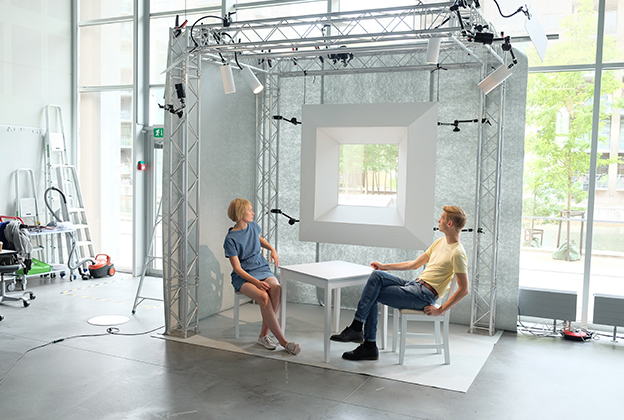
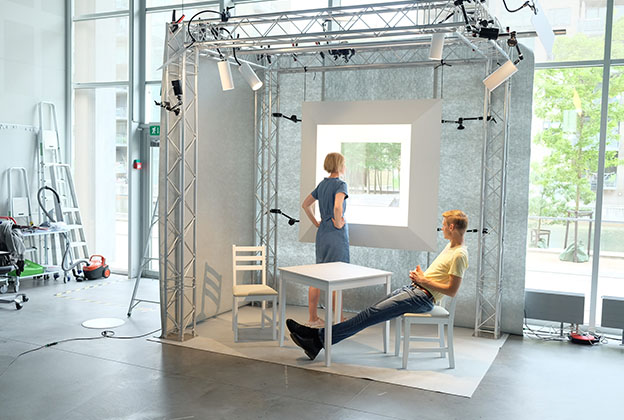
”We wanted to prove that this is not the case. Today we know that access to good and stimulating light is crucial for how humans feel and perform in their daily lives. With access to new technology and light sources it really shouldn’t be any problem to fulfil these needs.”
The prize-winning study (it has already been awarded ‘best research project 2018’ by Danish research organization Elforsk) Energy optimization through adaptive lighting control and was conducted by Kjell Yngve Petersen and Phd Nina Rask in 2017 in collaboration with a range of research and industry partners; Spektra LED, Det Kongelige Danske Kunstakademis Skoler for Arkitektur, Design og Konservering, CreaSign, Grontmij and Kongshaug & Søn. It shows that a combination of LED-lighting and generative software can provide better lighting without increasing the energy costs. Used in the right way, possibly in combination with renewable energy sources, it can actually reduce energy consumption and contribute to a sustainable society – from an environmental and a human perspective.
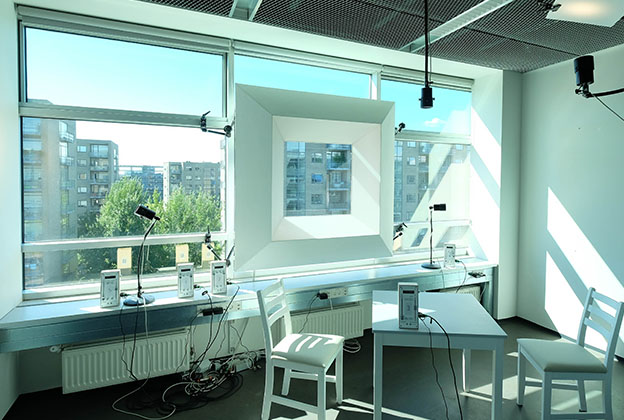
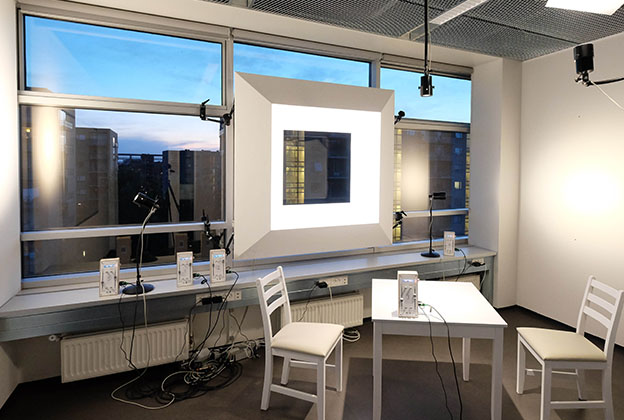
”Light weather”
The dynamics of daylight is an important factor to human well-being. Our biology is designed to thrive from the constant changes in the daylights’ intensity and colour – sometimes barely noticeable – that Kjell Yngve Petersen describes as ”light weather”.
”With LED-technology and proper software it is possible to design lighting solutions with daylight as a model. We developed a self-generative software that mimics the natural light with small dynamic changes in speed, intensity and colour.”
The software was implemented in two different test environments in form of full scale architectonical mock ups. In the different tests, the subjects carried out various tasks related to everyday life and office work, responding to the light experience.



Compatible with renewable energy
The tests have resulted in prototypes that can be used to create lighting environments that react to the different changes in daylight and supports the different tasks of people’s daily lives.
”The study confirmed our theory that adaptive lighting control systems can actually lead to improved lighting quality with the possibility to lower energy costs. The algorithms of the software are well fit to take advantage of the irregularities that come with the production of renewable energy, such as wind. The adaptive software can follow the fluctuation of the energy production and use the peaks to initiate the fluctuation of the ‘light weather’ in a cost-effective way”, explains Kjell Yngve Petersen.
 "It is important to state that this is not about the technology – it’s all about the human lighting experience." Kjell Yngve Petersen, Associate Professor at ITU Denmark
Open source software
The next step is to evaluate the developed models in different real-life settings.
”It’s realistic to think that it should be possible to scale up this technology for more complex environments, like entire residential quarters, office buildings, schools and hospitals – implementing the benefits for humans and environment in a larger scale.”
The software developed for the research project is open source, Kjell Yngve Petersen explains, and is available for the industry's various stakeholders to use.
”Our wish is to help lighting designers create intelligent and easily operated high quality lighting designs based on individual preferences. It is important to state that this is not about the technology – it’s all about the human lighting experience. Lighting design should not be something that people have to adapt to. The light design should adapt to the people and support us in our daily lives!”
Related News
Universities: Optimising buildings through data-driven lighting systems
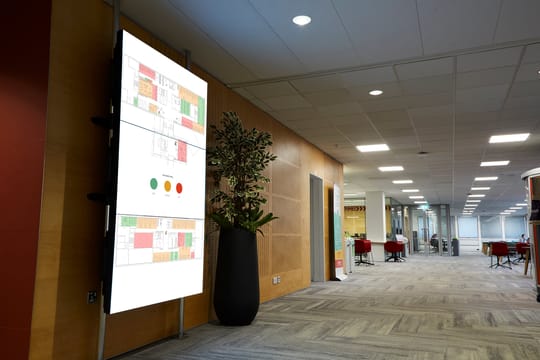
Universities today face growing pressure to reduce carbon emissions, operate more efficiently, and create environments that actively support learning, research, and student wellbeing. From historic campuses to cutting-edge research facilities, managing such diverse estates is complex. Increasingly, data is proving to be a powerful tool in meeting these challenges. Smart lighting systems such as Fagerhult’s Organic Response are central to this transformation. By combining wireless technology with intelligent sensors, these systems collect and analyse data on energy use, occupancy patterns, and light levels. For university estates and facilities teams, this data-driven approach enables more informed decisions, helping to optimise building performance, reduce environmental impact, and create better spaces for students, staff, and visitors. So how does data-driven lighting work in a university context, and what are the benefits for higher education estates? Integrating smart lighting into complex university estates Smart lighting systems are no longer standalone solutions. They are an integral part of a wider, connected approach to campus building automation. At the application level, wireless lighting technology is particularly well suited to universities, where estates often include a mix of new developments, refurbished teaching spaces, and heritage buildings. For older campus buildings, where rewiring can be disruptive, costly, or impractical, wireless systems allow advanced lighting controls to be introduced with minimal structural intervention. This supports the decarbonisation of existing university estates while maintaining architectural integrity and minimising disruption to teaching and research activities. At the same time, smart lighting integrates seamlessly into new-build projects, enabling universities to future-proof their buildings from day one. Automating lighting to minimise waste across campus One of the biggest operational challenges for universities is ensuring that lighting is used only when and where needed. With long opening hours, irregular occupancy patterns, and a wide variety of space types, wasted lighting can quickly become both costly and unsustainable. Traditional lighting control systems are typically fixed at the point of commissioning. Once installed, they offer limited flexibility and often fail to adapt to changes in space usage, timetables, or occupancy. As a result, lighting may remain on in empty lecture theatres, corridors, or meeting rooms. A smart lighting system overcomes this by dynamically adjusting lighting in real time using sensor data. Lighting levels can respond automatically to occupancy, daylight availability, and predefined settings, while system parameters can be reconfigured manually or automatically throughout the building’s lifetime. For universities, this means: Lecture theatres and teaching rooms are lit only when in use Corridors and circulation spaces adapt to traffic levels Libraries and study areas maintain appropriate lighting while avoiding unnecessary energy use The result is optimised energy consumption without compromising visual comfort or safety. Turning lighting data into meaningful campus insight At the heart of smart lighting systems lies data. Large volumes of information on energy consumption, occupancy, and lighting performance can be securely collected and stored in cloud-based platforms, giving estates teams visibility across their campus. NVT Fagerhult has conducted studies analysing occupancy data to understand how small system adjustments can deliver significant energy savings. By fine-tuning sensor time-out periods and adjusting light levels relative to occupant proximity, it is possible to reduce energy use while maintaining a positive user experience. The findings show that: In high-traffic areas such as corridors, libraries, and open-plan study spaces, adjusting light levels delivers the greatest savings In spaces that are frequently unoccupied, such as meeting rooms or seminar rooms, optimising time-out periods is more effective For universities, this data-driven insight supports not only energy reduction but also improved understanding of space utilisation, helping inform future planning and investment decisions. Using lighting infrastructure as a data backbone Smart lighting systems also offer value beyond illumination. Because the lighting network spans the entire campus, it can act as a backbone for additional sensors and data collection. By integrating sensors for CO₂, temperature, and humidity into the lighting infrastructure, universities can reduce the need for multiple standalone networks. This provides a cost-effective and streamlined approach to monitoring environmental conditions across teaching spaces, libraries, laboratories, and social areas. Real-time environmental data can support: Improved indoor air quality management Health and wellbeing initiatives for students and staff Compliance with building and safety standards In some cases, this information can also be shared with building users through digital displays, increasing transparency and awareness of environmental quality. Proven performance in higher education environments Fagerhult’s smart lighting solutions are already delivering measurable benefits across higher education estates. At the University of Warwick Library, the introduction of intelligent lighting has resulted in significant energy and cost savings, while occupancy data has provided valuable insight into how students use different areas of the library throughout the day. Similarly, at Queen Mary University of London, smart, sustainable lighting has helped support long-term carbon reduction targets while enhancing visual comfort in teaching and study spaces. These projects demonstrate how data-driven lighting can support both operational efficiency and the academic mission of universities. The future of smart campuses As universities continue to prioritise sustainability, efficiency, and student experience, the role of data-driven technologies will only grow. Smart lighting systems offer a practical and scalable way to support these ambitions. “Data is the key to unlocking the full potential of smart lighting systems,” Nick concludes. “By harnessing the power of data, universities can improve energy efficiency, support wellbeing, and create more responsive and sustainable campus environments. As the technology continues to evolve, the opportunities for optimisation are virtually limitless.” Explore how Organic Response can help your estates team reduce energy use, gain insight into space utilisation, and future-proof your campus. Speak to our experts to find out more.
The flexible office - Long-term investment for property owners
As a property owner, meeting the needs of tenants while creating sustainable and smooth management is often a complex equation. With Control Track Versa, new and sustainable opportunities are created to streamline the process and offer good lighting for tenants. Petter Berg works with pre-sales for extensive property projects at Fagerhult in Oslo. Discussions with customers and more prominent property owners often revolve around the problem of meeting multiple interests both during the construction process and after the tenants have moved in. “The interests of the various actors often clash at the expense of the lighting quality. And then no one is delighted with either the process or the result,” says Petter Berg, Lighting Adviser Manager at Fagerhult. Petter Berg quote Petter Berg has closely observed the development of Control Track Versa and sees future opportunities for property owners. Not least, those who work actively with reuse and sustainability and want to create attractive environments for existing and future tenants can quickly achieve profitability in larger projects. “Being able to offer tenants good lighting without replacing the entire system every time someone moves is a huge sustainability advantage as a property owner. With Control Track Versa, each luminaire can be reused throughout its entire life cycle. In addition, the track itself can take on a new shape if the office changes design.” Property owners can benefit from the advantages of Control Track Versa during construction. The track can be installed earlier during construction and is completely independent of the future furnishings and the tenant’s choice of luminaires. “The fact that the installation can be done in principle at any time and is not dependent on the premises being cleaned of construction dust or that it takes place just before the property is completed makes a big difference. It is an ingenious way to buy time,” says Petter Berg. Collage three rooms - same Versa solution In parallel, installations can be made in fixed areas such as corridors, elevators, toilets, and public places that are not affected by the tenants’ choices. With fewer installation points, installation is also faster and easier. “The track has a flexible 230V system, so there is no need for cable ladders or extra wiring. Therefore, Control Track Versa is also very suitable for open ceilings. Since it is completely independent, the system is also future-proof. Each luminaire can be supplemented with a sensor for smart lighting control.” According to Petter Berg, Control Track Versa bridges the gap between electrical consultants and interior designers. He clearly sees that the track can be very useful in larger construction projects where many parts need to fit together. “When we work together, it often turns out very well. It is clear that a party is needed that connects the developer, electrical consultant and interior designer, and that is where Control Track Versa is now becoming an important party for us at Fagerhult.”