
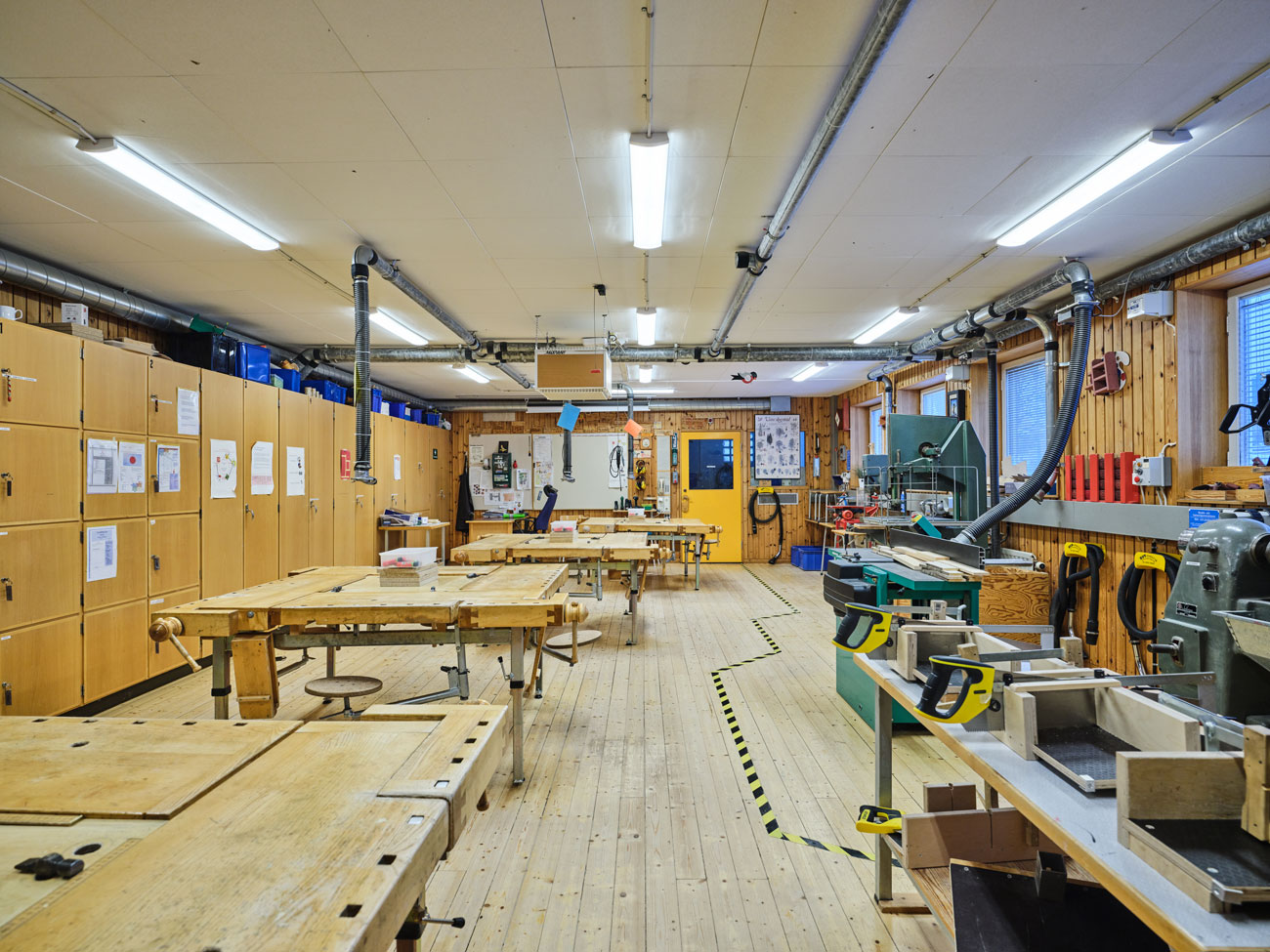
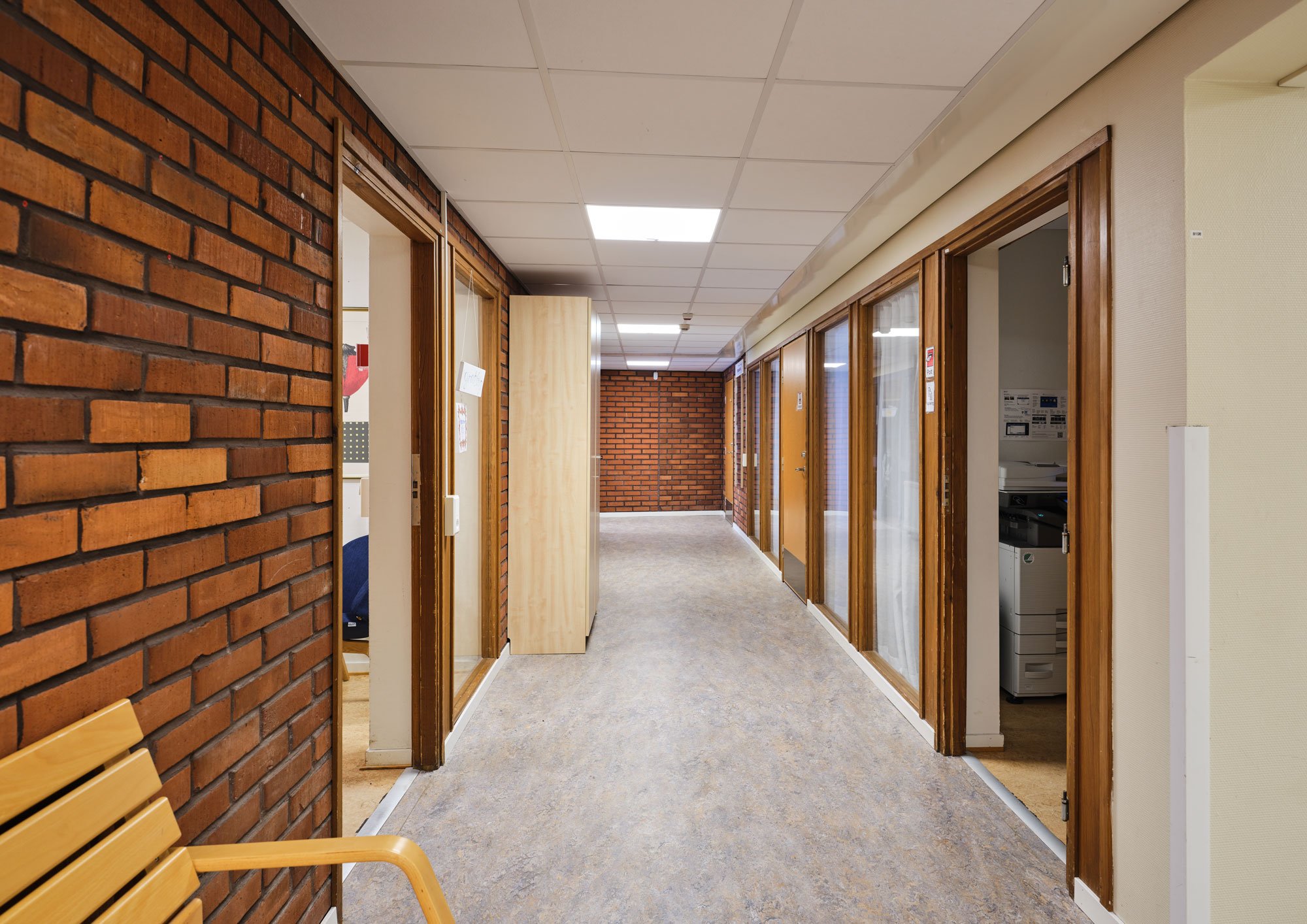
We visited three of Jönköping municipality’s school properties: a high school that was built at the turn of the century and two schools from the 1970s. Each school has its own style and architectural expression, but with a common denominator for the future: freestanding LED pendant luminaires with Organic Response control. Peter Honkala is responsible for the electrical installations in two of the municipality’s districts and he is now busy planning and designing new lighting for both properties and businesses:
“Now that we are moving from fluorescent lamps to LEDs, we have the chance to create a good learning environment for students, improve the working environment for teachers, increase energy efficiency and reduce cost, all while improving the expression of the properties,” says Peter.
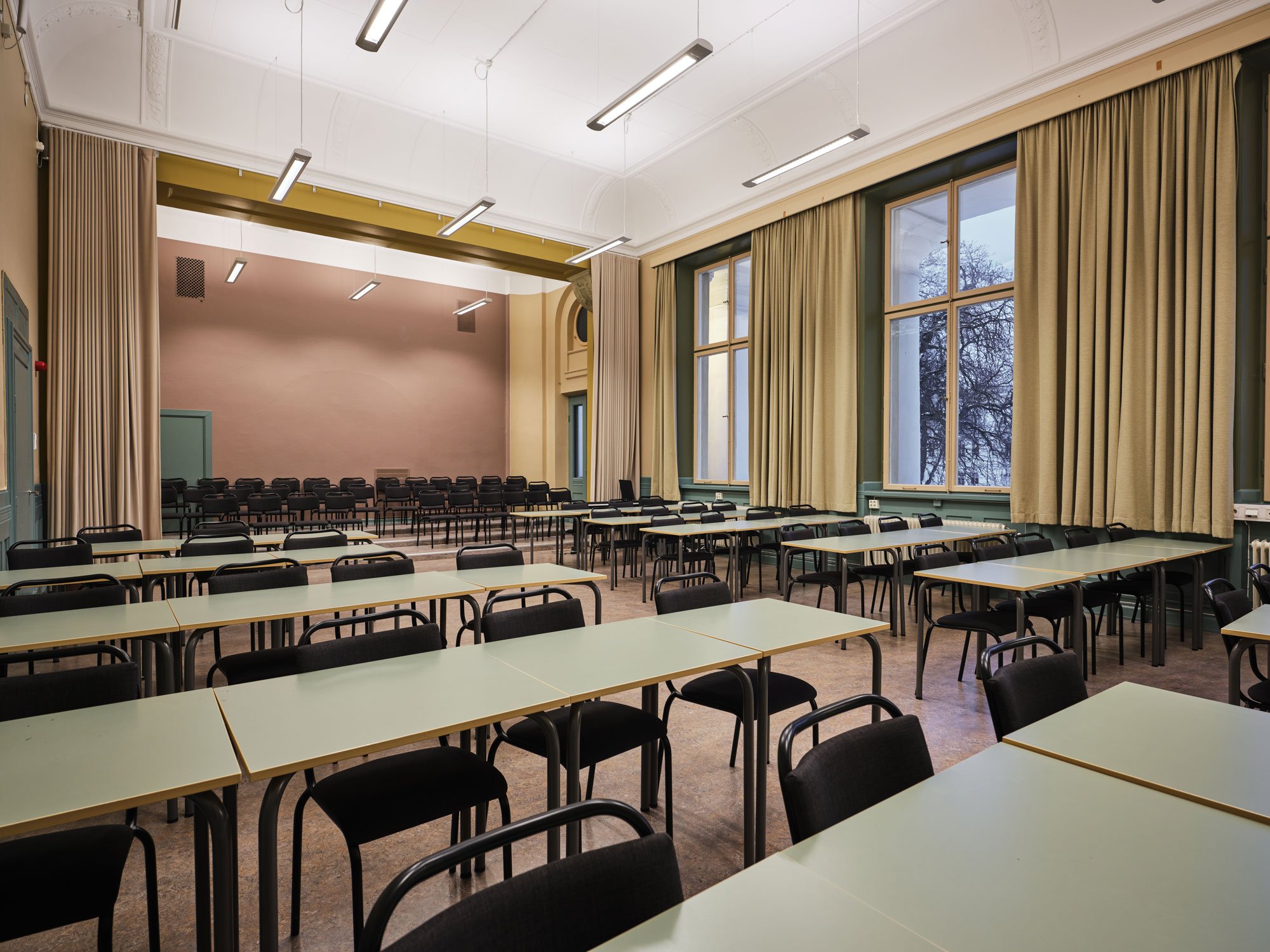
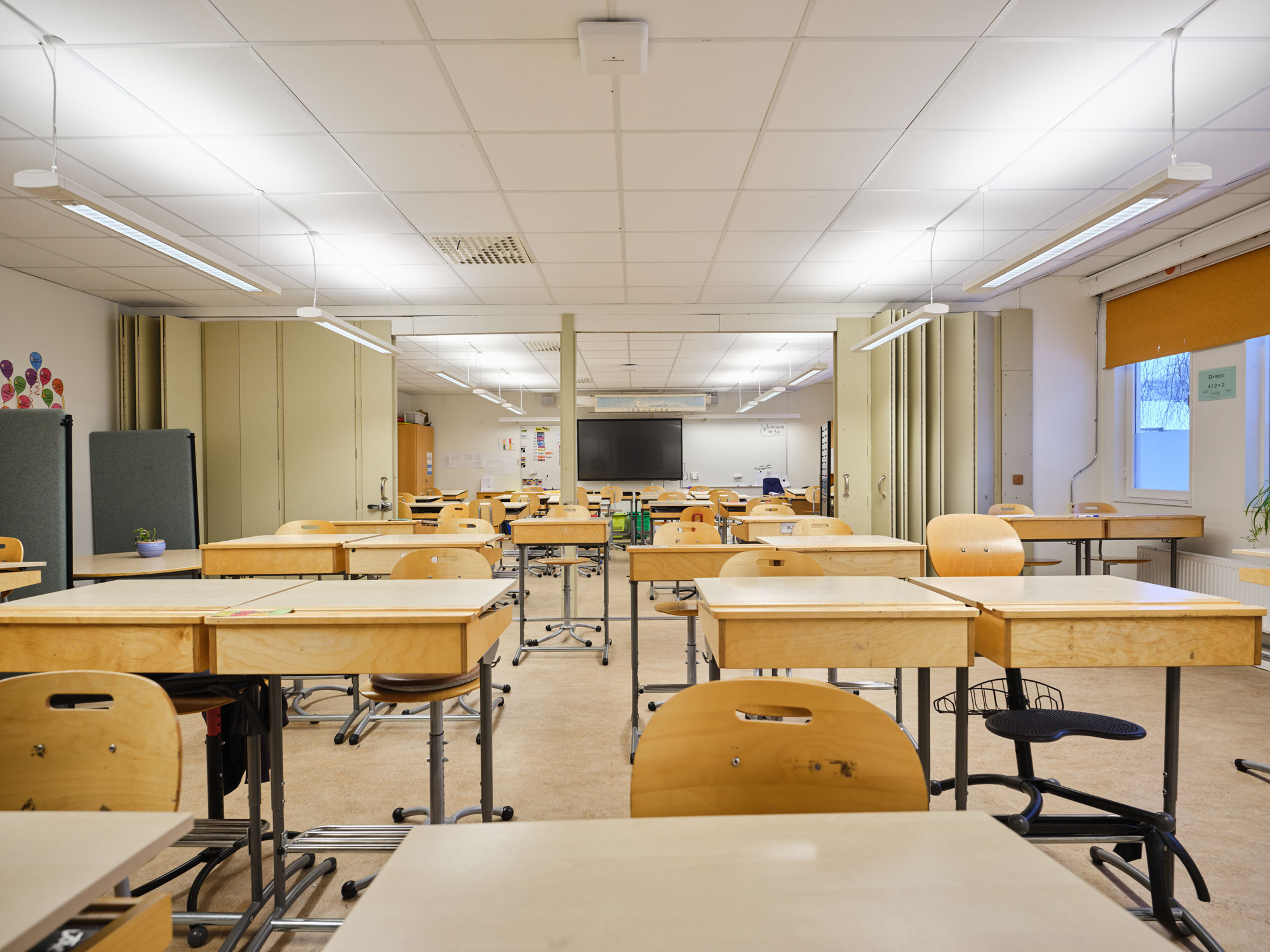
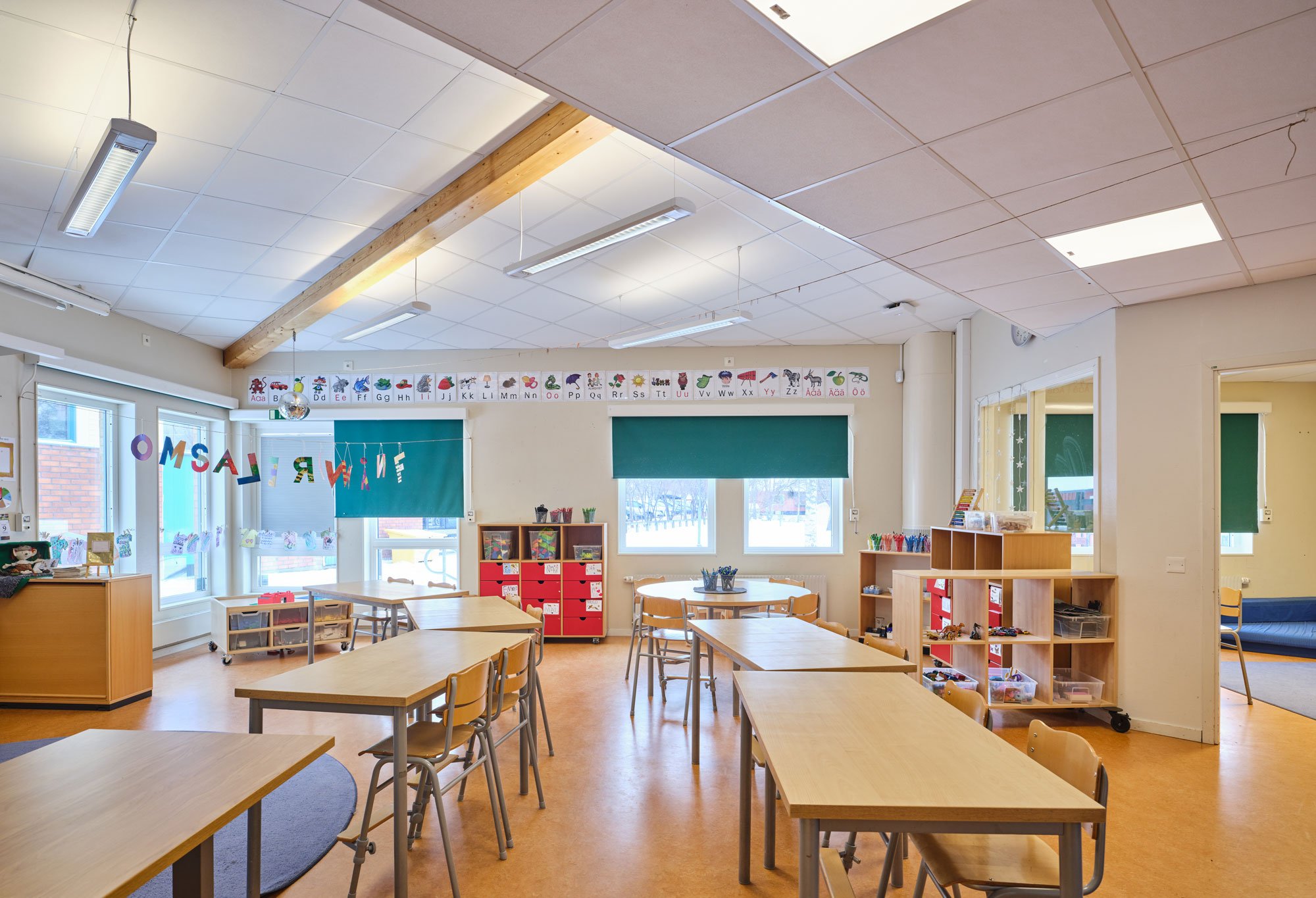
Architecture rarely an obstacle to lighting control
The installation is simple and does not require any major modification of the property. All that is needed is phase, neutral and earth, and wireless buttons for the control. Although the property portfolio contains many types of buildings from different periods and with varying styles, architecture is rarely an obstacle.
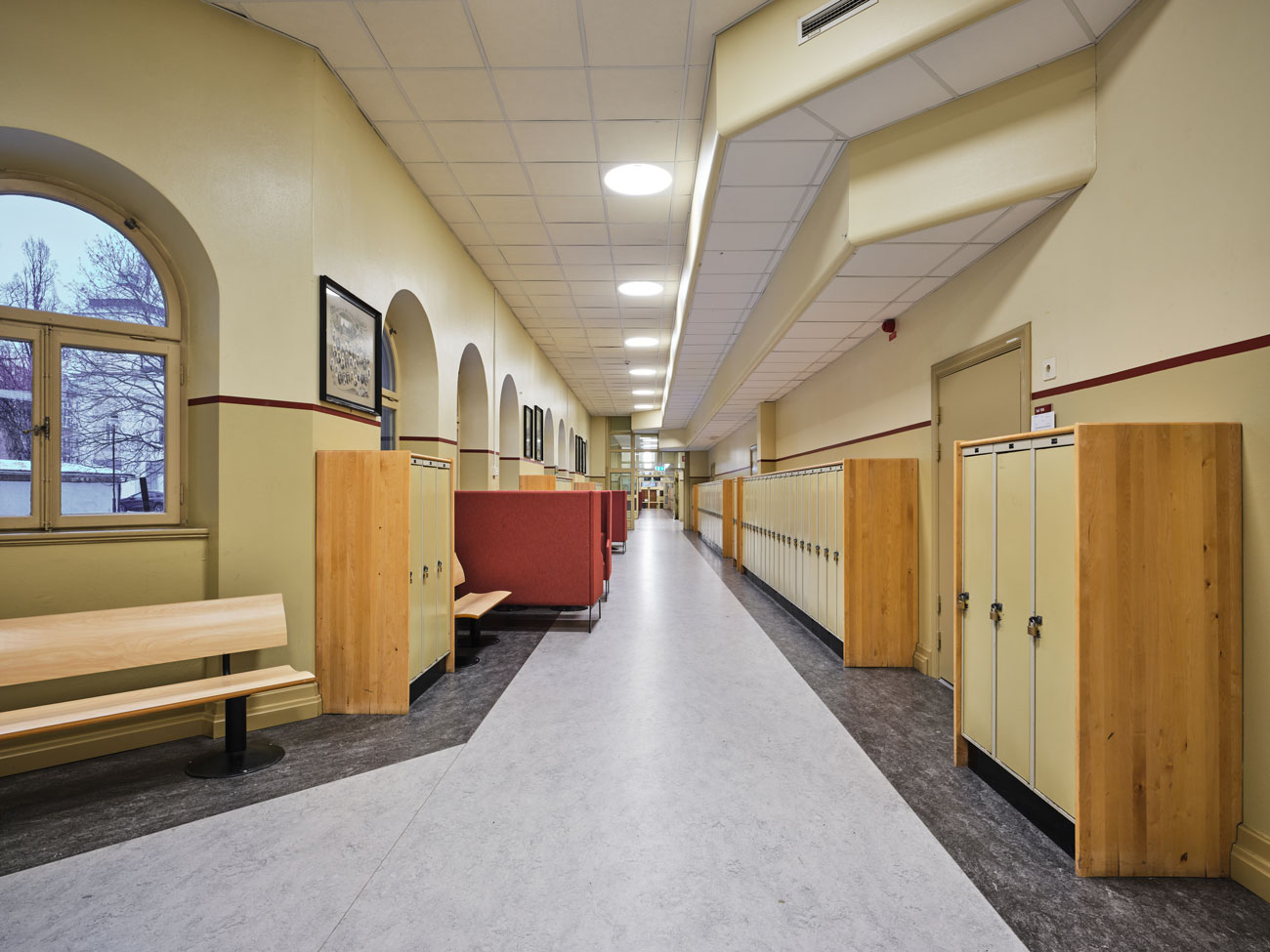
“We need to be a little more careful in some school properties, like the Per Brahegymnasiet high school, which is over a hundred years old,” explains Peter. “But the installation itself is not very different from a school built in the seventies, or even today. If we miss something during planning, or if a control button is needed after everything is complete, it is very easy to adjust: instead of an installer rerouting cabling, we can simply take down and move luminaires and the lighting control according to the needs of the business.”
According to Markus Winnert, Smart Lighting Manager at Fagerhult Sweden, Jönköping Municipality is following a clear trend. Since schools cannot be shut down for extended periods during construction, an efficient and smart solution is needed that is both easy to install and serves as a long-term solution.
 “With Organic Response, we create an optimal solution that works in different environments and is easy to install without needing to tear down anything or major rebuilding.” - Marcus Winnert, Business Area Manager, Smart Lighting Fagerhult
“As municipalities replace their fluorescent lamps, they take advantage of the opportunity to improve the lighting environment, broadly increase energy efficiency, and secure lighting for the future,” says Markus Winnert. “With pendant luminaires with Organic Response, we create an optimal solution that works in different environments and is easy to install without needing to tear down anything or major rebuilding. At the same time, the luminaires are suitable for different environments - regardless of when the school was built or its style.”
Peter Honkala has worked in the industry for many years, and, for a time, the recommendation was to use LED ceiling panels in classrooms. But this recommendation was quickly abandoned, and now pendant luminaires are solely used.
“Pendant luminaires provide indirect light, ambient light, with lower luminance,” says Peter. “Modern luminaires are also more efficient and spread light better, so in many classrooms we only need two rows of luminaires instead of three. It improves the light quality and the ceiling becomes significantly airier. We frequently hear how pleased they are with the result, which is very gratifying.”

Lighting that can be adapted to the business
Moving from fluorescent lamps to LEDs generally reduces energy consumption by fifty percent. And by adding a sensor and lighting control, an additional fifty percent can be saved. At the same time, the working life of both the ballast and the luminaire is extended, which increases the burn-time. But, according to Peter Honkala, the real advantage is that the lighting can be adapted according to each business.
“Improving the lighting environment for students is invaluable, and at the same time we are doing something really good for the environment.”
“Besides for being easy to install and operate, the major benefit is the use and that we save so much energy,” explains Peter. “Improving the lighting environment for students is invaluable, and at the same time we are doing something really good for the environment. It’s an honour to be part of this development.”

Related News

The flexible office - Long-term investment for property owners
As a property owner, meeting the needs of tenants while creating sustainable and smooth management is often a complex equation. With Control Track Versa, new and sustainable opportunities are created to streamline the process and offer good lighting for tenants. Petter Berg works with pre-sales for extensive property projects at Fagerhult in Oslo. Discussions with customers and more prominent property owners often revolve around the problem of meeting multiple interests both during the construction process and after the tenants have moved in. “The interests of the various actors often clash at the expense of the lighting quality. And then no one is delighted with either the process or the result,” says Petter Berg, Lighting Adviser Manager at Fagerhult. Petter Berg quote Petter Berg has closely observed the development of Control Track Versa and sees future opportunities for property owners. Not least, those who work actively with reuse and sustainability and want to create attractive environments for existing and future tenants can quickly achieve profitability in larger projects. “Being able to offer tenants good lighting without replacing the entire system every time someone moves is a huge sustainability advantage as a property owner. With Control Track Versa, each luminaire can be reused throughout its entire life cycle. In addition, the track itself can take on a new shape if the office changes design.” Property owners can benefit from the advantages of Control Track Versa during construction. The track can be installed earlier during construction and is completely independent of the future furnishings and the tenant’s choice of luminaires. “The fact that the installation can be done in principle at any time and is not dependent on the premises being cleaned of construction dust or that it takes place just before the property is completed makes a big difference. It is an ingenious way to buy time,” says Petter Berg. Collage three rooms - same Versa solution In parallel, installations can be made in fixed areas such as corridors, elevators, toilets, and public places that are not affected by the tenants’ choices. With fewer installation points, installation is also faster and easier. “The track has a flexible 230V system, so there is no need for cable ladders or extra wiring. Therefore, Control Track Versa is also very suitable for open ceilings. Since it is completely independent, the system is also future-proof. Each luminaire can be supplemented with a sensor for smart lighting control.” According to Petter Berg, Control Track Versa bridges the gap between electrical consultants and interior designers. He clearly sees that the track can be very useful in larger construction projects where many parts need to fit together. “When we work together, it often turns out very well. It is clear that a party is needed that connects the developer, electrical consultant and interior designer, and that is where Control Track Versa is now becoming an important party for us at Fagerhult.”
Recipe of Light helps purchasers make sustainable lighting choices
Fagerhult releases a new visualisation tool that simplifies the process for specifiers and purchasers to make sustainable lighting decisions. With Recipe of Light, users can create their own lighting "recipes" while considering climate impact, human needs, and economic factors.Developed by Fagerhult, the tool has been tested and refined with input from lighting designers, architects, and electrical consultants across Europe. This ensures its relevance and usability for a diverse range of stakeholders in various markets.“The engagement has been tremendous, underscoring the need for a user-friendly visualisation tool to support meaningful dialogue with clients. We’ve incorporated feedback and suggestions, and now Recipe of Light is available to everyone via our website,” says Henrik Clausen, Director at the Fagerhult Lighting Academy.The tool allows specifiers and purchasers to independently visualise different lighting solutions and understand their impact on the climate, people, and economy.Users can select a room type – an open-plan office, an individual office, a conference room, or a classroom – and experiment with various lighting solutions. Options include recessed or suspended luminaires, with or without spotlights or accent lighting. The tool visualises these choices in real time, showing how each lighting solution transforms the space.In connection to this, easily comprehensive bars show how each choice affects the climate in terms of CO2 emissions, how it affects the people in the room – visually, biologically, and emotionally – and the cost of the products as well as energy consumption.The tool also highlights the importance of presence and daylight controls, as well as the quality of luminaires, in achieving the desired outcome. All scenarios align with current laws and regulations.“The purpose of Recipe of Light is to empower companies and organisations to make informed lighting decisions. It clearly demonstrates how to achieve an optimal solution based on an organisation’s priorities across environmental, social, and economic sustainability. This is particularly important given the increasing focus on sustainability in EU legislation,” adds Henrik Clausen.