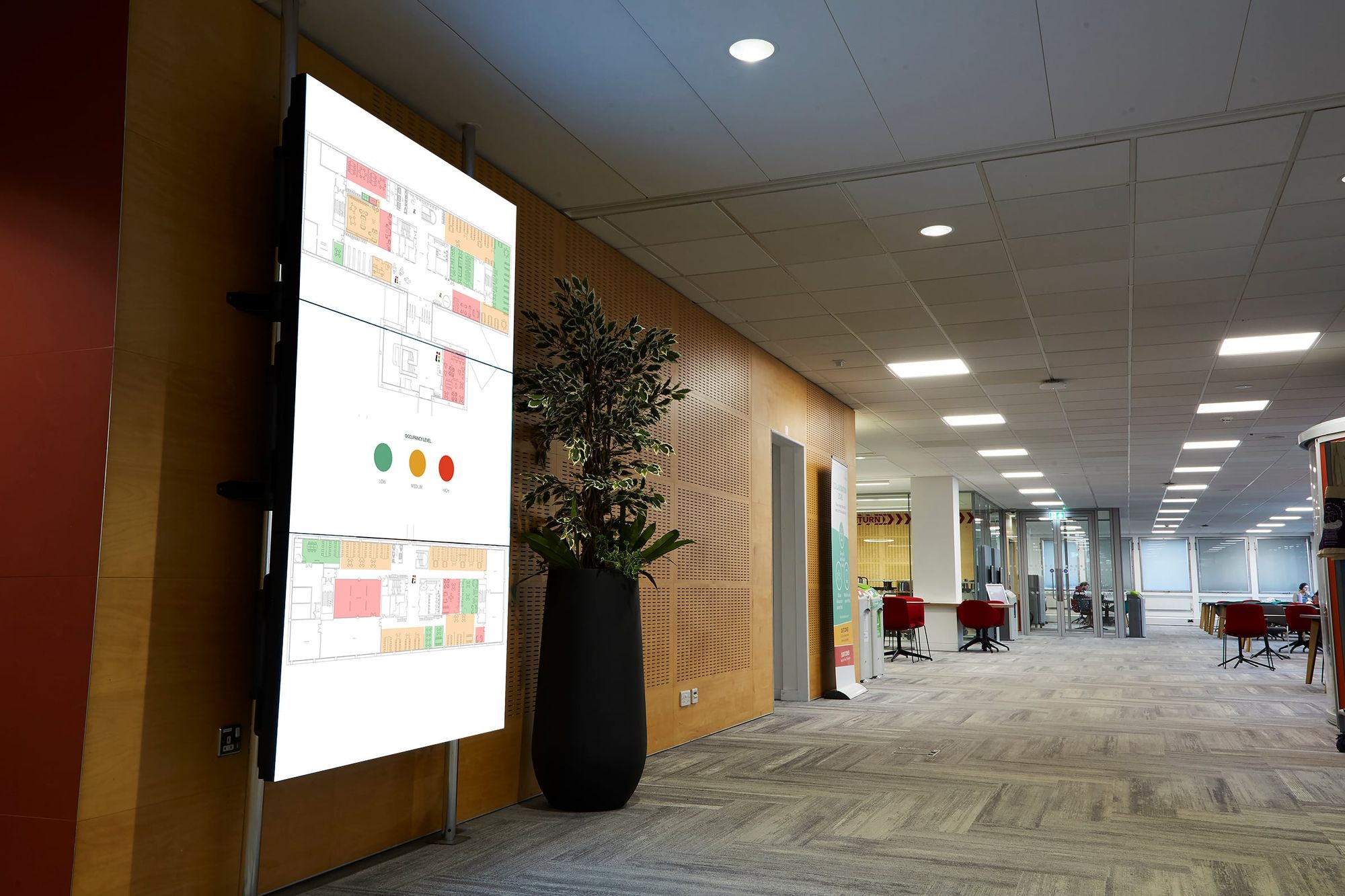
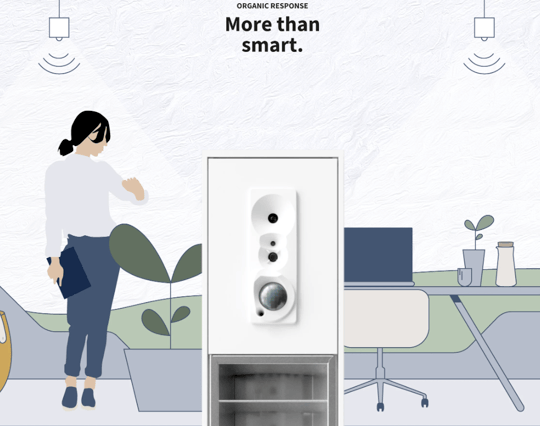
Smart lighting systems such as Fagerhult’s Organic Response are central to this transformation. By combining wireless technology with intelligent sensors, these systems collect and analyse data on energy use, occupancy patterns, and light levels. For university estates and facilities teams, this data-driven approach enables more informed decisions, helping to optimise building performance, reduce environmental impact, and create better spaces for students, staff, and visitors.
So how does data-driven lighting work in a university context, and what are the benefits for higher education estates?
Integrating smart lighting into complex university estates
Smart lighting systems are no longer standalone solutions. They are an integral part of a wider, connected approach to campus building automation. At the application level, wireless lighting technology is particularly well suited to universities, where estates often include a mix of new developments, refurbished teaching spaces, and heritage buildings.
For older campus buildings, where rewiring can be disruptive, costly, or impractical, wireless systems allow advanced lighting controls to be introduced with minimal structural intervention. This supports the decarbonisation of existing university estates while maintaining architectural integrity and minimising disruption to teaching and research activities.
At the same time, smart lighting integrates seamlessly into new-build projects, enabling universities to future-proof their buildings from day one.
Automating lighting to minimise waste across campus
One of the biggest operational challenges for universities is ensuring that lighting is used only when and where needed. With long opening hours, irregular occupancy patterns, and a wide variety of space types, wasted lighting can quickly become both costly and unsustainable.
Traditional lighting control systems are typically fixed at the point of commissioning. Once installed, they offer limited flexibility and often fail to adapt to changes in space usage, timetables, or occupancy. As a result, lighting may remain on in empty lecture theatres, corridors, or meeting rooms.
A smart lighting system overcomes this by dynamically adjusting lighting in real time using sensor data. Lighting levels can respond automatically to occupancy, daylight availability, and predefined settings, while system parameters can be reconfigured manually or automatically throughout the building’s lifetime.
For universities, this means:
- Lecture theatres and teaching rooms are lit only when in use
- Corridors and circulation spaces adapt to traffic levels
- Libraries and study areas maintain appropriate lighting while avoiding unnecessary energy use
The result is optimised energy consumption without compromising visual comfort or safety.
Turning lighting data into meaningful campus insight
At the heart of smart lighting systems lies data. Large volumes of information on energy consumption, occupancy, and lighting performance can be securely collected and stored in cloud-based platforms, giving estates teams visibility across their campus.
 “Smart lighting systems generate detailed information on how spaces are used, how much energy is consumed, and how lighting performs over time. When this data is brought together in secure digital platforms, estates teams gain a clear overview of what is happening across their buildings. This makes it far easier to identify opportunities for optimisation and to benchmark performance across different areas of a campus.” Nick Van Tromp, UK Controls Manager at Fagerhult
Fagerhult has conducted studies analysing occupancy data to understand how small system adjustments can deliver significant energy savings. By fine-tuning sensor time-out periods and adjusting light levels relative to occupant proximity, it is possible to reduce energy use while maintaining a positive user experience.
The findings show that:
- In high-traffic areas such as corridors, libraries, and open-plan study spaces, adjusting light levels delivers the greatest savings
- In spaces that are frequently unoccupied, such as meeting rooms or seminar rooms, optimising time-out periods is more effective
For universities, this data-driven insight supports not only energy reduction but also improved understanding of space utilisation, helping inform future planning and investment decisions.
Using lighting infrastructure as a data backbone
Smart lighting systems also offer value beyond illumination. Because the lighting network spans the entire campus, it can act as a backbone for additional sensors and data collection.
By integrating sensors for CO₂, temperature, and humidity into the lighting infrastructure, universities can reduce the need for multiple standalone networks. This provides a cost-effective and streamlined approach to monitoring environmental conditions across teaching spaces, libraries, laboratories, and social areas.
Real-time environmental data can support:
- Improved indoor air quality management
- Health and wellbeing initiatives for students and staff
- Compliance with building and safety standards
In some cases, this information can also be shared with building users through digital displays, increasing transparency and awareness of environmental quality.
Proven performance in higher education environments
Fagerhult’s smart lighting solutions are already delivering measurable benefits across higher education estates.
At the University of Warwick Library, the introduction of intelligent lighting has resulted in significant energy and cost savings, while occupancy data has provided valuable insight into how students use different areas of the library throughout the day.
Similarly, at Queen Mary University of London, smart, sustainable lighting has helped support long-term carbon reduction targets while enhancing visual comfort in teaching and study spaces.
These projects demonstrate how data-driven lighting can support both operational efficiency and the academic mission of universities.
The future of smart campuses
As universities continue to prioritise sustainability, efficiency, and student experience, the role of data-driven technologies will only grow. Smart lighting systems offer a practical and scalable way to support these ambitions.
“Data is the key to unlocking the full potential of smart lighting systems,” Nick concludes. “By harnessing the power of data, universities can improve energy efficiency, support wellbeing, and create more responsive and sustainable campus environments. As the technology continues to evolve, the opportunities for optimisation are virtually limitless.”
Explore how Organic Response can help your estates team reduce energy use, gain insight into space utilisation, and future-proof your campus. Speak to our experts to find out more.
Related News

Safer, Smarter, and More Sustainable Outdoor Campus Lighting
Outdoor lighting in educational environments, such as universities and colleges, serves several important roles. Well-planned lighting enhances security by illuminating pathways, entrances, and parking areas, reducing the risk of accidents and deterring crime. It ensures that students, staff, and visitors can navigate the campus safely, even after dark. Beyond safety, outdoor lighting helps highlight the architectural character of historic campuses. Many institutions feature grand, centuries-old buildings and landscaped grounds. Thoughtful lighting enhances these features, creating a welcoming atmosphere while preserving both accessibility and heritage. At the same time, lighting must be carefully planned to minimise environmental impact. Poor design can lead to excess energy use, light pollution, and disruption to wildlife. This article explores key considerations for campus lighting, including the shift to LED, minimising light pollution, using warmer colour temperatures, and implementing motion sensors and smart controls to improve energy efficiency. From legacy lighting to wildlife-sensitive LEDs Over the past two decades, lighting has undergone a major transformation. Early outdoor schemes often relied on high-pressure sodium or metal halide lamps, technologies with relatively short lifespans, high maintenance demands, and limited control options. The transition to LED significantly improved energy efficiency and reliability, yet early iterations of LED technology introduced new concerns. One of the key challenges with early LEDs was the harsh blue-white light they emitted. This was found to have negative effects on both human circadian rhythms and local wildlife. Fortunately, innovations in LED development have now made it possible to specify warmer colour temperatures, such as 2700K, that deliver necessary illumination while mitigating environmental impact. In one recent campus lighting project, an initial specification of 4000K was revised following a detailed environmental review. By switching to 2700K, the design team achieved a careful balance between visual clarity and ecological responsibility. This example underscores the need to tailor lighting to context, asking: is it needed, where is it needed, and when should it be on? Precision through optics tailored to output Maximising performance while minimising impact requires control and that starts with the right optics. Thanks to continued innovation, luminaires can now be specified with optics tailored to their intended output, ensuring light goes precisely where it’s needed and nowhere else. For example, luminaires such as Fagerhult’s Fjord or Rondo are equipped with advanced optics that deliver optimised distributions for everything from narrow pathways to open plazas. By tailoring the beam angle and spread, designers can reduce the number of fittings required and improve uniformity without over-lighting. Optics also help address comfort and visibility. In areas like shared pedestrian and cycle routes or outdoor study zones, glare-free, well-directed light improves safety and supports wellbeing. This level of precision is key to lighting success in complex environments like university campuses. Smart control with Citygrid Lighting should adapt to how people use space, not the other way around. That’s where intelligent lighting control systems like Citygrid come into play. It connects each luminaire into a responsive network that automatically adjusts lighting based on real-time occupancy and ambient conditions. Citygrid offers a wireless, plug-and-play solution that can reduce energy consumption by up to 90%, with modules that can be integrated into new luminaires or added to existing installations via “on-pole” units. This flexibility is particularly beneficial for campus environments, where lighting needs may vary between academic terms, event schedules, or times of day. By regulating brightness dynamically and enabling remote monitoring, Citygrid not only reduces energy waste but also extends product life, enhances safety, and contributes to broader sustainability targets. Lighting up schools and campuses The design of campus lighting must support safety, usability, and efficiency, often in spaces that blend historic buildings with modern architecture. A layered approach works best: ambient lighting for general orientation, bollards and low-level luminaires for walkways, and facade lighting to soften transitions and improve vertical illumination. Luminaires such as the Vik LED and Rondo provide high-performance options for wall and ceiling mounting, delivering subtle yet effective lighting that enhances the sense of security without creating glare or disruption. Citygrid enables each of these elements to be fine-tuned and responsive. Whether it’s dimming lights in unused areas, brightening in response to movement, or adjusting automatically with seasonal changes, the result is a safer, smarter, and more sustainable lighting strategy. A balanced approach to sustainable outdoor lighting Sustainability involves balancing environmental responsibility, long-term economic value, and a positive experience for people. This means specifying luminaires that limit light pollution, reduce wildlife disruption, and comply with best-practice standards like TM65 and TM66 and additional standards developed by CIBSE to promote circular economy thinking and sustainable product selection. Socially, it’s about creating welcoming and inclusive environments. the WELL Building Standard encourages lighting that enhances visual comfort, particularly for older or visually sensitive users. Economically, futureproofing is key, choosing flexible systems with modular optics, smart controls, and durable materials to ensure long-term performance with minimal need for replacement or upgrades. Creating safer, smarter, and greener campuses For schools, colleges, and universities, the goal is clear: provide safe, functional, and inspiring spaces that reflect the values of sustainability and care. With the help of high-performance optics, adaptive lighting controls and an environmentally sensitive approach to design, outdoor lighting becomes a powerful tool to support this mission. At its best, lighting enhances the nighttime identity of a campus, supports biodiversity, and saves energy all while maintaining the safety and comfort of those who use the space. That’s the future of sustainable outdoor lighting and it’s already within reach.
Marischal College, a historical building with a modern approach to efficiency and light control
Marischal College, the glorious granite landmark on Broad Street in Aberdeen, Scotland, has been the headquarters of Aberdeen City Council since 2011. The second-largest granite building in the world shares its space with the historic Town House and is a Category A listed structure, a testament to its national and international significance. Lighting such an iconic and historic structure presents unique challenges, requiring a balance between modern functionality and the preservation of its architectural integrity. Considerate planning is key to ensuring the building is both effectively illuminated and energy-efficient without altering its historic features. To learn more, Colin Sutherland, Northern Regional Manager at Fagerhult UK, who led the project, gave us some insights into the project scope and outcomes. Efficiency, longevity, and modernisation Due to ongoing issues on site with both the lighting and controls, the council looked into addressing this by replacing the lighting and the control system in the least obtrusive way possible, as this had to remain a live building throughout. Local consultants Atkins recommended Fagerhult for the job. After an in-depth interview process, including product demonstrations, Fagerhult was selected for its robust, user-friendly Organic Response system. The solution prioritised efficiency and incorporated emergency monitoring and heat mapping, ensuring optimal performance and minimal risk of human error. Overcoming challenges with precision The project wasn't without its obstacles. Marischal College's shared spaces, occupied by various departments and organisations, required a flexible system catering to diverse user needs. Similarly, the historical and architectural features of the building presented unique physical challenges: Granite-tiled Floors: When attempting to replace uplights, the team discovered that the bases were bonded directly to the granite. Removing them risked damaging the tiles, so they were left intact, and parts were retrofitted instead. Archway Preservation: A prominent archway, often used for wedding ceremonies, could not be altered. The team creatively adapted the existing fittings to meet modern efficiency standards without compromising the building's heritage. Despite these complexities, the project remained on schedule, showcasing Fagerhult's ability to innovate and adapt in the face of constraints. Energy efficiency and smart controls At the heart of the project was the transition to state-of-the-art LED lighting powered by Fagerhult's Organic Response control system. Key features included: Real-Time Monitoring: The system tracks faults, occupancy patterns, and energy usage across the building, allowing for responsive adjustments. Daylight Linking: Individual fittings automatically dim when natural light is sufficient, maintaining consistent light levels while reducing energy consumption. Emergency Testing Automation: The system runs function and duration tests, ensuring compliance and safety without manual intervention. Customisable Controls: With remote access, the council can adjust settings, such as dimming light levels, for optimal comfort and energy savings. The data collected from Organic Response allows for an open conversation between Fagerhult and the client and having insight into usage helps to educate the staff occupying the space which enables a smooth collaboration. This advanced technology has significantly improved both the efficiency and reliability of Marischal College's lighting, offering Aberdeen City Council a sustainable, cost-effective solution. A collaborative success The Fagerhult Group's involvement was instrumental in the project's success, with contributions from several of its lighting brands, including WE-EF, LTS, and ateljé Lyktan. The use of the popular pendants such as the striking Globia fitting in the reception area, enhanced the building's aesthetic appeal while meeting its technical requirements. A highlight of the installation was the one-up, one-down fitting design. Each fitting featured individual sensors and daylight linking, ensuring energy efficiency while maintaining optimal lighting conditions throughout the office spaces. A brighter future for historical buildings The Marischal College lighting project not only improved the functionality and sustainability of the building but also demonstrated Fagerhult ability to navigate complex challenges and deliver tailored solutions. With energy efficiency at the forefront, Aberdeen City Council now benefits from a modern, reliable, and cost-effective lighting system—a shining example of innovation meeting heritage.