Branding a building and its surroundings with light is one of the most effective ways to increase the value of your property.
”It’s a good chain reaction. In many ways, the lighting determines our experience of the habitat, biologically and emotionally. If we get to live and work in environments with functional and beautiful lighting designs that support our actions and needs, we’ll feel vitalized and secure. A lighting design in symbiosis with the surrounding architecture is vital for creating attractive environments where people want to stay. It is really a good investment, that increases the value of the property for the owners whether it is a commercial property or a housing association. Hopefully, more people will be interested in renting from you or buying an apartment. And if you run a company it will most certainly contribute in strengthening its brand”, says Henrik.
The art of storytelling
Using the lighting design to enhance the architecture and the environments around it is a matter of storytelling.
”Lighting can be used to tell the unique story of the environmental context – not only about the architecture but about the nature that surrounds it. Look around for interesting elements to illuminate – a tree, a little hill, a cairn or – if you are in a former industrial area – something that reminiscent of the place’s history.”
No matter how good the story, functionality is the backbone of the lighting design.
Enhancing the environment is not only a matter of highlighting the character and the aesthetics of an area. To achieve the important feeling of belonging and security, the lighting design has to support the different activities going on by defining the moving patterns – from the actual building, gardens and courtyards to walkways and parking lots.

Involving the stakeholders
According to Henrik, the best way to succeed is to involve the people concerned by introducing them to the project, encouraging them to share ideas and letting them experience on site test designs. This is very common in social lighting design projects but is a way of working that is very beneficial no matter the circumstances.
”Make sure to invite everyone involved – property owners, facility management and residents – to a workshop to identify their needs. How is the space used today and how it is supposed to work in the future? What kind of lighting solution do they want – visually and emotionally? After a thorough valuation, the lighting designer can return to you with a first draft and invite the group to experience some test designs. You can do a lot in a digital lighting design program, but in the end, nothing beats an IRL-experience”, says Henrik.
”From my experience, including the stakeholders in the process and to let them see the project ‘come to light’ is a great way to increase the commitment and people’s understanding of lighting. Through the years I’ve had the benefit of doing a lot of workshops in collaboration with customers, consultants, lighting designers and architects. At the end we evaluate our ideas by building some simple mock ups and the outcome is always the same. When the light goes on, everyone’s like WOW!”
A wall of stories
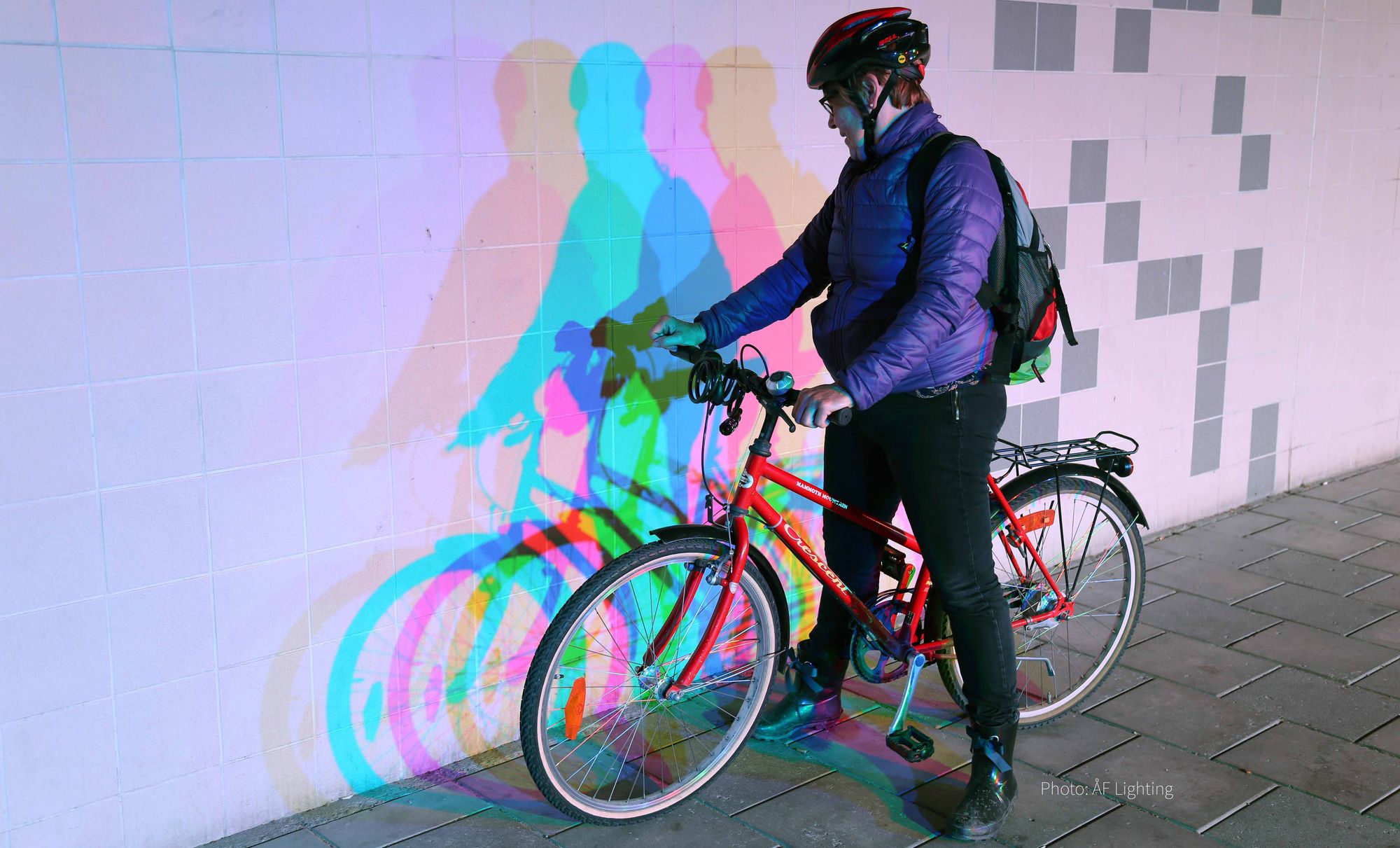
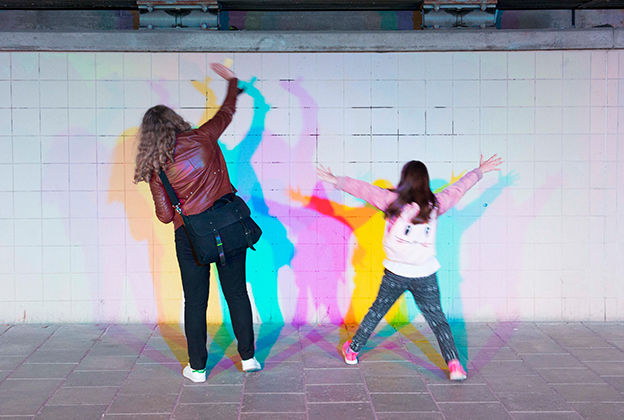
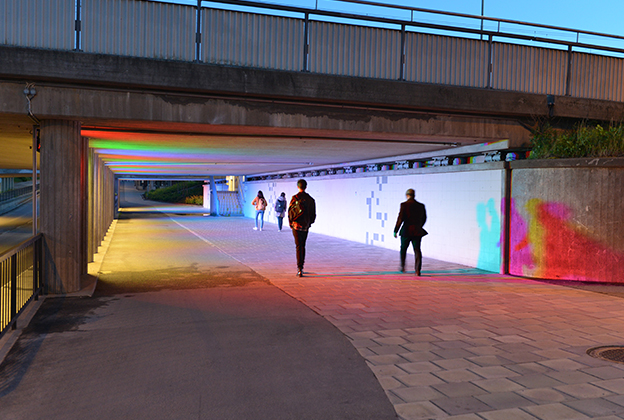
One of Henrik’s favourite lighting designs is the ”Story Wall” in the Swedish town of Eskilstuna, as it combines every aspect that he finds important: it enhances the environment and provides functionality by interacting the users in an ongoing process. A poorly used road tunnel has been brought to new lifewith the installation of red, green and blue luminaires throughout the tunnel. When the white light hits people passing by, it changes colour, creating a vibrant kaleidoscope of moving human shapes in different colours on the opposite wall.
”It is an amazing lighting design, based on a clever idea and beautifully executed by the lighting designers at consultant ÅF Lighting. The project is not connected to Fagerhult in any way, but it is really one of those truly creative solutions that one wish that you’d come up with yourself. The tunnel has been transformed into a fascinating and friendly place where people can feel safe, and I’m, sure it is more frequently used than before. It really captures the benefits of good lighting design in one simple and inspiring solution.”
Ask a lighting designer
When illuminating a property and its surroundings you’ll of course need a solid base in form of wall luminaires, ceiling luminaires and bollards, preferably from one luminaire family to achieve a coherent design expression.
”The more options available regarding light distributions, light sources and colours the more you can play with different expressions. In most cases I would also recommend to use some other luminaire types from the toolbox, like wallwashers, projectors and inground luminaires to create that little extra.”
When it comes to lighting design, nowadays we have unlimited options as the LED-technology has made advanced lighting solutions available for everyone.
“This is also our greatest challenge. Having so much to choose from, it is extremely important that we make the right choices. To create a lighting design with the right amount of comfortable non-dazzling light, with the right colour and temperature that enhances the different forms, textures and functions of the architecture and its surroundings – requires knowledge. It is also quite easy to ‘over optimize’, adding too much luminaires and effects, just because the stuff is approachable. This is why I always encourage my customers to hire a professional lighting designer, as it pays off in the long way – in terms of results and finances.”
Ideas from the lighting advisor:
1. Ambient light creates context
Ambient light is as important outdoors as indoors. By lighting vertical surfaces like walls and hedges orientation is facilitated, helping people with spatial cognition and improving the security experienced. This also applies on walkways where light should be directed not only directly on the ground but also on the sides of the walkway, to create a context.
2. Soft transitions at the entrance
When lighting entrances and portals it is important not only to light them at the inside. The walls surrounding them should also be lighted, leading the way to the entrance and creating a soft and pleasant transition in light levels.
3. Be picky when it comes to materials
An energy efficient LED-luminaire is of course a sustainable choice. But what’s the benefit of 100 000 hours if the materials isn’t up to it? Make sure that the luminaires you choose are suitable for the conditions where they will be placed regarding weather, corrosion and damage.
4. Avoid lighting pollution
Make sure that luminaires won’t be a disturbing factor in office or residential areas. For example, you wouldn’t want the light to shine into a bedroom at ground floor during night time. Also, be aware that lighting could have a disturbing effect on the wildlife – like bats and night-hunting animals.
5. Do a proper follow-up
Make sure that the luminaires and the light sources are installed in the right way and with the right angles. This is a part that is often neglected but may result in a lighting design not working out as expected. By choosing luminaires that are easy and fool proof to install, you can avoid the worst-case scenarios.
Related News

Melanopic lux: lighting for education influenced by human biology
Light is essential in our daily lives, influencing our ability to see, overall well-being and performance. In educational environments, lighting quality can significantly impact students' focus, mood, and energy levels. So, how do we know what is the right amount and quality of light for this setting? Traditionally, light has been measured in lux, a unit of measurement for the intensity of light. It's used to measure how much light falls on a surface or the amount of light in a given space. One lux is the amount of light that falls on a surface that is one square meter in area when one lumen of light is spread out evenly. Recent advancements in research have unveiled the importance of melanopic lux, which goes beyond mere visibility. This measures how effectively light stimulates specific eye cells that regulate crucial non-visual functions such as sleep and alertness. In classrooms and lecture theatres, the melanopic ratio has become vital in lighting design, enabling educators to create spaces that support visual tasks and align with students' biological rhythms. In this article, we explore how lighting solutions can align with our biology, and how this helps to create optimum conditions for educational environments. The science of vision and light The human eye is a remarkable organ designed for high-resolution colour vision within a small area (approximately 2 degrees of the visual field) while relying on peripheral vision for motion detection. This dual-function system, shaped by evolution for survival, continues to influence how we perceive and interact with our surroundings. Our eyes are particularly susceptible to green and yellow light, reflecting our evolutionary adaptation to naturally lit environments. In contrast, blue light, which is chief in modern LED lighting, requires higher intensity to be perceived at the same level. Effective lighting design carefully considers brightness, timing, and distribution to support visual clarity and biological functions like mood and alertness. For example, exposure to bright light in the morning helps regulate circadian rhythms, boosting alertness and mitigating the effects of seasonal darkness. This is particularly important in educational environments, such as schools and universities, where lighting impacts mood, focus, and overall performance. Our Organic Response system provides an innovative solution tailored for these spaces. This smart lighting technology automatically optimises light levels, featuring daylight-responsive sensors and advanced occupancy detection, maintaining a balance between natural and artificial light. Doing so supports visual comfort and reduces energy consumption, making it an ideal choice for creating dynamic, efficient, and student-friendly learning environments. To further support students, well-lit spaces with minimal glare are essential for reducing eye strain and maintaining focus during extended study sessions. Adjusting light intensity and colour temperature for different tasks—such as reading, group discussions, or creative activities—enhances light's visual and non-visual effects. By integrating thoughtful lighting strategies like those offered by Organic Response, educational environments can promote healthier, more productive, and engaging learning experiences. Integrative lighting: Supporting health and well-being. Integrative lighting (also referred to as human-centred lighting) combines visual and non-visual benefits (such as emotional effects) to support biological rhythms and psychological well-being. This approach goes beyond traditional lighting solutions by considering how light impacts circadian rhythms and hormonal balance. Light exposure in the morning is critical for suppressing melatonin (the sleep hormone) and increasing cortisol (the alertness hormone). Proper timing helps align students' natural rhythms with school schedules, which often require a lot of focus. Consistent exposure to bright, cool light early in the day can enhance energy levels and cognitive performance. The melanopic ratio compares the spectral composition of a light source with daylight. Using this information, you can determine its melanopic lighting intensity. This enables the design of lighting setups that precisely meet both visual and biological lighting needs. Lighting recommendations for educational spaces Each learning environment has unique lighting needs. Libraries benefit from direct lighting on the floor, paired with ambient lighting on walls and ceilings. Vertical shelf lighting (200-300 lx) makes it easier to browse titles. Lecture halls, on the other hand, require glare-free, comfortable lighting with flexible control, ideally with pre-programmed scenarios. In auditoriums and classrooms, strong vertical lighting is crucial for clear visual communication, especially over greater distances, enhancing facial expressions and engagement. General lighting recommendations apply to all educational spaces. Our solutions meet industry standards, ensuring reading and writing areas maintain 500 lx for effective visual tasks. Using daylight-responsive sensors for luminaire rows can reduce energy consumption while maximising natural light. The number and arrangement of luminaires should be adjusted based on the room's size and function to ensure consistent illumination. The role of dynamic lighting A Double Dynamic lighting system can be a game-changer in educational environments. It allows for intensity and colour temperature adjustments to match the specific needs of activities, from quiet reading sessions to collaborative group work. Fagerhult's distinct approach to lighting means that our design is human-centric; we integrate scientific insight into light and human psychology, creating environments that support academic performance and well-being. Our focus on energy efficiency also means our advanced control systems optimise light usage while minimising energy consumption, contributing to a building’s sustainability goals. The customisable setting and flexible solutions ensure that educational environments can create tailored lighting profiles for different times of the day or specific learning activities. Long-term benefits of melanopic lighting Melanopic lighting, designed to mimic the natural light spectrum, helps regulate the circadian rhythm, which is essential for maintaining focus, energy, and emotional balance. In classrooms and study areas, proper lighting can reduce eye strain, improve sleep patterns, and enhance mood, which are critical for students' mental health and academic performance. By incorporating lighting that aligns with our biological needs, schools and universities can foster healthier, more productive learning environments,. This is particularly important during the winter months when daylight is limited. Whether through advanced tuneable white light systems, designs that maximise daylight, or energy-efficient solutions, we are dedicated to leading the way in lighting innovation for educational environments, delivering brighter futures—one classroom at a time.
The inspiration behind Nobel Week Lights: ”Light, art and technology intertwined.”
Nobel Week Lights has quickly become a beloved public celebration. During Nobel Week, Stockholm residents flock outdoors to marvel at the spectacular light installations, where contemporary lighting technology meets artistic expression. ”We aim to create a moment of gathering: around light and around something meaningful”, says Lara Szabo Greisman. Nobel Week Lights is a light festival that illuminates Stockholm during the darkest time of the year – a free cultural experience for everyone. Presented by the Nobel Prize Museum, the festival invites international and local artists, designers and students to create light artworks inspired by the Nobel Prize. The installations shed new light on the scientific discoveries, literature and peace efforts of Nobel laureates while offering a fresh perspective on the city. Fagerhult is Principal Partner of Nobel Week Lights 2024, and this year’s edition features 16 different light installations across Stockholm. The artworks can be experienced from 7–15 December, including ”The Wave”, a light installation by the art collective Vertigo, located in front of the Parliament House where visitors can walk right through the luminous wave. The Wave by Vertigo ”Light and art and creativity is incredibly intertwined because these are technologies that are constantly evolving. So part of the fun working with the artists is that they are constantly testing new technologies. And we see these incredible visual results which are based on just pure innovation”, says Lara Szabo Greisman, co-founder and producer of Nobel Week Lights. Lara Lara Szabo Greisman and Leading Lights by Les Ateliers BK The significance of light as a collective force, its ability to encapsulate life and death, joy and sorrow – indeed, the very essence of what it means to be human – makes lighting a powerful medium of artistic expression, she argues: ”The dream for the festival is that this becomes a personal experience for each and every member of the audience. A moment that they remember and cherish . A moment that they think about later and bring forward as their story of connecting with the city.”