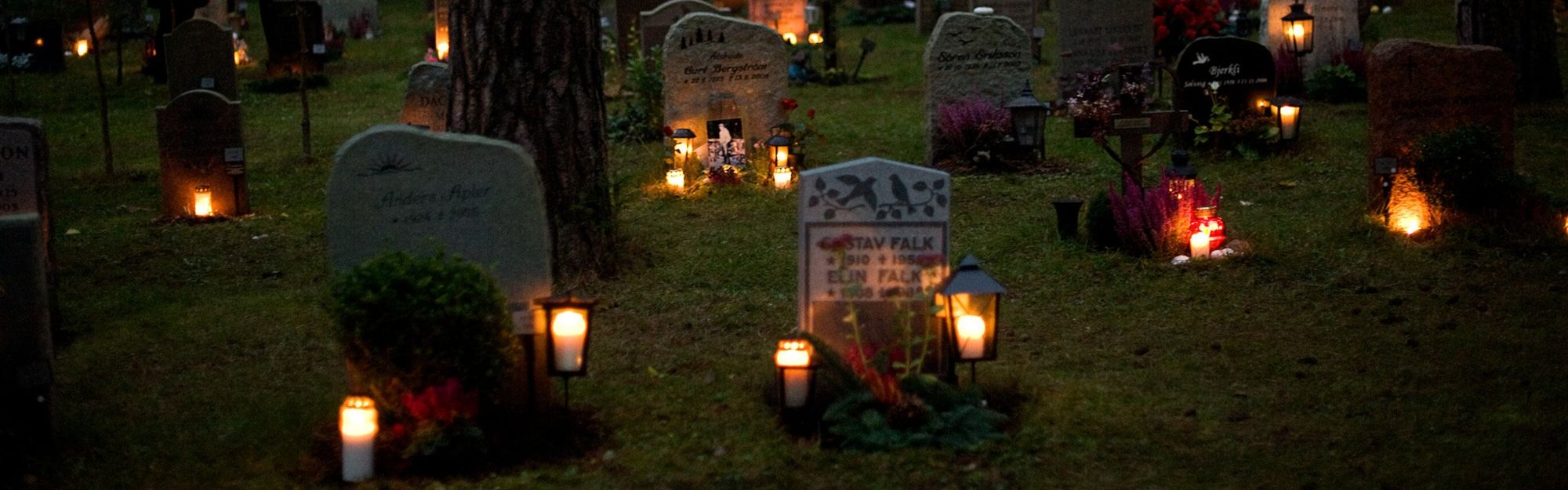
Although it is a resting place for those who have left us, the focus for cemeteries is still the people who visit them. One of the people who has worked on lighting for Swedish cemeteries is Florence Hermansson, a light artist and light designer/light planner, who is based in Uppsala, Sweden.
“Cemeteries are primarily a resting place for the deceased. We always need to remember that is the main purpose of the place,” she explains. “After that, it is a space that belongs to the relatives, and those who manage the cemetery. After that, it is a place for the public. That hierarchy is something that cemetery visitors need to accept and respect.”
‘Semi-public’ and ‘semi-private’ environment
Florence emphasises that there is a valuable focus and purpose to the whole cemetery environment.
“These places are truly unique. They must not and cannot be compared with other public spaces in the municipal environment, such as public parks. I want people to respect the importance these spaces have to others, and to society as a whole. In cemeteries, there is a very thin line between the private burial plots and the ‘public’ paths. It’s important to create a ‘semi-public’ space that is also ‘semi-private’, which is what a cemetery is an example of. We need to take this complexity into account when planning the lighting.”
Jaana Rintala Berndtsson, a planner at the Swedish Church’s cemetery administration in Gothenburg, also encounters challenges in her work in managing the unique type of environment that cemeteries represent.
“We have many different types of areas to illuminate in a cemetery,” she explains. “You have to consider why you are illuminating an area, and who will be visiting it. In environmental terms, you need to avoid having too much lighting, and from a safety aspect, you need enough lighting for visitors to feel safe. On the one hand, we have equipment depots that need to be illuminated in an efficient way – so that visitors and our employees can see and work. On the other hand, we shouldn’t illuminate all parts of the site so as to avoid upsetting the biological circadian rhythm of the wildlife in and around the cemetery.”
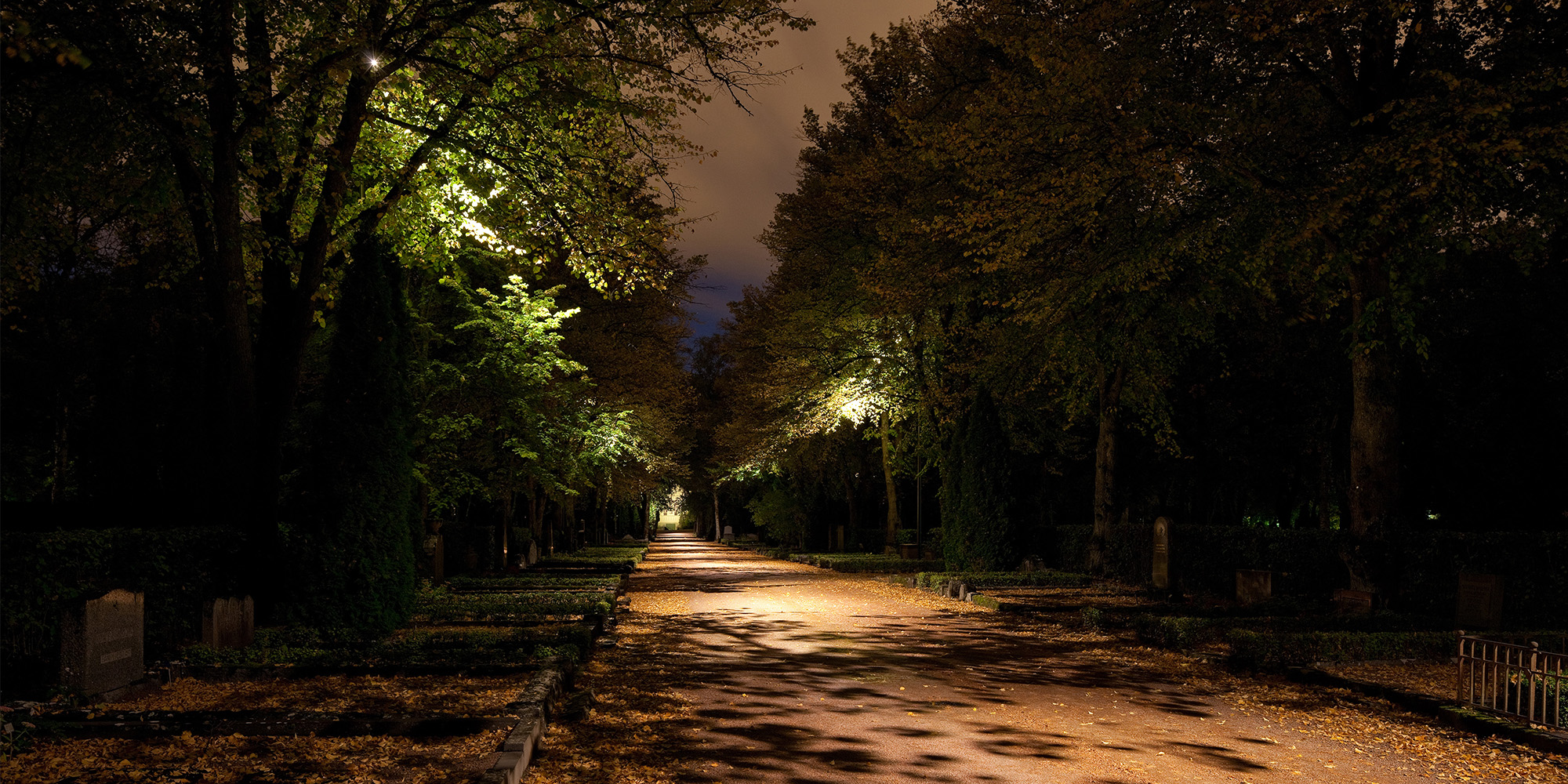
Perceived safety in the quiet space
Perceived safety in the area is something that both Florence Hermansson and Jaana Rintala Berndtsson consider a priority when working on cemetery lighting.
“The main paths through cemeteries need to be safe and secure, as some of our cemeteries in Gothenburg are also public thoroughfares or have public footpaths running through them,” says Jaana. “Visitors ought to feel a sense of peace and quiet when they come here, and that’s something that the lighting can contribute to.”
Florence also emphasises the importance of safety and security in cemeteries for visitors.
“A project I undertook in Uppsala included one of the city’s most popular pedestrian and cycle paths,” she explains. “People using them were colliding with one another due to the contrast between their bike lights and the surrounding darkness. Therefore, I want to emphasise the importance of harmony and coherence between the deliberately lit and the ‘spontaneously’ lit areas of the city. When it comes to lighting, it’s the complete picture that counts. Every place has its own darkness and light scale, and we should make use of that, and not simply view the darkness as something to be worried about but rather something reassuring and peaceful. One example of that is stray light from city streetlights. That’s important to use in the light palette when lighting cemeteries. It may sound counterintuitive, but in fact the non-illuminated places, the very darkest places, may be the places that are perceived as safest. From there you have control over what you can see and can adapt to the more strongly lit places.”
 "Visitors ought to feel a sense of peace and quiet when they come here, and that’s something that the lighting can contribute to." Jaana, Rintala Berndtsson, planner, Gothenburg's cemetery administration
‘Tröstefull Lyrik’
Florence mentions her project at the Gamla Kyrkogården cemetery in Uppsala as one example of how she worked on lighting and how the neighbouring surroundings came to influence that work.
“In Uppsala, I allowed the living light in the lanterns on each grave to control the light level on the nearby footpath,” she explains. “The title of the lighting is ‘Comforting lyricism’. The lighting means, in purely practical terms, that the large artificial light had to take second place to the individual living light.”
“In this project, we made use of the city’s public lighting around the cemetery,” continues Florence. “This created the silhouette effect for those moving around the darker parts of the cemetery. The low light levels on the main footpath, the central artery of the cemetery, enhance visitors’ visual comfort and adaptation to this darker area. Visitors get a more natural view and can see what is happening in the adjoining city space. Another important aspect of cemetery lighting is to allow the entrance into the cemetery to be a lit area, an identity-bearing space between the city lights and the cemetery’s lights. The entrance then becomes a light-visual staircase into the cemetery, something that can help visitors to prepare for their visit.”
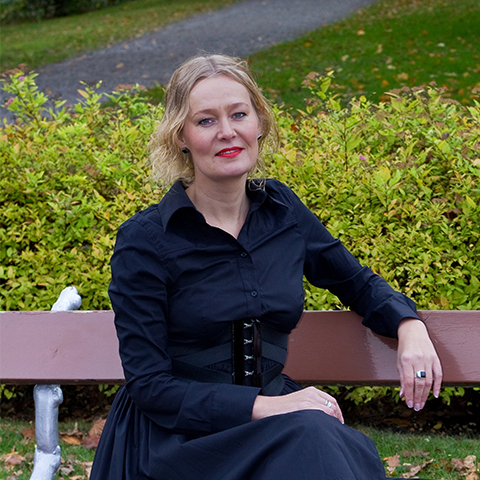 "I think that cemeteries can be a role model for other lighting in public spaces. The lighting becomes more homely, more compassionate and more intimate. Let’s take that sympathetic lighting – and use it in other projects!" Florence Hermansson, artist, lighting designer and light planner
Living and dead involved in the planning
It is not just the living who have opinions on the planning process for the luminaire locations and lighting assembly. The dead must also be included in the process.
“Cemeteries are often lush areas, with lots of greenery and trees,” says Jaana. “When planning lighting, and especially post luminaires, tree roots and other plants can influence what solution we are able to implement. There are also other issues we need to consider. Although here at the cemetery administration in Sweden we are not responsible for the lighting of churches, we do have chapels and memorial parks that are our responsibility. In those cases you have to consider how you light and illuminate cultural and historical buildings to ensure they are in harmony with the architecture and other aesthetics in the area.”
Florence agrees with Jaana’s reflections.
“The graves, the location and the position of trees have in some cases determined the placement of lighting in the projects I have worked on for cemeteries,” she says. “We must never forget what these places are, and I feel that it encourages a more humble and creative approach to lighting. I think that cemeteries can be a role model for other lighting in public spaces. The lighting becomes more homely, more compassionate and more intimate. Let’s take that sympathetic lighting – and use it in other projects!”
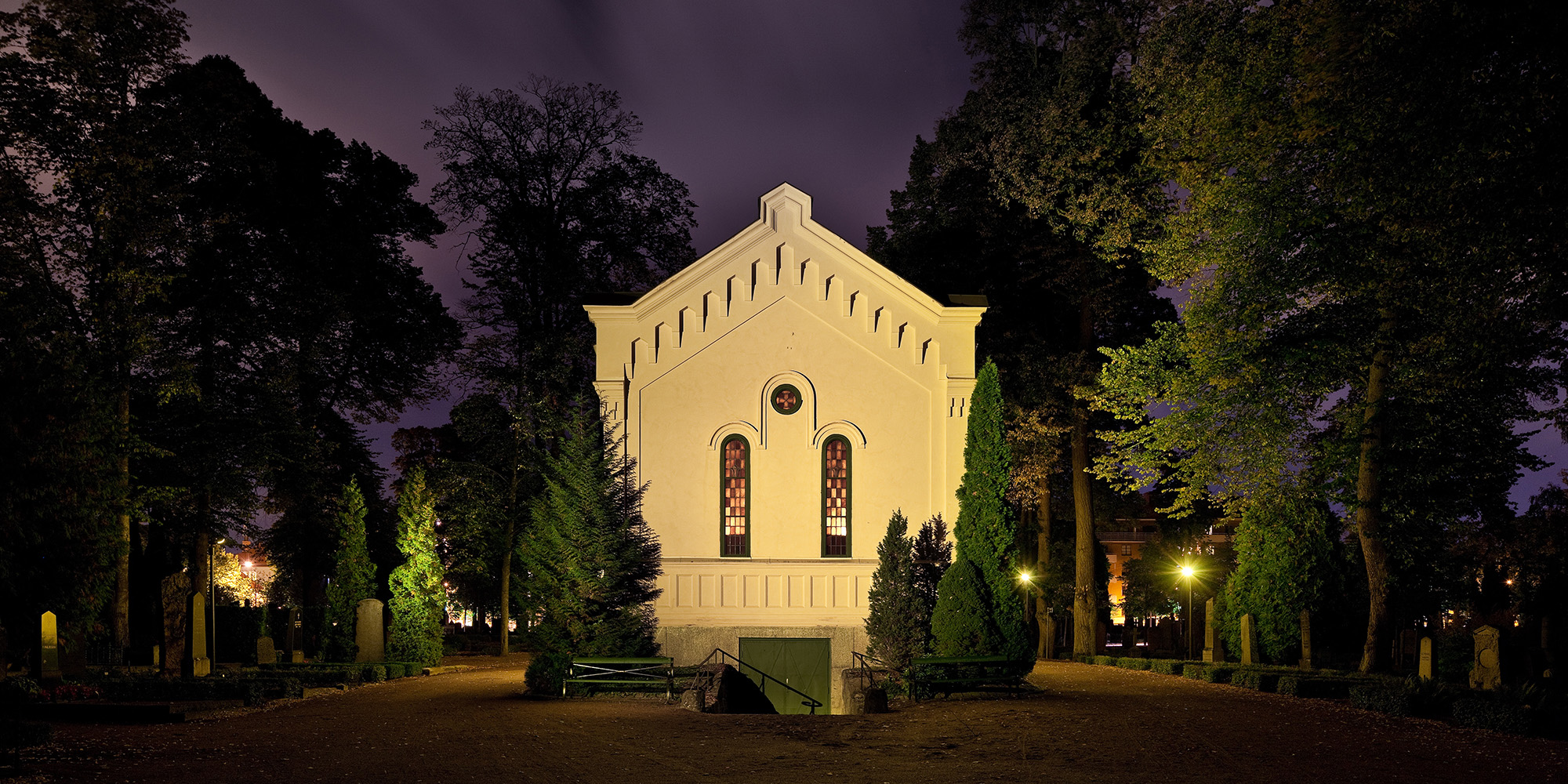
Tröstefull lyrik
Uppsala was named cemetery administration of the year in 2013, the same year that ‘Comforting lyricism’ was installed. The award was received by Tord Engström, head of Uppsala cemetery, and the justification given was the sustainability work that the cemetery had been actively involved in. The impression is reinforced and the sense of security is increased by the illumination of the interior of Gamla Kapellet.
See Florence Hermanssons complete work on her homepage.
Related News
Celebrating Retail Design: Inside Fagerhult's Health & Beauty Retail Safari
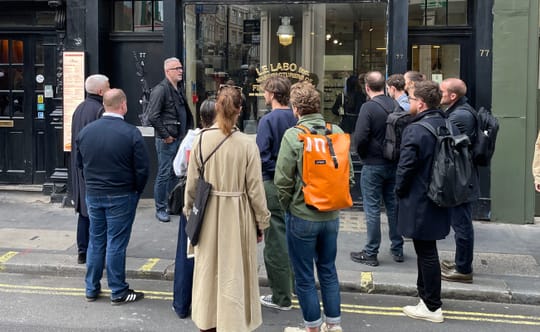
In retail, there is still no substitute for experiencing stores in person. That idea sits at the heart of Fagerhult's Retail Safari programme. Hosted by retail consultant Phil D'Souza, the initiative brings together retailers, designers and industry specialists to explore standout store environments, share perspectives and celebrate the creativity shaping the sector. With more than 30 years of experience spanning visual merchandising, store design, retail format development and customer experience, Phil has spent much of his career exploring how physical environments influence customer behaviour, brand perception and commercial success. Today, through his consultancy work and collaboration with Fagerhult, he helps retailers create spaces that engage, inspire and perform, making him an ideal guide for these immersive retail explorations. The recent Health & Beauty Retail Safari saw participants spend an afternoon visiting 12 stores across London's West End. Rather than critiquing brands against a checklist, the safari created space for observation, discussion and inspiration, examining how retailers use layout, materials, merchandising and lighting to shape customer experiences. Phil Different Brands, Different Answers Health and beauty proved a particularly interesting sector to explore because of the diversity of brands operating within it. "It's a really dynamic sector," says Phil. "You've got legacy brands alongside direct-to-consumer startups that have successfully transitioned into physical retail. That creates a really diverse environment." For the retailers and designers attending, that diversity was evident throughout the safari. Across the stores, participants encountered very different approaches to customer experience, despite many brands ultimately selling similar categories of products. By focusing on a single sector, the group could compare how brands interpreted space, atmosphere and product presentation in distinct ways. "You're able to look at what could ostensibly be a similar product type being presented through very different combinations of design, layout, materials and architecture," says Phil. "Ultimately, that respects the brand and creates a more immersive experience for the consumer." The Power of Product Presentation One of the standout examples came from Molton Brown's Regent Street flagship. The store uses ambient lighting to create a warm and welcoming atmosphere, with lighting also integrated directly into the shelving displays. "The thing about Molton Brown is that most bottles are clear, so customers often recognise and select products by colour," explains Phil. "What they've done by adding lighting into the shelving is almost illuminate the product from within." Unlike many brands where colour sits on the packaging, Molton Brown's clear bottles showcase the product itself. The distinctive colours of the shower gels, hand washes and bath products become a visual shorthand for different fragrances and collections, helping customers quickly spot familiar favourites or explore new options. The effect transforms the presentation of the products, amplifying the intensity of colour and helping customers navigate the range intuitively. "It almost creates this ethereal glow," he says. "They've not only lit the space, they've exploited the intensity of the colour of the product itself." For participants, it demonstrated how lighting can become part of the product experience rather than simply illuminating it. Creating Atmosphere Through Design Another memorable stop was Penhaligon's on Regent Street. For Phil, the store illustrated how lighting works most effectively when considered alongside every other element of the environment. "Penhaligon's felt like walking into someone's wonderful home," he says. Artwork, warm timber finishes, brass detailing, rich colours and discreet lighting combined to create a calm and highly immersive experience. "You suddenly realise that when you add all these things together and light them correctly, you feel very calm and very immersed in the environment," says Phil. "That's the power of good retail design underpinned by fantastic lighting solutions." Rather than drawing attention to individual features, the design worked as a cohesive whole to reinforce the brand's identity. One Brand, Two Very Different Stores One of the most interesting discussions emerged from comparing two stores operated by the same retailer. Participants visited two Aesop locations situated only a short distance apart: one on Regent Street and another on Beak Street. Despite sharing the same brand, the stores felt entirely different. The Regent Street location reflected the scale and character of its flagship surroundings, while the Beak Street store adopted a much simpler aesthetic more suited to its local context. "What was really interesting was that the store design on Beak Street reflected Beak Street, and the store design on Regent Street reflected Regent Street," says Phil. This approach extended across the brand's wider portfolio. "If you go to Kensington it's completely different again. If you go to Islington it's different again." For participants, it highlighted an increasingly sophisticated approach to retail design, where consistency comes from brand values and customer experience rather than identical store formats. "They're thinking about who's visiting the store," says Phil. "It doesn't really matter that every store isn't exactly the same. They reflect the consumer who's shopping in that location." Looking Beyond the Store Interior While much of the discussion focused on interiors, Phil encouraged participants to consider the customer experience before entering the store. "Standing outside a store is as important as being inside it," he says. Storefronts, windows and exterior lighting all play a role in shaping expectations and attracting attention within a competitive retail environment. "It's what you spot when you're walking past," he explains. "The better the environment is, the more likely you are as a consumer to consider that space." For retailers and designers alike, it served as a reminder that customer experience begins long before a purchase decision is made. Celebrating Great Retail A consistent theme throughout the safari was the desire to celebrate great retail design rather than critique it. That sense of celebration extended into the stores themselves. Ahead of the safari, the Fagerhult team spoke with the retailers they planned to visit. Phil says the response was overwhelmingly positive. “Pretty much every store said, ‘This is fantastic. Thank you so much. Yes, please come in,’’ he recalls. For him, that reaction reflected something important about physical retail: when a store has been carefully designed and invested in, teams are often proud to share it. Their enthusiasm adds another layer to the experience, reinforcing the relationship between brand, environment and people. Across the twelve stores, participants encountered a variety of approaches to lighting, layout, product presentation and customer engagement. While no two environments were the same, each demonstrated how considered design can shape the way customers experience a brand. "When you see some really good retail design, it creates fantastic ideation and fantastic creativity," adds Phil. Explore how Fagerhult can support your next retail project — from store openings to refurbishments — by getting in touch with our team. Coming soon: In a forthcoming profile feature, Phil D'Souza shares insights from more than 30 years in retail, exploring how store design, visual merchandising, customer experience and lighting have evolved, and what today's retailers can learn from creating environments that engage, inspire and perform.
Melanopic lux: lighting for education influenced by human biology
Light is essential in our daily lives, influencing our ability to see, overall well-being and performance. In educational environments, lighting quality can significantly impact students' focus, mood, and energy levels. So, how do we know what is the right amount and quality of light for this setting? Traditionally, light has been measured in lux, a unit of measurement for the intensity of light. It's used to measure how much light falls on a surface or the amount of light in a given space. One lux is the amount of light that falls on a surface that is one square meter in area when one lumen of light is spread out evenly. Recent advancements in research have unveiled the importance of melanopic lux, which goes beyond mere visibility. This measures how effectively light stimulates specific eye cells that regulate crucial non-visual functions such as sleep and alertness. In classrooms and lecture theatres, the melanopic ratio has become vital in lighting design, enabling educators to create spaces that support visual tasks and align with students' biological rhythms. In this article, we explore how lighting solutions can align with our biology, and how this helps to create optimum conditions for educational environments. The science of vision and light The human eye is a remarkable organ designed for high-resolution colour vision within a small area (approximately 2 degrees of the visual field) while relying on peripheral vision for motion detection. This dual-function system, shaped by evolution for survival, continues to influence how we perceive and interact with our surroundings. Our eyes are particularly susceptible to green and yellow light, reflecting our evolutionary adaptation to naturally lit environments. In contrast, blue light, which is chief in modern LED lighting, requires higher intensity to be perceived at the same level. Effective lighting design carefully considers brightness, timing, and distribution to support visual clarity and biological functions like mood and alertness. For example, exposure to bright light in the morning helps regulate circadian rhythms, boosting alertness and mitigating the effects of seasonal darkness. This is particularly important in educational environments, such as schools and universities, where lighting impacts mood, focus, and overall performance. Our Organic Response system provides an innovative solution tailored for these spaces. This smart lighting technology automatically optimises light levels, featuring daylight-responsive sensors and advanced occupancy detection, maintaining a balance between natural and artificial light. Doing so supports visual comfort and reduces energy consumption, making it an ideal choice for creating dynamic, efficient, and student-friendly learning environments. To further support students, well-lit spaces with minimal glare are essential for reducing eye strain and maintaining focus during extended study sessions. Adjusting light intensity and colour temperature for different tasks—such as reading, group discussions, or creative activities—enhances light's visual and non-visual effects. By integrating thoughtful lighting strategies like those offered by Organic Response, educational environments can promote healthier, more productive, and engaging learning experiences. Integrative lighting: Supporting health and well-being. Integrative lighting (also referred to as human-centred lighting) combines visual and non-visual benefits (such as emotional effects) to support biological rhythms and psychological well-being. This approach goes beyond traditional lighting solutions by considering how light impacts circadian rhythms and hormonal balance. Light exposure in the morning is critical for suppressing melatonin (the sleep hormone) and increasing cortisol (the alertness hormone). Proper timing helps align students' natural rhythms with school schedules, which often require a lot of focus. Consistent exposure to bright, cool light early in the day can enhance energy levels and cognitive performance. The melanopic ratio compares the spectral composition of a light source with daylight. Using this information, you can determine its melanopic lighting intensity. This enables the design of lighting setups that precisely meet both visual and biological lighting needs. Lighting recommendations for educational spaces Each learning environment has unique lighting needs. Libraries benefit from direct lighting on the floor, paired with ambient lighting on walls and ceilings. Vertical shelf lighting (200-300 lx) makes it easier to browse titles. Lecture halls, on the other hand, require glare-free, comfortable lighting with flexible control, ideally with pre-programmed scenarios. In auditoriums and classrooms, strong vertical lighting is crucial for clear visual communication, especially over greater distances, enhancing facial expressions and engagement. General lighting recommendations apply to all educational spaces. Our solutions meet industry standards, ensuring reading and writing areas maintain 500 lx for effective visual tasks. Using daylight-responsive sensors for luminaire rows can reduce energy consumption while maximising natural light. The number and arrangement of luminaires should be adjusted based on the room's size and function to ensure consistent illumination. The role of dynamic lighting A Double Dynamic lighting system can be a game-changer in educational environments. It allows for intensity and colour temperature adjustments to match the specific needs of activities, from quiet reading sessions to collaborative group work. Fagerhult's distinct approach to lighting means that our design is human-centric; we integrate scientific insight into light and human psychology, creating environments that support academic performance and well-being. Our focus on energy efficiency also means our advanced control systems optimise light usage while minimising energy consumption, contributing to a building’s sustainability goals. The customisable setting and flexible solutions ensure that educational environments can create tailored lighting profiles for different times of the day or specific learning activities. Long-term benefits of melanopic lighting Melanopic lighting, designed to mimic the natural light spectrum, helps regulate the circadian rhythm, which is essential for maintaining focus, energy, and emotional balance. In classrooms and study areas, proper lighting can reduce eye strain, improve sleep patterns, and enhance mood, which are critical for students' mental health and academic performance. By incorporating lighting that aligns with our biological needs, schools and universities can foster healthier, more productive learning environments,. This is particularly important during the winter months when daylight is limited. Whether through advanced tuneable white light systems, designs that maximise daylight, or energy-efficient solutions, we are dedicated to leading the way in lighting innovation for educational environments, delivering brighter futures—one classroom at a time.