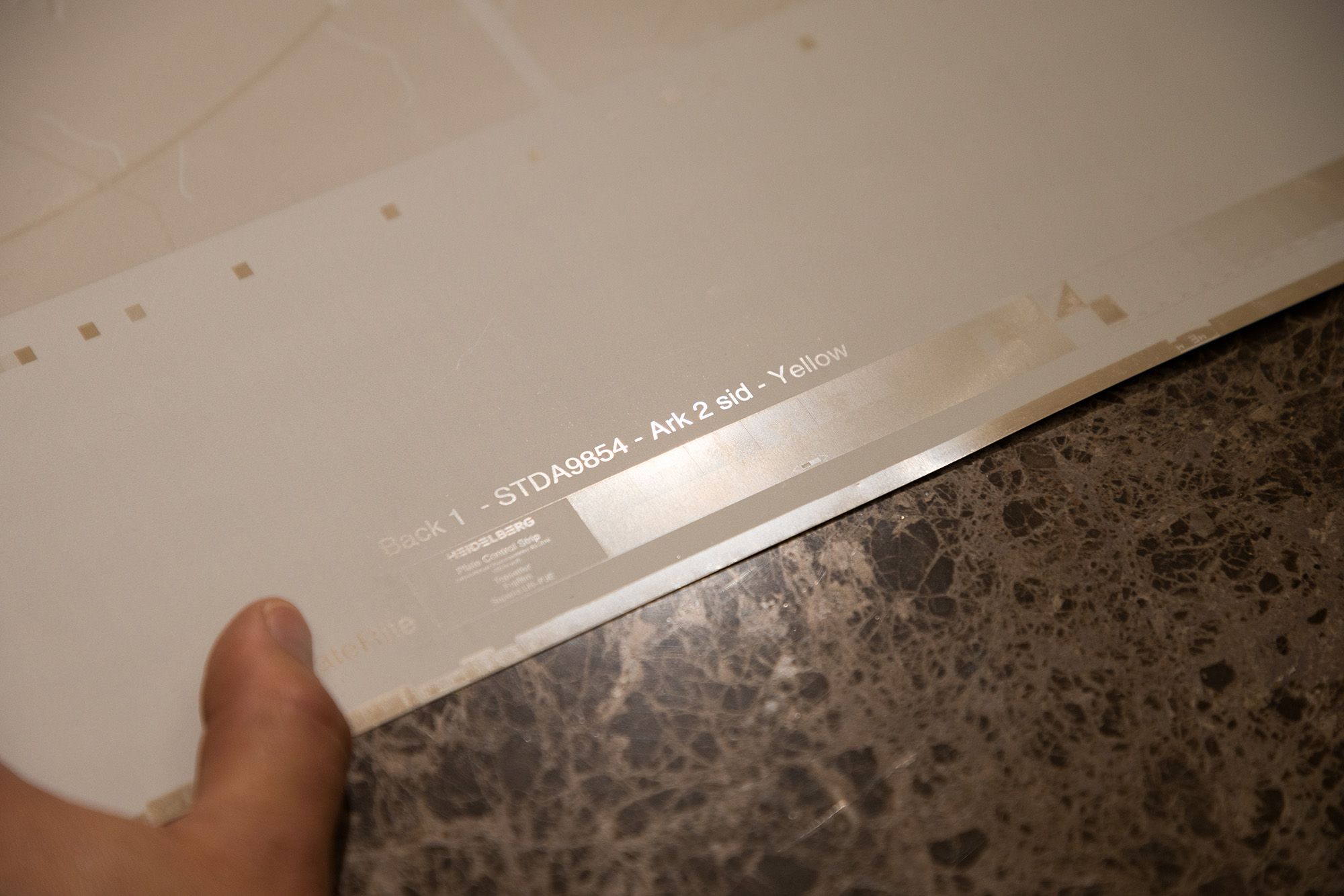
Reusing printing plates perfectly encapsulates the concept of industrial symbiosis – where a residual product from one operation becomes a valuable input product in another. The idea took shape at a kitchen table in Lund, when Fagerhult’s Sustainability Manager, Niclas Thulin, was visiting his parents.
“They asked how things were going at work, and I told them about Kvisten, which we were in the final stages of at the time. We were reusing reflectors from old TV sets for that product, and I mentioned that we were looking for more residual materials to reuse.”
Niclas went on to explain that the company needed a steady flow and consistent quality over time – and, ideally, the same format as well.
“And then my Dad, who’s worked in the printing industry his whole life, suddenly says, ‘What the heck, we’ve got loads of printing plates. They’re of the highest quality, always the same format – and they’re recycled.’ The next day, he brought home a couple of printing plates, which I then took to work and gave to my colleagues in the development department.
“I could tell right away that they were similar to the materials we use in many of our luminaires. In addition, there were a large number of them, the quality was high and consistent, and they were roughly the same size. All the qualities we were looking for were there.”
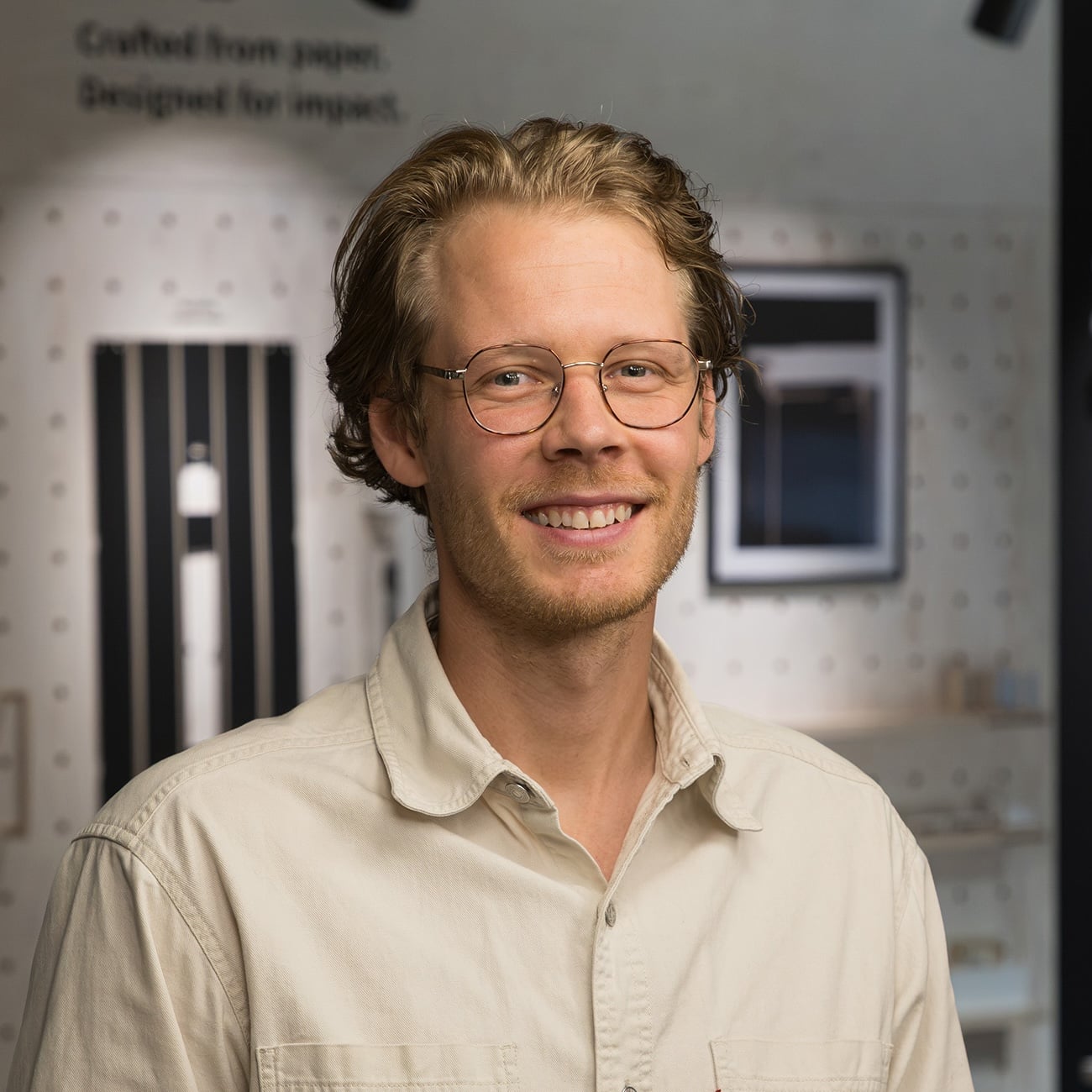 “And then my Dad, who’s worked in the printing industry his whole life, suddenly says, ‘What the heck, we’ve got loads of printing plates. They’re of the highest quality, always the same format – and they’re recycled.’" Niclas Thulin, Sustainability Manager at Fagerhult
From printing works to luminaire
When the printing plates arrived at Fagerhult’s development department, they quickly attracted a lot of interest – could they be used in the new Wrapped luminaires?
“I was in touch with the printing works about Wrapped and how we could use paper for the actual luminaire body. The printing plates were in the back of my mind at the time, so I raised the issue with them. They jumped at it immediately,” says Jonathan Levinsson, Design Engineer at Fagerhult.
The printing works uses a great many printing plates, and some of these are now being used for Wrapped Corner and Wrapped Surface (ceiling). The sheet metal is installed on the inside, as part of the structure. Here it contributes to electrical safety, for example, by acting as an insulation and earthing layer. It also provides stability and can be used to secure cables and other components, for instance.
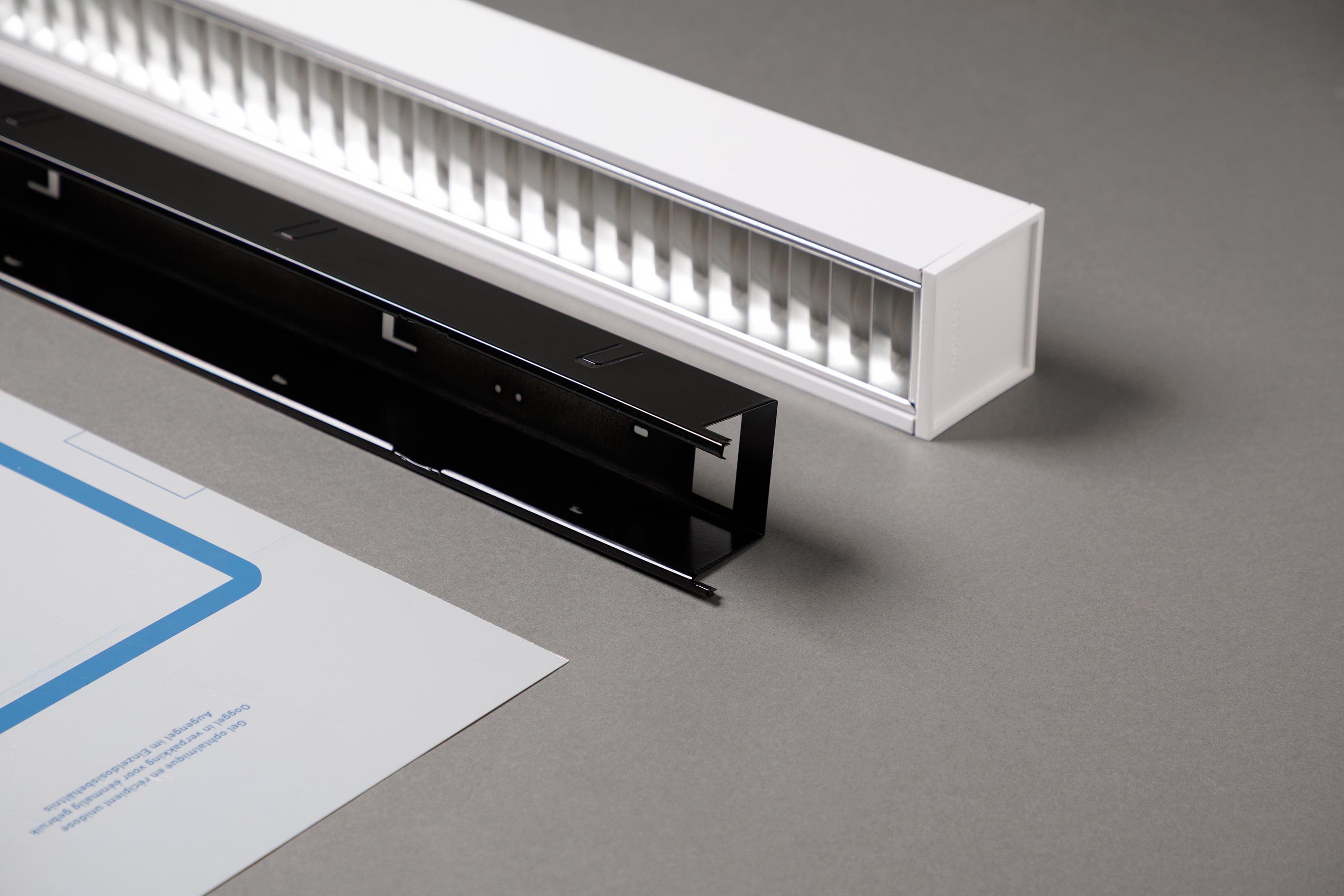
Circular flow. Waste from one industry creates value in another.
“The fact that the plates maintain the same dimensions and specifications over time ensures a stable material flow and makes it possible to plan production. This is a major advantage for us,” says Jonathan.
Start with the material – not the product
The work also highlights an important principle when it comes to industrial symbiosis. It is often easier to find a use for a residual product than to first decide what product you want to make and then try to find suitable recycled material.
“I think you have to start with the raw material and then design the component based on that. If you design a component first and then try to find a suitable material, it can be really difficult,” says Niclas.
The printing plates are a clear example. If Fagerhult had instead started by asking itself, ‘Where can we find sheet metal as a residual product?’ the search would probably have focused on the metal industry.
“We might have been looking for a business that bends or punches sheet metal. We would never have thought about printing works, which are a completely different kind of business. That’s what makes industrial symbiosis so interesting.”
At the same time, finding new connections is not easy.
“It’s hard to know what residual products other businesses have, especially when you don’t always know exactly what you’re looking for yourself. I think we need more forums where people can gain an insight into other industries and businesses, and where we can discuss industrial symbiosis with a more open mind,” says Niclas.
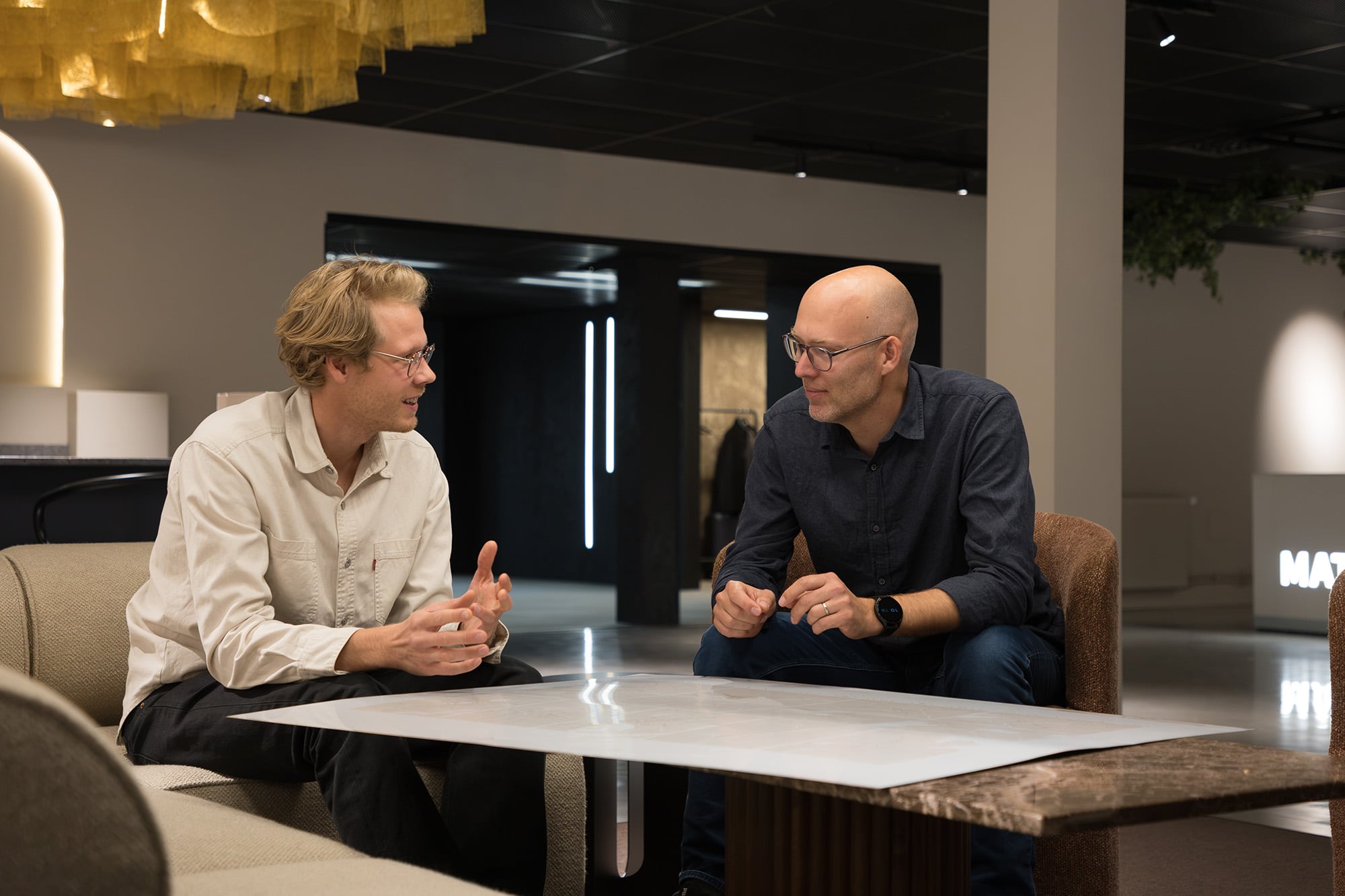
By sharing and developing ideas, Niclas and Jonathan enable new and innovative collaborations.
Ideas that roam between departments
At Fagerhult, there is already a way of working that fosters this kind of exchange of ideas. Niclas and Jonathan continually bounce ideas off each other, and a small group of people from Sustainability and R&D meet from time to time in order to brainstorm new ideas.
“We share a lot of ideas with each other. It’s fun to see what grabs Jonathan’s interest and what doesn’t. At times, someone will have stumbled upon something that we can then build on,” says Niclas.
In the case of the printing plates, the solution came from an unexpected source.
“It was really just luck. My Dad wasn’t sitting around wondering how he could solve a problem for Fagerhult. But when I told him what we needed, he saw the opportunity right away. He’s clever and often comes up with his own solutions,” says Niclas. “I’m almost a little annoyed that I didn’t think of it myself.”
A solution that links multiple workflows
So far, we have not performed any calculations regarding the exact climate benefits. The principle is clear, however: when existing materials can be used rather than virgin raw materials, the potential exists to reduce the need for new resources.
“We need to be open throughout the entire chain and to dare to look beyond our own industry. The right materials might be found in a place we’d never even have thought of looking,” concludes Niclas Thulin.