The pressures facing retail today – new technologies, changing customer habits, shifting expectations around experience and convenience – are not entirely new. Retail has always evolved in response to social, cultural and technological change. Long before the arrival of online shopping, retailers were experimenting with how architecture, display, atmosphere and service could influence behaviour.
We spoke with Professor Laura Ugolini, Director of the University of Wolverhampton’s Centre for the History of Retailing and Distribution (CHORD), to chart this history of retail stores and the role of lighting with in it.
The Theatre of the Early Shopfront
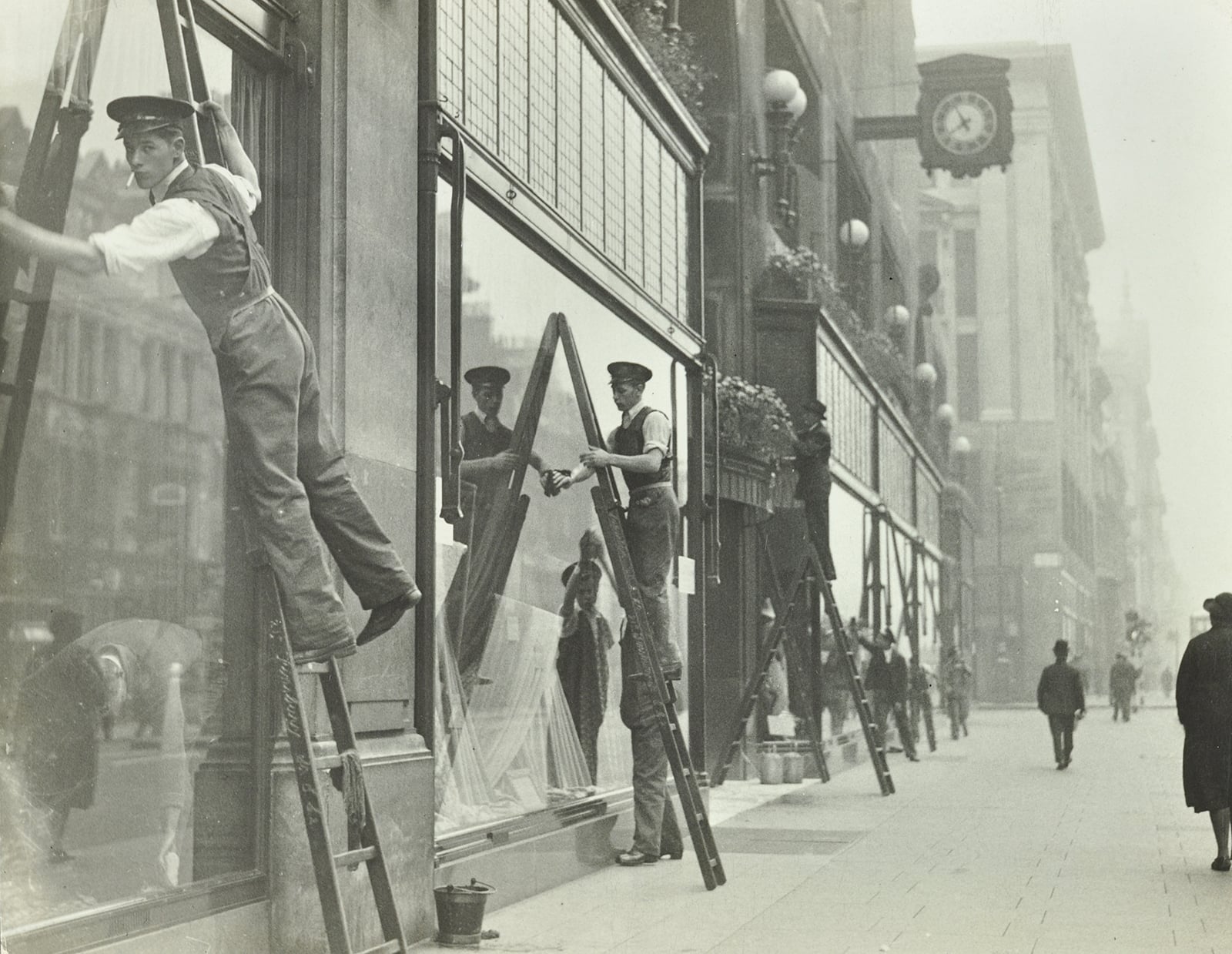
The instinct to attract attention is far older than the modern high street. Retailers in medieval markets and Georgian streets already understood the importance of presentation, spectacle and visibility. Yet the nineteenth century transformed what shops could physically become. Advances in manufacturing made large plate-glass windows more affordable and widely available, allowing retailers to create bigger and more ambitious displays. According to Laura, Victorian window displays often appear cluttered to modern eyes, with goods “almost crammed into the shop to give an impression of abundance.”
When Lighting Became Part of Modern Retail
Lighting has long shaped the retail experience, even before electricity became widespread. Gas lighting illuminated nineteenth-century shopfronts and allowed stores to extend trading hours, particularly in winter. Yet the interwar period marked a significant shift in how lighting was discussed and marketed.
“Modernity was very much associated with lighting. The cinemas, dance halls, and the city centre were all portrayed as being very bright in that period.”
Electric lighting became a visible symbol of progress. Retailers used brightness to communicate cleanliness, efficiency and fashionability. Stores that embraced electric lighting presented themselves as contemporary businesses aligned with changing tastes and lifestyles.
“There seems to be this association with being modern, with being up to date. They make comparisons with dark and dingy interiors.”
Trade publications of the interwar period increasingly discussed lighting as part of the wider modernisation of retail interiors, alongside shop fittings, display design and window presentation. One interwar menswear article argued that “the modern man’s shop must be bright”, contrasting contemporary retail environments with the “gloomy” and poorly organised outfitter shops of earlier decades. At Walter Scott’s menswear premises in Regent Street, “dust proof fixtures and tubular lighting” were promoted as signs of a modern retail design.
While display had long been key to retail, interwar department stores increasingly integrated it throughout the entire shopping environment. One article describing the Simpson store in Piccadilly states that space was devoted to “selling through display”, with furniture, fittings and lighting all contributing to the overall customer experience. Even then, retailers balanced aesthetics with practicality. Electricity remained relatively expensive during the interwar years, meaning natural light still played an important role. Skylights, large windows and glazed façades were often combined with electric lighting to reduce costs while maintaining bright interiors.
Markets, Spectacle and Entertainment
While department stores projected refinement and sophistication, Britain’s markets developed their own highly theatrical retail culture. Laura points to photographs of 1930s markets, where traders used electric lighting to illuminate stalls and attract crowds. The Saturday night market became both a commercial and social event.
“It was often a spectacle as well as just somewhere you went to buy your items. People went for entertainment as well as just to buy things.”
The Bolton Worktown photograph, shown below, of a brightly lit shoe stall captures this atmosphere particularly well. Electric lamps flood the stall with light while customers gather closely around the display, demonstrating how illumination could help to create drama, visibility and energy within crowded public spaces.
These markets reveal an important point about retail history: experiential retail is not a recent invention. Long before contemporary flagship stores and immersive brand environments, retailers were already using atmosphere, performance and sensory appeal to attract visitors.
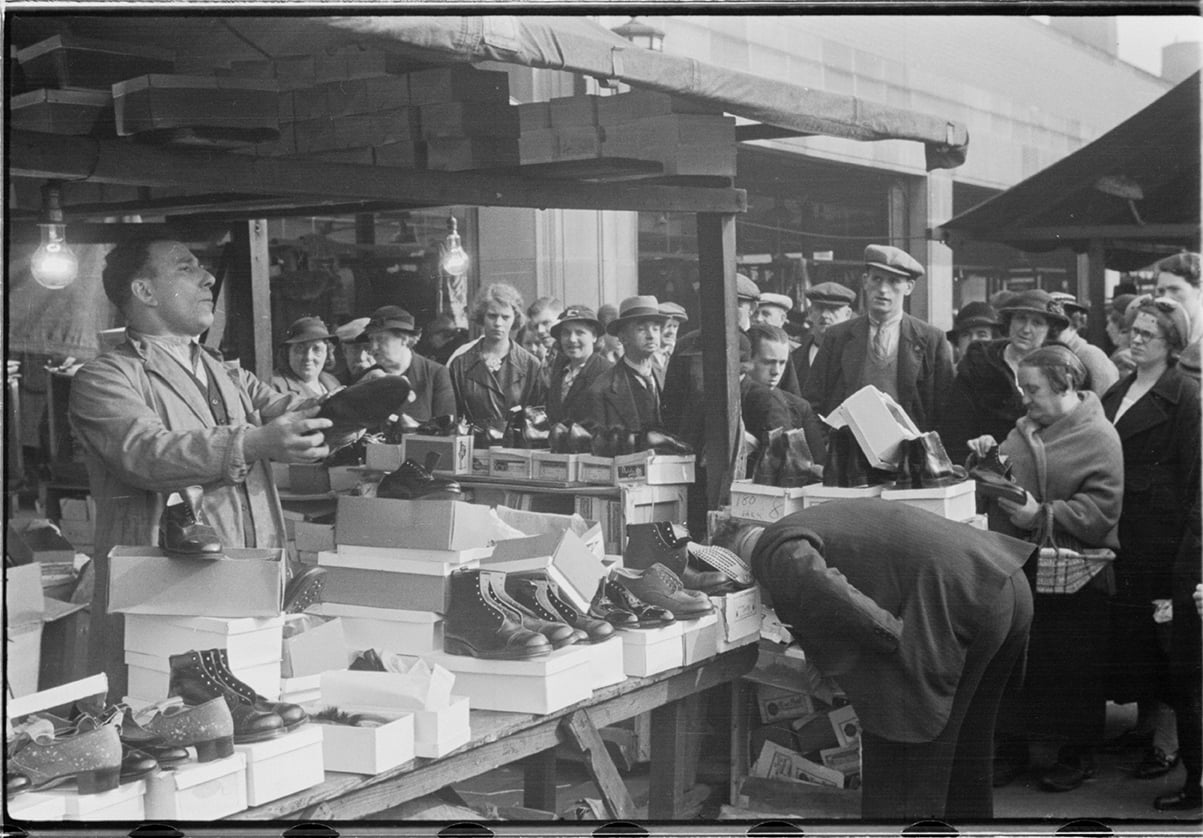
Shoe Stall, 1937. Humphrey Spender. © Bolton Museum
The Department Store Revolution
If markets brought energy and spectacle, department stores introduced a new kind of controlled retail environment. By the late nineteenth century, stores such as Harrods, Selfridges and John Lewis allowed customers to browse freely without the pressure to purchase immediately. Cafeterias, reading rooms, hairdressers and rest facilities encouraged visitors to spend extended periods inside.
“I would suggest that that kind of experience of actually just browsing, shopping, wandering around and just looking is probably something we associate with department stores in the nineteenth century,”
This represented a major cultural shift. Earlier forms of shopping were often highly transactional, involving direct interaction between customer and shopkeeper. Department stores softened this exchange and made browsing itself a leisure activity. The development of customer amenities also changed who retail spaces were designed for. Many department stores actively targeted female shoppers, presenting themselves as respectable and relatively safe urban environments.
“Department stores often marketed themselves as a shop aimed specifically at female customers. Somewhere where women could actually wander around in relative safety.”
The design of these interiors reinforced that sense of reassurance and comfort. Bright, ordered environments, visible circulation routes and carefully controlled displays all contributed to a more welcoming retail experience.
Standardisation and Aspiration
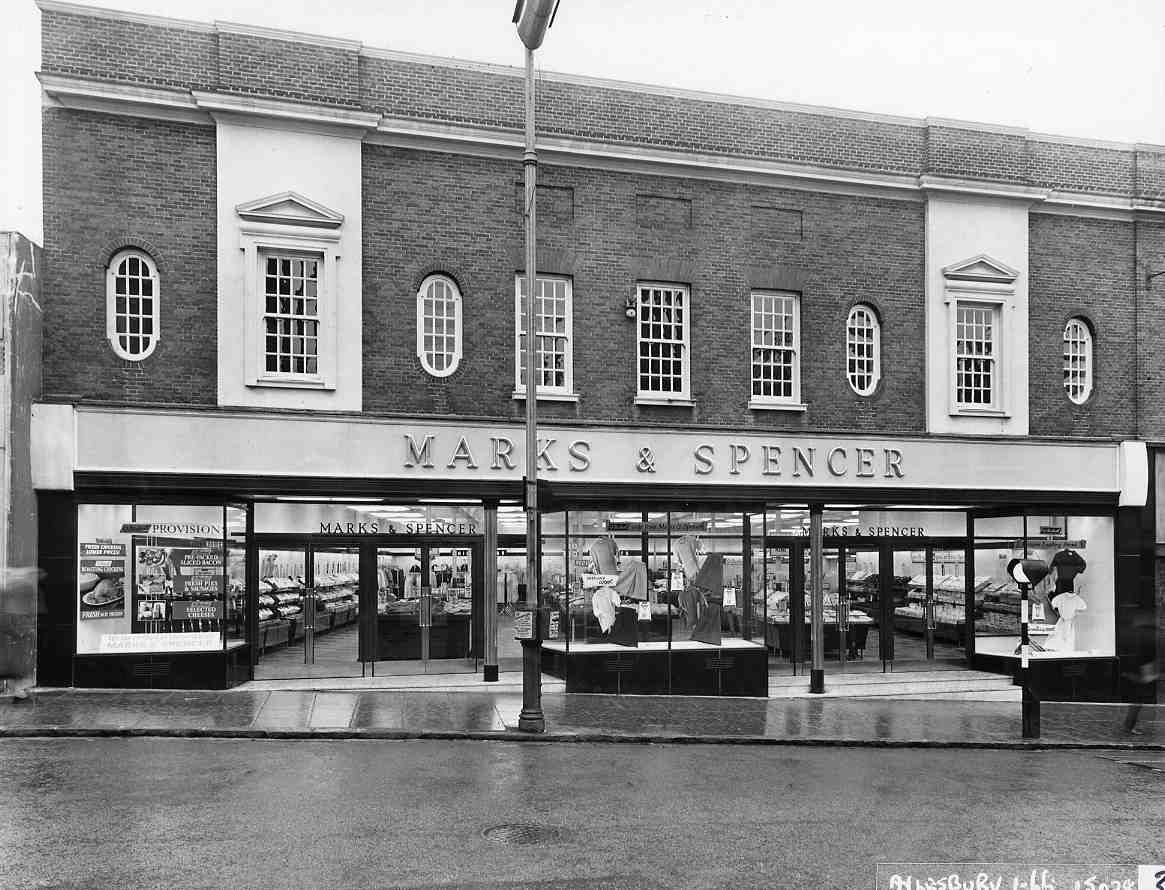
As the twentieth century progressed, chain retailers began refining another retail strategy: consistency. Brands such as Marks & Spencer created standardised interiors and displays across multiple locations, helping customers recognise the brand experience wherever they shopped.
Laura points to menswear chains, such as Burton, that used fittings and fixtures designed to resemble bespoke tailoring establishments, despite selling mass-produced suits at accessible prices.
“It actually felt as if you were entering a bespoke tailor,”
This blending of aspiration and accessibility became central to twentieth-century retailing. The environment itself communicated value, trust and identity. An article on Elliotts of Reading described a modernised shopfront as possessing “quiet but compelling attraction”, suggesting retailers increasingly understood that atmosphere and identity could influence customer perception before any interaction took place.
That connection between atmosphere and perception continues today. Whether through lighting, materials, layout or display, retail environments still shape how customers interpret brands long before a purchase is made.
The Foundations of Modern Retail
By the interwar period, retailers were already thinking carefully about how lighting, display, materials and layout influenced perception and behaviour. Many of the themes shaping retail design today – atmosphere, identity, experience and customer comfort – were already emerging nearly a century ago.
In part two, we will look at how retail continued to evolve through the twentieth century – from department stores and chain stores to self-service, convenience shopping, and the modern question of what physical stores can offer that digital retail cannot
Related News
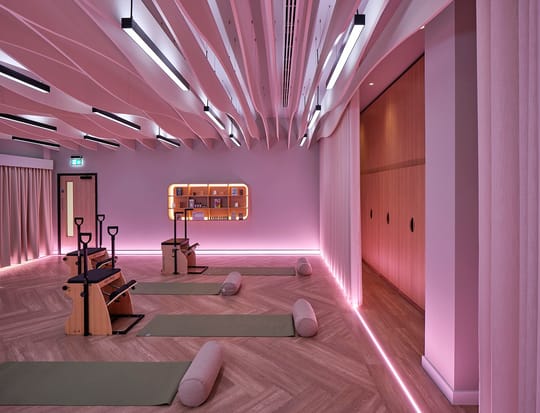
Holland & Barrett’s Award-Winning Experience Store
Holland & Barrett’s Cardiff store represents a new approach to retail, combining traditional shopping with health services and wellbeing experiences such as yoga sessions, health checks, blood tests,. Recognised across the sector, the store won the New Store Game Changer award at the Retail Gazette Awards, the Best New Store Award – Small/Medium at the Retail Week Awards 2026, and was named Store of the Month by the Institute of Grocery Distribution. Fagerhult played a role in bringing this concept to life, providing lighting solutions to help realise the client’s vision of a human-centred wellness and retail space. Store Concept and Design The Cardiff store is a major step in Holland & Barrett’s strategy to become a purpose-led wellness destination. The store was designed to evoke a feeling of calm and comfort, while remaining accessible and encouraging self-guided discovery of products and services. Fagerhult’s role was to provide lighting that supported the design, ensuring visual comfort and product clarity while adapting to the needs of each space - from retail areas to consultation rooms and the Wellness Studio. Fagerhult worked closely with the client and creative agency Syn to ensure the lighting complemented the store’s layout, materials, signage, and interactive features. Wellness Studio The Wellness Studio at the rear of the store is the centrepiece of the wellbeing concept. Tunable white lighting allows the colour temperature to shift between cooler, energising tones and warmer, calming light. RGBW in-ground luminaires add colour and support different moods for yoga, pilates, and other activities. Lighting scenes are controlled via dedicated scene controllers, allowing instructors to adjust settings manually depending on the session. “This area was really exciting to work on,” says Charles. “For sessions like yoga, the tone of light is important. Being able to adjust warmth and colour helps support the activity taking place. The ability to change light to suit the activity makes the space feel dynamic and responsive. It brings an extra layer to the experience and really supports the wellbeing focus of the studio.” Supporting the Customer Journey Through Light Lighting plays a key role in attracting customers into the store. As Charles explains, “From the street, the entrance is designed to stand out, using illuminated signage and a large digital display to draw attention and encourage people inside.” Inside, the layout is long and relatively narrow, with clear views towards the rear of the store where the Wellness Studio is located. Streamer Mini Twin luminaires were installed throughout the retail areas. The twin-head design of these spotlights helped to reduce installation time and costs, while providing flexibility across different zones. Integrated dip switches allow the luminous output to be adjusted, making it possible to increase the light in a specific area or brighten the entire store if it feels too dark. “The Streamer Mini Twin is an extremely efficient fitting, meaning energy efficiency is built into the lighting scheme,” says Dave. Each bay is carefully illuminated with dedicated fittings aimed at product headers and shelving, keeping the focus on merchandise rather than surrounding surfaces. “The lighting is designed so that shadows fall on the floor, not the products,” says Charles. “That way, attention stays on the merchandise, and the space isn’t over-lit.” Consultation and Testing Areas Consultation and testing rooms within the store were lit to higher levels to support clinical tasks and visual clarity. These spaces required a more neutral and functional lighting approach to ensure comfort and accuracy during health checks. Collaboration and Delivery Fagerhult worked alongside Syn and the wider project team during the design and delivery stages, particularly around the Wellness Studio and specialist areas. Coordination across disciplines helped ensure the lighting responded to both the spatial design and operational needs of the store. All luminaires were held in UK stock and delivered within short lead times, supporting the project programme and Holland & Barrett’s wider store investment plans. “Delivering reliably and on time is essential,” says Charles. “It allows the client to progress with confidence.” Recognition The day before the store opening, the client gathered designers, installers, and suppliers to celebrate the completed store and acknowledge everyone’s contribution. “It was really rewarding to see everyone so pleased with the outcome,” says Dave. “The Wellness Studio, with its adjustable lighting, was particularly well received and made a real impact on everyone.” “It was a real team effort,” adds Charles. “We worked closely with Syn and the wider project team to ensure the lighting complemented the design and operational needs. The recognition the store has received, including the New Store Game Changer award and being named Store of the Month, shows that this collaboration really paid off. Seeing the store completed and hearing the client’s feedback made it clear the lighting delivered exactly what was needed.” Explore how Fagerhult can help you transform your retail and wellbeing environments; get in touch today.
The Latest Research on Retail Lighting Design: How Light Influences Shopper Behaviour, Perception, and Sales Outcomes
Retail environments are evolving fast. With online channels offering convenience and endless choice, physical stores must deliver compelling reasons for customers to enter, engage, and purchase. For retailers, lighting should be treated as an active contributor to customer behaviour and commercial performance. Retailers who integrate evidence-based lighting solutions are likely to see higher engagement and sales. This article draws together the most recent findings from 2025 studies, linking lighting design to customer psychology, perception, and business impact. Lighting as Part of a Holistic Retail Experience Studies of retail design often focus on singular elements such as store layout, failing to acknowledge that the act of shopping is always a multisensory, holistic experience. A 2025 study by the University of Kent sought to change this, examining flagship retail environments on Oxford Street, including Lush, Disney, and Primark. The research analysed atmospherics such as lighting, layout, flow, and sensory cues alongside observed shopper behaviour. In stores such as Lush and Disney, lighting reinforced brightness, colour, and product visibility, contributing to perceptions of energy, enjoyment, and immersion. By contrast, Primark’s lighting supported efficient, task-focused shopping. Shoppers were willing to accept a less enjoyable environment when their goal was rapid product acquisition. For retailers, this highlights that lighting should align with store purpose and brand positioning rather than follow generic standards. The study’s author, Cariad Martin, notes: “The process of shopping online is relatively one-dimensional, certainly not multisensory, and generally would be difficult for shoppers to differentiate much between shopping with one brand or another. This means that shoppers are much more likely to revert back to price being the sole factor when deciding between similar products.” “Multisensory, interactive retail experiences allow retailers to differentiate their goods from similar goods on the market, something that is significantly more difficult to do with ecommerce.” Exterior Lighting Affects Shopping Decisions A 2025 research paper, The Influence of Fashion Retailers on Customer Psychology Using Visual Merchandising and Store Layout to Improve Shopping Decision provides strong evidence that lighting influences how customers notice, enter, and navigate retail environments. The authors describe the window display as the store’s ‘first line of offence’, acting as a direct and immediate connection between the shopper and the merchandise. Lighting plays a key role in this interaction by enhancing visibility, creating contrast, and supporting visual storytelling. Key insights from the paper include: Well-designed exterior lighting helps create strong first impressions, particularly during evening or low-light conditions. Effective lighting increases the visibility of window displays, signage, and entrances, making stores easier to recognise and more inviting to approach. Brand colours, logos, and exterior lighting work together to strengthen brand identity and differentiation in competitive retail environments. The study concludes that: ‘Exterior lighting emerges as one of the most influential factors in shaping consumer behaviour and decision-making processes,’ and ‘Such findings underscore the importance of investing in high-quality, thoughtfully designed exterior lighting as an integral component of retail strategy, with a clear and measurable impact on attracting and engaging potential customers.’ Interior Lighting Affects Shopping Decisions The same study highlights the importance of interior lighting once customers enter the store. Adequate and well-distributed lighting allows customers to see fine details in fabrics, finishes, and colours, supporting confident product evaluation. Brighter environments are consistently associated with higher perceived value, better ambience, and more positive brand impressions. In the paper, the authors use the example of retailers like H&M, which use this concept to create a clean, well-lit shopping atmosphere that promotes a sense of value and quality. The study concludes that ‘The impact of interior lighting on customer shopping decisions is substantial and statistically significant.’ Light Influences Visual Perception and Product Evaluation A 2025 study published in the Journal of Business Research uncovered how lighting influences perceived product size. The research found that under bright lighting, certain products with convex shapes appear larger to customers — which shifts visual attention and can affect judgement of product desirability. Why this matters: lighting changes how products look in customers’ eyes, not just whether they can see them. This can influence choice, perceived value, and how merchandise is evaluated relative to competitors on display. Why Lighting is a Strategic Retail Investment “The latest research presents a consistent message: lighting is not decorative. It is a foundational element of retail design that supports experience, perception, and behaviour,” says Dave Hughes, Head of Lighting Design at Fagerhult. Key evidence-based insights include: Exterior and interior lighting are linked to store entry, exploration, and in-store behaviour. Lighting influences psychological comfort, mood, and well-being in retail spaces. Brightness and light quality affect how products are visually perceived and evaluated. Fagerhult combines research-led insight with technical expertise to help retailers translate evidence into lighting solutions that support both brand experience and commercial performance. Get in touch with our team to learn more about how we can help you.