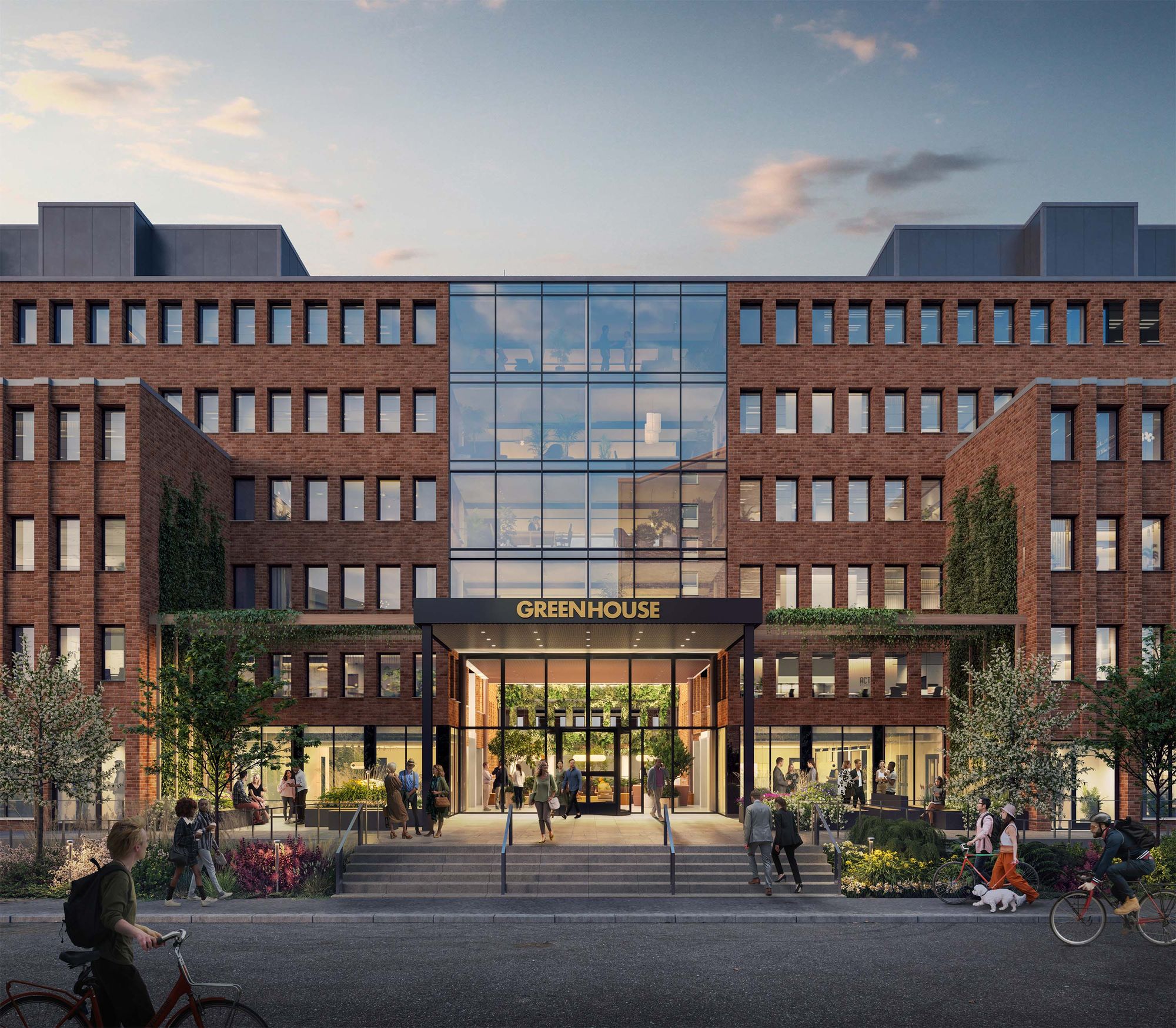
Creating a space for people and nature
Greenhouse is a modern workspace of up to 20,000 square meters with occupancy starting at the end of 2023. It offers a wide range of conference rooms and shared workspaces in an open environment. When navigating the space, you constantly enjoy the change between indoor and outdoor surroundings. The building is defined by its great variation between open landscapes and more intimate meeting spaces, while simultaneously making space for non-work related activities such as yoga, meditation, and sauna. The result is a dynamic work environment generating both great focus and relaxation.
"We want to create places where people wish to be and want to return. This requires exciting contexts and a changing environment that supports modern ways of working and is attractive to employees", says Anna Kullendorff, Business development manager at Humlegården.
Recycling and reuse in mind
Being an beautiful old brick property, the goal of this project was to modernise it in a sustainable way, while still preserving the value of its history. This included, for example, keeping and reusing the interior ceilings, glass partitions, and doors. Since the ceilings were reused, a question arose. Could the luminaires also be restored and updated to meet today’s standards? Fagerhult got involved at an early stage of the project to convert and transform the old luminaires into modern presence- and daylight-controlled LED luminaires.
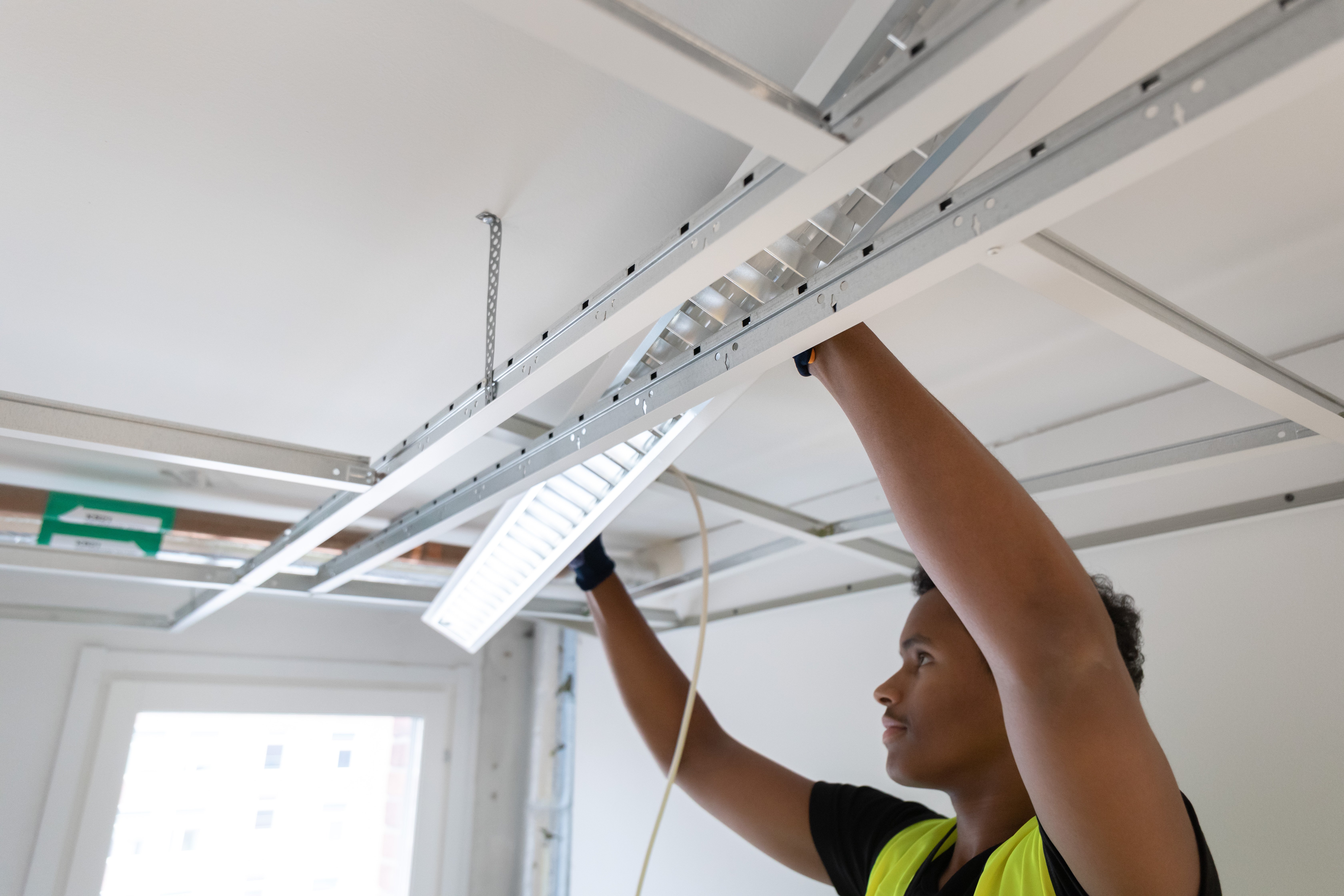
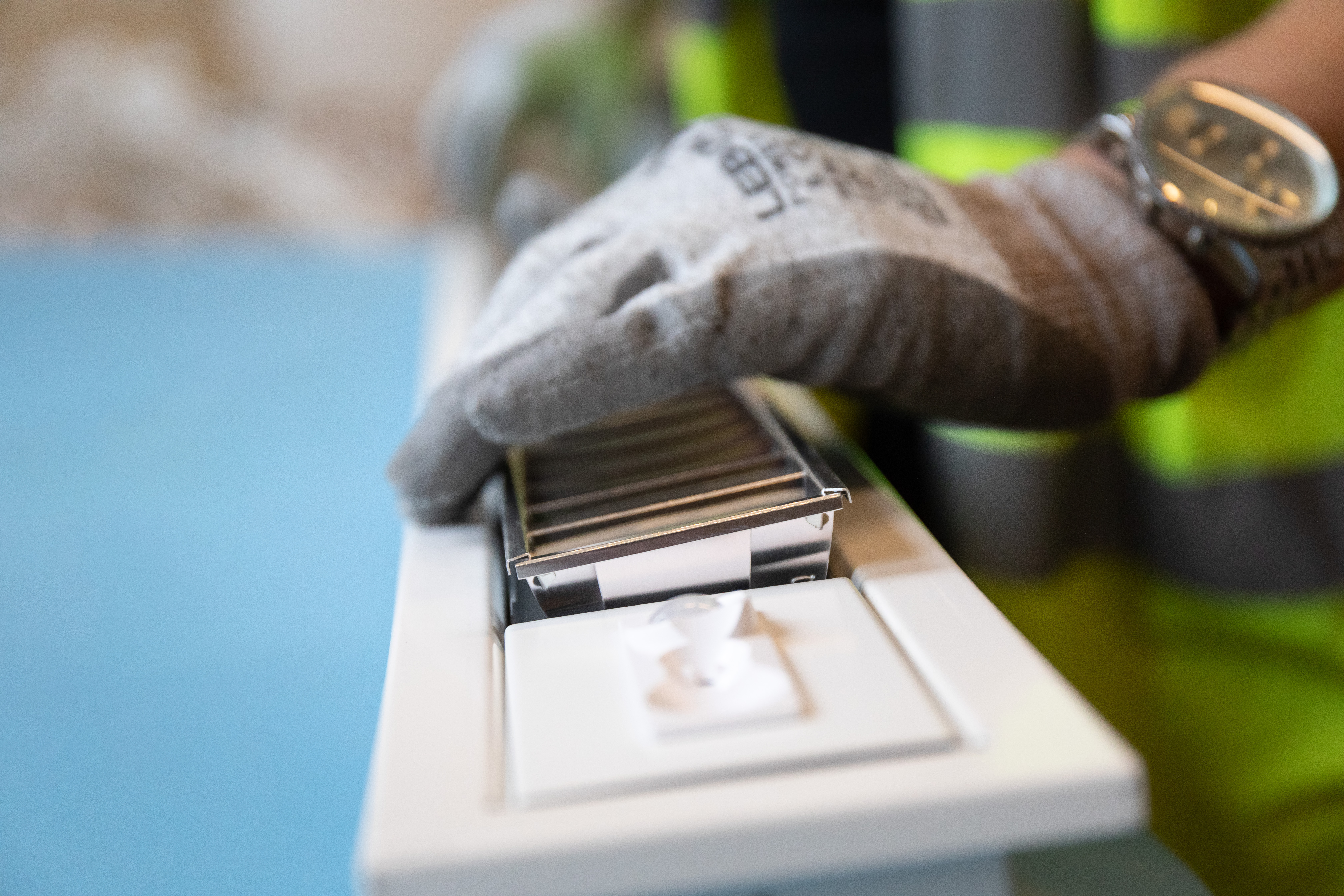
"By refurbishing the luminaires, we were able to achieve significant environmental and economic savings. We could keep the electrical installations, avoid new wiring and making new holes in the ceiling. To future-proof the building, we also installed our plug-and-play lighting control system, Organic Response in every luminaire. Incorporating a control system, ensures a future-proof solution since it creates the possibility to add on services and integrations to a Building Management system, if needed", says Kjell Wallin, Lighting advisor, Fagerhult.
Clear goals paved the way for creative solutions
For Fagerhult, Greenhouse is the largest refurbish project to date.
"Collaborating with a property developer who expresses such clear goals regarding sustainability and refurbishment is exciting. With over 2 700 luminaires, in three different models, being refurbished, we had to think creatively to find practical and sustainable solutions", says Jessica Wahlberg, Fagerhult's Regional manager in Stockholm.
However, transporting the luminaires from Solna to Fagerhult and back would entail significant greenhouse gas emissions and undo the environmental benefits of refurbishing the luminaires. So, with sustainability in mind – Fagerhult came up with a different, slightly unconventional, solution.
A full-scale production line on-site
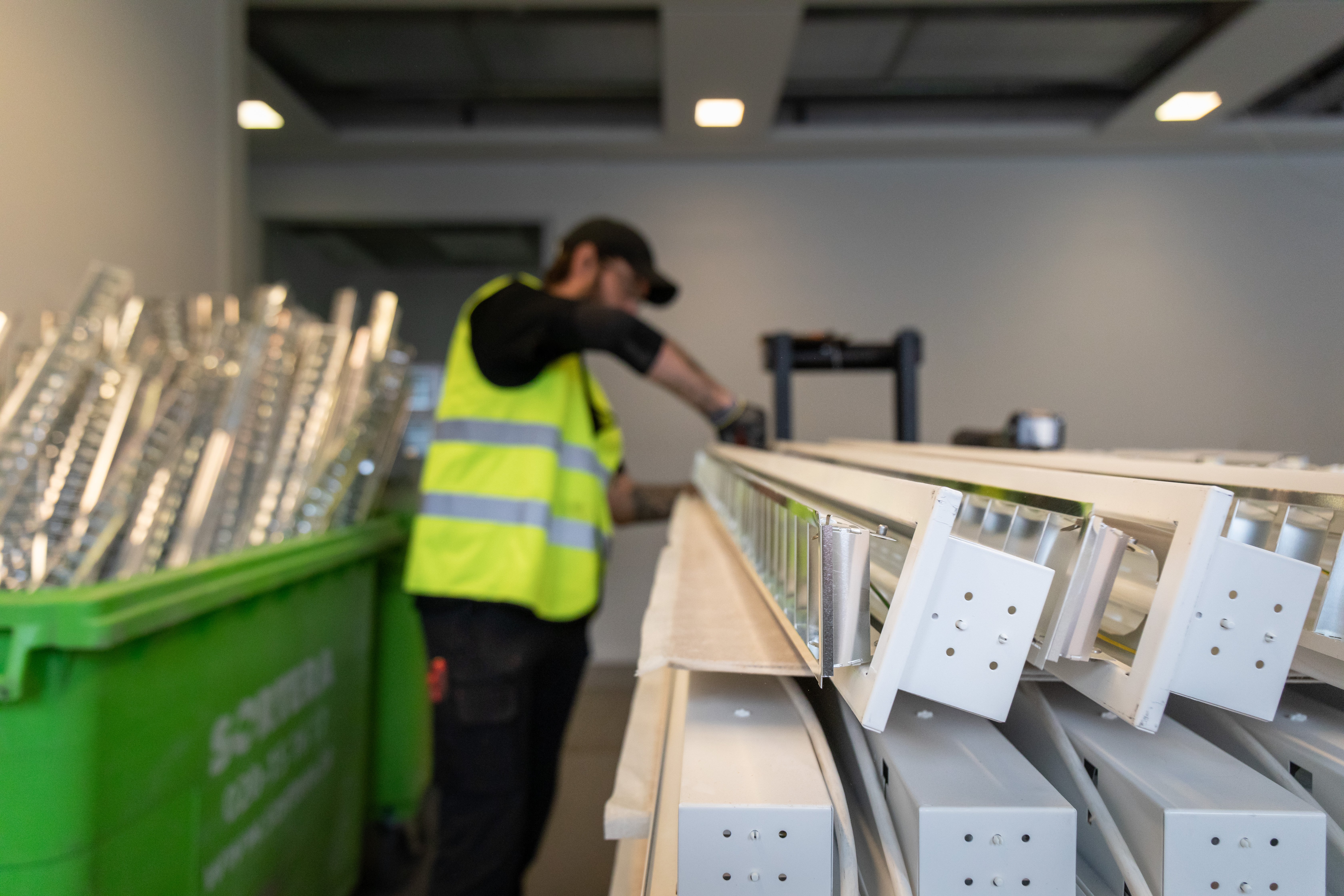
A full-scale production line was created at Greenhouse where Fagerhult planned and organised all the set-up in close collaboration with the on-site electricians for an efficient workflow. We considered everything from easy transportation of the luminaries inside the building to management of functional tests and recycling by the knowledgeable assemblers.
All the old luminaries were disassembled, the luminaire body was reused, and all excess material were sorted into different fractions and recycled. The old light sources were replaced with new LEDs and integrated Organic Response sensors to save energy. Everything was customised to fit into the old luminaire body.
 "On site we found old bread cages that fit into the elevators, these were reconstructed in order to safely transport the luminaires". Kjell Wallin, Lighting advisor, Fagerhult
"This project required a lot of creative solutions and quick thinking. For example, while transporting the luminaires between different floors we needed to develop special cages since the elevators were too narrow to fit a forklift. On site we found old bread cages that fit into the elevators, these were reconstructed to safely transport the luminaires", says Kjell Wallin, Lighting advisor, Fagerhult.
And since we never compromise on safety, Fagerhult also ensured the technical capabilities and safety of the refurbished luminaires. All new luminaire parts were tested at our laboratory according to current standards, which made the assembly at Greenhouse easy and efficient. After a luminaire had been rebuilt, complementary and final tests were also carried out on site. We always focus on high quality in our lighting solutions, regardless of them being old or new.

Environmental savings
By reusing parts from the luminaires, keeping the old electrical installations, and not needing to make new holes in the ceiling or new cable installations, the refurbishment of the luminaires at Greenhouse has led to significant environmental savings.
"By working with Fagerhult to reuse the existing luminaires we have saved 7.1 tons of material and 2,297 megawatt-hours of energy over a 20-year lifecycle. If we also include the environmental savings from fewer transports and less packaging, the environmental benefit becomes even greater", says Clas Boudrie, Project manager at Humlegården.
Greenhouse is proof that big steps can be taken within sustainable property development - all through close collaboration, commitment and by embracing an unconventional mindset to make it happen.
Read more about Greenhouse here
Related News
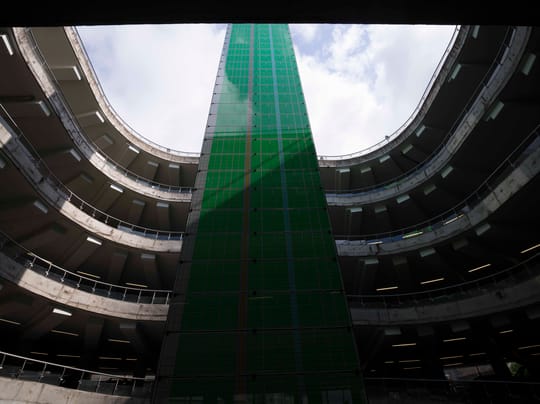
Smart reuse of 600 luminaires in Smedjan parking garage
When upgrading the lighting in Smedjan parking garage in Jönköping, Sweden, the property owner chose to invest in reuse instead of buying new – and the solution was Fagerhult ReLight. By reusing 618 customised luminaire frames, the climate impact could be reduced by as much as 6.3 tonnes of CO₂e compared to newly purchased materials. Smedjan parking garage is unique in its design, with spiral lanes without traditional floors, and recessed lighting luminaires in the ceiling. The luminaires were installed when the parking garage was built in the early 2000s, and when the old fluorescent tubes were replaced with LEDs, a problem occurred: the luminaire frames were custom-made and adapted to the cast concrete. “We needed to find a solution that worked with the existing frames and dimensions of the concrete structure, and ReLight made it possible,” says Martin Hulthe Landberg, Technical Administrator at Jönköping Municipality. Image gallery - Smedjan Easy reuse with ReLight The project began with a couple of luminaires being sent to Fagerhult, who used them to create a prototype. After a few rounds of development and idea exchange, the new LED kits were ready for installation. The installers could easily clear the chassis and fit the upgraded light source in place – reusing the existing luminaire frames without having to dismantle them from the concrete structure. “During the work, we closed the parking garage in stages and the installation went smoothly. We changed three to four luminaires per hour.” Each ReLight project is based on a clear core idea. The characteristics, energy efficiency, and light comfort of the luminaire must meet the same high standards of quality, safety, and durability as a new luminaire. Lower consumption and better light Even before the luminaires were updated, a lighting control system was in place. It could also be reused and integrated into the new solution. After switching to LEDs, energy consumption has been reduced by around 30% in the first six months after commissioning. “Lighting accounts for a large proportion of energy consumption, so changing to LED had a very positive effect. We also believe that we will see further reductions when we measure over the full year and when we fine-tune the system. At the same time, we have a much better light environment in the parking garage and that is a win in itself.” Quote block - Martin More projects to come In total, 618 luminaires were reused, which meant that 2,609 kg of sheet steel could be reused. This corresponds to a climate saving of 6,288 kg CO₂e – compared to if the same amount of material had been produced from virgin raw material. The ReLight solution has now been ordered for another parking garage, and the property owner see great opportunities to reduce the climate impact of their buildings through reuse. “There is often nothing wrong with the chassis or the cables. We can keep the same design and standard, save money and find a more sustainable solution. It feels very good,” says Martin Hulthe Landberg. Image galley 2 - Smedjan Smedjan parking garage – ReLight in figures 618 reused luminaires 2.6 tonnes of recycled material 6.3 tonnes of CO₂e savings
World of Volvo lights up Gothenburg – go behind the scenes in planning
When World of Volvo opened its doors in April 2024, it marked the culmination of an extensive and unique lighting project that started back in 2019. The primary construction material of the 22,000 square metre building is wood – and its rounded, organic geometry and advanced design challenge traditional architectural norms. Through close collaboration with Granitor and Vinnergi, Fagerhult has played an important role in bringing the innovative building to life, which is now a bright landmark in Gothenburg. Traditional, but at the same time innovative – and with natural materials as common denominators. World of Volvo was designed by the internationally renowned architectural firm, Henning Larsen and inspiration for the design was taken from the Swedish concept Allemansrätten (The right of public access to nature). The building stands on a solid concrete foundation, with the supporting structure comprised of glulam beams and cross-laminated timber. The glass façade acts as a transparent wall to the world outside, allowing natural sunlight in and to create a warm and inviting atmosphere. The design of World of Volvo contributes to a vibrant meeting place that fosters interaction between people and ideas. In a building that interweaves artistic creativity and technological innovation, light plays an important role in enabling meetings between people – where creativity is promoted and new ideas are take form. Video “We have worked on large projects before, and World of Volvo is something completely unique,” says Mikael Johansson from Fagerhult, who served as the technical sales representative for the project. With responsibility for a large part of the general lighting both indoors and outdoors, it was up to Fagerhult to take on this unique lighting project. The mission of World of Volvo presented several technical and aesthetic challenges, as light has not only had to meet functional requirements, but also needed to be harmonised with the building’s unique architecture. “We really had to think hard in this project,” says Johansson. “The huge window sections provide a lot of natural light, but we have different seasons in Sweden with varying amounts of sunlight. We have therefore adapted the lighting so that it emphasises and highlights the building in the dark, but also interacts well with the natural light that seeps through the glass sections.” Gallery 1(2) Create, test and adapt for a constantly changing building World of Volvo was designed as a constantly changing building, and an early goal during the planning stage was to create a space where people could socialise, enjoy themselves, develop and be entertained. Since the opening day, visitors are able to enjoy temporary and permanent exhibitions, cultural events, lectures, conferences, and dining, which requires different types of lighting adapted for each individual space and purpose. “We have created, tested and tried out a lot of lighting at World of Volvo, since the building’s round shapes and varying ceiling heights have demanded a high degree of customisation,” explains Hampus Simmons from Simmons Ljusstudio, Head Lighting Designer in the World of Volvo project. “Each room and surface has been equipped with unique lighting solutions in a flexible system. It was important for us that the lighting could be adaptable and re-orientable over time – for example, when the exhibition changes or when new parts are added.” Quote Wood is a favourable material to work with when it comes to lighting. The colour temperature has been adapted to ensure that the wood does not look too yellow, but otherwise the natural material and the lighting have been seamlessly harmonised. The different heights, surfaces and lighting uses – combined with the unique architecture and its visible construction – proved to be a major challenge. It required well thought-out solutions since the focus was to be on the actual light provided and its emphasis on the building – and not the luminaires. At World of Volvo, there are no ceilings that can hide the work behind the lighting. In many buildings it is possible to conceal brackets, cables and cords in the ceiling – but that was not an option here. For this reason, it has been very advantageous that our production facility is located in Habo, as it has enabled us to quickly develop custom brackets and luminaires, including specific lengths and light colours. “Having our production and product development in such close proximity has been a huge advantage throughout the World of Volvo project”, explains Mikael Johansson. Quote Vinnergi The lighting enhances the unique architecture of the building According to Pontus Mazetti from Vinnergi, who is responsible for the electrical design at World of Volvo, the project has involved collaboration and good cooperation between the client, the architect, the construction contractor and the supplier. “Since the start of the project, we have all had ambitious visions for World of Volvo, and the results truly reflect the commitment all parties have shown. Together we have created lighting that enhances the experience of the building, while maintaining its function and aesthetics year after year,” says Pontus. Gallery 2(2) LEED Gold and WELL certifications were obtained for the project, which involved solutions that reduce energy consumption and promote the well-being of everyone who spends time in the building. Fredrik Jernstedt, Lead Project Manager at Granitor, notes that intelligent, long-term choices and sustainable processes have been common goals for all parties. “With a building that is meant to change, depending on the exhibitions and events being held, it was crucial that World of Volvo’s lighting solutions last over time and can be adapted as needed. We have created a flexible system where it will be possible to adjust the light settings without having to rebuild the entire installation,” explains Fredrik Jernstedt. What makes World of Volvo particularly impressive is not only the design and shape of the building, but also how it is highlighted by its lighting – especially during the evening. It becomes even clearer that World of Volvo is a visual landmark, visible from the motorway and other parts of the city. “We have managed to create a lighting solution that is not only functional, but also enhances the building’s unique architecture. It’s really a powerful feeling to drive past World of Volvo in the evening,” says Mikael Johansson, Fagerhult. The light highlights the building’s organic forms, highlights Volvo’s iconic vehicles, and creates an innovative atmosphere that reflects both Volvo’s and Fagerhult’s values of sustainability, innovation and respect for nature. World of Volvo now stands as a landmark in Gothenburg – and as an example of how architecture, nature and lighting can interact in a way that both impresses and inspires. And Fagerhult continues to light up Sweden’s most iconic places.![SKRYTA [slow design] - holding it together](https://www.fagerhult.com/cdn-cgi/image/width=540,quality=80,fit=crop,onerror=redirect/globalassets/global/_news/2019/skryta-slow-design/header.jpg)