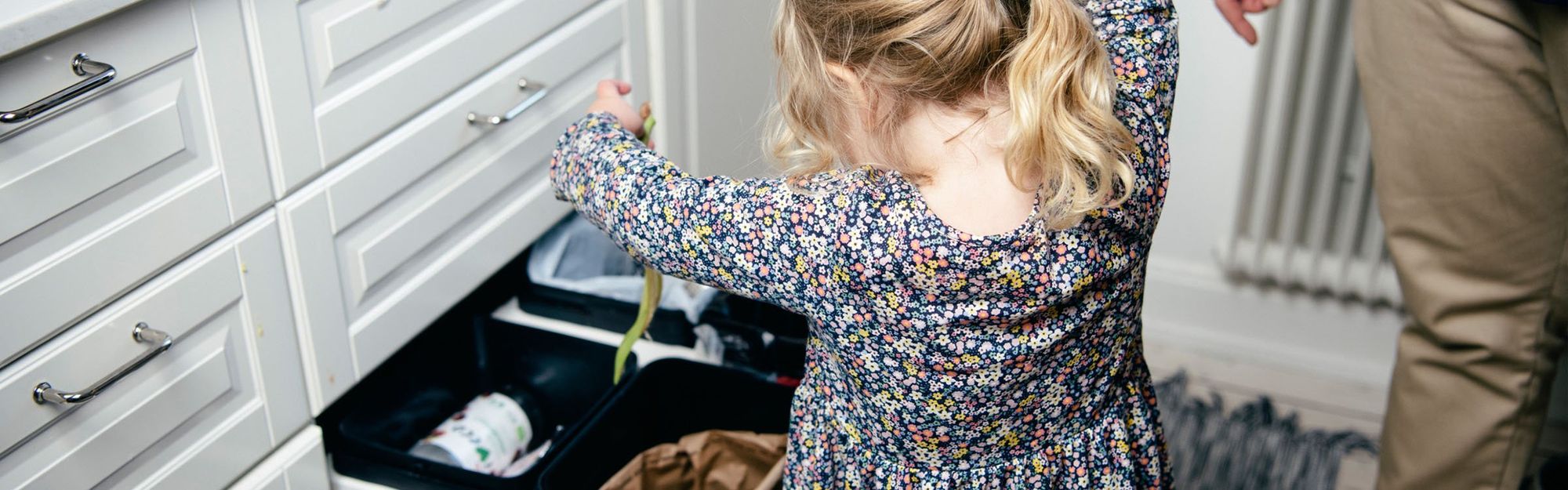
Make sustainable choices easy
Climate studies are showing that humans must change their behaviour by making more sustainable choices. Considering the consequences of global warming, the United Nations have identified 17 goals for a more sustainable future. The goals involve extinction of poverty, hunger, sickness and inequality, as well as promoting sustainable consumption, innovation and green energy.
Even though more information is provided, and new technology promoting energy efficiency is developed, statistics show that energy use in OECD countries will rise with 35 % by 2020 (UN 12th goal). Why are people still not making environmentally friendly choices to the extent that is necessary? The answer may, at least in part, lie within classic judgement psychology - humans are not fully rational in their decision making. That’s when they need a little nudge.
People, planet and profit
For the past decade Sweden-based nudging expert Katharina Paoli Brunat has been advocating a more sustainable way of living. In her work, as a public speaker and entrepreneur, she sees the possibilities to create a more sustainable future for all of us. We just need to see the options clearer.
- My passion is to empower people with hands on solutions that makes measurable impact, says Paoli Brunat. I believe we can have a more resource efficient, sustainable future where digitalisation, behavioural science and sustainability co-create and collaborate.
For Katharina Paoli Brunat’s sake, she took matter into her own hands by founding Nudgd, A Win Win World, Wildflower Group and EcoBride. She is also on several boards and work as a mentor, all with the same passion – to solve our biggest challenge for the future, a sustainable way of living by changing our behaviour.
- It is my opinion that people, planet and profit goes hand in hand towards the future, Paoli Brunat states. For that to happen, I believe that a collaboration between multiple stakeholders and a clear focus on action are essential, otherwise there will be no change.
 "I believe that a collaboration between multiple stakeholders and a clear focus on action are essential, otherwise there will be no change." Katharina Paoli Brunat, Nudging expert and Sustainability advisor, CEO of Nudgd
Nudge in a nutshell
What is nudging then? The term nudge, and nudging, gained popularity in 2008, when coined in a book by Cass R. Sunstein and Richard H. Thaler. In 2017, the latter was awarded the Sveriges Riksbank Prize in Economic Sciences in Memory of Alfred Nobel for his contribution to behavioural economics.
A nudge, in a behavioural context, refers to steering an individual’s behaviour in a given, desired direction; influencing their choices without removing other alternatives. It is a gentle push without legislation, carrots or/and sticks. Human behaviour is often irrational and can also be hard to predict. Nudging can therefor act as an instrument for influencing an individual’s behaviour and choices, in a more preferable way. If used successfully, you can increase a change in behaviour or attitude with nothing more than a gentle tweak and a soft touch.
Nudging is an effective tool for achieving a more sustainable world, and there are many nudging techniques that are proven efficient. Here are 5 nudging techniques that is used frequently with great results:
- A friendly reminder – in the right place, at the right time
- Framing – how the message is presented and by whom
- Social norms – compliance with the group
- Direct feedback – the impact of your actions shown immediately
- Visualisation – making it clear to see the benefit for me
- Without context, the concepts are perhaps hard to grasp – but here is an examples, says Paoli Brunat. In the case of social norms, we as humans like to compare ourselves with others, our group. Most people feel uncomfortable acting outside social norms and pleasant when they have a feeling of belonging. We also love to hear that we are better than average and tend to compare ourselves with others. A good example of wanting to be as good as your neighbour, or even better, was adapted by the power company Opower.
By presenting the customers private energy usage, as well as their neighbours, in their energy use home report they could see how much energy they were using, in relations to each other. This simple data, made visible in an easy way, triggered something in the users; a desire to be better than their next-door neighbour. The effect being that the energy usage of the customers dropped significantly.
Don’t stop believing
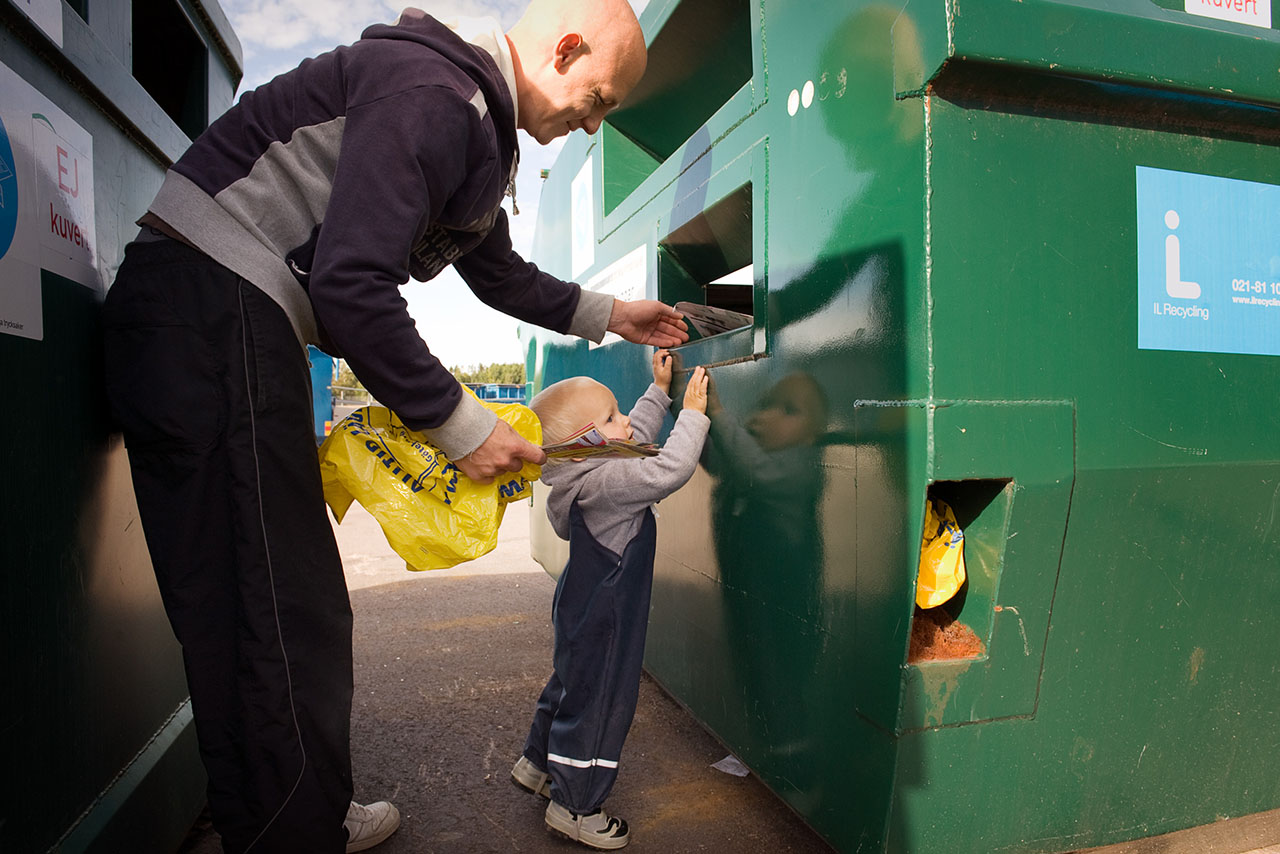
I believe that if we can make small changes, in the end it will make a big impact, says Paoli Brunat. May it be that hotels and restaurants uses smaller plates or bowls at buffets, and hence reduces the food waste and overconsumption, or invite your colleague to carpool instead of driving separately, or make a game out of who can recycle most household waste in your neighbourhood? I believe most of know what is “the right thing” to do, and I know that together we can make the changes necessary. But some of us might need a little push to get there.
Want to know more?
Smart Nudges: https://smartnudges.com
Nudgd: https://nudgd.se/ and https://nudgd.io
Nudging Sweden: https://facebook.com/groups/nudgingsweden
12 strategies to promote behavioural change: http://www.caminomagasin.se/files/media/enabling_sustainalbe_choises_webb.pdf
Sustainable development through nudging: https://www.diva-portal.org/smash/get/diva2:1281473/FULLTEXT02
Related News
Fagerhult is switching LEDs to reduce its climate impact
Fagerhult is implementing a major change with the aim of reducing the climate impact of its luminaires. By switching to the latest LED technology, Fagerhult is able to reduce annual emissions by 2,250 tonnes CO₂e from the products it sells. “A small change in each luminaire that has a huge overall impact,” says Niclas Thulin, Sustainability Manager at Fagerhult. The decision to replace the LED technology in the luminaires is a strategic one and has been made at management level. In practice, this means that the majority of Fagerhult’s Indoor range will be equipped with new LEDs featuring the latest generation of Flip Chip technology. This change will improve efficiency and reduce energy consumption by 5–10 percent, depending on the luminaire model. A small change with a big impact “Successful sustainability efforts entail focusing on the right things. In all, 85 percent of Fagerhult’s total climate impact across the entire value chain – Scopes 1–3, in other words – comes from the energy consumption associated with the use of our products. If we can improve efficiency and reduce electricity consumption from a significant portion of our product range, this will have a major impact,” says Niclas Thulin. Extended lifetime from 50,000 to 100,000 hours, with stable, high-quality light throughout. “It’s always difficult to predict exactly how much a change will save, since there are many factors at play. But by using data from 2025 – how many luminaires we sold and to which markets – and assuming that they are used for an average of 50,000 hours without lighting control, we estimate potential savings of approximately 2,250 tonnes of CO₂e each year*.” That is basically an entire forest: “That’s roughly equivalent to the amount of carbon dioxide absorbed by 90,000 trees in a year**. As a result, this change could have a significant impact on both our own and our customers’ environmental efforts.” A small LED upgrade can reduce emissions by approximately 2,250 tonnes of CO₂e per year – equivalent to the amount of carbon dioxide absorbed annually by 90,000 trees. Doubling the operating time The change also offers other sustainability benefits. The operating time of the luminaires is doubled from 50,000 hours to 100,000 hours. In the long run, this will entail a reduction in the consumption of resources such as raw materials and other materials. It will also provide financial benefits for our customers, who can make a secure and profitable investment in energy-efficient lighting with a longer working life. With this new technology, all luminaires will also have a Constant Light Output, providing stable, high-quality light throughout the luminaire’s working life. Put simply, good lighting ergonomics at work. How it works A small change that produces big results – what exactly makes the difference from a technical standpoint?“Our approach involves replacing standard LEDs with the latest generation of Flip Chip technology. In simple terms, Flip Chip has a more advanced design in which electrodes and other contact surfaces are positioned in such a way that they do not block or affect the light output. Flip Chip LEDs are simply more energy-efficient and robust,” explains Niclas Thulin.Luminaire models that already feature this type of LED will be upgraded to the latest generation of Flip Chip, as will all models that were previously equipped with standard LEDs. A win-win for everyone The cost of the upgrade will not be passed on to customers in the form of more expensive luminaires but will be financed through the logistical benefits that the change will bring. Sustainability Manager Niclas Thulin regularly meets customers in Fagerhult’s Sustainability Hub —bringing to life how informed lighting choices can deliver both climate and cost savings. “Larger purchase volumes and fewer item numbers mean we can offer these added benefits. Improved energy efficiency, a longer working life and better light quality, lower energy consumption and, above all, a significant contribution to the climate,” says Niclas Thulin.“Here at Fagerhult, we are committed to fulfilling our social responsibility and offering solutions that can address both climate change and the challenges associated with future electricity supplies. In our opinion, our customers shouldn’t have to choose between affordability and sustainability when it’s possible to have both. It's a win-win for everyone.” * Emission factors by country, based primarily on data from the Association of Issuing Bodies (AIB).** Based on average carbon dioxide absorption according to Ecotree.
When material matters – Wrapped adds a new view on sustainable lighting
In a world where every gram of material and every gram of carbon dioxide counts, Wrapped emerges not just as a luminaire – but as a statement. It’s Fagerhult’s most sustainable pendant to date, and it didn’t happen by accident. Every detail, every decision, every material was chosen with intention. Sustainability often starts with a simple question: What is it made of? For Wrapped, the answer is a trio of materials that each carries its own environmental story. Solid board: a familiar friend At Fagerhult, we first met Solid board in 2021 with Multilume Re:Think. But for Wrapped, we’ve taken it further. The material consists of a three-layer construction featuring a 100% recycled core, a renewable FSC-certified top layer, and a thin protective plastic film. All in all, a material that’s 65% recycled – and a 89% reduction in CO₂ emissions compared to virgin extruded aluminium. Image gallery: Solid board Wrapped is made of organic Solid board, recycled aluminium and post-consumer recycled plastic. Reimagining plastic Plastic is often a hot topic in sustainability conversations. But not all plastic is created equal. Wrapped uses post-consumer recycled plastic: the kind that has lived a life before, perhaps as a shampoo bottle or food container. Pre-consumer plastic, on the other hand, is different as it never made it to the shelf. Quote: Josefin Carlsson Aluminium with a past Inside Wrapped, two structural components are made from 75% post-consumer recycled aluminium. This material is also part of a circular infrastructure – and may even have been part of a Notor luminaire once. Compared to virgin aluminium, this choice reduces emissions by 64%. Designing with less - built to last However, sustainability isn’t just about what you use – it’s about how much. At just 900 mm, Wrapped is shorter than a conventional 1200 mm pendant. That reduction in size alone cuts the climate impact by 25%, without compromising the luminaire’s lighting performance. Josefin Carlsson compares the climate impact of products in Fagerhult's Experience Centre in Habo. To understand the impact of Wrapped, it helps to look at where we started. In 2021, Notor 65 – made from virgin aluminium – had a climate impact of 34 kg CO₂e. By 2024, with 75% recycled aluminium, that number was reduced to 25 kg CO₂e. Today, Wrapped comes in at just around 12 kg CO₂e. “That’s a third of the original Notor 65, and half of the current version, and a quiet revolution, measured in kilograms of CO₂e,” says Josefin Carlsson. After its long life – estimated at 100,000 hours – Wrapped is ready for an equally sustainable exit. Its design makes it easy to disassemble, with each material being recyclable and prepared for its next chapter in the circular economy.