
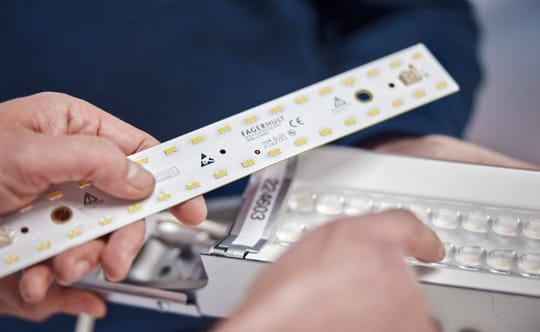
Related News
NEWS ARTICLE |
Holland & Barrett’s Award-Winning Experience Store
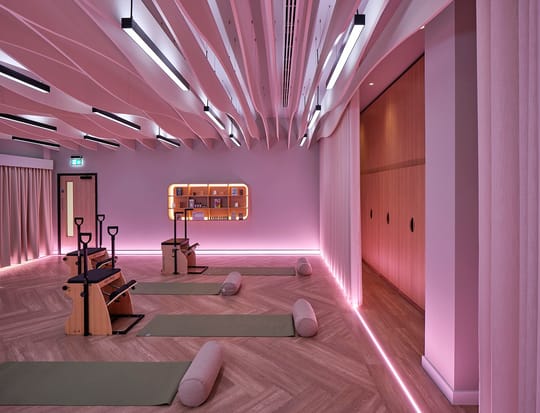
Holland & Barrett’s Cardiff store represents a new approach to retail, combining traditional shopping with health services and wellbeing experiences such as yoga sessions, health checks, blood tests,. Recognised across the sector, the store won the New Store Game Changer award at the Retail Gazette Awards, the Best New Store Award – Small/Medium at the Retail Week Awards 2026, and was named Store of the Month by the Institute of Grocery Distribution. Fagerhult played a role in bringing this concept to life, providing lighting solutions to help realise the client’s vision of a human-centred wellness and retail space. Store Concept and Design The Cardiff store is a major step in Holland & Barrett’s strategy to become a purpose-led wellness destination. The store was designed to evoke a feeling of calm and comfort, while remaining accessible and encouraging self-guided discovery of products and services. image 1 h&b Fagerhult’s role was to provide lighting that supported the design, ensuring visual comfort and product clarity while adapting to the needs of each space - from retail areas to consultation rooms and the Wellness Studio. Fagerhult worked closely with the client and creative agency Syn to ensure the lighting complemented the store’s layout, materials, signage, and interactive features. Charles quote Wellness Studio The Wellness Studio at the rear of the store is the centrepiece of the wellbeing concept. Tunable white lighting allows the colour temperature to shift between cooler, energising tones and warmer, calming light. RGBW in-ground luminaires add colour and support different moods for yoga, pilates, and other activities. Lighting scenes are controlled via dedicated scene controllers, allowing instructors to adjust settings manually depending on the session. “This area was really exciting to work on,” says Charles. “For sessions like yoga, the tone of light is important. Being able to adjust warmth and colour helps support the activity taking place. The ability to change light to suit the activity makes the space feel dynamic and responsive. It brings an extra layer to the experience and really supports the wellbeing focus of the studio.” Image 2 h&b Dave's quote Supporting the Customer Journey Through Light Lighting plays a key role in attracting customers into the store. As Charles explains, “From the street, the entrance is designed to stand out, using illuminated signage and a large digital display to draw attention and encourage people inside.” Inside, the layout is long and relatively narrow, with clear views towards the rear of the store where the Wellness Studio is located. Streamer Mini Twin luminaires were installed throughout the retail areas. The twin-head design of these spotlights helped to reduce installation time and costs, while providing flexibility across different zones. Integrated dip switches allow the luminous output to be adjusted, making it possible to increase the light in a specific area or brighten the entire store if it feels too dark. image 3 h&b “The Streamer Mini Twin is an extremely efficient fitting, meaning energy efficiency is built into the lighting scheme,” says Dave. Each bay is carefully illuminated with dedicated fittings aimed at product headers and shelving, keeping the focus on merchandise rather than surrounding surfaces. “The lighting is designed so that shadows fall on the floor, not the products,” says Charles. “That way, attention stays on the merchandise, and the space isn’t over-lit.” Consultation and Testing Areas Consultation and testing rooms within the store were lit to higher levels to support clinical tasks and visual clarity. These spaces required a more neutral and functional lighting approach to ensure comfort and accuracy during health checks. h&b image 4 Collaboration and Delivery Fagerhult worked alongside Syn and the wider project team during the design and delivery stages, particularly around the Wellness Studio and specialist areas. Coordination across disciplines helped ensure the lighting responded to both the spatial design and operational needs of the store. All luminaires were held in UK stock and delivered within short lead times, supporting the project programme and Holland & Barrett’s wider store investment plans. “Delivering reliably and on time is essential,” says Charles. “It allows the client to progress with confidence.” image 5 Recognition The day before the store opening, the client gathered designers, installers, and suppliers to celebrate the completed store and acknowledge everyone’s contribution. “It was really rewarding to see everyone so pleased with the outcome,” says Dave. “The Wellness Studio, with its adjustable lighting, was particularly well received and made a real impact on everyone.” “It was a real team effort,” adds Charles. “We worked closely with Syn and the wider project team to ensure the lighting complemented the design and operational needs. The recognition the store has received, including the New Store Game Changer award and being named Store of the Month, shows that this collaboration really paid off. Seeing the store completed and hearing the client’s feedback made it clear the lighting delivered exactly what was needed.” Explore how Fagerhult can help you transform your retail and wellbeing environments; get in touch today.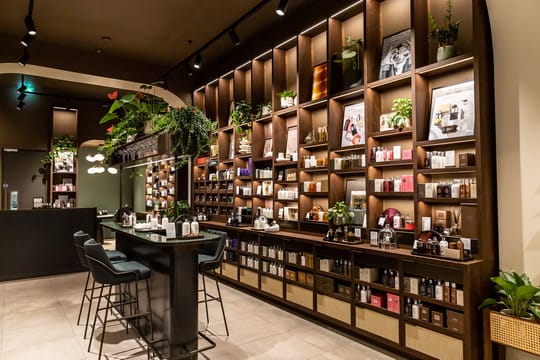
NEWS ARTICLE |
Lighting the Way: Creating Inclusive Retail Spaces
Dave Hughes, Head of Lighting Design at Fagerhult, shares his thoughts on how strategic lighting choices can enhance accessibility, comfort, and the overall shopping experience for everyone. Retail lighting has evolved far beyond its traditional role of simply illuminating spaces, products, or displays. Today, it plays a crucial part in shaping the overall shopping experience, creating an inviting, comfortable, and inclusive environment that works for both customers and staff, and showcases the products housed within. From a design perspective, truly inclusive retail spaces should not only reflect a brand’s identity and aesthetic but also enhance accessibility, wellbeing, and engagement. Thoughtfully designed lighting can make all the difference, influencing mood, navigation, and even purchasing decisions. To explore the role of lighting in fostering an inclusive retail experience, we spoke to Dave Hughes - Head of Lighting Design at Fagerhult - to gain his expert insights on how lighting can help transform retail spaces for everyone. Tell us a bit about your background. I’ve been with Fagerhult for just over eight years, primarily as a Retail Design Manager, and I recently stepped into the role of Head of Lighting Design. Before that, I spent over 11 years at iGuzzini, progressing from a Junior to a Senior Designer. I also have a background in product design, which definitely complements my current role. What does inclusivity mean for you, in your role? Inclusive lighting is about recognising and responding to the diverse needs of individuals, creating spaces that are welcoming, functional, and emotionally enriching for everyone. You can’t, therefore, take a one-size-fits-all approach, as what works for one person may not be suitable for another. What kinds of conditions do you take into account when considering lighting solutions for inclusive retail environments? We consider how lighting can best support a wide range of needs, from people with disabilities, people with health conditions, neurodivergent conditions, people with sight loss, as well as older customers. This is why there isn’t one, single recommended approach. For instance, someone with autism may prefer calm, low-light environments, while an older shopper may require higher light levels to read clearly. Balancing those needs in one space, like a busy bookstore, can be a challenge. We’ve worked on projects specifically aimed at supporting neurodiverse individuals, including those with autism. In one case for a major banking group, we collaborated with a charity to better understand the needs of autistic customers. We walked through a branch together, and they highlighted specific lighting triggers, such as areas that were too bright, high in contrast or glare, which could cause discomfort or distress. Based on their feedback, we provided tailored recommendations to help create a more supportive environment. It’s encouraging to see businesses increasingly aware of the diverse challenges customers may face and actively seeking ways to reduce those triggers through thoughtful design. What are the core principles you follow for inclusive lighting design? Reducing glare and avoiding high contrast is key. We advise a softer light scheme to avoid this. Sensory or breakout rooms are also starting to appear in retail spaces. These quiet, personalised spaces often feature adjustable lighting. They’re still relatively rare, but they can be a valuable addition for creating more inclusive and supportive environments. It pays to be aware that, in some cases, well-planned lighting schemes can be undermined during commissioning, for example when spotlights are repositioned to highlight a particular product without consideration for how that could impact the overall environment. What starts as a glare-free setup can quickly become uncomfortable if fixtures are aimed too sharply. Have technologies like control systems helped with inclusivity? Absolutely. Control systems have allowed far more flexibility. With digital lighting control systems like DALI or Casambi, you can customise environments more easily than with traditional mains voltage setups. Casambi offers wireless control via apps, making it easy to tweak lighting without rewiring, ideal for creating flexible retail spaces. These systems allow for more responsive, user-friendly environments, helping to make retail lighting both inclusive and efficient. How do you balance a brand’s aesthetic with inclusivity, comfort, and sustainability? It all has to be considered from the beginning. Too often, these essential considerations get brought into the conversation late, which makes integration harder. For inclusivity and brand aesthetics, it’s about compromise and prioritising the most critical needs for the environment you’re creating. At Fagerhult, we focus heavily on sustainability too, exploring new materials like hemp-based composites, and recycled aluminium in our fittings. What does the future look like for inclusive retail spaces? Creating inclusive retail environments is a balancing act, merging brand aesthetics, accessibility, sustainability, and comfort. Thoughtful lighting schemes play a crucial role, from reducing glare and contrast to enabling flexible, calming atmospheres for people with different sensory preferences. I’ve seen retailers now leveraging advanced technology to gain deeper insights into customer behaviour. With complete store mapping, a combination of cameras and sensors can be used to track movement throughout a space. One fascinating aspect of this technology is its ability to distinguish between staff and customers. By analysing movement patterns, the system can recognise individuals who spend extended periods in the store and automatically classify them as staff members. Though it doesn’t identify individuals personally, it can tag and follow a single person’s movements anonymously to build behavioural insights. Some stores have also integrated cameras into digital screens, adding another layer of data collection. These cameras can estimate a shopper’s age and gender in real time and link this information to heat mapping, allowing retailers to track how different demographics navigate the store. Additionally, facial expression analysis enables the system to gauge reactions to advertisements or displays, whether a person is engaged, indifferent, or even frowning. While this level of detail may seem daunting to some, it also opens up possibilities for enhancing the shopping experience, and could contribute to creating more inclusive environments. For example, if the system detects an elderly shopper, it could theoretically adjust lighting levels in their vicinity to improve visibility. However, implementing such personalised adjustments in a busy retail environment remains a significant challenge, and it’s not being commonly adopted – yet! This technology represents a powerful shift in retail analytics, offering opportunities for both businesses and customers, provided it is used ethically and with privacy in mind. While still early days, it’s a powerful reminder that the future of retail lighting isn’t just smart, it’s human-centred.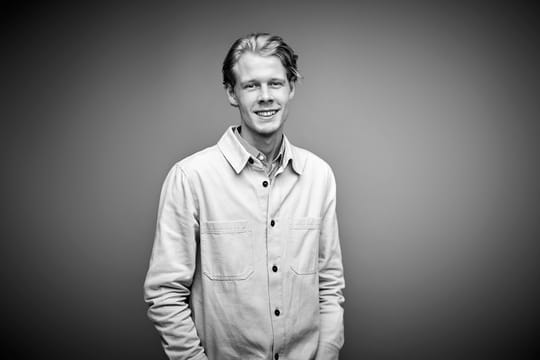
NEWS ARTICLE |
How We Help Retailers Achieve Their Environmental Ambitions Through Lighting
Retailers worldwide are stepping up to ambitious climate targets, driven by increasing expectations from customers, regulators, and investors. Many are striving to meet standards such as B Corporation certification, making emission reduction both an environmental and commercial priority. While lighting may not always be the first area people consider, it offers one of the fastest and most effective opportunities to reduce environmental impact. At Fagerhult, we know light matters. Lighting accounts for 15% of global electricity consumption. However, by implementing smart lighting solutions, in combination with the latest LED technology, energy use can potentially be reduced by up to 90%. It is common for 90–95% of a luminaire’s total lifecycle greenhouse gas emissions to come from its usage phase. That’s why we focus on innovative technology and knowledge-sharing to help retailers optimise their lighting. Lighting and Emissions: Scope 2 and Scope 3 Lighting plays a key role in both Scope 2 and Scope 3 emissions, which are part of the Greenhouse Gas (GHG) Protocol, the international standard for measuring and managing carbon footprints. The protocol divides emissions into three ‘scopes’ to help businesses understand where their emissions originate and how to address them effectively. Scope 2 covers the indirect emissions from the electricity, steam, heat, or cooling a company purchases and uses, while Scope 3 includes all other indirect emissions from activities such as the production of purchased goods, transportation, and waste. niclas Helping Retailers Reduce Scope 2 Scope 2 emissions are often the easiest to measure — and the fastest to reduce. By upgrading to efficient luminaires, retailers cut electricity bills while shrinking their carbon footprint. Controls and sensors can add further savings, particularly in back-of-house areas. “If you add a sensor, you can cut energy use in that area straight away,” Niclas notes. Sensors in dressing rooms, for example, ensure lights are only on fully when the room is occupied and dimmed when not in use, preventing unnecessary energy use. Supporting Scope 3 and Responsible Sourcing For many retailers, Scope 3 emissions — those associated with the purchase of goods and services — represent the biggest challenge. This is also where transparency matters most, especially for those on the path to B Corp certification. To help, Fagerhult produces Environmental Product Declarations (EPDs) in-house with our own life cycle assessment (LCA) experts. These third-party reviewed documents set out the environmental footprint of each product, including embodied carbon. They provide retailers with credible data for their own reporting, and a trusted basis for comparing options. “An EPD helps our clients make informed choices,” says Niclas. “By choosing products with a lower footprint, they can reduce Scope 3 emissions from purchased goods.” Many retail lighting products are being designed to use fewer resources. They are becoming smaller and lighter year by year, reducing material use while maintaining performance. We are constantly developing our products to minimise resource use and waste, while increasing the share of recycled and renewable materials. For example, several of our luminaires already incorporate high levels of recycled aluminium or renewable materials, with some product families using 75% post-consumer recycled aluminium. These choices make a measurable difference when used in high volume. Designing for the Future Our ambition is not only to make products efficient today but also adaptable tomorrow. We are working to design luminaires that are easier to upgrade, repair and eventually reuse. “We are working on making products more modular and easier to disassemble. That means they can be upgraded in the future, extending their life and lowering the total footprint,” Niclas explains. A good example is our ReLight programme, a circular initiative focused on reuse. By upgrading end-of-life luminaires and materials, we integrate new technology to extend their lifespan. Since the introduction of ReLight, we have reused more than 15,000 luminaires, making sure that we use our planet’s resources in the most efficient way. This way of thinking supports both circularity and responsible growth. It also reflects our philosophy: to always do our best; to act in a responsible manner; to treat people well; and to continuously lower the impact on the environment. Shared Responsibility, Shared Progress Niclas’s own path into sustainability was shaped by a belief that industry must play its part. “During my studies, I became convinced that if we are going to achieve a sustainable society, companies must act. A large responsibility lies within industry, and I wanted to contribute to that,” he recalls. That sense of responsibility runs through Fagerhult. We are aiming for a 70% reduction in Scope 1 and 2 emissions and a 30% reduction in Scope 3 by 2030, with net zero across our value chain by 2045. These are ambitious goals, but we believe they are necessary. For retailers, partnering with a supplier who takes sustainability seriously offers more than efficient lighting. It offers reassurance, credibility, and a chance to make real progress on environmental and social commitments — whether that is reporting to the Science Based Targets initiative, strengthening sustainability audits, or moving towards becoming a B Corp. As Niclas concludes: “Retailers can make real progress by looking at their lighting – in terms of both energy use and material choices.” Take the Next Step Lighting gives retailers a fast, visible way to cut emissions, reduce costs and support long-term goals. By partnering with Fagerhult, retailers gain: Immediate reductions in energy use and emissions (Scope 2). Credible, transparent data to strengthen sustainability reporting and reduce Scope 3 emissions from purchased goods, supporting B Corp readiness. A partner whose own targets are aligned with the Paris Agreement and United Nations’ Agenda 2030. Lighting is an essential part of every store, and it is also a powerful lever for change. By working with Fagerhult, retailers can reduce emissions, save energy, and take meaningful steps towards their environmental goals. Ready to reduce your Scope 2 and 3 emissions? Get in touch with Fagerhult to discuss how we can support your next retail project.
Return to top