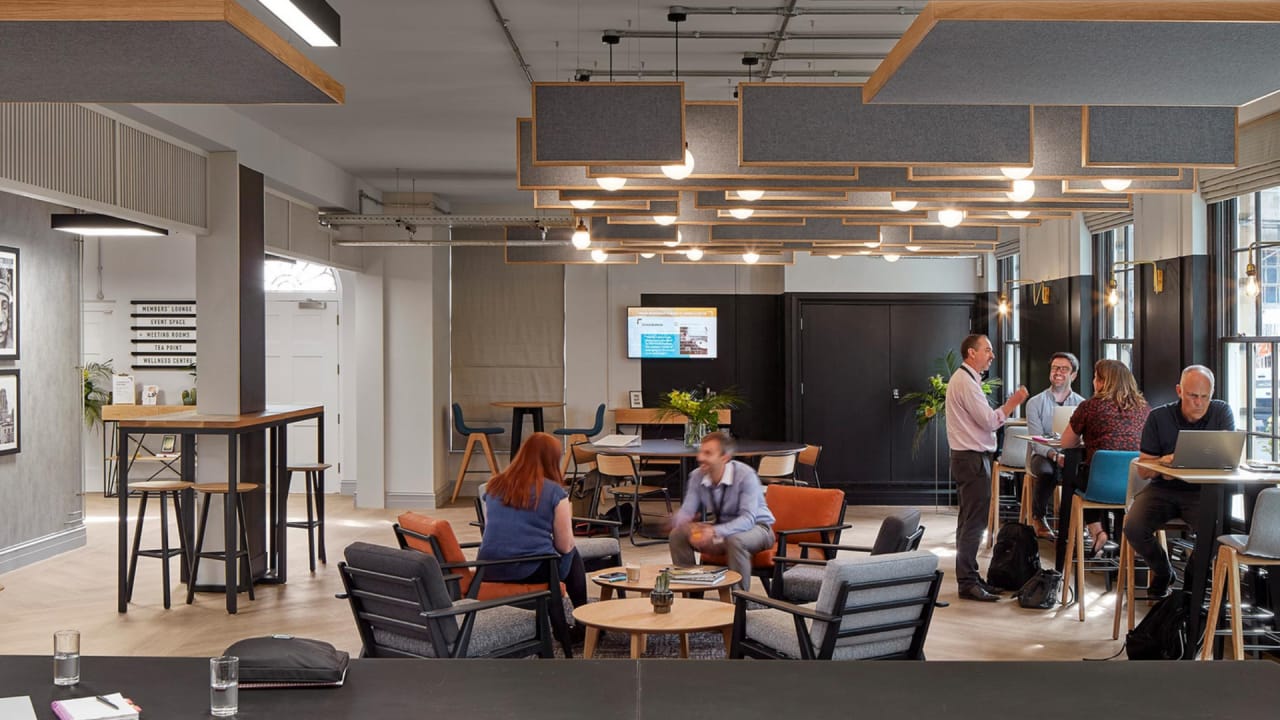
For many employees, working from home offered novel advantages, such as escaping long commutes, achieving a better work-life balance, and experiencing fewer office distractions. In June 2020, McKinsey research revealed that 80% of people enjoyed working from home, and 41% reported increased productivity as a result.
In January 2021, The Wall Street Journal even asserted that ‘The death of the desk is upon us,’ suggesting that the office had lost its relevance as a place for concentration and focus. At the time, companies were widely assessing the future of their offices, and large organisations including Shopify, Dropbox and Slack declared that they would be moving to a ‘remote first’ model, using their offices for collaboration rather than day-to-day work. Was the office as we knew it being phased out?
But working remotely is not a one-size-fits-all solution. For younger workers, those living in shared accommodations with limited privacy, or individuals without an inspiring or professional home setup, working from home full-time can be challenging and unrewarding.
As the pandemic wore on, priorities began to shift towards environmental, social, and corporate governance (ESG) and employee well-being when considering the office environment. Progressive employers were already making changes, creating people-centric, sustainable, and dynamic workplaces to ensure teams would get the most out of time spent in the office.
The post-pandemic office landscape
So, was The Wall Street Journal correct? Partially.
Fast forward to 2024, and despite a steady increase in remote and hybrid working, many businesses are keen to have staff in the office more frequently: a survey from Resume Builder found that 90% of companies - including Goldman Sachs, Google, and Amazon - planned to have more of their teams back in the office this year.
But expectations about workplace environments have risen, and with the majority of the workforce still working in offices, it has an important role to play. Office aesthetics, including interior design, colour schemes, lighting, furniture, and overall layout, significantly impact employee well-being, productivity, and retention.
The role of lighting in the new office environment
What role does lighting play in this new office landscape? Should it be helping to entice people back to the office, or just make them happier when they’re there?
A report from Ernst & Young placed lighting conditions joint first in a list of the most important factors influencing office satisfaction, with about 90% of respondents saying that lighting was either very or more relevant than other factors.
Research has shown that bringing office lighting to life by replicating and dynamically delivering daylight-like components can have powerful effects. These lighting conditions create variations in office environments, mirroring natural daylight, which in turn leads to improved work engagement, motivation, and concentration.
Double Dynamic Lighting, a concept where lighting adapts in intensity, colour temperature and directional quality, is an ideal solution for modern office design. This type of lighting not only enhances visual comfort but also aligns with our natural preference for daylight-like conditions, promoting overall well-being. By integrating such advanced lighting systems, for example the Notor 65 Dynamic, businesses can create environments that are more inviting and conducive to work, whether the office is at full capacity or operating under a hybrid model.
The evolution of office life and lighting
The evolving nature of office occupancy offers an opportunity to rethink and redesign lighting solutions to be more flexible and adaptive, compared with traditional office lighting solutions designed for fully occupied spaces.
The office is not dead, but it is undoubtedly evolving, and lighting plays a crucial role in this evolution, influencing everything from employee satisfaction to productivity. By embracing advanced lighting solutions that replicate natural light and adapt to changing needs, businesses can create office environments that are not only functional but also enriching and engaging.
Looking to the future of office lighting, Steve Shackleton, Lightings Applications Manager at Fagerhult, comments: “Trends at the moment are away from full, multi-floor Cat A fitouts with acres and acres of suspended ceilings. We are seeing the growing use of track systems with linear or sometimes circular products attached. These systems have inherent flexibility, so that localised task-oriented solutions can be realised when the space usage becomes clear.
 Many, if not all of these products are having intelligence built-in, with sensors gathering information and providing connectivity to wider building systems, a potential indicator of the future direction of workplaces and workplace lighting in the UK. Steve Shackleton, Lightings Applications Manager at Fagerhult
Related News

Seeing Colour Clearly: How Lighting Builds Trust and Drives Sales
Imagine a customer buying a shirt that looks perfect under your store’s lighting, only to return it days later because the colour appears different in natural light. This mismatch isn’t merely inconvenient – it represents lost revenue, added logistics, and potential erosion of customer trust. Often, the underlying cause is lighting: how products are presented under artificial light shapes every purchasing decision, from apparel to furniture to accessories. The Power of Colour Rendering Among the qualities of effective store lighting, colour rendering – the ability of light to display products’ true colours accurately – is an essential factor in building trust and supporting sales. For decades, the industry relied on the Colour Rendering Index (CRI), a scale of up to 100, where higher values meant closer alignment with natural daylight. CRI helped establish a common language, but it only measured a very limited set of colours. Today, the industry is moving forward with RF metrics. RF examines 99 colour samples instead of just eight, offering a more detailed and reliable picture of how accurately a light source will reveal colours. Often paired with RG (gamut), which shows how vivid colours appear, these tools give retailers the confidence that their products will look authentic and consistent. Why Colour Accuracy Matters Customers expect products to appear consistent under standard store lighting and in typical real-world conditions. Discrepancies in shade or tone can contribute to disappointment and, in some cases, returns, particularly when other expectations, such as fit or quality, are already aligned. “If products do not appear as expected, that can be a real issue,” says Dave Hughes, Head of Lighting Design at Fagerhult. By contrast, accurate colour rendering enables customers to make informed decisions with confidence. They feel assured that what they see in store is what they will get. Dave Studies have shown that lighting operates “below the level of our immediate awareness” to subtly influence perception and behaviour. Inconsistent or poor-quality lighting can subtly affect how customers perceive products, which may influence their confidence and trust in the store. Beyond Returns: Shaping the Customer Experience Accurate lighting improves more than just return rates; it shapes the overall customer experience. Shoppers who feel confident in their purchases develop a positive impression of the store, increasing the likelihood of repeat visits. Fagerhult has explored ways to enhance this experience, such as adjustable fitting room lighting. This feature allows customers to see how garments appear in different environments – from cool daylight to warmer evening settings – creating an engaging, authentic shopping experience. Academic studies support this: lighting shapes not just what customers see, but how they feel. It affects mood, time spent in store, and even product preference. Positive lighting atmospheres encourage shoppers to linger, browse, and ultimately purchase more. Common Mistakes in Retail Lighting Despite the proven value of good lighting, mistakes are common. The most damaging, according to Dave, is simply failing to upgrade. “Some retailers stick with what they have and try to make the most of it, which can be a missed opportunity.” Other mistakes come from poor coordination. Lighting as an afterthought can clash with store layouts, for example, ceiling heights or fixture placements that make displays difficult to illuminate properly. While not strictly a colour rendering issue, such oversights undermine the impact of high-quality lighting. Lighting research highlights the balance needed between technical precision and atmospheric design. Manufacturers focus on measurable factors, such as lux levels and shadow elimination, while designers shape mood and experience through contrasts and layering. Effective retail lighting combines both approaches: it must meet technical standards and enhance the customer’s emotional journey. Fagerhult’s Approach Fagerhult prioritises collaboration and early engagement in the design process. If possible, lighting is integrated from the outset, working alongside interior designers, architects, and retailers. “Our approach is to engage as much as possible with our clients and ensure lighting isn’t an afterthought; it’s considered throughout the design process so that everything works together,” says Dave. A Single Piece of Advice Asked to summarise his guidance to retailers, Dave highlights communication: “Engage designers as early as possible. That gives you the best result – a great experience in your store, building trust, boosting sales, and reducing returns.” Light is more than illumination: it is a silent partner in every purchase decision. With accurate colour rendering, stores can create an environment where customers see products as they truly are, feel confident in their choices, and are less likely to return items due to unexpected colours or appearances. Returns can still occur for other reasons, of course, but accurate lighting helps ensure that colour-related surprises are minimised, reinforcing customer trust and strengthening long-term loyalty. Transform your store experience today – contact Fagerhult and see how expert lighting can boost sales, build trust, and reduce returns. Get in touch.
Designing Lighting for Changing Bodies and Minds
Buildings are often designed around a fixed idea of the “average” user, but in reality, people are anything but fixed. Our vision evolves with age, and our cognitive needs shift throughout the day. Hormones, health, neurodiversity, stress, screen use and circadian rhythms all influence how we experience light. Recognising these differences can help buildings better serve the people who use them. With increasing emphasis on people-first environments, lighting is no longer viewed solely as a technical requirement but as a dynamic design tool that can respond to human needs. Designing lighting – whether for workplaces, or education settings – means recognising that bodies and minds change, and that our built environments must adapt alongside them. We Don’t Experience Light the Same Way Forever A simple reality sits at the heart of human-centred lighting design: a 20-year-old and a 60-year-old do not perceive light in the same way. As we age, our eyes typically need more light to see clearly and comfortably. A 40-year-old may require around twice as much light as a 20-year-old for comparable visual clarity, while a 60-year-old may need four times as much. Yet many lighting standards are effectively based around the visual needs of a typical 40-year-old. In reality, building occupants span a far wider age range, each with different visual requirements. Colours may appear different, contrast becomes harder to detect, and glare often feels more distracting with age. Light that feels bright and comfortable to one person may feel harsh or insufficient to another. When lighting is designed only to meet minimum standards, these differences can leave some people comfortable while others struggle to see or experience fatigue. Designing for an “average” user, therefore, risks excluding many of the people who actually occupy a space. Changing Bodies: The Biological Dimension Human physiology shapes how we experience light throughout our lives. Lighting affects not only how we see, but how we feel, think and function. Ageing eyes typically require higher light levels and better contrast for comfortable visibility, whilst careful glare control becomes increasingly important to prevent visual fatigue. Hormonal changes can also influence light sensitivity and comfort. For example, people experiencing menopause may report increased sensitivity to light, fatigue and sleep disruption – all of which can affect well-being and productivity in the workplace. Circadian rhythms add another dimension. Modern lifestyles often involve long hours indoors, extended screen exposure and reduced access to natural daylight. Lighting that supports the body’s natural rhythms can help regulate alertness, mood and sleep patterns. This is where Human Centric Lighting (HCL) plays an important role. By considering the biological effects of light – including melanopic stimulation and the changing patterns of natural daylight – designers can create lighting environments that support both visual and physiological well-being. In this context, lighting becomes more than illumination; it becomes a subtle regulator of comfort, well-being, and daily rhythm. Changing Minds: Cognitive and Psychological Needs Lighting also plays an important role in cognitive and emotional experience. In workplaces and educational environments, lighting can influence concentration, stress levels and mental fatigue. The widespread use of digital screens means people frequently shift their focus between monitors, paper and the surrounding environment – placing new demands on lighting balance and contrast. Growing awareness of neurodiversity is also changing how designers approach sensory environments. Individuals with conditions such as autism, ADHD or dyslexia may experience sensory input differently, meaning lighting that feels neutral to one person may feel overwhelming to another. Recent research found that some users prefer lower light levels, reduced glare or warmer colour temperatures to minimise sensory stress. Flicker, reflections and uneven brightness can also contribute to discomfort or distraction. This does not mean there is a single “correct” lighting condition. Instead, it highlights the importance of flexibility and user choice. Designing for Variability, Not Uniformity If people experience light differently – and if those experiences evolve – then lighting design should not focus on uniformity, but adaptability. Traditional lighting schemes often aimed for consistency: evenly distributed illuminance, fixed colour temperatures and static lighting conditions throughout the day. Today, human-centred design increasingly recognises that spaces benefit from a custom lighting system. Lighting systems can support this through: Adjustability – allowing brightness and colour temperature to change Zoning – enabling different areas to support different activities Personal control – allowing individuals to tailor lighting to their needs Temporal change – aligning lighting conditions with natural daylight rhythms Visual hierarchy – guiding movement and attention through contrast Systems such as Organic Response enable these principles in practice. By integrating sensors directly into each luminaire, Organic Response enables lighting to continuously respond to occupancy and daylight levels throughout a space, with each fitting communicating with the ones around it, enabling localised dimming, adaptive zoning, and responsive lighting scenes without the need for complex central programming. This distributed intelligence means lighting can automatically adjust to changing conditions, support daylight-led rhythms and provide the flexibility needed for different activities and user preferences. In essence, it shifts lighting from something static and uniform to something that quietly adapts to the people and spaces it serves. The Architectural Responsibility Human-centric lighting works best when integrated into the architectural concept from the earliest stages of design. Daylight strategy, interior finishes, ceiling heights, surface reflectance and spatial planning all influence how light is experienced. Successful projects therefore require collaboration between architects, lighting designers, engineers and clients – including engagement with end users – to ensure lighting supports the wider spatial vision. This approach is becoming increasingly important as societies age and awareness of diverse user needs grows. Buildings must accommodate a broader range of visual and cognitive experiences than ever before. Designing for People Ultimately, the goal of lighting design is not simply to illuminate architecture, but to support the people who inhabit it. As people age, their sensory preferences evolve, lighting that recognises these realities can help create spaces that feel comfortable, supportive and intuitive to use. By moving beyond the idea of the “average” user and embracing variability, lighting systems can play a vital role in creating environments that reflect the diversity of human experience. And in doing so, lighting becomes one of the most powerful tools available for shaping truly people-centred spaces. Want to explore how lighting can support changing human needs? Get in touch with us to learn more about how we can help create more comfortable and inclusive environments.