
Related News
NEWS ARTICLE |
From Design to Data: How Lighting Analytics Shape Better Spaces
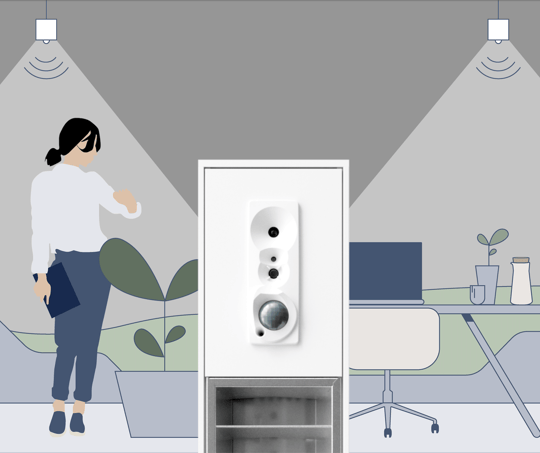
Designers and architects begin with the best intentions. They create spaces that are thoughtful, inclusive, and centred on how people are expected to work, learn, shop, and move. Yet no matter how carefully a building is conceived, real life rarely unfolds exactly as planned. This is where smart lighting – and the data it produces – is reshaping the relationship between design and performance. As buildings become more connected, lighting systems generate valuable insight into how spaces are actually used, experienced, and felt. Rather than informing architectural choices at the outset, these insights enable meaningful adjustments once a building is operational – helping spaces evolve in response to real-world behaviour. But what does that insight look like in practice? From Intuition to Insight Lighting analytics bridge the gap between design intent and real-world behaviour, helping architects and designers feel confident that their ideas truly shape human experiences. Once installed, systems can gather meaningful data on how people move through a space, where they spend time, and how light affects comfort, mood, and productivity. In turn, this enables more human-centric, adaptable, and sustainable environments that continue to evolve after handover. Even the most user-centred design is, to some degree, based on prediction. Architects imagine how people will circulate, collaborate, or concentrate – but until a building is occupied, those assumptions remain untested. Lighting solutions equipped with sensors and IoT connectivity, such as Fagerhult’s Organic Response system, use wireless technology to enable advanced lighting control at the application level, supporting both new developments and retrofit projects without extensive rewiring. They monitor occupancy patterns, daylight levels, and energy consumption in real time via wireless sensors and secure cloud portals. Rather than relying solely on how a space was expected to function, these systems learn from how it actually performs in use. Adjustments such as sensor time-out periods or graduated light levels based on proximity to occupants can then be refined without invasive rewiring. When Data Reveals Real-World Human Behaviour The University of Warwick library showcases how lighting systems like Organic Response provide real-time occupancy data, empowering users with information that improves their experience beyond initial design goals. The original design intention was to improve visual comfort, flexibility, and energy efficiency across large study areas. These aims were successfully achieved. However, the lighting system also generated valuable real-time occupancy data, which provided facilities teams with evidence to support ongoing optimisation. By making this data visible to students, the university enabled them to see which study areas were available before moving between floors. What began as a technical capability became a meaningful enhancement to student experience, reducing frustration and helping people use the building more intuitively. Occupancy monitoring within systems such as Organic Response collects presence data, which is stored securely in cloud portals, ensuring user privacy is maintained while enabling building operators to optimise performance. Lighting as a Design Partner in Offices In contemporary office environments, flexibility and wellbeing are central to architectural thinking. Designers increasingly aim to create spaces that support both focused work and collaboration, yet occupancy patterns often shift after a building opens. In offices using Organic Response, the lighting system adapts dynamically to actual occupancy and daylight conditions. Over time, the data it collects helps facilities teams and design partners understand which areas are most used, which remain underutilised, and how people actually move through the workplace. This kind of insight is invaluable. It allows future refurbishments, new projects, or existing spaces to be fine-tuned based on actual behaviour rather than theoretical assumptions, creating spaces that respond to real patterns of use over time and supporting ongoing architectural innovation. Sustainability Strengthened by Evidence Sustainability is a core priority in modern architecture, but it is most powerful when it is measurable. Because smart lighting systems dynamically adjust in response to real-time occupancy and daylight conditions, unnecessary energy consumption is reduced at the source. Unlike traditional systems fixed at commissioning, settings can be reconfigured manually or automatically to optimise performance throughout the building’s lifecycle. This lifecycle adaptability supports decarbonisation of both new buildings and existing stock, particularly in projects where upgrading existing infrastructure is a priority. Lighting as Infrastructure Because lighting systems span the entire building, they can act as a backbone for additional environmental data collection. Sensors such as those that monitor CO₂ levels, temperature, or humidity can seamlessly integrate with the same wireless network, reducing the need for parallel systems. This positions lighting not simply as a visual layer, but as digital infrastructure within a broader building automation strategy. Taking Good Design to the Next Level At its heart, this shift is not about replacing creativity with data. It is about enriching design with insight. Architects can still begin with empathy, intuition, and vision – but smart lighting allows those ideas to be tested, validated, and refined in real time. The result is spaces that not only look good but truly work for the people who use them. Looking Ahead As buildings become smarter, lighting will continue to play a central role in shaping the experience of spaces. By combining thoughtful design with meaningful data, spaces can be created that are beautiful but genuinely responsive to human needs. If you are exploring how intelligent lighting can strengthen the long-term performance of your next project, Fagerhult works closely with architects and design teams to integrate technology seamlessly into the built environment. Speak to us to learn more about how we can support your goals and requirements.
NEWS ARTICLE |
Why Home Feels Better Than the Office and What Commercial Spaces Can Learn
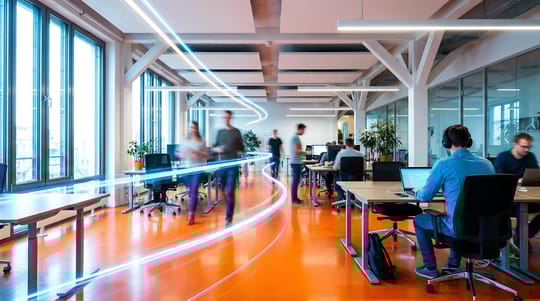
As millions shifted to remote work during the pandemic, productivity broadly held steady or improved, but comfort and well-being gained prominence in people’s minds. Studies now indicate that a majority of employees feel as productive - or more productive - at home, often because they experience better focus, autonomy and control over their environment. For example, a study found that 90% of remote workers report being as productive or more productive away from the office, with many surprised by their own performance. As organisations redefine the role of the office, they face a pivotal question: what can commercial spaces learn from the home - especially if the goal is to make workplaces feel better. The Evolution of the Office Workplace design has always reflected broader social, economic, and technological shifts, evolving alongside the organisation of work itself. Early offices were largely functional and hierarchical, shaped by clerical work and supervision. As industrialisation gave rise to white-collar professions, offices expanded in scale and complexity to support growing organisations. By the mid-20th century, workplaces were generally more stable and spacious. Employees typically had assigned desks, while managers worked from private offices that often incorporated elements of domestic interiors. Softer furnishings, desk lamps, layered lighting and personal artefacts introduced a sense of comfort alongside authority, reflecting an early understanding of the relationship between environment and performance. The 1960s saw the rise of the cubicle, originally intended to offer greater autonomy, visual privacy and flexibility within larger office floors. Over time, however, increasing standardisation and density reduced this human-centred ambition, shifting the focus back toward efficiency. From the 1970s onwards, open-plan layouts, standardised furniture and uniform lighting became dominant, prioritising flexibility and space optimisation over sensory richness and personal control. In more recent years, these trends accelerated through hot-desking and shared zones. While technically agile, many offices lost a sense of ownership and environmental control, resulting in spaces that feel efficient and dynamic - but often emotionally neutral. The Home Reveals What Was Missing Working from home reintroduced something the modern office had gradually lost: agency over the environment. At home, people instinctively adjust lighting, move between spaces, and adapt their surroundings to suit their mood, task, or time of day. These small acts of control shape comfort and focus. Lighting plays a central role in this experience. A single, flat overhead source rarely lights homes; instead, light is layered through a combination of daylight, task lamps and softer accent lighting. This creates visual richness and flexibility. By contrast, many offices still rely on uniform ceiling lighting that prioritises visibility over comfort, often contributing to glare, visual fatigue and a sense of detachment. Fagerhult’s research on the history of office lighting shows how, over time, many workplaces shifted away from more nuanced lighting approaches that supported human comfort and circadian alignment toward standardised solutions focused primarily on energy performance and compliance. The home, by contrast, retained many of those intuitive lighting principles. Bringing the Best of Home into the Office Redesigning workplaces to feel more comfortable - without losing their professional purpose - means creating environments that respond intelligently to human needs. One solution is tunable white lighting. By allowing colour temperature to shift over the course of the day - warmer in the morning and evening, cooler during peak focus times - spaces can better align with natural circadian rhythms. This supports alertness, reduces visual strain, and creates environments that feel more intuitive than those with static lighting. Layered lighting strategies - combining ambient, task and accent lighting - reflect the way people naturally light their homes, supporting comfort, focus and choice throughout the working day. Coupled with smart lighting controls, workplaces can become responsive rather than prescriptive. These systems adjust lighting based on time of day, occupancy or task, while still providing users with simple ways to customise their immediate surroundings. This balance restores a sense of personal agency without adding complexity. Designing for Belonging and Choice Beyond lighting technology, the way spaces are organised and understood matters. One reason a home feels comfortable is that it is personal - even if only at the level of choice and control. Commercial spaces can support that feeling by designing for legibility and behaviour. Lighting can define zones for focus, collaboration and restoration through subtle shifts in intensity or tone rather than physical partitions. These visual layers help people understand the space instinctively, reducing cognitive load and supporting fluid movement throughout the day. When environments prioritise choice and variety - from bright, alert task zones to softer, calmer areas - they feel less like tools for productivity and more like places where people can be productive in ways that suit them. From Places of Attendance to Places People Choose The pandemic didn’t render offices obsolete. It did, however, reveal what people value in a working environment: autonomy, comfort and control. The challenge - and opportunity - for commercial design is to bring those qualities into offices without diluting their purpose. Adaptable lighting solutions, such as tunable white systems, smart controls, responsive sensors, and task lighting, provide a clear path forward. These technologies support human-centred design, improve energy and operational performance, and help workplaces feel more supportive and intuitive. At their best, offices should not ask people to tolerate discomfort as a prerequisite for professionalism. They should make comfort part of how work happens - and in doing so, make the office a place people don’t just attend, but choose. If you would like to know more about how Fagerhult’s lighting solutions support comfort, flexibility and well-being, get in touch.
NEWS ARTICLE |
Lighting for All: How Lighting Supports Universal Design
The spaces we design and build must serve the needs of everyone, regardless of age, background, or identity. This is the principle at the heart of Universal Design: a philosophy that seeks to create environments, products, and experiences that are intuitive, accessible, and welcoming for all, without the need for adaptation or specialised interventions. What is Universal Design? Universal Design, also known as Inclusive Design, is not just about compliance or accessibility, it’s about creating environments that work for everyone from the outset. Originating from architecture and product design, it has since evolved into a multidisciplinary framework that is now widely embraced by designers and urban planners worldwide. So, what role does lighting play? Whether in hospitals, schools, offices, or public buildings, lighting is more than a functional necessity. It shapes how people navigate, interact with, and feel within a space, which is why it’s a crucial element of Universal Design. From guiding movement and enhancing safety to creating comfort and supporting emotional wellbeing, lighting plays a pivotal role in making spaces inclusive for all. Research backs this up: lighting influences both the measurable (lux levels, colour rendering) and the experiential (mood, productivity). As noted in Applied Ergonomics[i], effective lighting supports both physical and psychological aspects, crucial for individuals with diverse sensory and visual needs. The Center for Universal Design (USA)[ii] outlines seven core principles that define Universal Design. These principles provide a valuable lens through which to consider how lighting impacts usability, comfort, and inclusion. The 7 Principles of Universal Design, and the Role of Lighting Equitable Use:Design is useful and marketable to people with diverse abilities. Good lighting ensures that everyone, from those with low vision to neurodiverse individuals, can perceive their surroundings safely and confidently. Uniform, glare-free illumination ensures no group is disadvantaged. Fagerhult’s DTI LED luminaires, for example, offer inclusive light levels and design aesthetics suitable for all users. DTI (Direct to Indirect) is a classic solution that covers the need for focused work and general lighting in the most varying environments. Direct light makes it easier to see and work, and indirect light defines the room, providing positive energy and making us feel good. Flexibility in Use: The design accommodates a wide range of individual preferences and abilities. Adjustability is key to inclusive lighting. Whether it’s dimmable fittings, tunable white colour temperatures, or presence-responsive control systems like Organic Response, adaptable lighting empowers individuals to tailor their environments to their personal needs, whether it be for concentration, calm, or visibility. Simple and Intuitive Use: Use of the design is easy to understand, regardless of the user's experience, knowledge, language skills, or current concentration level. Complex control systems can alienate users. That’s why intuitive interfaces and automatic lighting systems are important. Smart sensors that adjust to occupancy and daylight reduce the cognitive load, helping users navigate and use a space confidently, without unnecessary steps or stress. Perceptible Information: The design communicates necessary information effectively to the user, regardless of ambient conditions or the user's sensory abilities. Lighting enhances signage visibility, helps define spaces, and can highlight hazards or pathways. High-contrast lighting - such as illuminating doorways, stairs, and handrails - improves spatial awareness for people with visual or cognitive impairments. In retail or public settings, accent lighting can also guide attention and improve orientation. Tolerance for Error: The design minimises hazards and the adverse consequences of accidental or unintended actions. Glare, uneven lighting, and harsh shadows can lead to missteps or accidents, especially for older users or people with vision impairments. Consistent, diffuse lighting reduces risks and supports safe movement. In workplaces, corridors, and healthcare environments, Fagerhult’s Double Dynamic Lighting creates gentle transitions and minimises visual fatigue. Low Physical Effort: The design can be used efficiently and comfortably and with a minimum of fatigue. Lighting controls and switch placements must be reachable and easy to use. Automated lighting systems – such as Organic Response - that respond to motion or daylight reduce the need for manual interaction, which is ideal for users with limited mobility Size and Space for Approach and Use: Appropriate size and space is provided for approach, reach, manipulation, and use regardless of user's body size, posture, or mobility. Lighting should account for wheelchair users and people with walking aids by ensuring no obstructions from lighting infrastructure, for example low-hung pendants or poorly placed wall sconces. Equally, good lighting enhances spatial perception, making it easier for users to judge distances and avoid collisions. The Fagerhult Approach We design lighting systems that meet the practical demands of modern environments and support inclusivity. Our solutions support universal design through: Consistent, low-glare illumination Dynamic lighting that responds to time, use, and users Colour and contrast-aware design principles Controls that are intuitive and universally accessible We work closely with architects and lighting designers to integrate lighting strategies from concept to completion, ensuring every environment meets the diverse needs of its users. To discuss how Fagerhult can help you work within the seven principles of Universal Design, please get in touch. [i] https://www.sciencedirect.com/science/article/abs/pii/S0360132322008216 [ii] https://universaldesign.ie/about-universal-design/the-7-principles
Return to top