Related News

NEWS ARTICLE |
Control Track Versa: empowering offices of the future with lasting flexibility
In 2024, the UK workplace landscape saw a gradual return to in-person work, with office attendance increasing to an average of three days per week, according to the Centre for Cities data. While major corporations such as Barclays and Lloyds Banking Group enforced stricter in-office policies, hybrid working remained a key factor in attracting and retaining talent, with nearly half of UK graduates unwilling to apply for roles without flexible options. This evolving work pattern is influencing office leasing trends, with new data from Re-Leased showing a shift toward longer lease agreements in both the office and retail sectors. In Q1 2024, the average UK office lease length increased by 27% to 3.7 years. Lease duration of three to five years surged by 69%. However, short-term flexible leases remain in demand. As businesses seek to optimise their space efficiency while balancing employee flexibility, rental offices must prioritise adaptable fit-outs that accommodate evolving tenant needs. These shifting lease dynamics also impact the lifecycle of office assets, including lighting. Traditionally, light fittings have had the capacity to operate for 20–25 years, which once aligned more closely with longer office lease terms. In the 1990s, leases in the UK office market typically ranged from 10–15 years, often with mid-term break clauses. Today, lease durations have shortened considerably, with many now averaging just 3–5 years — reflecting the rise of more agile and flexible workspace models. As a result, lighting systems are likely to change hands multiple times before reaching the end of their intended life. This raises an important question: how do we design and specify products built to last two decades for spaces that may be reconfigured, relet, or vacated in under five? Adapting to flexibility, health, and productivity To adapt to this new norm, office fit outs must be more flexible and sustainable. This is where the Control Track Versa comes in—a cutting-edge track lighting system that offers unparalleled versatility. It serves as its own infrastructure, allowing for a range of lighting combinations that can easily be adapted to different tenant needs and office layouts, making it an ideal solution for modern, flexible workspaces. A creative edge This suspended track system offers exceptional flexibility in lighting design. It features a dual track known as Control Track Dual which supports direct, indirect, and intermediate configurations and is compatible with luminaires using a Eurostandard+ adapter, ensuring broad usability. Notable compatible products include the VIL Luminaire, designed for dual Control Track use, providing seamless uplight with 300 lux at the ceiling and various lumen output options. The Pleiad G4 128 Track offers advanced solutions for modern offices, while the Zkye 55 G2 Zoom Spotlight adds precision and flexibility for adjustable focus. The Notor 65 Track integrates effortlessly with the system, delivering efficient lighting, and with Integrated Organic Response Sensor enhances energy savings with smart technology. These luminaires demonstrate the system’s adaptability, catering to diverse needs across a range of different spaces. Control Track Versa allows seamless integration of track and luminaires, creating visually appealing setups suited to both minimalist and extravagant styles. By employing lighting principles like focal glow (highlighting specific areas), ambient luminescence (soft overall brightness), and the play of brilliance (creating contrast and depth), designers can craft dynamic and engaging spaces. Ideal for commercial and office workspaces, providing the tools for stunning and effective lighting solutions. Organic response for a long-term infrastructure Control Track Versa offers an adaptable lighting system, ideal for sustainable, forward-thinking projects. Built on a 230V setup, it integrates with advanced lighting control systems, like Organic Response. This wireless Plug & Play solution, designed for workplaces and learning environments, features luminaires with presence sensors that activate upon connection to mains, removing the need for complex programming. Organic Response automatically adjusts lighting based on occupancy, optimising energy use. As each luminaire has its own driver it simplifies rearrangements without the need to recalculate capacity, a common challenge in traditional 48V systems. The design also minimises installation issues, creating a cleaner aesthetic. Control Track Versa, with Organic Response, provides dynamic lighting that adapts as workspace needs change. Flexible lighting designs, planned from the outset, support evolving tenant requirements without compromising energy efficiency or sustainability. As workplaces become more dynamic, lighting quality can be significantly enhanced to meet the needs of modern, tenant-focused spaces. Simplicity that offers versatility The adaptability of both the tracks and fixtures ensures that Control Track Versa can meet the demands of tenants and clients alike. Recognising the collaborative nature of today’s workplaces, this range has been expanded with various track-mounted products designed to accommodate the evolving needs of modern offices. As office spaces become more dynamic, the challenges of short-term leases and temporary spaces are significantly mitigated, making Control Track Versa the perfect solution for fast-paced, ever-changing environments. If you’re curious to see more of what the Control Track versa is capable of, see the full product page or for all products visit our website.
NEWS ARTICLE |
Reduce waste, not performance: Why retrofit is rising in the UK, and the role of Fagerhult’s ReLight in supporting this
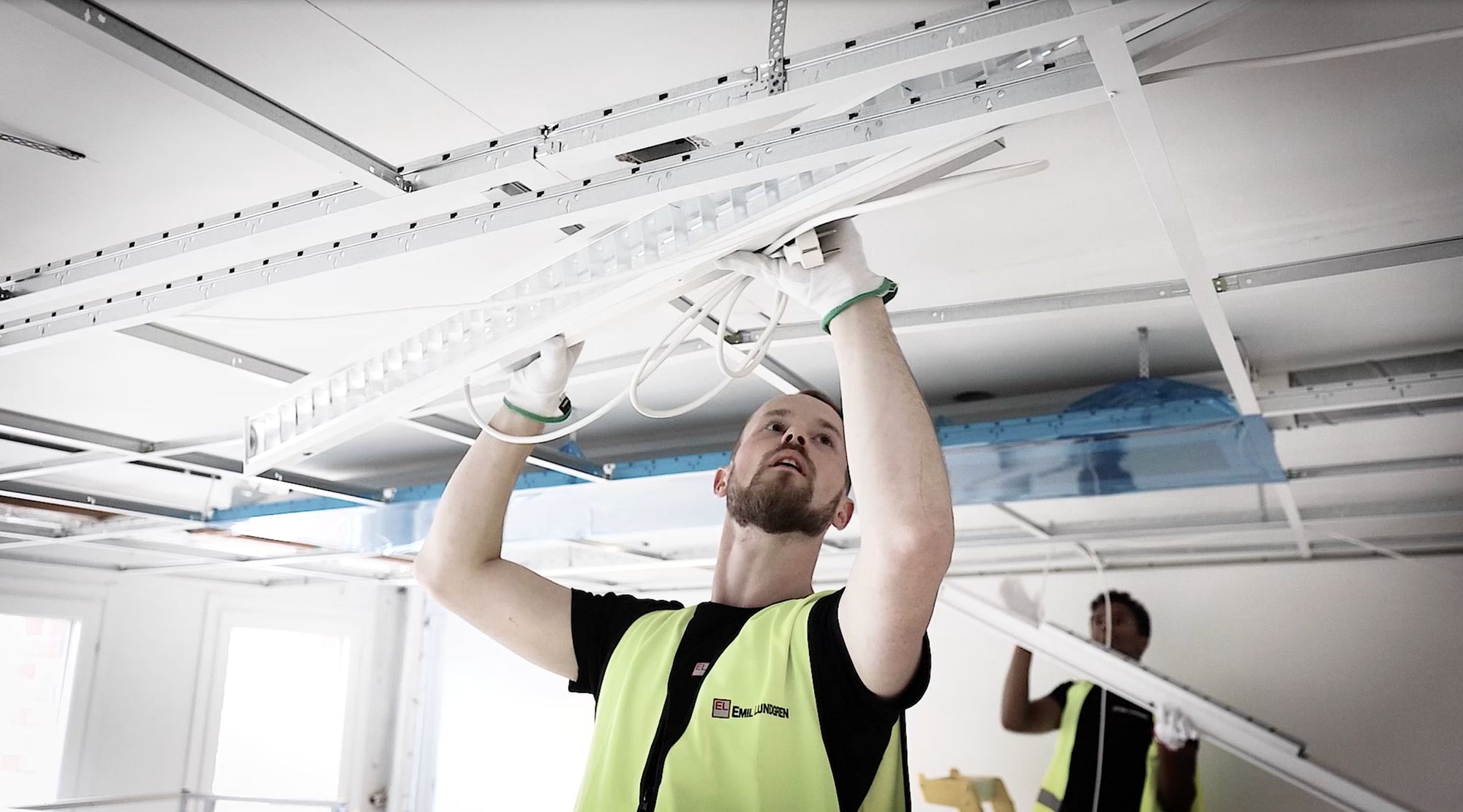
In the race towards a net-zero future, the UK is rethinking how it upgrades its built environment. This has become increasingly apparent in the office retrofit market, where sustainable refurbishment is becoming the default choice over demolition and rebuild. With the pressure to reduce embodied carbon, improve energy performance, and meet stricter regulations, lighting is emerging as one crucial upgrade area, and Fagerhult’s ReLight initiative offers a standout solution. A shift in thinking: Retrofit first, not rebuild The UK commercial property remodelling sector is expected to grow at a compound annual rate of 2.6% to reach £7 billion over the five years through 2024–25, reflecting steady growth in retrofit projects. A mix of economic, regulatory, and environmental factors has driven this growth: In London’s Square Mile, the City of London Corporation approved 17 retrofit applications in 2023, a record number, representing over 50% of all planning approvals[i]. In 2024, Westminster Council launched a retrofit-first policy, requiring developers to preserve at least 50% of the building’s structure where possible[ii]. Minimum Energy Efficiency Standards (MEES) are also tightening. By 2030, commercial properties must have an EPC rating of B or higher[iii]. This is a target that many ageing office buildings will only meet through deep retrofit. These shifts have not only made retrofit projects viable but also essential. Lighting: A hidden solution for sustainable upgrades While much attention is paid to HVAC (Heating, Ventilation, and Air Conditioning), insulation, and glazing in retrofit conversations, lighting remains a powerful but often overlooked opportunity. Fluorescent fixtures - still present in many offices - are inefficient, maintenance-heavy, and incompatible with modern sustainability goals. This is where Fagerhult UK’s ReLight initiative shines. ReLight: Smarter, circular lighting for modern workspaces ReLight is a retrofit concept that upgrades existing Fagerhult luminaires - such as the popular DTI and Notormodels – as well as luminaires from other brands, with new LED engines, drivers, optics, and optional smart controls. Instead of removing and replacing ceiling-mounted fittings, ReLight repurposes the existing housings, saving time, materials, and money. Here’s how it works: Assessment & Kit Design: Fagerhult checks if a standard ReLight kit exists for your luminaires or develops a custom solution. Installation: Kits are easy to install, featuring click-fit components and user-friendly documentation. Performance Testing: Every refurbished luminaire undergoes thorough testing, is CE-marked, and comes with a 5-year warranty. Reduced waste, maximum efficiency The environmental case for ReLight is compelling: Up to 70% energy savings compared to fluorescent lighting. Reduced embodied carbon by retaining and reusing luminaire housings, especially important for projects aiming for low Whole Life Carbon scores. Smart lighting options via Fagerhult’s Organic Response, delivering adaptive, sensor-driven lighting for even greater energy control. No aesthetic disruption: Refreshed luminaires look and feel the same but perform dramatically better. Perfect for retrofit projects Whether you’re transforming a 1990s office into a Grade A workspace or upgrading outdated ceilings for compliance with EPC standards, ReLight is a low-disruption, high-performance option. It's particularly well-suited for office refurbishments operating under live conditions, occupied buildings with limited access, projects where ceiling layouts are to be retained, and buildings undergoing sustainability assessments, such as BREEAM. Customisation for refurbishment projectsBeyond ReLight, Fagerhult also offers extensive customisation options, regularly developing small but precise modifications to our Notor range and other luminaires to work within the constraints of an existing space and the demands of refurbishment projects. Where existing lighting can’t be reused – or it isn’t the most effective way to illuminate the space – customisation can create a solution to fit the exact dimensions, layouts, and performance requirements of your project. This flexibility means you get a perfect match for your environment without compromising on efficiency or aesthetics. Lighting the path to net zero According to the UK Non-Domestic National Energy Efficiency Data Framework, lighting is a major contributor to electricity use in non-domestic buildings[iv]. The top three consumers of electricity are factories (33%), offices (15%), and warehouses (12%). Switching to LED with smart controls can significantly reduce that load, directly contributing to ESG goals, net-zero commitments, and compliance with landlord-tenant energy performance requirements. And because ReLight supports the circular economy, it sends a clear message about your organisation’s values: reduce waste, use resources wisely, and invest in long-term solutions. As the retrofit market continues to grow across the UK, Fagerhult UK stands ready with ReLight, a solution that meets the moment. It’s efficient, scalable, and sustainability-focused, making it ideal for forward-thinking developers, facilities managers, architects, and contractors. Want to know if your luminaires qualify for ReLight?Fagerhult’s team offers assessments and guidance to help determine feasibility, and can design a kit that fits your building and your goals. Get in touch to learn more. [i] https://news.cityoflondon.gov.uk/record-year-for-retrofitting/ [ii] https://www.westminster.gov.uk/news/new-policy-make-westminster-retrofit-first-city [iii] https://www.cbre.co.uk/insights/articles/what-can-we-expect-from-the-upcoming-changes-to-minimum-energy-efficiency-standards [iv] chrome-extension://efaidnbmnnnibpcajpcglclefindmkaj/https://assets.publishing.service.gov.uk/media/62bc5a35d3bf7f2915159f64/non_domestic_need_data_framework_2022.pdf
NEWS ARTICLE |
Fagerhult halves CO₂ emissions – 49% reduction since 2021
Material choices, product innovations, reuse initiatives, and a systematic analytical approach underpin Fagerhult’s reduced climate impact. Over five years, total CO₂ emissions have decreased by 49 per cent – far exceeding the company’s own targets. Using resources wisely has been a cornerstone throughout Fagerhult’s 80-year history, and it continues to shape the business today. Since 2021, this work has gained even sharper focus and direction, with clear carbon-emission targets, long-term plans, and a comprehensive sustainability programme based on life-cycle assessments (LCA).“A reduction of this magnitude in such a short time shows that systematic work truly makes a difference. It is the result of many large – and small – initiatives, where every improvement contributes to the whole,” says Josefin Carlsson, Sustainability Specialist at Fagerhult. Fagerhult's total CO₂ emissions have decreased by 49 per cent compared to 2021 levels. Many initiatives – one shared direction The success is underpinned by a series of strategic decisions in product development and processes. The work has been carried out across several parallel tracks, following the principle many small streams together create significant impact.“Innovation and sustainable solutions make a real difference for our customers and reduce emissions across the entire value chain – not just in our own production,” adds Josefin Carlsson. Josefin Carlsson, Sustainability Specialist at Fagerhult, Habo. The greatest impact is in the use phase, where emissions since 2021 have been steadily reduced by around 200,000 tonnes of CO₂e – a 49 per cent decrease. At the same time, emissions in Scope 1 and 2 have been reduced by 60 per cent compared with the base year. Sustainability in practice A decisive factor behind this progress is the many parallel initiatives, with material choices playing a central role.Since 2025, the majority of luminaires with housings made from extruded aluminium profiles contain up to 75 per cent recycled material. This contributes to an annual climate saving of approximately 225 tonnes of CO₂e.In 2025, Fagerhult reused more than one hundred luminaires per working day through the ReLight initiative. By upgrading existing luminaires with new technology and extending their life cycle, the climate impact from materials and production is significantly reduced. In total, more than 50,000 products have been given a new lease of life through reuse.Product development is also a key driver of the transition, and several innovations have both reduced climate impact and increased energy efficiency: Multilume Re:Think has reduced Scope 3 emissions by over 320 tonnes of CO₂e through smart design and environmentally sustainable material choices since its launch in 2021. This is equivalent to planting and growing 1,300 trees for ten years. Twin Dual Driver has reduced the climate impact of control gear by 49 per cent through more efficient electronics and improved material composition. Wrapped’s Solid Board housing has up to 89 per cent lower climate impact per kilogram compared with virgin aluminium. At the same time, more than one in ten luminaires sold today includes an integrated sensor, helping to reduce energy consumption during operation. A key factor behind the success is the long-term, fact-based approach.“Based on life cycle assessments, we have identified where and when climate impact occurs – and which actions have the greatest impact. We’re now carrying that knowledge forward in our continued efforts to further reduce our climate impact,” concludes Josefin Carlsson.
Return to top