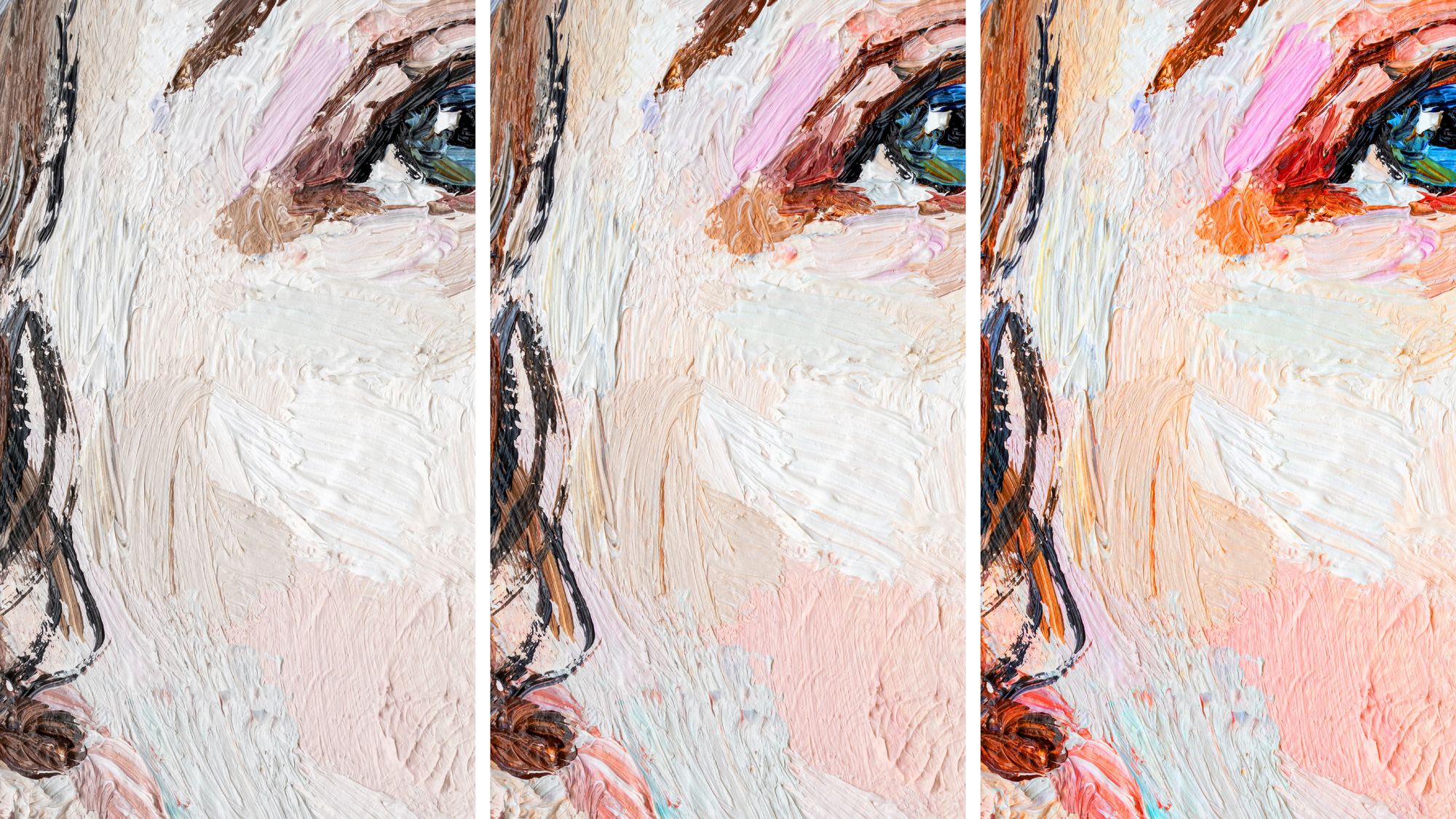
For decades, retailers have used the Colour Rendering Index (CRI) to judge how lighting reveals colour. Colour rendering refers to the ability of a light source to accurately show the true colours of objects compared to a reference or natural light source.
CRI gave the industry a shared benchmark, but it was built on narrow foundations. Today, a newer approach, Colour Fidelity Index (Rf) metrics, offers a broader way to evaluate how faithfully light sources render colours, but it is not without its challenges.
To understand what this means for retailers, we spoke with Henrik Clausen, Director of the Fagerhult Lighting Academy.
CRI: A Useful but Incomplete Measure
The Colour Rendering Index was introduced more than 50 years ago by the International Commission on Illumination (CIE) and is still widely used in standards and specifications. CRI evaluates a light source using just eight test colours – soft, pastel shades that do not reflect the richness of real retail environments.
 "CRI gave people a feel for how good a light was," explains Henrik. "But those colours were soft, diffused, and not very like anything in real life. It was invented for fluorescent tubes. Subtle shifts in tones, for example, in skin colours, often went unnoticed." Henrik Clausen, Director of the Fagerhult Lighting Academy
The CIE has itself noted that ‘for some types of light sources, the CRI does not agree well with overall perceived colour rendering,’ particularly in cases of LED lighting with narrow-band spectral components – an issue that becomes especially relevant for saturated tones and complex materials.
Rf: A Broader and More Comprehensive Measure
The Rf metric, defined in the publications CIE 224:2017 and IES TM-30, was created to address these limitations. Instead of eight references, Rf evaluates 99 colour samples, selected to represent a broad range of real-world materials.
Why Precision Matters in Retail
In practice, much of retail design is built around appearance and perception. Premium packaging, cosmetics, fashion textiles, and even fresh food are all developed under specific lighting conditions. If colours shift when displayed in stores, the intended impression is lost. Rf metrics were designed to provide lighting specifiers with a broader toolset to preserve those intended appearances across a wider range of tones.
“Rf could help to replicate the designer’s vision more faithfully,” Henrik says. “That is the real advantage for retail. The colours of a product or package are shown the way they were meant to be seen.”

Henrik was cautious, however, to note that end customers are unlikely to notice the difference directly.Instead, the benefit is mainly for specifiers and purchasing teams, who can use Rf data to help ensure consistency across stores and product categories; a high Rf is generally more likely to provide consistency than a high Ra. However, as the CIE notes, two different light sources with the same Rf value can still render the appearance of specific objects differently, so lighting booths will likely still be necessary to ensure accurate colour rendition across a range of sources.
Since CRI is long-established, both CRI and Rf will continue to appear on product sheets for the foreseeable future. But the shortcomings of CRI are clear: a light can score highly while still distorting saturated or complex colours. Rf reveals these gaps by showing how a source performs across a much wider range of references.
Customers Don’t Notice the Lights – But They Notice the Results
While end customers are unlikely to consciously notice the difference between CRI and Rf, purchasing teams can use Rf data to increase the likelihood of consistency across stores and product categories. The benefit is indirect: customers may not name the technology, but they experience greater consistency in presentation when retailers apply it carefully.
“Customers won’t walk in and say, ‘This is Rf lighting,’” Henrik points out. “But they will see products as they were designed to look, and that creates a sense of quality and trust.”
Trade-offs and Practical Challenges
Henrik noted important trade-offs with adopting Rf: higher colour rendering often means lower light output for the same energy input, raising environmental considerations.
“There are pros and cons,” Henrik said. “More accuracy in specification is the benefit. But it is harder to measure, and you can lose efficiency if you push for the highest rendering levels.”
The key recommendation is to carefully balance colour rendering accuracy with practical considerations such as energy efficiency and cost-effectiveness.
He also pointed out that in practice, specifying exact values can be challenging, which is why Fagerhult often works with ranges such as ‘above 80’ or ‘above 90’ rather than precise figures. This approach gives customers confidence in quality without over-promising on measurement precision.
The CIE also points out in its Position Statement on Colour Quality Metrics that the colour fidelity index alone does not encompass all aspects of colour quality; in particular it does not characterise colour preference.
The Road Ahead
Henrik underlined that Fagerhult has not yet adopted Rf metrics in its product documentation but is monitoring developments: “We are keeping track of what’s going on, and if customers want documentation in that way, then we’ll move. Our role is to support retailers with the standards and tools they find most valuable, helping them create lighting that reflects their products and brand as intended.”
Take the Next Step in Retail Lighting
Understanding and applying colour metrics can give retailers a competitive edge – ensuring products are seen as intended, building trust with customers, and strengthening brand perception. Fagerhult is here to guide you through this evolving landscape, balancing colour fidelity, efficiency, aesthetics, and practical considerations.
Connect with our experts at Fagerhult to explore how precise lighting solutions can elevate your stores and bring your brand vision to life; get in touch.
Related News

Experts in retail lighting: Tom Harries
Our focus on retail lighting and design requires a high level of expertise to ensure client satisfaction and to bring their visions to life. With fast-paced project timelines, retail lighting must be tailored to meet specific needs while ensuring full compliance with energy regulations and fulfilling aesthetical needs. We spoke to Tom Harries, Business Development Manager at Fagerhult, to explore how his specialised background supports our retail clients and how his approach goes beyond a typical sales strategy. From product design to lighting expertise Can you tell us about your background and how you ended up in your current role? I earned a degree in Product Design at Brunel University, where I had the opportunity to take part in a year-long lighting design course - the first time such a course had been offered at the university level – which involved designing a light fitting as part of my dissertation. Following that, I had a placement at Aktiva, a UK-based company which designs and manufactures contemporary lighting solutions, specialising in high-quality, bespoke light fittings. After graduating, I joined Fagerhult, as a lighting designer. Initially, I was focused purely on design, but I soon realised I enjoyed the customer-facing side of the role, which led me to transition into sales. Having a design background is quite rare in a sales role and allows me to bring a different perspective to the position. My experience allows me to focus on discussing the scheme with the client, exploring how we can enhance it, and considering how materials can look and feel in the space. It’s very much a collaborative conversation. Overcoming challenges in retail lighting design What are the biggest challenges in retail lighting design? The main challenge is pace—when you’re working on a store refit, everything has to happen incredibly fast. While office projects might take two to three years, retail projects often need to be turned around in as quickly as one month to get the store open as quickly as possible. There’s often only time for quick sketches and drawings, so you need to find ways to quickly bring those concepts to life. Another challenge is the bespoke nature of retail design. Each project must be unique, which I find rewarding. I enjoy finding creative solutions that balance both aesthetic and practical needs. From concept to completion What does a typical day look like for you? A big part of my work revolves around managing accounts like Frasers Group, which owns a wide range of brands, ranging from Sports Direct to high-end stores like Flannels and Frasers and those in between like Jack Wills and Sofa.com. I often attend pre-site meetings in empty buildings, collaborating with architects and clients to explore what is possible. Once the design concept is agreed upon, we work to ensure that everyone is aligned and satisfied with the results. I also deliver CPD presentations to retail design agencies, sharing our expertise and building trust in our ability to bring client's visions to life through effective lighting solutions. Bringing brands to life What aspect of your work do you enjoy the most? I love working on concept development—trying to understand what a brand is aiming to achieve and then figuring out how we can realise that vision in a way that is both practical and visually striking. Sometimes we are working with tight budgets, so part of the challenge is making sure the concept works for everyone involved. Working with twelve brands under the Frasers Group umbrella, each with their own unique requirements, keeps things interesting, and being their sole lighting supplier allows us to create tailored solutions that fit each brand’s identity perfectly. Which project are you most proud of? I’m particularly proud of two standout projects. The first is the Sports Direct flagship store on Oxford Street, a massive 50,000 sq. ft space spread across four floors. This project, part of a £10 million investment from the Frasers Group, took about a year to complete. We incorporated various Fagerhult products, alongside LED Linear and LTS, as well as bespoke elements like the curved LED feature around a custom stretched fabric lightbox. Another favourite is the Flannels flagship store in Liverpool. This 120,000 sq. ft, six-floor store includes unique custom features along with a fully controllable DMX external lighting scheme. The scheme, primarily Fagerhult with contributions from WE-EF, LED Linear, and LTS brands, creates a high-contrast, luxurious atmosphere. This project earned several awards, including the Drapers Award for Best Store Design and Creative Retail Award for Store Design of the Year. What makes Fagerhult stand out? What do you think clients appreciate about working with Fagerhult? Retail is a diverse sector, and our range of brands within the Fagerhult Group allows us to tailor products and solutions to various budgets and needs. From WE-EF to LED Linear, we can provide installations for both standard and bespoke luxury retail spaces. Our team of five in-house designers collaborates closely with clients to create high-quality, customised designs. We’ve also introduced Revvit, a software for creating 3D models that enhances collaborative planning, ensuring clear communication among architects, clients, and designers, which helps to effectively bring concepts to life. Tom Harries' journey from product design to business development highlights the significance of expertise and creativity in retail lighting. His blend of technical knowledge and customer-focused service enables Fagerhult to meet clients' evolving needs with innovative, sustainable solutions. Whether working on bespoke designs for luxury stores or rapid rollouts for high-street brands, Tom effectively bridges the gap between concept and execution, ensuring every project excels.
From Fixtures to Feelings: Rethinking Retail Lighting as Experience Design
Lighting retail environments is no longer just about making things visible. It’s about shaping how people feel, behave, and connect with the products and space around them. The role of lighting has shifted dramatically, from a functional necessity to a strategic design tool, and this evolution is redefining how brands engage customers and express their identity. Lee Thompson, Business Development Manager for Fagerhult UK’s Retail Lighting Solutions team, brings hands-on experience from working with some of the world’s most forward-thinking retailers – both from his time on the shop floor and in his role at Fagerhult now. In this article, Lee explores some of the trends, challenges, and creative opportunities transforming retail lighting, and why the future lies in selling light as a service, not just a specification. From Selling Products to Crafting Atmosphere Traditionally, lighting in retail was about function. Fixtures were chosen for their ability to illuminate a space. They had to be bright enough to see, consistent enough to avoid shadows, and inexpensive enough to scale. But, as retail has transformed into a more immersive, experiential space, so too has lighting design. Lighting today is a narrative device. It sets tone, tells stories, and silently guides customers through environments. The right lighting doesn’t just highlight merchandise, it enhances mood, influences dwell time, and ultimately supports purchasing decisions. “Lighting is theatre,” explains Lee. “It’s about creating contrast, drama, mood, as well as doing justice to the products, the brand, and even the store’s architecture.” This evolution requires a mindset shift, from selling fixtures to selling the value of light as an emotional and strategic tool. The industry needs to “reframe lighting as a service, not an item on a specification,” continues Lee. “In other words, it's not about what you install, it's about what you evoke.” The Psychology of Light Light affects us in powerful, often subconscious ways. Warm, soft lighting in fitting rooms can improve confidence. Bright, cool lighting around displays energises shoppers and draws attention. Accent lighting elevates premium products, enhancing their perceived value. These subtle effects tap into our emotional and biological human responses. Lighting impacts circadian rhythms, influences emotional states, and contributes to how we remember experiences. “Research shows that customers spend more time and more money in well-lit, emotionally engaging spaces,” comments Lee. “In short, lighting isn’t just something that sits in the background, it’s a silent persuader.” No Standards? No Problem: Embracing a Principles-Led Approach Retail lighting remains a highly creative space, so - unlike commercial or industrial sectors, where performance guidelines are well established - retail lighting is often approached as bespoke. While this allows for creativity, it can also result in inconsistency and underperformance. This means retailers and designers must rely heavily on best practice, creative instinct, and close collaboration. As Lee points out: “When it comes to retail lighting, it's a bit like the Wild West. There are no real rules to it, which is one of the reasons I really enjoy it, and the creativity and innovation it allows for.” At Fagerhult, this approach is shaped by a “good, better, best” structure that considers general lighting to establish consistent ambient visibility, accent lighting to highlight products, displays, or materials, and decorative lighting to reinforce brand tone and enhance atmosphere. “It’s less about what you must do,” Lee notes, “and more about what you can do to improve the customer experience.” While the focus is often on design flair, the fundamentals still matter. Emergency lighting, for instance, is a legal and functional necessity. These systems must work flawlessly in crisis scenarios, providing a clear path to safety even when main power fails. Thoughtful integration of these elements ensures they don’t disrupt the aesthetic, but are always ready to perform. And poor lighting, no matter how artistic in concept, can ruin a customer’s experience if it’s too harsh, too dim, or simply impractical. Designed for Change: The Need for Flexibility Retail is fast-moving. Stores may undergo multiple layout changes or brand campaigns within weeks. “I previously worked in a flagship London store for a leading sportswear organisation, and the shop floor could look different every few days,” Lee recalls from his retail background. Lighting systems must keep up. It has to move with the brand, the product, and the ever-evolving retail environment. That’s why Fagerhult’s solutions are built for adaptability. In retail, using a combination of track and spot luminaries – such as the Streamer X and Touch Mini G2 – offers many advantages: One power feed is needed for an entire track, meaning more cost-effective and quicker installation compared to units that require individual feeds Should the store wish to change the position of displays, moving a luminaire to illuminate those new displays is straightforward, as easy as unclipping and reclipping the spotlight Lights can be added or removed quickly and easily, on the existing track Sustainability: From Obligation to Opportunity Sustainability is no longer optional, it’s expected. Energy efficiency, responsible sourcing, and minimal environmental impact are now part of the baseline. But, retail presents a challenge. Many stores are completely refitted every 3–5 years, making circular design complex. “It’s tricky,” Lee admits. “But sustainability can’t be an afterthought, especially when brands want to demonstrate values as well as style.” Fagerhult is responding by embedding sustainable thinking into every stage of design: Using recycled materials and aluminium housings Optimising for long-lifespan LEDs Deploying sensor-controlled lighting to reduce energy use Designing modular fittings for reuse and reconfiguration Even small improvements, like reducing energy loads or future-proofing components, can deliver long-term environmental and cost savings. So, What’s Next? Smart, Sensory, and Story-Driven Lee has noticed several trends which he believes are set to define the next chapter of retail lighting: Multi-sensory design is growing, with lighting integrated alongside sound, scent, and digital interaction to build fully immersive environments. AI-powered lighting controls are becoming more common, helping stores respond in real-time to environmental conditions, footfall, and time of day. In fitting rooms, we may start to see interactive concepts that allow customers to see how outfits look under different lighting, or explore options via mirror-integrated tools. Sustainability and storytelling are increasingly merging, with lighting choices used to communicate brand values, not just enhance performance. Beyond the Fixture In retail environments, it’s no longer enough to simply light a space, you have to light an experience. “The most successful brands aren’t just selling products, they’re staging emotional and memorable customer encounters,” continues Lee. For designers, retailers, and lighting professionals, the opportunity involves moving beyond the fixture to embrace lighting as a dynamic, emotional, and essential design service. To discuss how best to light your retail environment, please get in touch.