
Related News
NEWS ARTICLE |
The Crucial Role of Lighting in Stimulating Workplaces
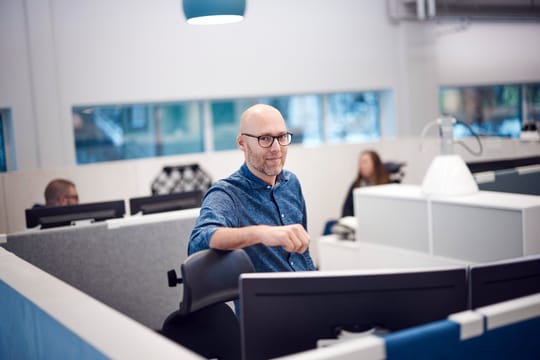
A recent WORKTECH Academy report challenged the industry to think more deeply about how workplaces can inspire creativity, innovation, and wellbeing. With hybrid working now the norm, many organisations are re-examining how their offices can be an attractive and productive space. This raises a key question: what design considerations help create stimulating workplaces – and how can lighting play a central role? Experts Matthew Thorpe, Architecture & Design Team Manager at Fagerhult, and Jean Hewitt, Accessibility and Inclusion Specialist at Buro Happold, share their insights. From Functionality to Experience Offices are often designed to meet basic functionality, such as providing sufficient lighting for reading, maintaining uniform brightness across the floor plate, and ensuring compliance with regulations. While practical, this can overlook the emotional and creative potential of a workspace. As Matthew explains: “The best offices are always well considered. The lighting accentuates the finishes, enhances the architecture, and evokes a sense of ambience on entering. That’s when a workplace feels exciting.” Lighting influences not only how a space looks, but also how it feels – whether cosy, energising, calm, or collaborative. When coordinated with architecture, interior design, and acoustics, lighting transforms the office from a space where employees feel obligated to be into a space they want to be. Comfort and Inclusion While lighting can stimulate creativity, it must also support comfort and wellbeing. Jean notes that people experience lighting differently depending on factors such as neurodiversity, age, or health conditions. “Neurodiversity, age, and health conditions – such as autism, ADHD, or the menopause – can all create hypersensitivity to lighting,” she explains. “So, while we want workplaces that are engaging, it’s important to balance that with comfort. Stimulating doesn’t mean overwhelming.” Her work with the Royal National Institute of Blind People (RNIB) demonstrates how adjustability can make a workplace more inclusive. In their London office, clusters of four desks were fitted with shared overhead lights that could be adjusted for brightness and colour temperature. At the individual level, each person also had a desk lamp with the same controls, allowing them to fine-tune their own space. “For some, it wasn’t the brightness but the whiteness of the light that was difficult. Having this two-layered control – both at the cluster and desk levels – was transformative. People even preferred coming into the office because the lighting was better than at home.” Personal control and thoughtful design enable workplaces to cater to a wide range of needs, ensuring everyone feels empowered to thrive. Lighting as a Design Catalyst Lighting’s impact goes far beyond visual clarity. It shapes how people interact with space, how they feel during the day, and how they collaborate. Matthew calls lighting a catalyst for atmosphere: “Natural light is the best – dynamic and changing throughout the day. If we can bring elements of that indoors, such as integrating Human Centric Lighting (HCL), offices feel more invigorating and natural.” Jean adds: “We’ve seen brilliant people hindered by the wrong lighting. Adjustable, high-quality light not only supports focus and creativity, but it also ensures everyone can participate fully.” Design Considerations for Stimulating Workplaces There are many ways to approach lighting design to achieve the desired impact, these include: Layered lighting: Combining ambient, task, and accent lighting creates depth and variety. Matthew notes: “By layering light and giving people options, you make a workplace more visually interesting without major structural changes.” Zoning with light: Adjusting brightness and tone distinguishes areas for focus, collaboration, or relaxation. Human-centric lighting: Mirroring natural rhythms supports alertness and wellbeing. Personal control: Through smart systems, desk lamps, or dimmers, individuals can fine-tune lighting for comfort and satisfaction. Jean highlights: “The perception of what the ‘majority’ need is a myth. Many people benefit from adjusting their lighting. It’s not niche – most people appreciate it.” Integration with design: Lighting should complement architecture, finishes, and acoustics to create a coherent environment. These strategies enhance stimulation while supporting inclusivity, offering tangible benefits for both employees and organisations. The Workplace of Tomorrow Looking ahead, flexibility will remain a key driver. Offices must adapt to changing demands, and hybrid working patterns. Adjustable, modular, and sustainable systems – such as Control Track Versa – will play a central role in this shift. Matthew stresses the importance of sustainability and personal control: “We’re competing with home offices now, where people have control over their light and often sit near a window. Offices need to offer the same – if not better.” Jean adds: “After the initial wow factor of a big office space, what really matters is whether people feel comfortable. Lighting that can be fine-tuned to personal needs helps people flourish.” Lighting is Central to Stimulating Workplaces When integrated thoughtfully, lighting shapes atmosphere, supports wellbeing, and enables creativity. It is both a design catalyst and an inclusion tool, helping organisations create offices that people want to visit. As Matthew concludes: “Lighting isn’t just about enabling people to see – it’s about enabling them to thrive.” With lighting at the heart of design, workplaces can move beyond functionality and become spaces that energise, connect, and inspire.
NEWS ARTICLE |
Lighting Retail with Purpose: Reflections from the Fagerhult Team
Retail is a sector that never stands still, and lighting plays a vital role in shaping how shoppers experience a space. As lighting specialists, we work closely with designers to bring their creative visions to life, crafting immersive retail environments through carefully considered lighting solutions. Our approach is grounded in collaboration – understanding the design philosophy behind each project and ensuring that lighting enhances and supports it. We believe that the best results come when lighting is seamlessly integrated with the overall concept, materials, and atmosphere. Our retail team combines diverse experiences and perspectives, united by a shared passion for creating lighting that transforms the look and feel of a retail space. To understand what drives their work and how they approach the unique challenges of retail lighting, we spoke with three team members about their partnership with designers to shape spaces that feel cohesive, engaging, and true to the design intent. Dave Hughes, Head of Lighting Design As Head of Lighting Design, Dave’s role involves overseeing design delivery, guiding teams, and working closely with clients to ensure their spaces are not just illuminated but brought to life. Dave has vast experience working in a variety of sectors, but retail is a sector that quickly stood out for him: “I prefer working in the fast-paced nature of retail. The idea of working on a project and within weeks you see it installed – there’s a quicker gratification compared to other sectors where you wait years.” One of his recent highlights was a Next store in Thurrock, Essex, where his team collaborated with architects Gensler to reimagine the brand’s look: “We introduced more detailed LED elements, including coves and ceiling pads with squares and rectangles of light. While a few individuals from the Next team were initially hesitant about the changes being made to the store, the design looked fantastic and quickly proved its impact. It’s about moving a brand forward while staying true to its identity.” For Dave, success is measured by teamwork and outcomes: "I am driven by delivering high-quality work and take great satisfaction in seeing how our designs perform in the real world. Constructive feedback – whether positive or offering opportunities to refine our approach – is what helps us grow and develop as designers. I believe the success of any design is never the achievement of a single individual – it is the product of collaboration, learning, and shared progress. I truly enjoy being an active part of that process." Lee Thompson, Business Development Manager Lee manages a mix of client accounts and new business development. His portfolio includes household names such as Starbucks, O2, and Molton Brown. Alongside nurturing relationships, he collaborates with retail designers and fit-out companies, providing them with Fagerhult’s design expertise where their lighting knowledge may be limited. Before joining Fagerhult, Lee spent years in retail, from the shop floor to management. That experience continues to shape his approach today: “Retail gave me a strong foundation in customer service, and that’s still what drives me. I enjoy building relationships, understanding clients’ challenges, and finding ways we can add real value.” For Lee, the most rewarding aspect of the role is the impact lighting has on a retail environment: “We’re not just delivering a product – we’re helping create a feeling and an atmosphere that aligns with a brand’s identity and customer expectations. Effective lighting has the power to influence mood, guide people's movement through a space, and shape their connection with what’s on display. When it’s done well, it enhances both the environment and the overall customer experience. That responsibility is something I take pride in.” Lee’s perspective bridges the gap between customer experience and design delivery. He thrives on helping clients see what’s possible: “Sometimes clients don’t initially see what’s possible with lighting. That’s when the conversation becomes exciting – showing them how light can transform not only their products but the entire store experience.” Kayleigh Latka, Retail Commercial Director Kayleigh has been with Fagerhult for 14 years, joining the company when its retail division was still in its infancy. Her role is broad and fast-paced. She oversees the internal sales team – a group that handles everything from project coordination and quoting to stockholding and ensuring projects are delivered within tight lead times. “Retail is more fluid than other areas. Whatever the salesperson needs for a project, we make it happen. We quote, we stockhold, we coordinate – it’s very much an all-hands-on-deck approach.” For Kayleigh, the pace is what makes retail so rewarding: “I’ve always thrived under pressure. I enjoy the speed and intensity of retail – that sense of instant progress and achievement. You can work on something one week and see it live the next, which is hugely motivating.” The nature of retail projects means last-minute changes are inevitable, but she views them as an opportunity rather than a setback: “There are times when a project is 70% delivered, and a designer will request a significant change. Without moving the timeline, we need to make it work. That problem-solving element is challenging, but it’s also what keeps the role exciting.” Just as important to her as the pace is the culture of collaboration within her team: “One of the main reasons I’ve been at Fagerhult for so long is the people. We’re a very open team – hierarchy doesn’t get in the way of collaboration. Everyone has a voice, and that constant openness helps us keep improving.” Looking to the future, Kayleigh is most excited about the role of sustainability in retail: “It’s a huge topic, and more and more of our clients are pushing for it. I enjoy being part of those conversations – seeing how retailers are trying to move forward and be more sustainable in the way they design and deliver their spaces. It’s an important and exciting challenge for the industry.” Lighting Retail, Together Together, Dave, Lee, and Kayleigh highlight the unique character of retail lighting: a sector defined by pace, collaboration, and creativity. From problem-solving under pressure to shaping memorable customer experiences, the team’s shared commitment ensures that every project delivers both impact and value. It’s this combination of expertise, adaptability, and passion that continues to drive Fagerhult’s retail work forward. To discuss how Fagerhult can support your next Retail project, please get in touch.
NEWS ARTICLE |