Fagerhult’s louvres
Our aim is to create optimal, energy-efficient and visually superior light distribution for all lighting requirements. As a result, we use several different types of louvre.
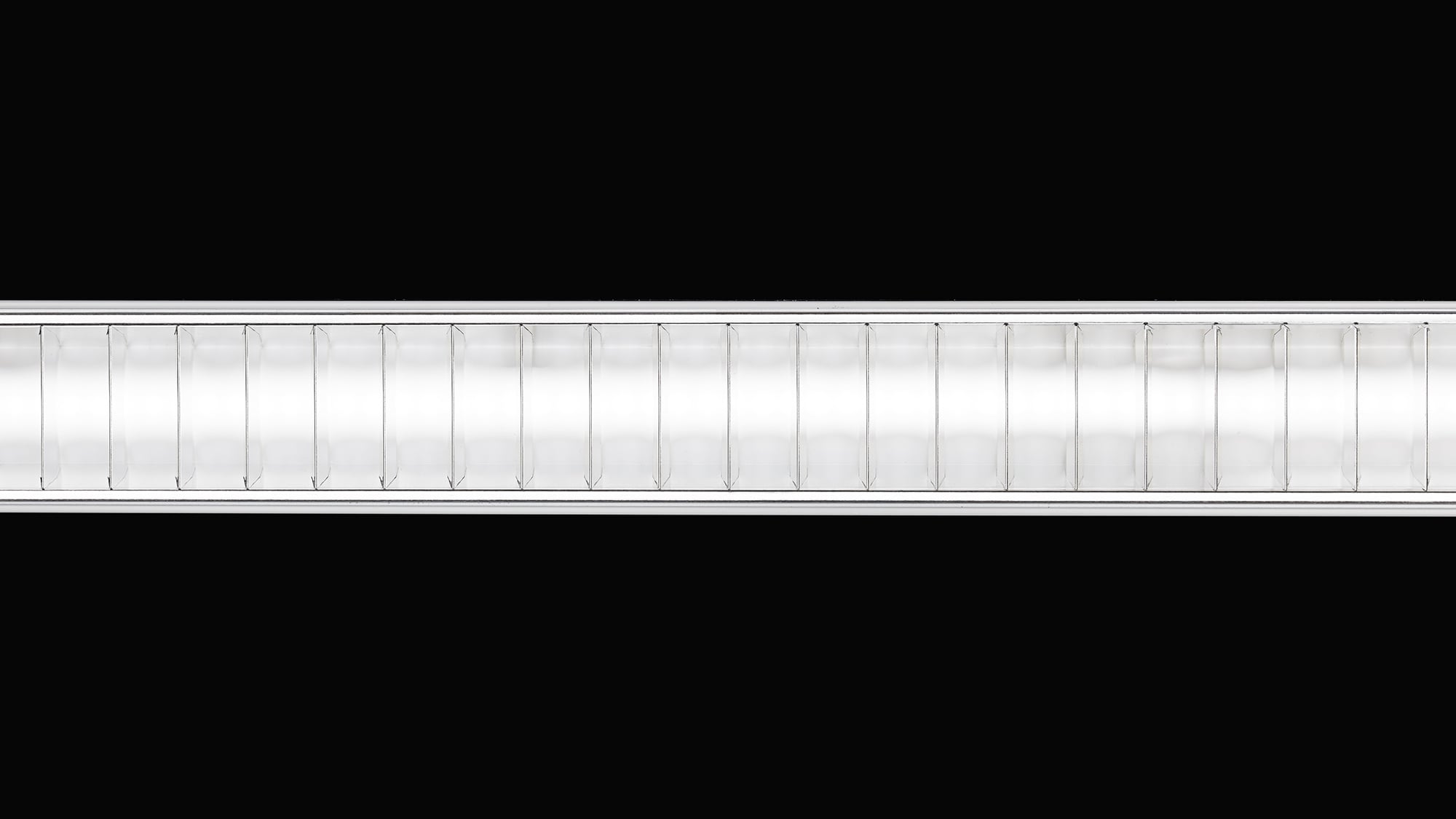
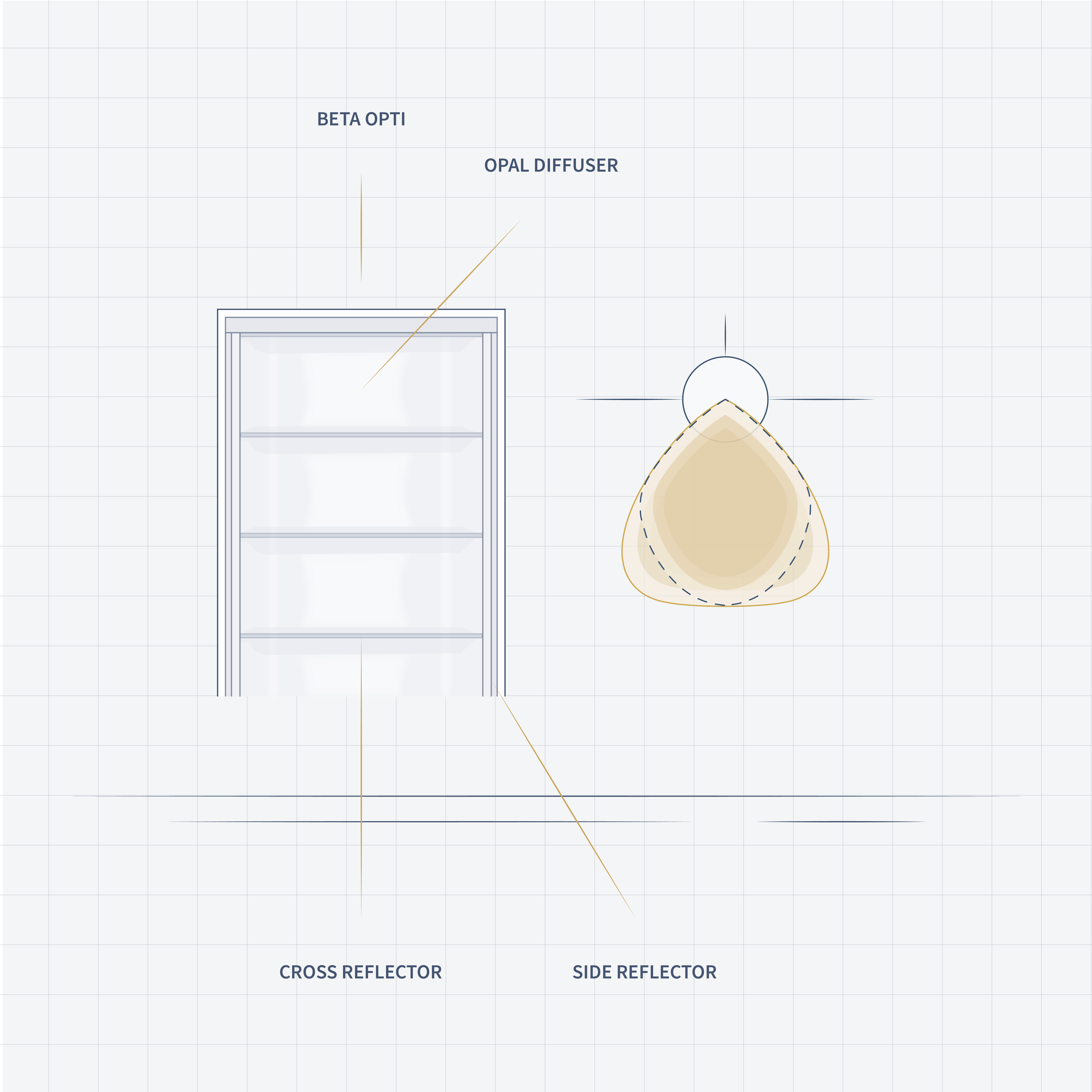
Double parabolic louvres (Beta Opti)
Double parabolic louvres consist of longitudinal and transverse reflectors. Both have a parabolic shape, and the light is controlled in two directions. This creates a well-shielded longitudinal and transverse light distribution, providing excellent visual comfort.
Double parabolic louvres also enable highly effective light distributions, allowing for high luminous flux and good uniformity on illuminated surfaces—without compromising stringent lighting requirements. This type of louvre is used in both direct and direct/indirect luminaires (recessed and suspended). Beta Opti louvres are available in four variants: R5, R5 Mini, R5 Micro and R5 Nano.
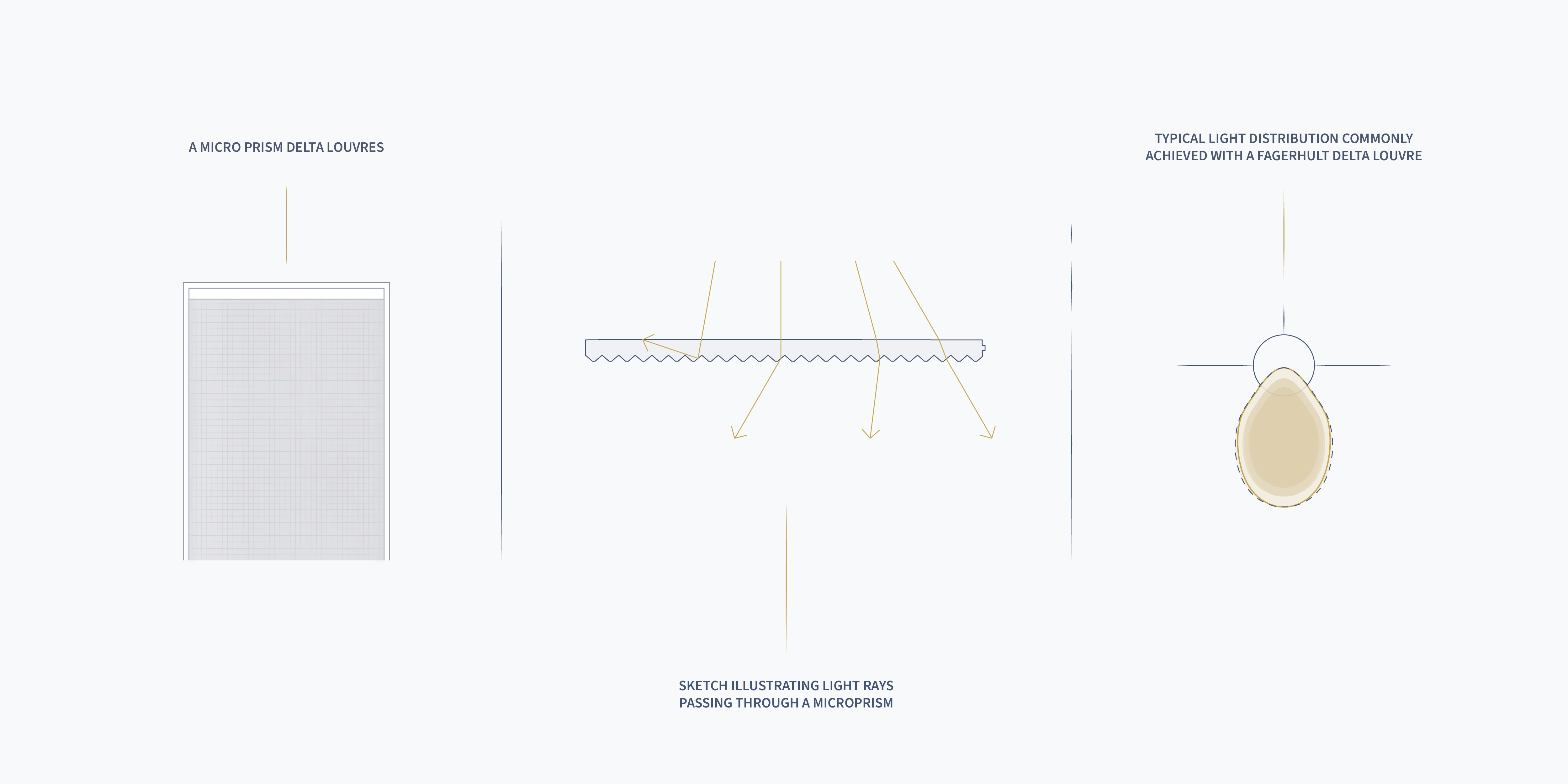
Micro-prism louvre (Delta)
Micro-prism louvres consist of a plastic diffuser (usually made of clear PMMA), where the light strikes a flat surface and exits through a textured surface. This is often made up of closely spaced cones or pyramids that direct light downwards at steep angles relative to the vertical line, thereby reducing glare. This louvre is used in both direct and direct/indirect lighting luminaires, for example in office environments.
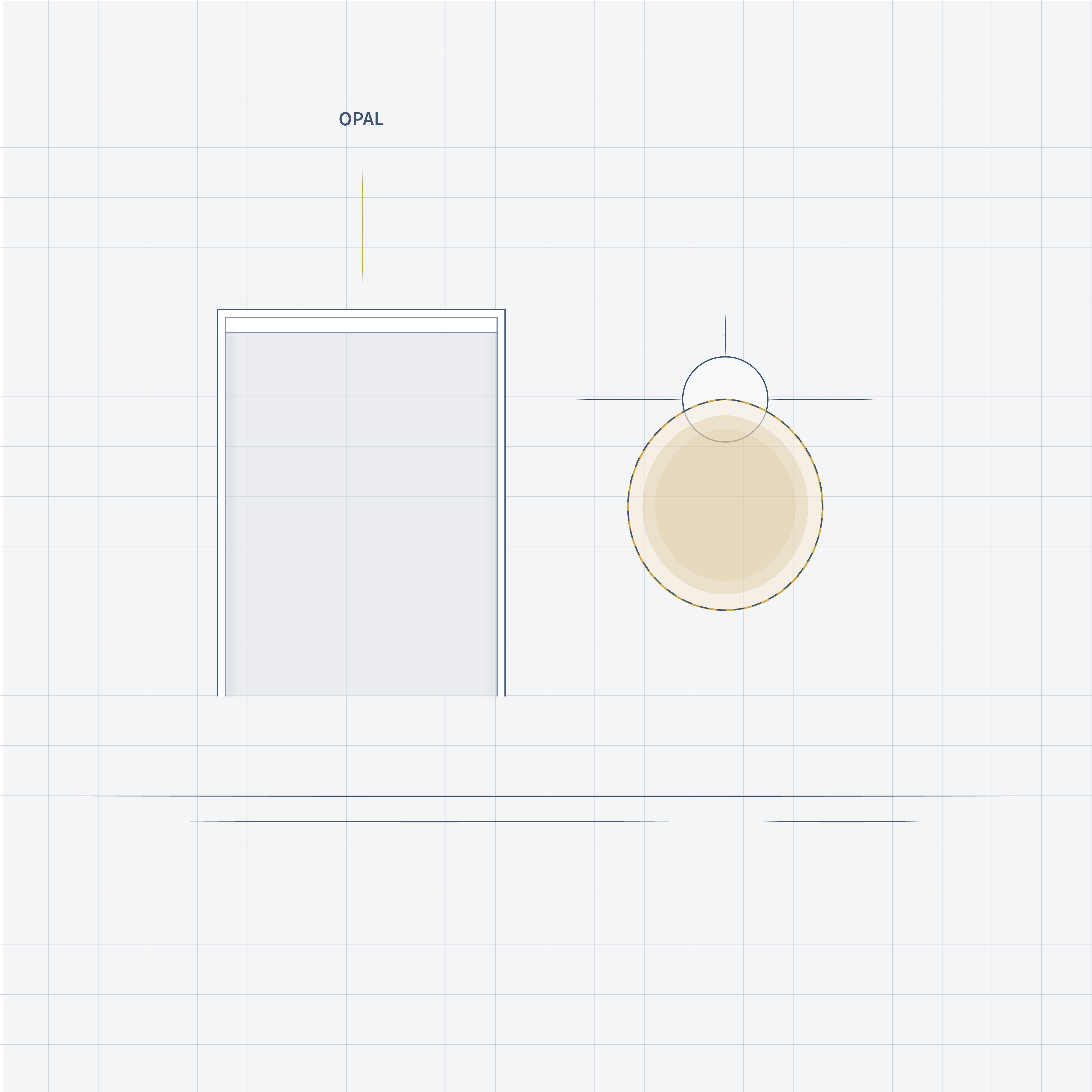
Opal louvre
Opal louvres consist of frosted plastic panels. This type of louvre provides an omni-directional (Lambertian) light distribution, making it well suited for general areas.
They are most commonly used in recessed and/or surface-mounted direct luminaires.
Edge-lit lighting solution
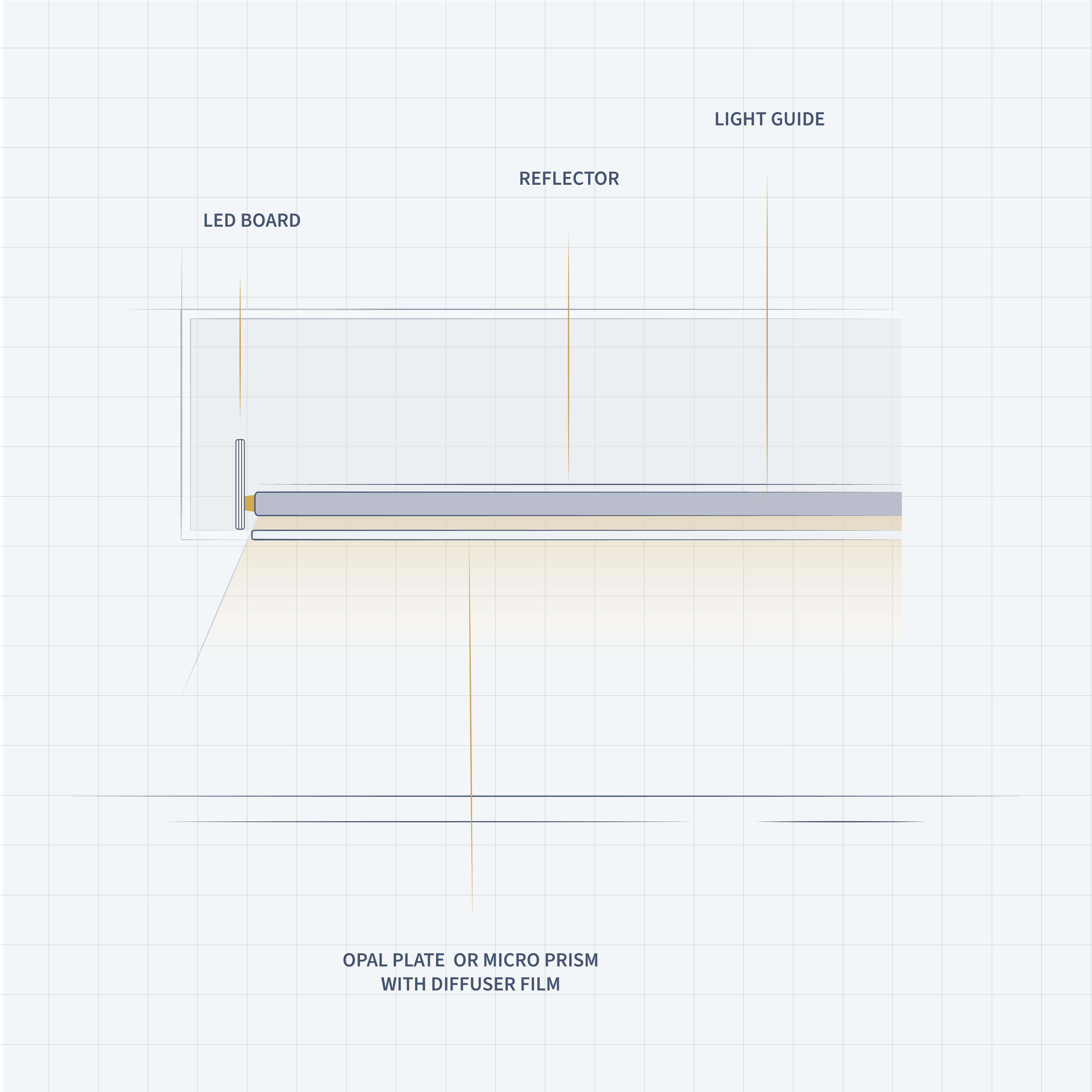
Edge-lit lighting solutions always consist of an LGP (Light Guide Plate) illuminated from one or more sides. There are two main types of LGP: clear plates with etched patterns and slightly opal (volumetric) plates. Edge-lit solutions can be used in both direct and direct/indirect luminaires (recessed and suspended).
The image shows a typical configuration of a direct luminaire. Here, an LGP is combined with a microprism to achieve an effective light distribution.