Art, paper, scissors
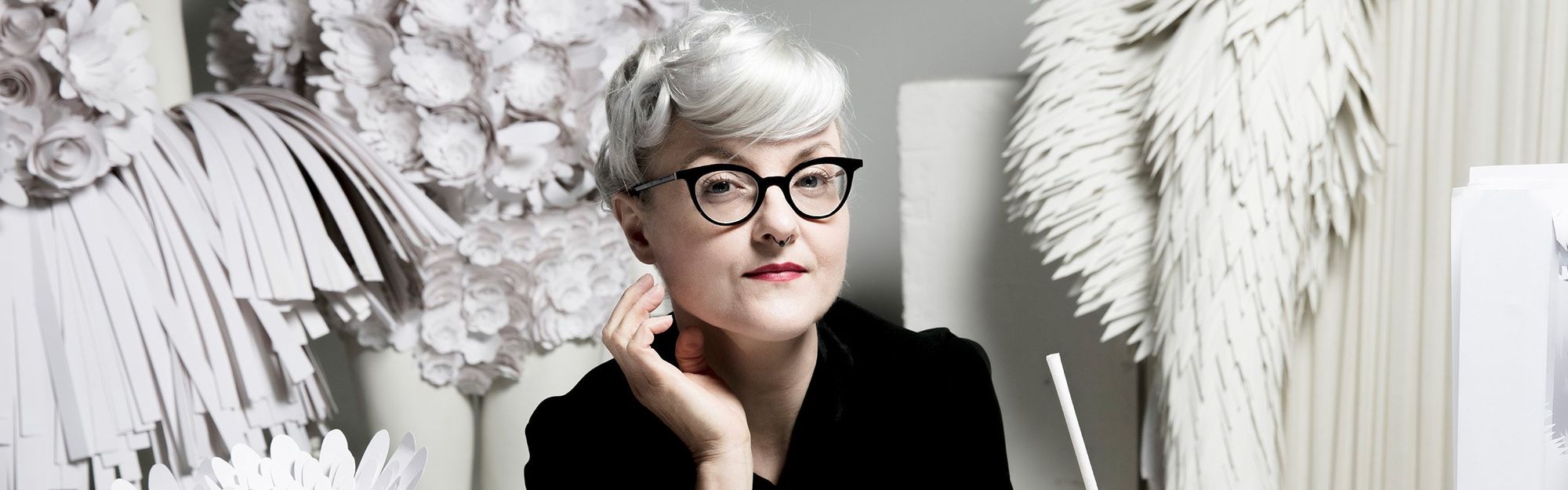
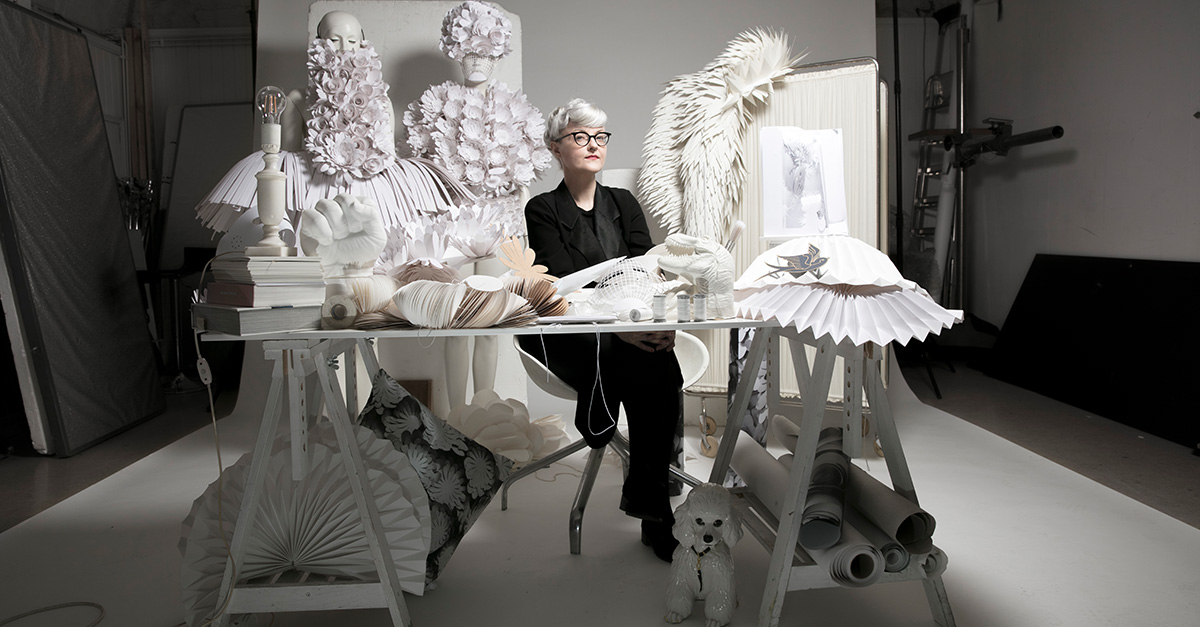
Bea Szenfeld, has always felt an urge to express herself through different types of mediums and materials. She is a trained potter, cutter and fashion designer and has done her trainee at Stella McCartney’s. But she felt out of place working with fashion, and experienced that she came too far away from what she actually loved.
– After my training and education in fashion and design, I started my own brand of clothes, says Bea Szenfeld. But I noticed after some time that the majority of my time was spent on dealing and trading with textiles, or with marketing – and that was not my forte. I love design, and I love the human body. So I started doing some small projects on the side, where I had a more artistic approach to the human form and figure. That is when I began to do clothes in other material than fabric. And I noticed that when I did a dress out of salad or pasta, the focus shifted from “can I get this in another size?” to “oh, this is design – a new way of dressing the body and contouring silhouettes!”.
During this period, Szenfeld describes, she did many trials and errors with different materials, but quite soon discovered the simplicity with paper.
– I did some tests in paper, and thought “this is too good to be true!”, Bea Szenfeld laughs. It was incredibly simple, and paper is such a beautiful material. It's such an easy job, once you play in its league. Once you have learned paper, it is truly so gratifying!


Heavy light-weight
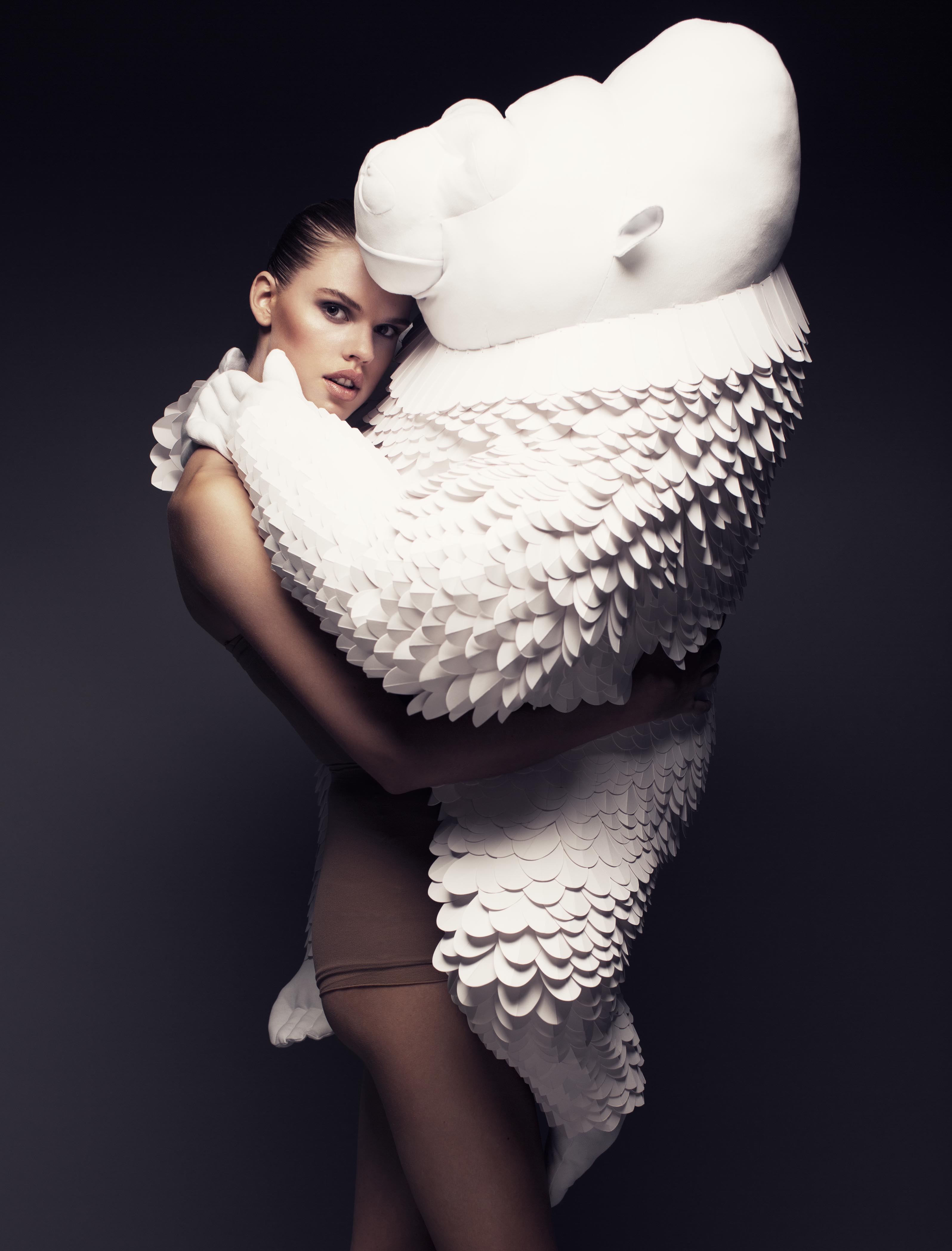
Even though Szenfeld has found her core material, it is still an explorational journey for her creations. Most often, it is the practical conditions that limits the creative possibilities in her work. Despite the light weight material, Szenfeld’s creation are surprisingly heavy, and sometimes hard to transport. Therefore, the garment is shipped in disassembled pieces – and then reassembled on a model when in use.
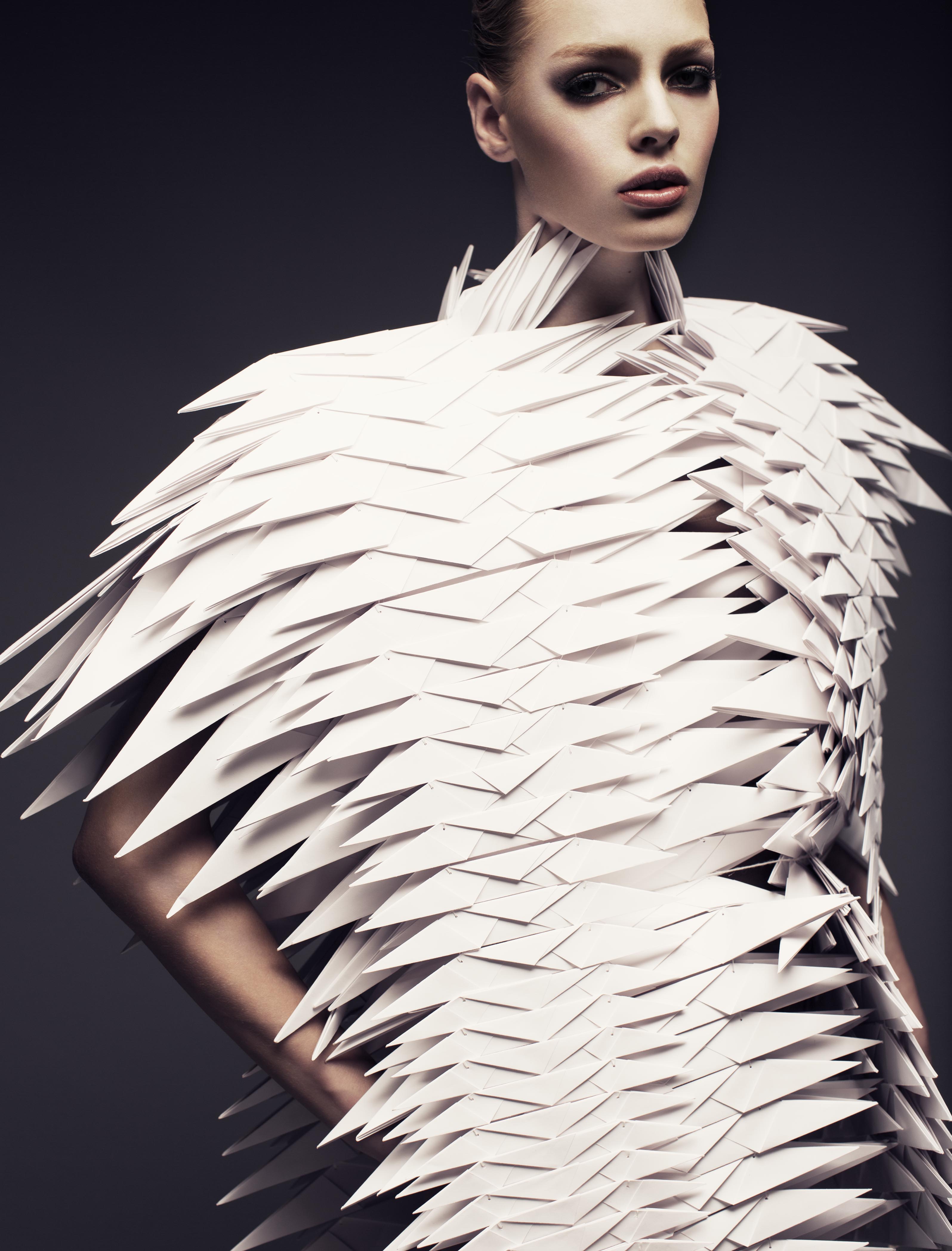
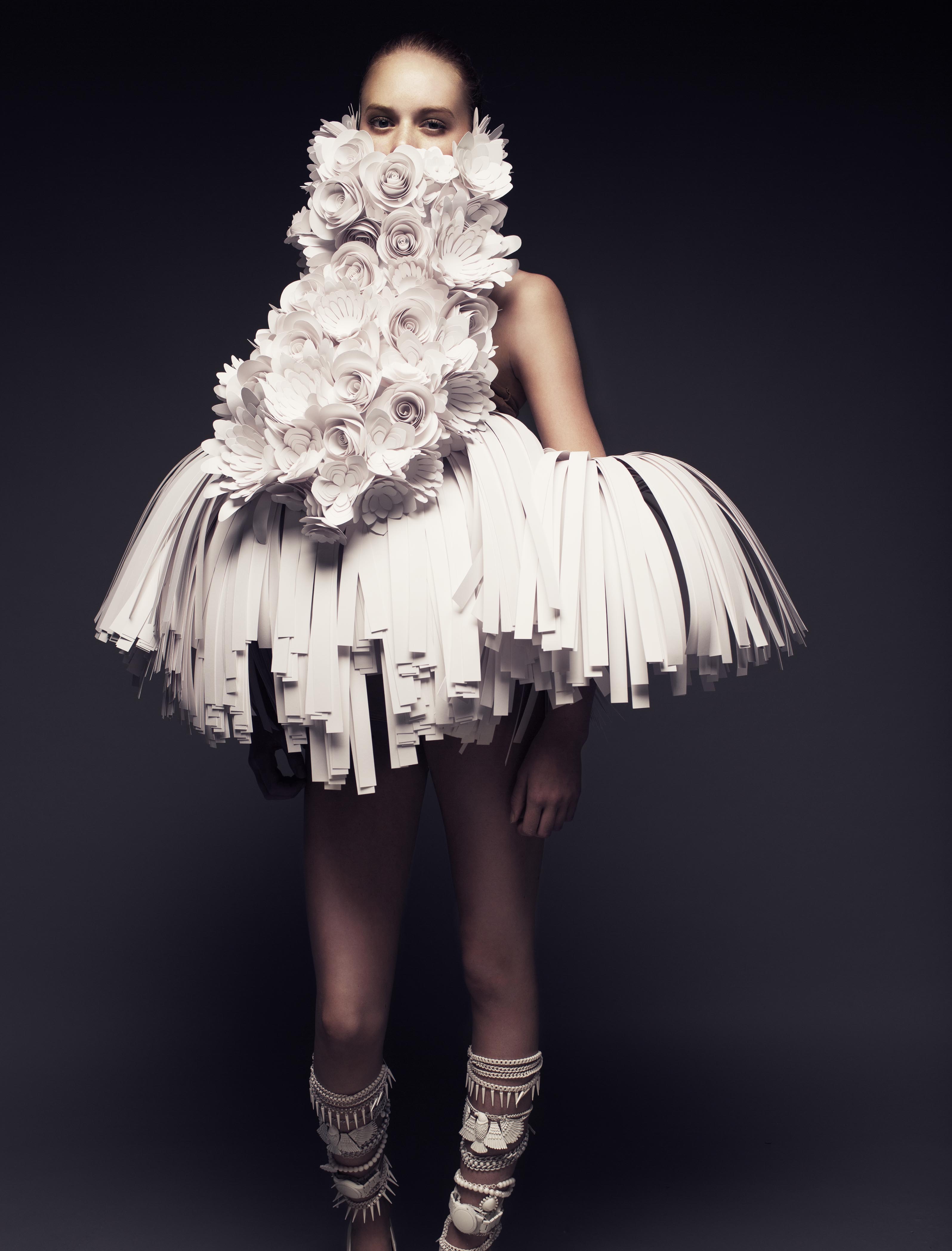
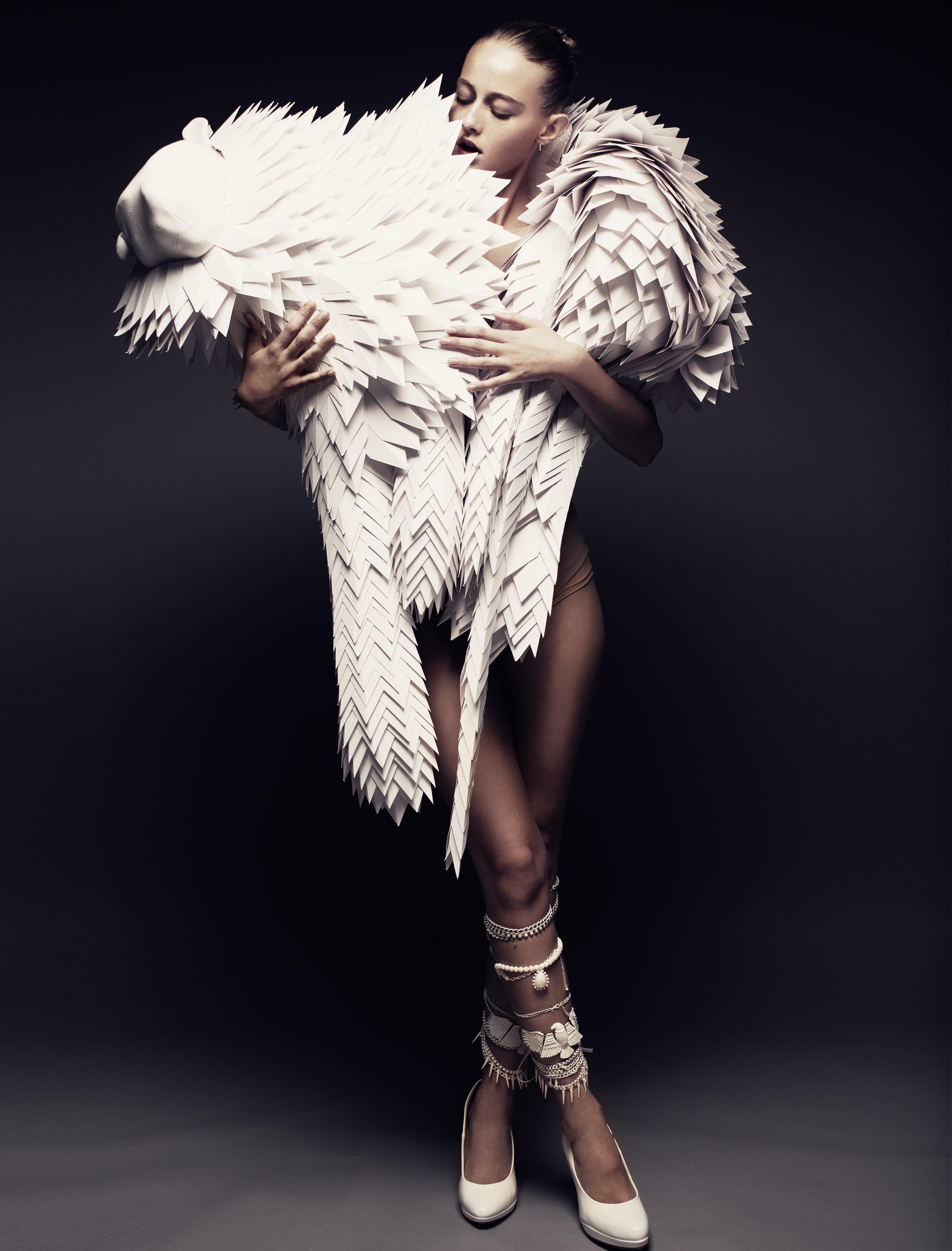
– The garments I make can often break in shipping or handling, and many of my pieces weigh over 20 kg, Szenfeld explains. So I have found a way to store and transport these creations in small pieces, where I instead dress on every single garment. I build these sculptures and assemble them one by one. Paper can withstand quite a lot, but not too much. Therefore, you need to trick the eye, and also the paper, a little. If I cut a little cardboard and a little tissue paper in between, I can trick the eye into thinking "this feels fragile", but still it is a support in the form of the solid cardboard.
Szenfeld has, with her experimental creations and unusual concepts, proven that sometimes you don’t need to label what you do. You just need to do. Her pieces really leaves no one unimpressed, and that is the intention. A common denominator in her work is emotions – and humor.
– Yes, humor is very important! Szenfeld laughs. I really try to be serious, but despite that, when I had my fashion show in 2015, people laughed when my models came out. Because "here comes the model carrying a 200-kilo gorilla like a handbag". I believe that fashion needs to be paused a bit, because it gets ridiculous when it gets too cool.
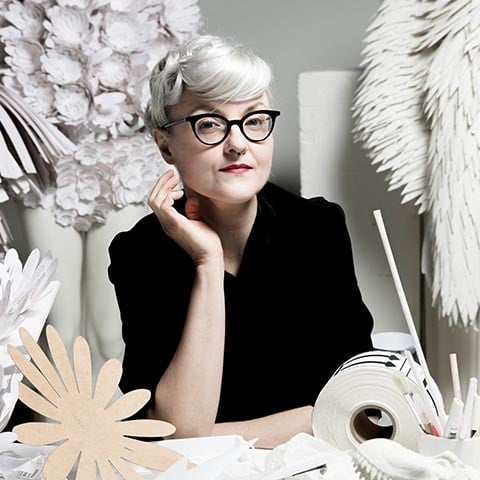 "I believe my strength has been that I have never been still. I am constantly testing my way forward." Bea Szenfeld, artist & designer
Sustainable fashion
As recent times have shown, we need to rethink and challenge given frameworks to find a more durable way forward. Even though the art pieces requires a lot of material, the resources used are environmentally friendly, and most definitely circular.
– I work with plain paper, no special treatments on it or anything, Szenfeld explains. Plain paper, directly from the paper mill here in Sweden. The great thing about paper is that we have been producing and recycling paper for so, so many years. It is one of the oldest materials we reuse, which means that it is not rocket science - we know this, we know how to manage this resource.
All surplus and waste pieces from the art objects can be put straight in the paper recycling. Since no materials are mixed, everything can be pulled apart and recycled or reused. When the lifespan of a garment is finished, the threads are removed and the glass/plastic beads are reused. The paper is just put in the recycling bin. It really is circular art. And for the garments that still lives on, depending on the storage and treatment it can really be long lasting.
– My paper sculptures can be stored and kept for as long as you like, it all depends on how you handle them, Szenfeld explains. They cannot be exhibited in direct sunlight or in a humid room, but if they are handled by me or museum staff, they last for decades.
Different target groups
Apart from exhibiting her art at museums and in fashion magazines, Szenfeld is also a recurrent feature in one of Swedish Televisions most watched TV-magazines, Go’kväll (Good Evening). There she has a standing mission on a reoccurring basis, a DIY-project that is either recycled or upcycled.
– I love those projects, Szenfeld smiles. I have about 7 minutes to show a DIY-craft that people can do themselves at home. In those projects, I find that lamps and luminaires are among the best things to use. You can do simple things and it is always needed at home. And especially now with LED lighting, when the light source does not get hot, the possibilities are so much more and vivid! It really enables you to work with more recycled materials than previously.
Yet another aspect regarding the material is that people from so many different target groups can relate to it. Everyone from pre-schoolers, craftsmen, designers or engineers – they all enjoy the magic and illusions created with regular paper.
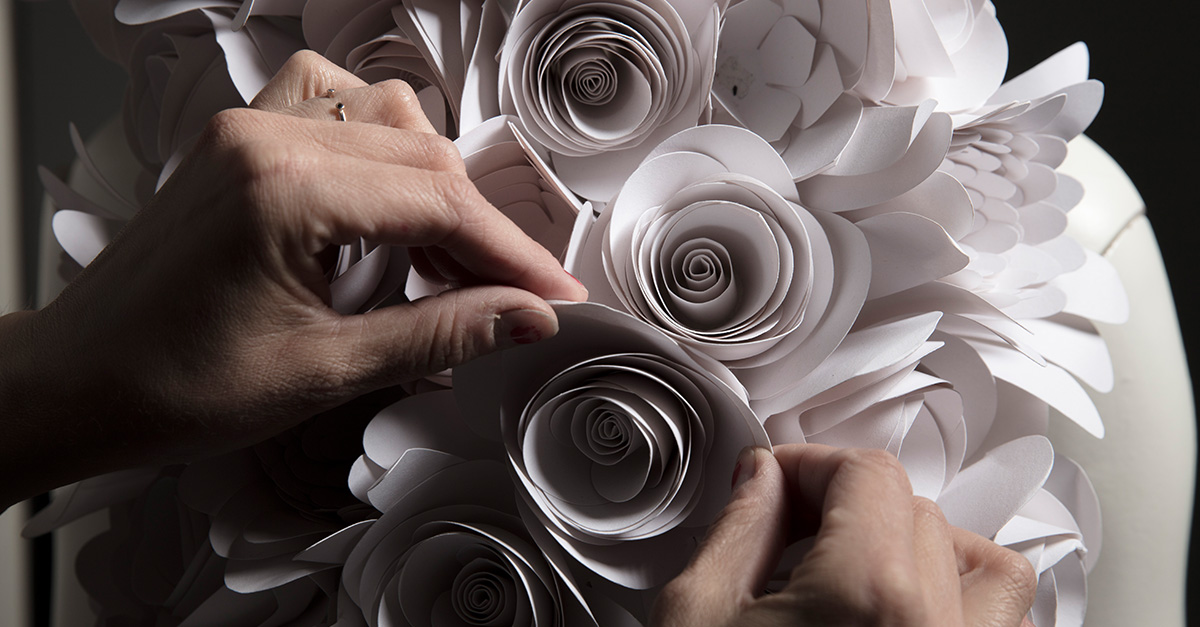
– That is truly one of the things I love about my paper clothes, that I can float out without a straight horizon, Bea Szenfeld says. If you like art, you may like my stuff. If you like fashion, you can like my stuff. When I exhibit in cities with paper or forest industry, there are usually visitors who work with paper - who have never seen it used like this. They might work with cardboard and large sheets, and so all of a sudden they see how their material can become something completely different. And those who love crafts, the same thing. You can do so much with paper, scissors, a ruler and some time - it's completely crazy! It's really lovely to find entrances to so many different audiences.
Tabula rasa
So, how does the future looks like for art in general, and more sustainable art in particular? Is there a visible trend for designers and artists to work more circular?
– Yes absolutely! Szenfeld states. I am part of the jury in Ung Svensk Form (Young Swedish Form) and at least half of all projects that contribute are about recycling and reusing. Either they reuse materials or create designs that are easy to reuse.
Not only is sustainability a high awareness among the upcoming artists and designers, so is also the love for crafts and handmade work.
– I love that, but we craftsmen must never relax and think that “this is good, now crafts are in", Szenfeld says with emphasis. We must always fight for recognition, and the time we spend. What we do is not a quick fix, a craft takes time to learn. That's something we need to explain to the new generation, that you have to take time with things. Now we have a world that spins so incredibly fast. From one day as unknown, to another day as world-famous on TikTok. That was not the case before, then you had the chance to grow up a little cautiously. Crafts are really slow techniques, and that is the way it must be.
Fact on Bea Szenfeld:
- She is trained potter and cutter, as well as graduated from Beckmans School of Design.
- After participating in Project Runway, she earned her internship at Stella McCartney.
- Has dressed celebrities such as Lady Gaga, Björk and Loreen.
- Designed the Swedish minister of Culture Alice Bah-Kunkhe’s dress for the Noble Dinner.
- Has explored other materials as well, and made a dress out of pasta for Barilla and clothes entirely of PVC.
Related News
Fagerhult se pasa a la tecnología led para reducir su impacto climático
Fagerhult está llevando a cabo un cambio importante con el objetivo de reducir el impacto climático de sus luminarias. Al adoptar la última tecnología led, Fagerhult consigue reducir en 2250 toneladas de CO₂e las emisiones anuales generadas por los productos que comercializa. «Un pequeño cambio en cada luminaria que tiene un enorme impacto global», afirma Niclas Thulin, responsable de sostenibilidad de Fagerhult. La decisión de sustituir la tecnología led de las luminarias es una decisión estratégica tomada desde la dirección. En la práctica, esto significa que la mayor parte de la gama para interiores de Fagerhult estará equipada con nuevos led que incorporan la última generación de tecnología Flip Chip. Este cambio mejorará la eficiencia y reducirá el consumo energético entre un 5 y un 10 %, dependiendo del modelo de luminaria. Un pequeño cambio con un gran impacto «Para que las iniciativas de sostenibilidad triunfen, es necesario centrarse en lo que importa de verdad. En total, el 85 % del impacto climático total de Fagerhult a lo largo de toda la cadena de valor —es decir, los alcances 1 a 3— proviene del consumo energético asociado al uso de nuestros productos. Si logramos mejorar la eficiencia y reducir el consumo eléctrico de una parte importante de nuestra gama de productos, esto tendrá un gran impacto», afirma Niclas Thulin. Ampliación de la vida útil de 50 000 a 100 000 horas, con una luz estable y de alta calidad durante todo ese tiempo. «Siempre es difícil predecir con exactitud cuánto ahorro supondrá un cambio, ya que hay muchos factores implicados. Pero, partiendo de los datos de 2025 —cuántas luminarias vendimos y en qué mercados— y dando por hecho que se utilicen durante una media de 50 000 horas sin control de la iluminación, estimamos un ahorro potencial de aproximadamente 2250 toneladas de CO₂e al año*». Eso es prácticamente un bosque entero: «Eso equivale aproximadamente a la cantidad de dióxido de carbono que absorben 90 000 árboles en un año**. Como resultado de ello, este cambio podría tener un impacto significativo tanto en nuestras iniciativas medioambientales como en las de nuestros clientes». Una pequeña actualización a tecnología LED puede reducir las emisiones en alrededor de 2 250 toneladas de CO₂e al año, lo que equivale a la cantidad de dióxido de carbono que absorben 90 000 árboles anualmente. Duplicación del tiempo de funcionamiento El cambio también ofrece otras ventajas en materia de sostenibilidad. La vida útil de las luminarias se duplica, pasando de 50 000 a 100 000 horas. A la larga, esto supondrá una reducción del consumo de recursos, como las materias primas y otros materiales. Además, reportará beneficios económicos a nuestros clientes, que podrán realizar una inversión segura y rentable en iluminación de bajo consumo con una vida útil más larga. Gracias a esta nueva tecnología, todas las luminarias ofrecerán además una potencia lumínica constante, lo que garantizará una iluminación estable y de alta calidad durante toda su vida útil. Dicho con pocas palabras, una buena ergonomía lumínica en el trabajo. Funcionamiento Un pequeño cambio que da grandes resultados: ¿qué es exactamente lo que marca la diferencia desde el punto de vista técnico?«Nuestro enfoque consiste en sustituir los led estándar por la última generación de tecnología Flip Chip. Dicho con pocas palabras, el diseño Flip Chip es más avanzado, ya que los electrodos y otras superficies de contacto están colocados de tal manera que no bloquean ni afectan a la potencia lumínica. Los led Flip Chip son, sencillamente, más eficientes energéticamente y más resistentes», explica Niclas Thulin.Los modelos de luminarias que ya incorporan este tipo de led se actualizarán a la última generación de esta tecnología, al igual que todos los modelos que anteriormente estaban equipados con led estándar. Una situación en la que todos salen ganando El coste de la actualización no se repercutirá a los clientes en forma de un encarecimiento de las luminarias, sino que se financiará gracias a las ventajas logísticas que conllevará el cambio. Niclas Thulin, director de sostenibilidad, se reúne periódicamente con los clientes en el Centro de sostenibilidad de Fagerhult, donde les muestra cómo unas decisiones informadas en materia de iluminación pueden contribuir tanto a la protección del clima como ahorrarles dinero. «Gracias a unos volúmenes de compra mayores y a un menor número de referencias, podemos ofrecer estas ventajas adicionales. Mayor eficiencia energética, una vida útil más larga y una mejor calidad de la luz, un menor consumo de energía y, sobre todo, una contribución significativa a la lucha contra el cambio climático», afirma Niclas Thulin.«En Fagerhult, estamos comprometidos a asumir nuestra responsabilidad social y a ofrecer soluciones que aborden tanto el cambio climático como los retos relacionados con el suministro eléctrico en el futuro. En nuestra opinión, nuestros clientes no deberían tener que elegir entre un producto asequible para su bolsillo o uno sostenible cuando es posible tener ambas cosas. Es una situación en la que todos salen ganando». * Factores de emisión por país, basados principalmente en datos de la Asociación de Organismos Emisores (AIB, por sus siglas en inglés).** En función de la absorción media de dióxido de carbono calculada por Ecotree.
Cuando el material importa: Wrapped aporta una nueva visión de la iluminación sostenible
En un mundo donde cada gramo de material y cada gramo de dióxido de carbono cuenta, Wrapped emerge no solo como una luminaria - sino como una declaración de intenciones. Es la iluminaria suspendida más sostenible de Fagerhult hasta la fecha, y no es por casualidad. Cada detalle, cada decisión, cada material fue elegido a propósito. La sostenibilidad suele empezar con una simple pregunta: ¿De qué está hecho? Para Wrapped, la respuesta es un trío de materiales, cada uno con su propia historia medioambiental. Cartón compacto: un amigo conocido En Fagerhult, conocimos el cartón compacto en 2021 con Multilume Re:Think. Pero para Wrapped, hemos ido más allá. El material consta de tres capas: un núcleo 100 % reciclado, una capa superior renovable con certificación FSC y una fina película protectora de plástico. En total, un material reciclado en un 65 % y una reducción del 89 % de las emisiones de CO₂ en comparación con el aluminio extruido virgen. Galería de imágenes: Cartón compacto Wrapped está fabricada con cartón compacto orgánico, aluminio reciclado y plástico reciclado postconsumo. Reimaginar el plástico El plástico suele ser un tema candente en las conversaciones sobre sostenibilidad. Pero no todos los plásticos son iguales. Wrapped utiliza plástico reciclado postconsumo: del tipo que ha vivido una vida antes, quizá como bote de champú o envase de comida. En cambio, el plástico preconsumo es diferente, ya que nunca ha llegado a los lineales. Cita: Josefin Carlsson Aluminio con pasado En el interior de Wrapped, dos componentes estructurales están fabricados con aluminio 75 % reciclado postconsumo. Este material también forma parte de una infraestructura circular, e incluso puede haber formado parte alguna vez de una luminaria Notor. En comparación con el aluminio virgen, esta elección reduce las emisiones en un 64 %. Diseñar con menos: construido para durar Sin embargo, la sostenibilidad no consiste solo en lo que se usa, sino en cuánto. Con solo 900 mm, Wrapped es más corto que una luminaria suspendida convencional de 1200 mm. Esa reducción de tamaño por sí sola reduce el impacto climático en un 25 %, sin renunciar al rendimiento lumínico de la luminaria. Josefin Carlsson compara el impacto climático de los productos en el Centro de Experiencias de Fagerhult en Habo. Para entender la repercusión de Wrapped, es útil mirar dónde empezamos. En 2021, Notor 65 —fabricada con aluminio virgen— tuvo un impacto climático de 34 kg de CO₂e. En 2024, con un 75 % de aluminio reciclado, esa cifra se redujo a 25 kg de CO₂e. En la actualidad, Wrapped pesa unos 12 kg de CO₂e. «Eso es un tercio de la Notor 65 original y la mitad de la versión actual, y una revolución silenciosa, medida en kilogramos de CO₂e», afirma Josefin Carlsson. Tras su larga vida útil, estimada en 100 000 horas, Wrapped está lista para un adiós igualmente sostenible. Su diseño hace que sea fácil de desmontar, con cada material reciclable y preparado para su siguiente capítulo en la economía circular.