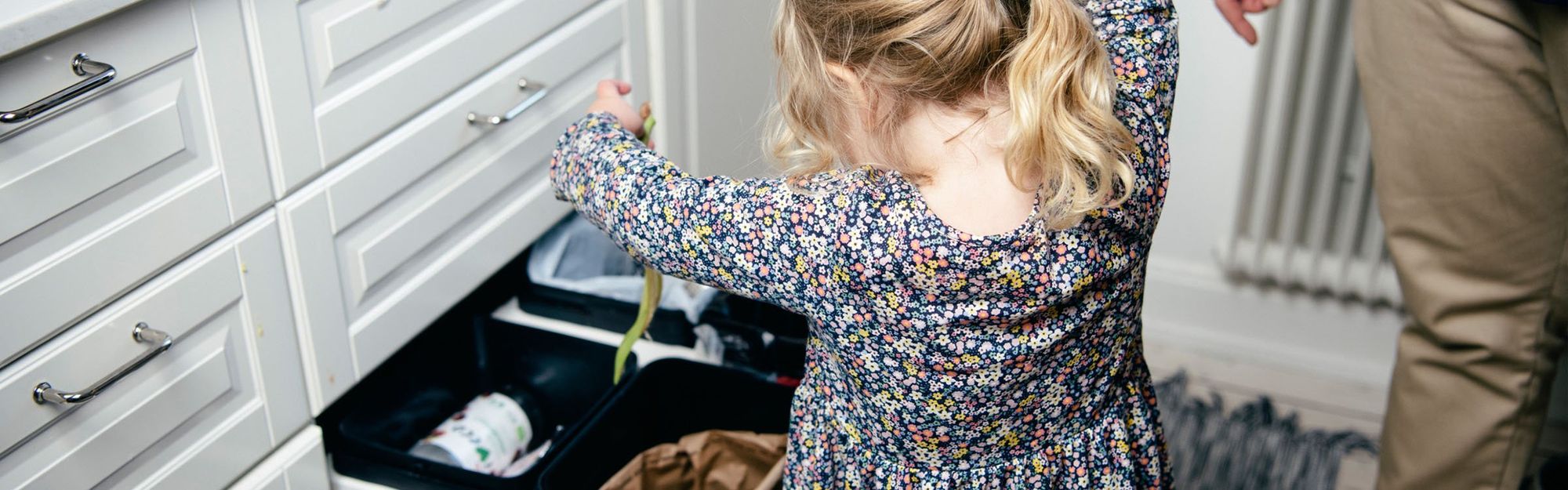
Make sustainable choices easy
Climate studies are showing that humans must change their behaviour by making more sustainable choices. Considering the consequences of global warming, the United Nations have identified 17 goals for a more sustainable future. The goals involve extinction of poverty, hunger, sickness and inequality, as well as promoting sustainable consumption, innovation and green energy.
Even though more information is provided, and new technology promoting energy efficiency is developed, statistics show that energy use in OECD countries will rise with 35 % by 2020 (UN 12th goal). Why are people still not making environmentally friendly choices to the extent that is necessary? The answer may, at least in part, lie within classic judgement psychology - humans are not fully rational in their decision making. That’s when they need a little nudge.
People, planet and profit
For the past decade Sweden-based nudging expert Katharina Paoli Brunat has been advocating a more sustainable way of living. In her work, as a public speaker and entrepreneur, she sees the possibilities to create a more sustainable future for all of us. We just need to see the options clearer.
- My passion is to empower people with hands on solutions that makes measurable impact, says Paoli Brunat. I believe we can have a more resource efficient, sustainable future where digitalisation, behavioural science and sustainability co-create and collaborate.
For Katharina Paoli Brunat’s sake, she took matter into her own hands by founding Nudgd, A Win Win World, Wildflower Group and EcoBride. She is also on several boards and work as a mentor, all with the same passion – to solve our biggest challenge for the future, a sustainable way of living by changing our behaviour.
- It is my opinion that people, planet and profit goes hand in hand towards the future, Paoli Brunat states. For that to happen, I believe that a collaboration between multiple stakeholders and a clear focus on action are essential, otherwise there will be no change.
 "I believe that a collaboration between multiple stakeholders and a clear focus on action are essential, otherwise there will be no change." Katharina Paoli Brunat, Nudging expert and Sustainability advisor, CEO of Nudgd
Nudge in a nutshell
What is nudging then? The term nudge, and nudging, gained popularity in 2008, when coined in a book by Cass R. Sunstein and Richard H. Thaler. In 2017, the latter was awarded the Sveriges Riksbank Prize in Economic Sciences in Memory of Alfred Nobel for his contribution to behavioural economics.
A nudge, in a behavioural context, refers to steering an individual’s behaviour in a given, desired direction; influencing their choices without removing other alternatives. It is a gentle push without legislation, carrots or/and sticks. Human behaviour is often irrational and can also be hard to predict. Nudging can therefor act as an instrument for influencing an individual’s behaviour and choices, in a more preferable way. If used successfully, you can increase a change in behaviour or attitude with nothing more than a gentle tweak and a soft touch.
Nudging is an effective tool for achieving a more sustainable world, and there are many nudging techniques that are proven efficient. Here are 5 nudging techniques that is used frequently with great results:
- A friendly reminder – in the right place, at the right time
- Framing – how the message is presented and by whom
- Social norms – compliance with the group
- Direct feedback – the impact of your actions shown immediately
- Visualisation – making it clear to see the benefit for me
- Without context, the concepts are perhaps hard to grasp – but here is an examples, says Paoli Brunat. In the case of social norms, we as humans like to compare ourselves with others, our group. Most people feel uncomfortable acting outside social norms and pleasant when they have a feeling of belonging. We also love to hear that we are better than average and tend to compare ourselves with others. A good example of wanting to be as good as your neighbour, or even better, was adapted by the power company Opower.
By presenting the customers private energy usage, as well as their neighbours, in their energy use home report they could see how much energy they were using, in relations to each other. This simple data, made visible in an easy way, triggered something in the users; a desire to be better than their next-door neighbour. The effect being that the energy usage of the customers dropped significantly.
Don’t stop believing
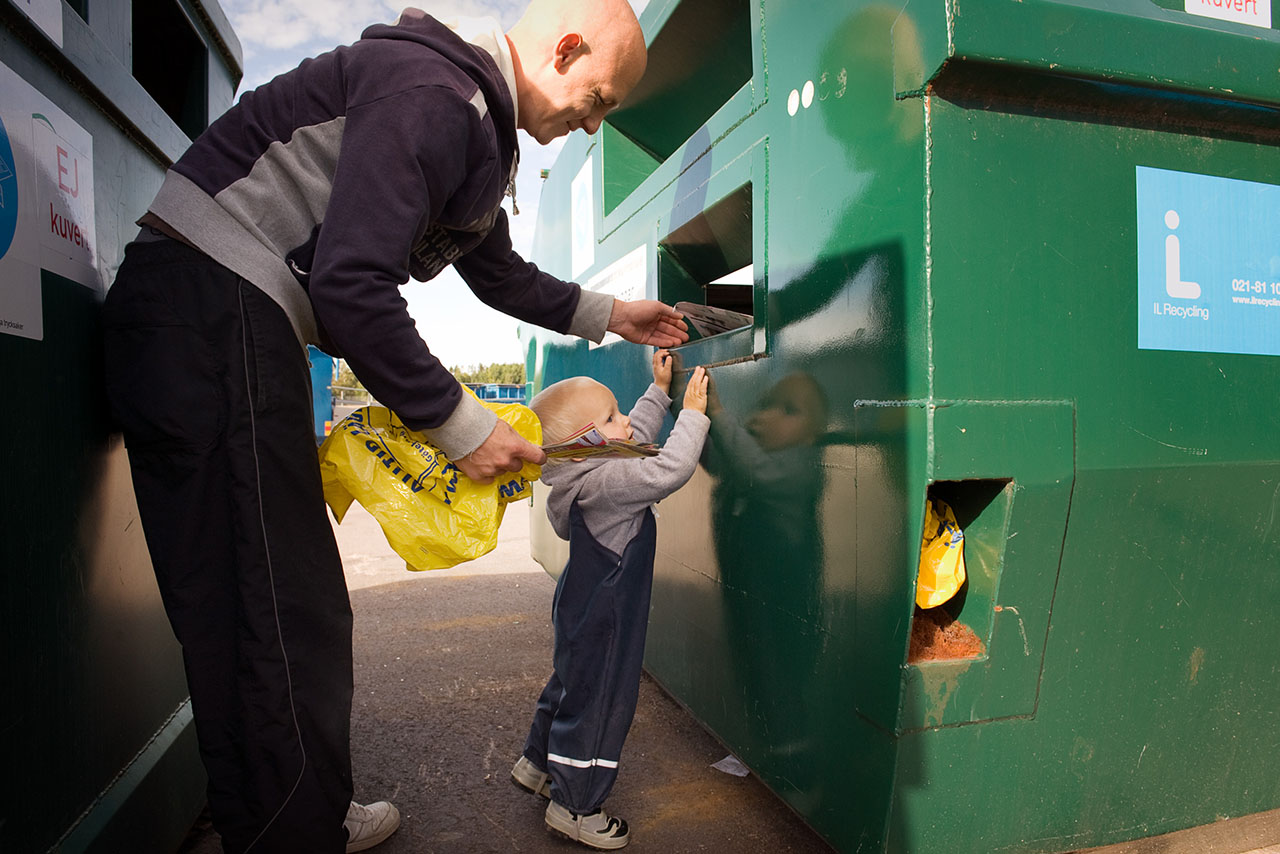
I believe that if we can make small changes, in the end it will make a big impact, says Paoli Brunat. May it be that hotels and restaurants uses smaller plates or bowls at buffets, and hence reduces the food waste and overconsumption, or invite your colleague to carpool instead of driving separately, or make a game out of who can recycle most household waste in your neighbourhood? I believe most of know what is “the right thing” to do, and I know that together we can make the changes necessary. But some of us might need a little push to get there.
Want to know more?
Smart Nudges: https://smartnudges.com
Nudgd: https://nudgd.se/ and https://nudgd.io
Nudging Sweden: https://facebook.com/groups/nudgingsweden
12 strategies to promote behavioural change: http://www.caminomagasin.se/files/media/enabling_sustainalbe_choises_webb.pdf
Sustainable development through nudging: https://www.diva-portal.org/smash/get/diva2:1281473/FULLTEXT02
Related News

Cuando el material importa: Wrapped aporta una nueva visión de la iluminación sostenible
En un mundo donde cada gramo de material y cada gramo de dióxido de carbono cuenta, Wrapped emerge no solo como una luminaria - sino como una declaración de intenciones. Es la iluminaria suspendida más sostenible de Fagerhult hasta la fecha, y no es por casualidad. Cada detalle, cada decisión, cada material fue elegido a propósito. La sostenibilidad suele empezar con una simple pregunta: ¿De qué está hecho? Para Wrapped, la respuesta es un trío de materiales, cada uno con su propia historia medioambiental. Cartón compacto: un amigo conocido En Fagerhult, conocimos el cartón compacto en 2021 con Multilume Re:Think. Pero para Wrapped, hemos ido más allá. El material consta de tres capas: un núcleo 100 % reciclado, una capa superior renovable con certificación FSC y una fina película protectora de plástico. En total, un material reciclado en un 65 % y una reducción del 89 % de las emisiones de CO₂ en comparación con el aluminio extruido virgen. Galería de imágenes: Cartón compacto Wrapped está fabricada con cartón compacto orgánico, aluminio reciclado y plástico reciclado postconsumo. Reimaginar el plástico El plástico suele ser un tema candente en las conversaciones sobre sostenibilidad. Pero no todos los plásticos son iguales. Wrapped utiliza plástico reciclado postconsumo: del tipo que ha vivido una vida antes, quizá como bote de champú o envase de comida. En cambio, el plástico preconsumo es diferente, ya que nunca ha llegado a los lineales. Cita: Josefin Carlsson Aluminio con pasado En el interior de Wrapped, dos componentes estructurales están fabricados con aluminio 100 % reciclado postconsumo. Este material también forma parte de una infraestructura circular, e incluso puede haber formado parte alguna vez de una luminaria Notor. En comparación con el aluminio virgen, esta elección reduce las emisiones en un 83 %. Diseñar con menos: construido para durar Sin embargo, la sostenibilidad no consiste solo en lo que se usa, sino en cuánto. Con solo 900 mm, Wrapped es más corto que una luminaria suspendida convencional de 1200 mm. Esa reducción de tamaño por sí sola reduce el impacto climático en un 25 %, sin renunciar al rendimiento lumínico de la luminaria. Josefin Carlsson compara el impacto climático de los productos en el Centro de Experiencias de Fagerhult en Habo. Para entender la repercusión de Wrapped, es útil mirar dónde empezamos. En 2021, Notor 65 —fabricada con aluminio virgen— tuvo un impacto climático de 34 kg de CO₂e. En 2024, con un 75 % de aluminio reciclado, esa cifra se redujo a 25 kg de CO₂e. En la actualidad, Wrapped pesa unos 12 kg de CO₂e. «Eso es un tercio de la Notor 65 original y la mitad de la versión actual, y una revolución silenciosa, medida en kilogramos de CO₂e», afirma Josefin Carlsson. Tras su larga vida útil, estimada en 100 000 horas, Wrapped está lista para un adiós igualmente sostenible. Su diseño hace que sea fácil de desmontar, con cada material reciclable y preparado para su siguiente capítulo en la economía circular.
Cerramos el ciclo: y ampliamos el ciclo de vida de las luminarias
El concepto de reconstrucción de luminarias usadas para ahorrar material y energía está en auge. A veces, lo único que necesita una luminaria obsoleta para brillar de nuevo es un poco de cariño y capacidades de ingeniería. Quedamos con Emma Hallman, Mathilda Holl y Andreas Ekslätt, el equipo de ReLight de Fagerhult, para hablar sobre los desafíos de encontrar soluciones que llevarán las luminarias usadas al futuro. En Fagerhult, una cultura de la innovación profundamente arraigada influye en todos los aspectos del trabajo. Posiblemente, surge de la mentalidad del fundador Bertil Svensson de resolver problemas con medios a veces pequeños, y curiosidad y dedicación. A diferencia de lo que pasa hoy en día, la sostenibilidad puede no haber sido una palabra de moda por aquel entonces. Sin embargo, utilizar nuestros recursos de forma consciente y esforzarse por lograr una alta calidad siempre han sido los pilares de Fagerhult. Hoy en día, un nuevo enfoque sobre la circularidad nos ha instado a cuestionar nuestra forma de pensar y nos hace conscientes de la necesidad de encontrar soluciones duraderas El departamento de soluciones de iluminación a medida (BLS, por sus siglas en inglés) de Fagerhult ha desarrollado luminarias únicas y soluciones adaptadas durante muchos años. Por lo tanto, rehabilitar y actualizar las luminarias usadas es algo que nos resulta familiar. Sin embargo, la ambición de reutilizar y reconstruir luminarias usadas para reducir el impacto climático ha aumentado con el tiempo. En este proceso, el diseño y la tecnología de ayer se ponen al día con los avances de hoy para satisfacer los requisitos del mañana. Cita Haga que sus luminarias usadas se vuelvan a encender Para el equipo de ReLight de Fagerhult, no hay preguntas peculiares ni soluciones imposibles. A diario, gestionan consultas sobre soluciones de iluminación especialmente desarrolladas para proyectos de los mercados de Fagerhult. Es un proceso complejo, pero, con el tiempo, han aprendido que algunos proyectos son ideales para reutilizar luminarias usadas en lugar de invertir en otras nuevas. «Para nosotros, las cualidades de la luminaria en cuanto a comodidad, seguridad y estética de la iluminación son el núcleo de cada proyecto ReLight. También calculamos minuciosamente cuánto podemos reducir el impacto climático total de la luminaria a lo largo de su ciclo de vida, en caso de que se pueda reducir. Si se cumplen todos estos requisitos, comenzaremos a desarrollar y diseñar un nuevo kit», afirma Emma Hallman. En ReLight, existe una voluntad abierta de ahorrar materiales y energía, y hacer un esfuerzo medioambiental actualizando las luminarias. Sin embargo, no todas las luminarias usadas pueden vivir para siempre; algunas están obsoletas y es mejor reciclarlas que reacondicionarlas. Img «Si las circunstancias no cumplen con nuestros requisitos y no funciona para reacondicionar la luminaria, no dejaremos que el proyecto avance más. Nunca pondríamos en peligro la comodidad, calidad, seguridad o la expresión de la luminaria si no resulta en una solución final de primera clase», dice Emma Hallman. En Fagerhult, la seguridad y la calidad son los hilos conductores que unen todos los productos. Y ReLight no es una excepción. A lo largo del proceso, el marcado CE y los ensayos son factores cruciales. «Para garantizar la calidad general, no se deben montar piezas sueltas in situ. Queremos que el montaje sea lo más eficaz y rápido posible, y el nuevo kit encajará perfectamente con los orificios de tornillos antiguos. La unidad está lo más cerca posible de ser una luminaria completa», comenta Andreas Ekslätt.