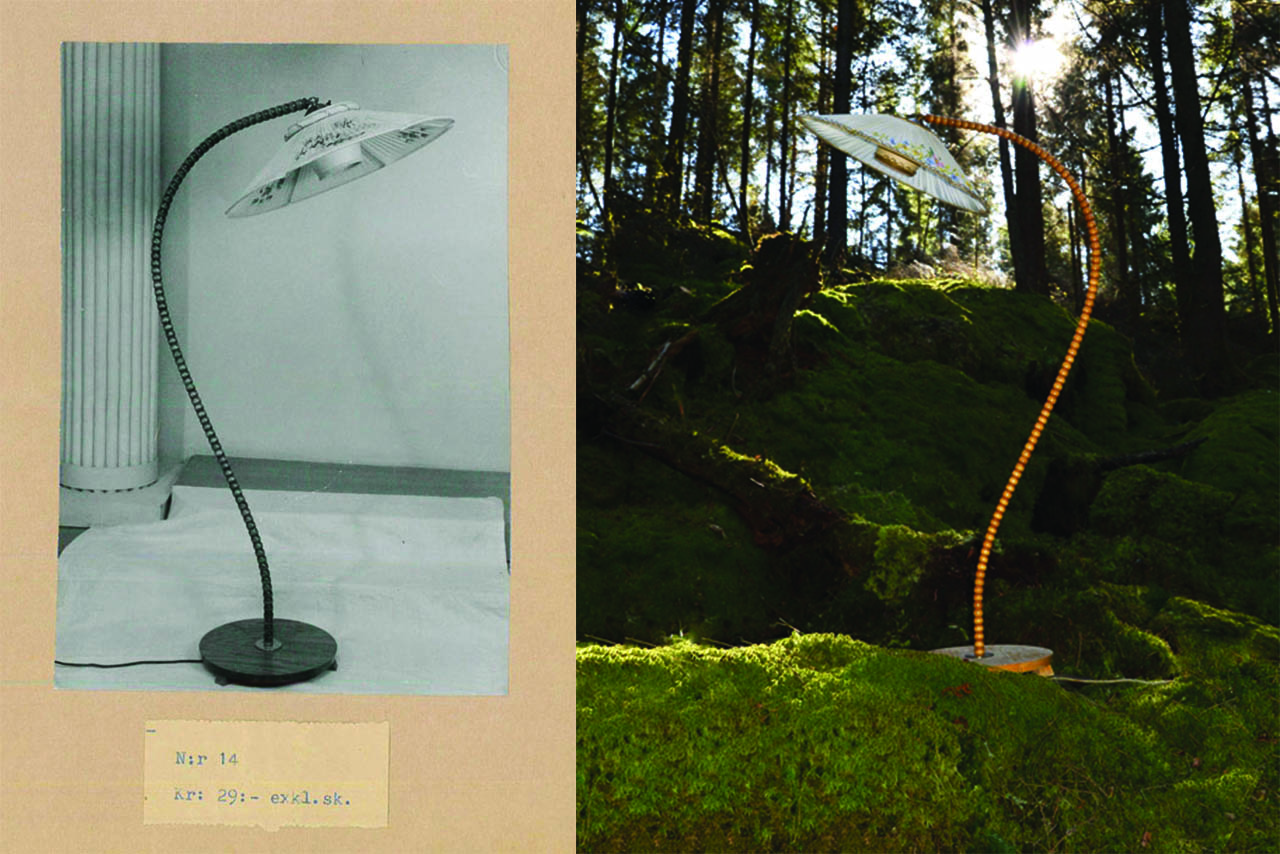
Bertil Svensson was never destined to take over the family farm. Being an inquisitive, open-minded person, he instead trained as an electrician. During the dark winter evenings on the farm, he would see his mother struggle with her handicrafts in a dimly lit room. In the year 1943, Bertil had a brilliant idea for a Christmas gift for his mum. He bought an 18.6 mm light-gauge conduit, a bit of cord, a lamp holder and a mains plug from his employer. He asked a local carpenter to turn him a birchwood lamp foot, and found a 60 cm lampshade at the local department store. And then he sat down to assemble his very first light fixture.
The result, a floor lamp in the shape of a question mark, was a big hit, brightening his mother’s crafts room on long, dark winter days.
“Doing needlework by the light of a floor lamp was not very common in those days,” Bertil said. “I didn’t spend a lot of money making that lamp, and when I saw what similar ones cost in the shops, I got the idea that maybe I could make a living making lamps.”
“That was my whole idea. I had no thought at all about organisation, sales technique or distribution.”
That would soon change. In 1945, Bertil Svensson teamed up with two childhood friends from Fagerhult. Helmer Andersson was a clever designer and production technician at Husqvarna. Harald Ulfenborg was a furniture manufacturer under the Ulferts brand. Together they started Fagerhults Lampindustri in an outbuilding on Bertil’s family farm in Fagerhult.
Bertil’s inventiveness, Helmer’s technological genius and Harald’s contacts in the furniture industry became the foundation of a highly successful home lighting company. It was not an easy time. Europe lay in tatters after the Second World War and it was hard to obtain materials. But thanks to its neutrality policy, Sweden was in fairly good shape, and soon its industry was running at full tilt.
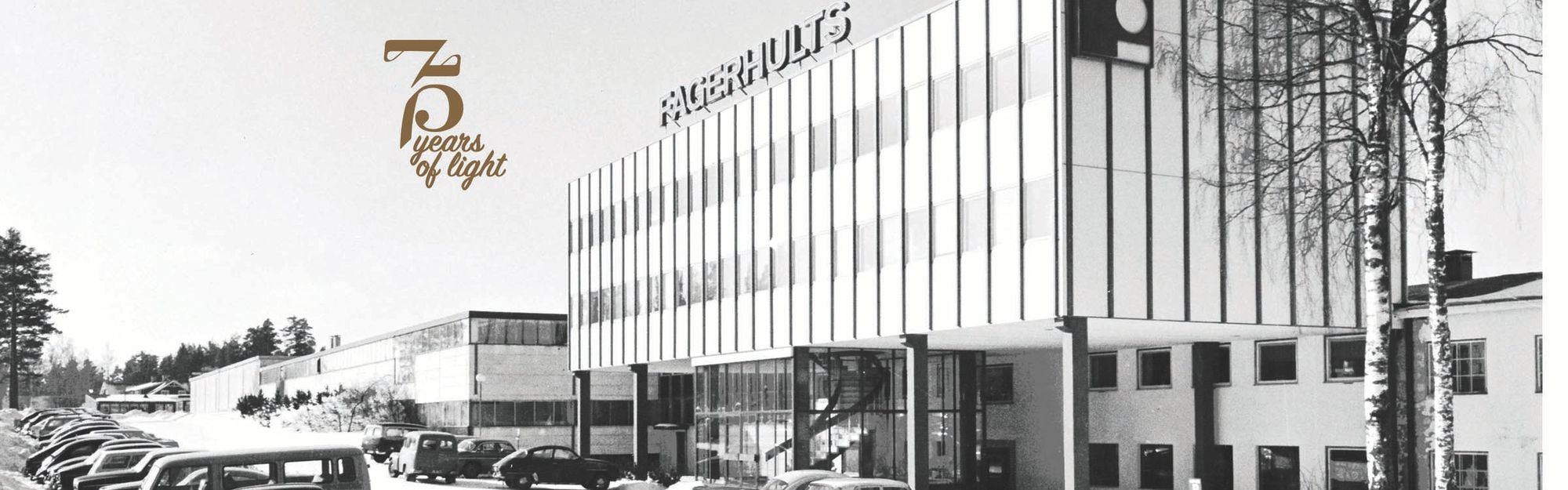
In the beginning, Fagerhult focused on the home market, which was fuelled by the new Swedish welfare model. By autumn 1947, the company had outgrown the outbuilding and it moved to a newly built 98 m² factory. Since then that factory has been renovated and expanded more than 40 times, now boasting 55.000 m².
Because the factory began on such a small scale, and in such a small community, the first employees was Bertil’s friends and neighbours from the village of Fagerhult. For them, the most important thing was always the customer – to make someone’s everyday life better and more productive. Using new materials and solutions, Bertil had found a way to create added value for the user and profitability in his own production. An innovative approach that came to shape Fagerhult’s future activities and became a part of the company’s DNA.
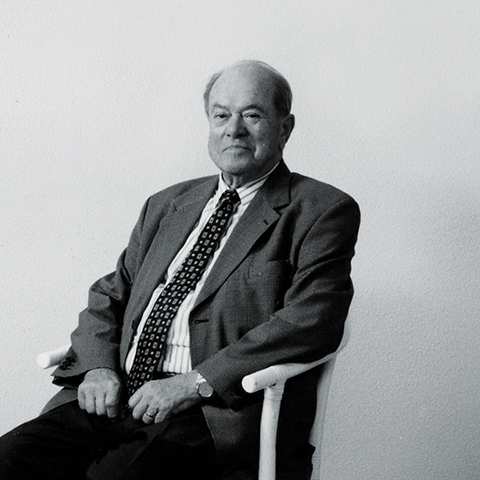 "I had no thought at all about organisation, sales technique or distribution. I got the idea that maybe I could make a living making lamps. That was my whole idea. ” Bertil Svensson, founder of Fagerhults Belysning AB
in 1948, a new light source entered the market– a fluorescent tube that produced a great amount of light at very low cost. Certain that this was the light solution of the future, he developed an entire collection of fluorescent-tube luminaires. A decade later, this paid off in Fagerhult’s first big prestigious order: 5.000 specially designed luminaires for the iconic functionalist National Tax Board building in Stockholm, “Skatteskrapan”. Fagerhult moved into the contract market, quickly becoming a key player in public interiors.
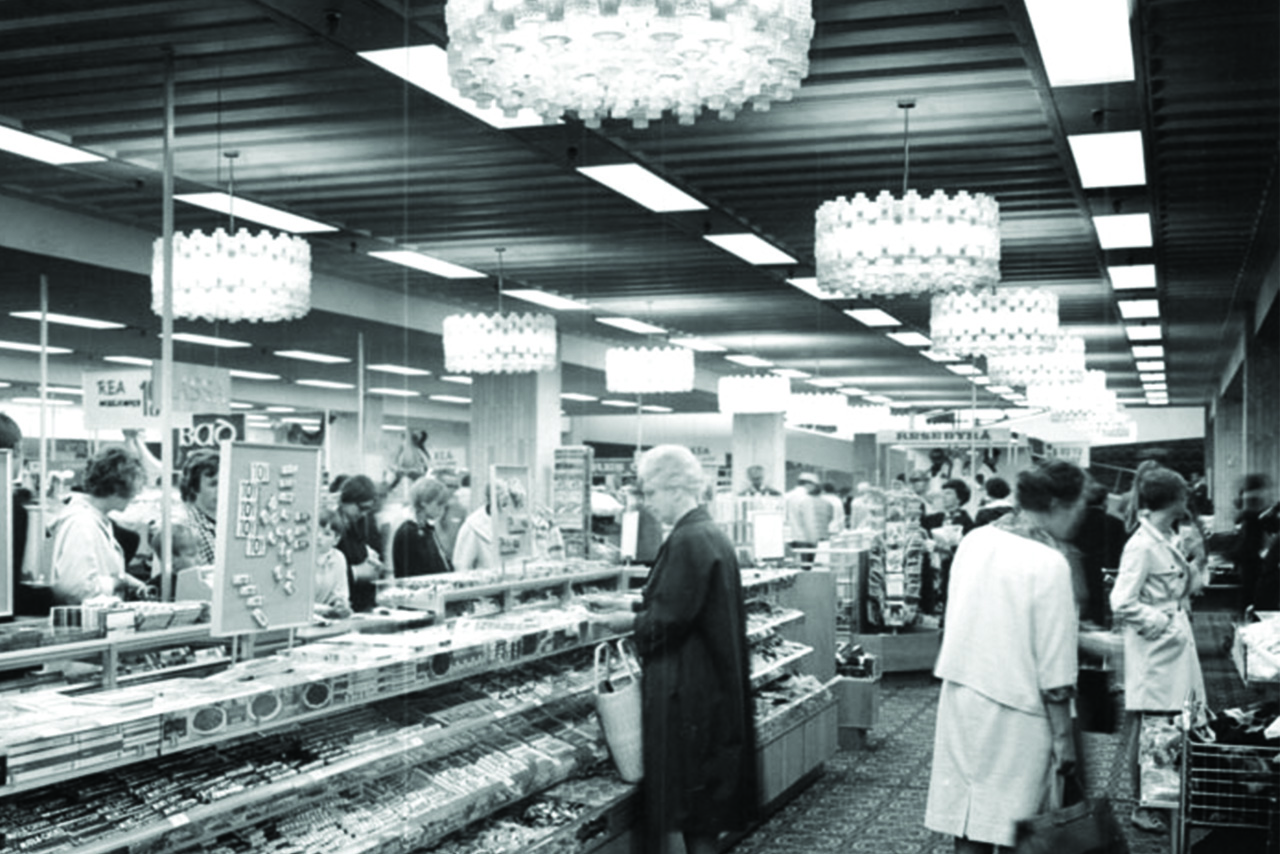
In the coming decades, the company grew steadily in the technical lighting field, although the focus remained on developing and manufacturing home lighting until well into the 1990s. By this time, Fagerhult’s signature traits of inquisitiveness and industriousness had resulted in several innovations that changed the lives of millions of people. The innovative plastic luminaire Fabian, of which more than 4 million were sold, and recessed downlights in the form of the popular Pleiad model, are just a few examples.
The courage to develop completely new luminaires based on relatively untested light sources is a shining trend throughout the years. When T5 fluorescent tubes were launched on the market, Fagerhult was one of the first companies to develop luminaires designed for the new light source. Fagerhult’s T5 luminaires combined the T5 light source, electronic controls and effective reflector materials that revolutionised the lighting industry and set a new standard for energy efficiency. When LED entered the scene 15 years later, the company followed the same path, generating as much light as possible, with no compromises.
In 1969, Bertil – who had been the company’s CEO since 1949 – was invited to take over all shares in the company. This was the beginning of an international expansion that occurred both organically and through acquisitions. In the coming decade, Fagerhult established sales offices in Denmark, Norway, the Netherlands and Germany. It also bought out its Swedish competitor Ateljé Lyktan. In 1984, Bertil left the office of CEO.
A few years later, Fagerhult was acquired by the Swedish Almedahl Group. In 1993 it was time for the next acquisition, when the investment company Latour, under the leadership of the Douglas family, took over all shares in the corporate group. Latour gave Fagerhult another long-term and committed owner – and the Douglas family have remained a major owner even after Fagerhult’s introduction to the Stockholm Stock Exchange in 1997. The operations were divided into three business units with their own manufacturing and development: Fagerhult Professional, Fagerhult Retail and Fagerhult Outdoor.
In September 2006, Bertil Svensson received an honorary doctorate at Jönköping University for his “distinguished life’s work as a national pioneer, entrepreneur and leading businessman in the lighting industry… and for important support to education and research in the lighting field”. Through the “Bertil & Britt Svensson Foundation for Lighting Technology” he supported new Swedish education in lighting technology, which would form the basis of the Lighting Academy.
Sadly, Bertil is no longer with us. In November 2006, Bertil left this world at the age of 86. However, his principle of providing people with the right light in the right place lives on – almost 75 years after the company was founded. Our head office is still located a stone’s throw from where our history began, in Fagerhult in rural west Sweden. We remain close to our roots, something we consider an advantage given that we now operate in almost 20 countries worldwide.
In 2020, Fagerhults Belysning AB that started out 75 years earlier as a three-man company, had become a wold-wide recognised brand with 650 employees still working on site in Fagerhult. All thanks to Bertil, his mother Elisabeth and her needlework basket.
Related News

Innovación en cada pliegue: Wrapped va más allá de la brillantez en la ingeniería
Dado que la sostenibilidad ya no es una elección sino una necesidad, la innovación debe comenzar con la pregunta: ¿Qué pasaría si hiciéramos las cosas de otra manera? Para el equipo de I+D de Fagerhult, esa pregunta se convirtió en la chispa detrás de Wrapped, la primera luminaria suspendida del mundo hecha de cartón. Tradicionalmente, las luminarias suspendidas se fabricaban con armazones metálicos, es decir, un método duradero, familiar y seguro. Pero el equipo que concibió Wrapped quería explorar otro camino. Juntos, decidieron averiguar si podían crear una luminaria que no solo rindiera a un nivel superior, sino que además tuviera un impacto medioambiental mínimo. Tras un minucioso estudio, el cartón compacto, un material renovable y reciclado que hasta ahora solo se utilizaba en componentes ocultos, salta ahora a la primera plana. Wrapped es más que una luminaria: es una exploración del pensamiento innovador y la creatividad. Sin soluciones prefabricadas en las que apoyarse, el equipo de diseño tuvo que empezar de cero. Se han estudiado todos los elementos, desde la construcción hasta el montaje, y el resultado es una luminaria técnicamente sólida y respetuosa con el medio ambiente. Gallery: Wrapped details El cuerpo de la luminaria está fabricado con hasta un 65 % de cartón reciclado y se pliega con recortes de alta precisión que encajan a la perfección. Ingeniería elegante El cuerpo de Wrapped se compone de dos partes principales: el cuerpo interior y el cuerpo exterior, ambos diseñados para trabajar en armonía en pro de la fuerza y la estabilidad. El cuerpo exterior se mantiene unido mediante una nervadura de aluminio 100 % reciclado postconsumo, que bloquea los pliegues y garantiza la conservación de la forma. Sus tapas finales están fabricadas con plástico 100 % reciclado postconsumo y encajan en cortes de precisión, asegurando la estructura sin necesidad de tornillos. La caja de conexiones encaja en su sitio a presión y el controlador se monta mediante pequeños clips, fabricados con plástico reciclado postconsumo. La placa led está montada en la lente, protegida por una cubierta de cartón sólido, y todo el módulo luminoso se bloquea en su sitio con una rejilla. El resultado es una construcción sin juntas ni tornillos que encarna un diseño que no deja nada al azar. Diseño con un propósito Fredrik Beckius, ingeniero de diseño de I+D, reflexiona sobre el viaje:«El reto era trabajar con un material que nunca habíamos utilizado para una luminaria suspendida. No podíamos montar los componentes de la forma habitual, así que tuvimos que buscar otras soluciones».Martin Gustafsson, también ingeniero de diseño, añade:«Teníamos que encontrar la manera de producir la luminaria de forma rentable, tanto para nosotros como para nuestros proveedores. Cada componente del diseño tenía que servir para más de un propósito». Este doble propósito salta a la vista en todo el diseño de Wrapped. No se trata solo de estética o sostenibilidad, sino de ingeniería brillante y de hacer que cada pieza cuente. Cita: Martin Gustafsson Sostenibilidad sin concesiones Wrapped se fabrica en Fagerhult, Habo, con materiales reciclados y renovables de origen local. Es un producto nacido de la innovación sueca, que hunde sus raíces en el legado de diseños sostenibles anteriores como Multilume Re:Think y Kvisten. A diferencia de muchos productos con conciencia ecológica, Wrapped cumple sin estridencias y, simplemente, es sostenible. Con recortes de alta precisión, una construcción estable y ensayos rigurosos durante todo el proceso, Wrapped cumple todas las normas de calidad sin renunciar a su ética medioambiental.
Fagerhult presenta la primera luminaria suspendida prémium del mundo fabricada en cartón
La nueva luminaria Wrapped de Fagerhult está diseñada y fabricada en Suecia, y combina una iluminación de primera, una elevada eficiencia y un peso bajo, además de ser la luminaria prémium más respetuosa con el medio ambiente de la empresa hasta la fecha. El cuerpo de la luminaria Wrapped está fabricado con cartón reciclado orgánico (cartón compacto), que tiene un 89 % menos de impacto climático por kilogramo que el aluminio. Los pocos detalles de plástico y metal también proceden de materiales reciclados postconsumo. El resultado es una luminaria suspendida con un impacto medioambiental mínimo en todas sus piezas, pero sin renunciar a la calidad de la luz ni al diseño. «Al optar por cartón compacto, ampliamos la idea de que una luminaria suspendida debe estar hecha de aluminio. Simplemente nos hicimos esta pregunta: ¿Podemos utilizar otro material renovable y reciclado que forme parte de una infraestructura circular establecida?», afirma Christer Liljegren, jefe de productos de Fagerhult. La sostenibilidad se une a la asequibilidad Wrapped combina las mejores prestaciones de iluminación con un precio bueno para el bolsillo, y pone las soluciones de iluminación sostenible al alcance de un público más amplio. La elección de un material más ligero también permitió un peso total de 1,6 kg (suspendida, 900 mm). «Creo que los instaladores apreciarán Wrapped tanto como nosotros. Realmente es sorprendentemente ligera y fácil de manejar», asegura Christer Liljegren. El lanzamiento incluye una Wrapped suspendida de 900 mm. La escasa cantidad de material la convierte en una opción realmente sostenible, ya que rinde igual que una luminaria general de 1200 mm en muchas aplicaciones. Está disponible con ópticas Beta Opti y tiene una distribución de la luz directa e indirecta de 50/50. Además, conserva una ergonomía visual excelente. La familia de productos se ampliará con variantes adicionales en 2026. La continuación de un legado de innovación sostenible Wrapped se basa en el innovador trabajo de Fagerhult con materiales sostenibles, tras la Multilume Re:Think (también hecha de cartón compacto) y la luminaria de madera Kvisten. «Wrapped encarna nuestra idea de light for a brighter tomorrow (luz para un mañana más brillante), al combinar una iluminación de primera con una sostenibilidad a un nivel accesible», apunta Paula Backman, directora de productos y marketing de Fagerhult.