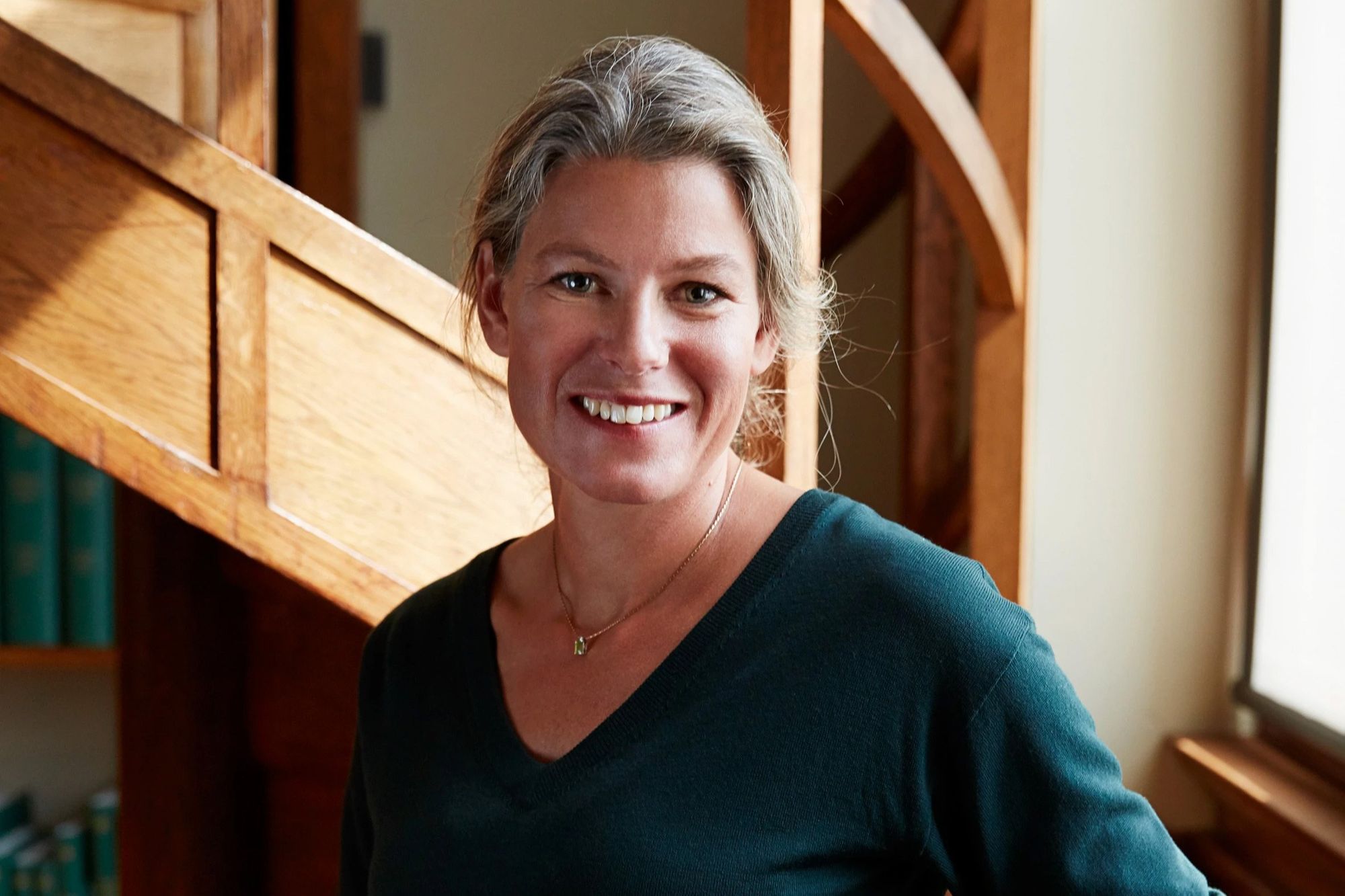
The Swedish designer and creative director Emma Olbers is on a mission – to design good products. Products that are good from all aspects, including being good for our planet. As one of the Swedish pioneers in sustainable design she is renowned as one of the furniture industry’s climate crusaders, an effort for which she has been awarded several prestigious awards.
”I believe that sustainability and product lifecycles are key concerns and core values that I strives to incorporate in my work. Those concerns can translate into using recyclable and reusable components, thinking carefully of which materials to use and of course avoiding the use of harmful substances in production altogether. An ultimate vision is to be able to create products and furniture that, after a long and rich furniture life, can go directly on the compost heap when they are scrapped”, she explains.
Where does it come from?
Born and raised in the Swedish countryside, Emma has a close connection to the agricultural tradition and the connection between natural resources and our everyday lives.
”I’ve always been environmental aware, but after attending a sustainability course at the Sustainable Fashion Academy in 2008, my commitment increased, and I started to work methodically in all my projects. It has been kind of a knowledge journey, trying to figure out facts and learning along the way. Concentration and determination needed”, she concludes.
In 2015, while preparing the exhibition, ”Where does it come from, where does it go”, Emma decided to explore the different materials she is working with.
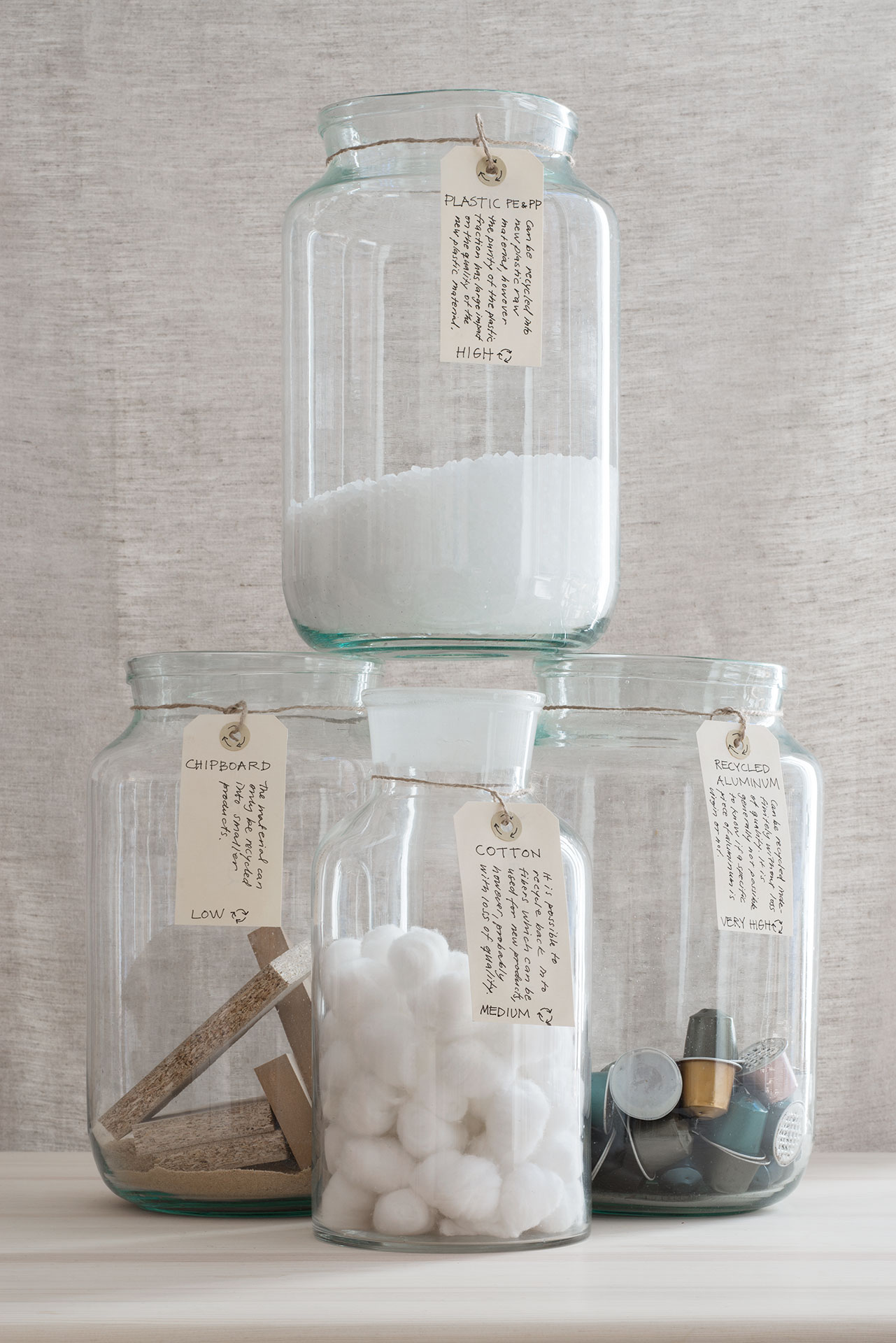
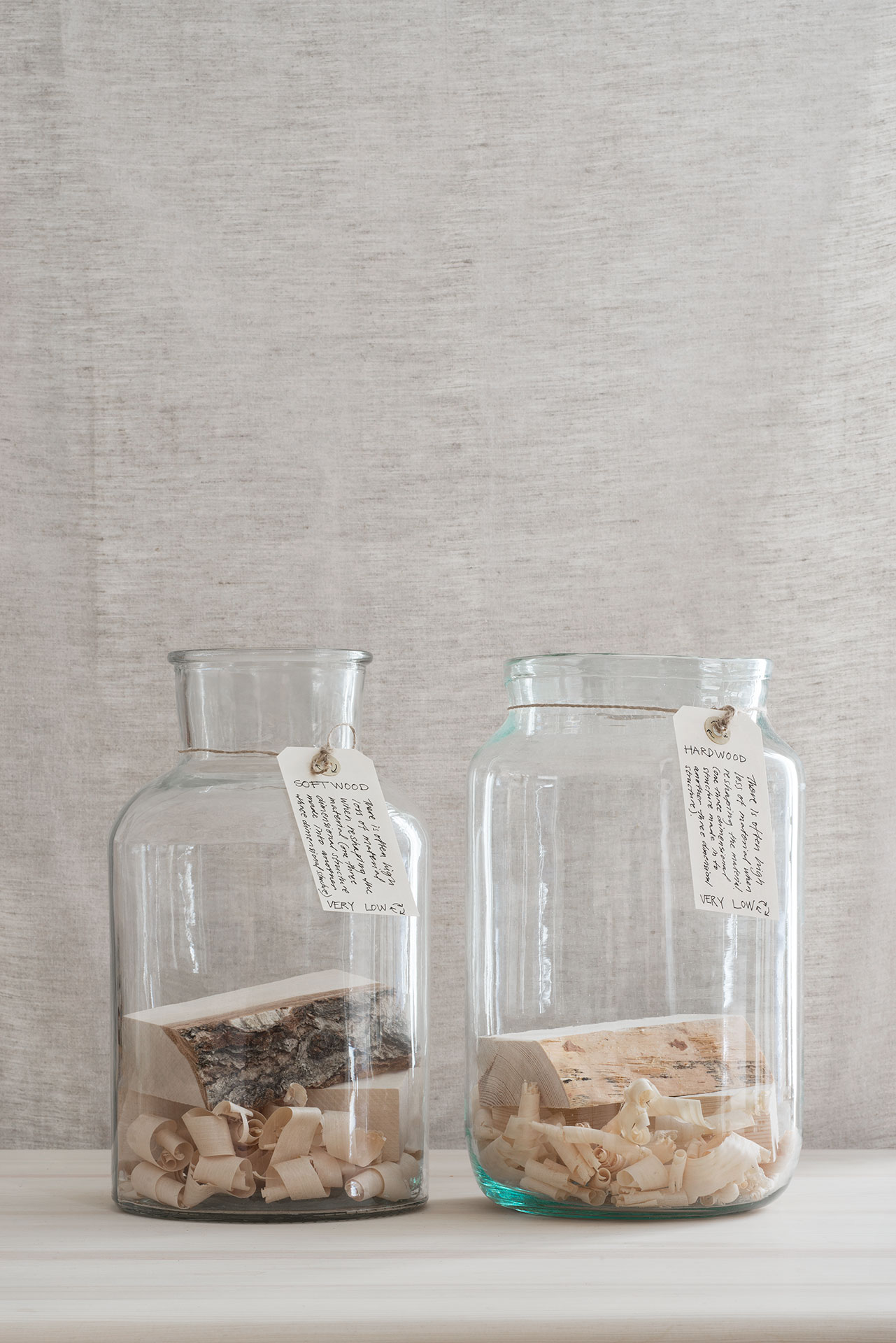
”It was planned as a trend exhibition, but I saw the possibility to share knowledge about how good furniture can contribute to sustainability and a better environment. I decided to team up with the Swedish Environmental Research Institute, IVL, and they helped me to do a life cycle analysis on the materials in my toolbox and to calculate and rank them according to their emissions of CO2e/kg material.”
While working with the exhibition, Emma learned that the most important we can do for the climate is to keep the carbon dioxide equivalents low. She decided to commit to the UN Paris Climate Summit’s goal to limit the global temperature rise to 1.5°C in her future work.
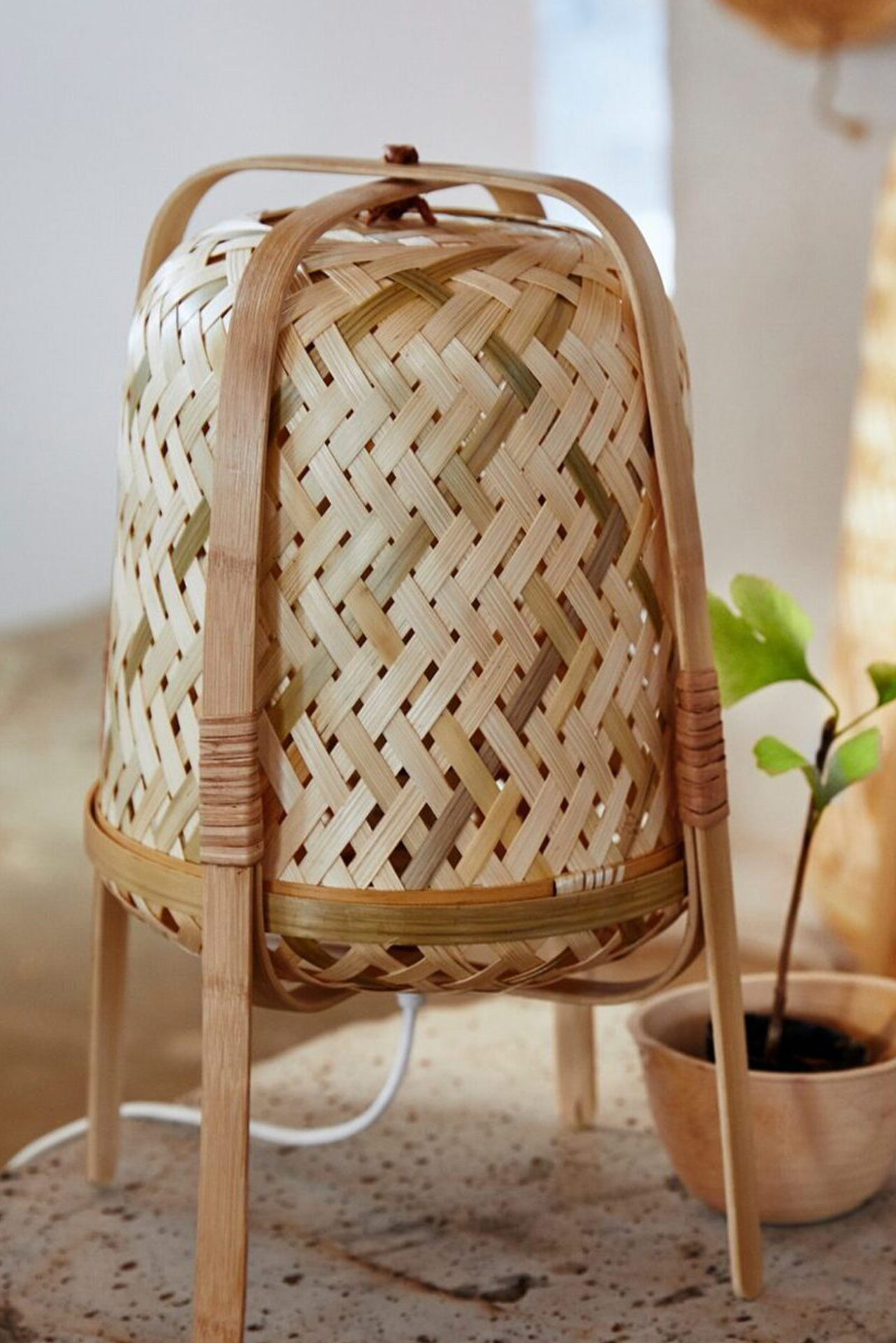
Bamboo lighting
”I discovered that certain wood, like birch and other leaf trees, had a less environmental impact. And bamboo, for example, turned out to be a positive material. When designing new products, I strive to use this knowledge, choosing materials that help minimize the furniture’s CO2 footprint. If I have to work with a material with a not so positive ranking, I make sure to use a very small amount. Actually, minimizing the quantity of material is important, no matter what kind of material you work with.”
Compared to lighting – where a great part of the environmental impact is related to the luminaire’s energy consumption while lit, furniture has its greatest environmental impact at the beginning and at the end of its lifespan. The choice of material is crucial, Emma states.
”From the perspective of being a designer, choosing the right materials and ensuring thoughtful production play a big part.”
For IKEA, Emma chose to design a new luminaire out of bamboo.
”When it comes to lighting, I think it is easy to just focus on the energy consumption, but of course, the body material also has a great impact. New technology also opens up for new ways to design lighting – not only regarding energy efficiency, but also when it comes to materials and production processes.”
 "I’ve always been backed by my customers and architects – now I experience that we also get more feedback from consumers. There is definitely a new awareness in the society." Emma Olbers, desginer and creative director
A national heritage
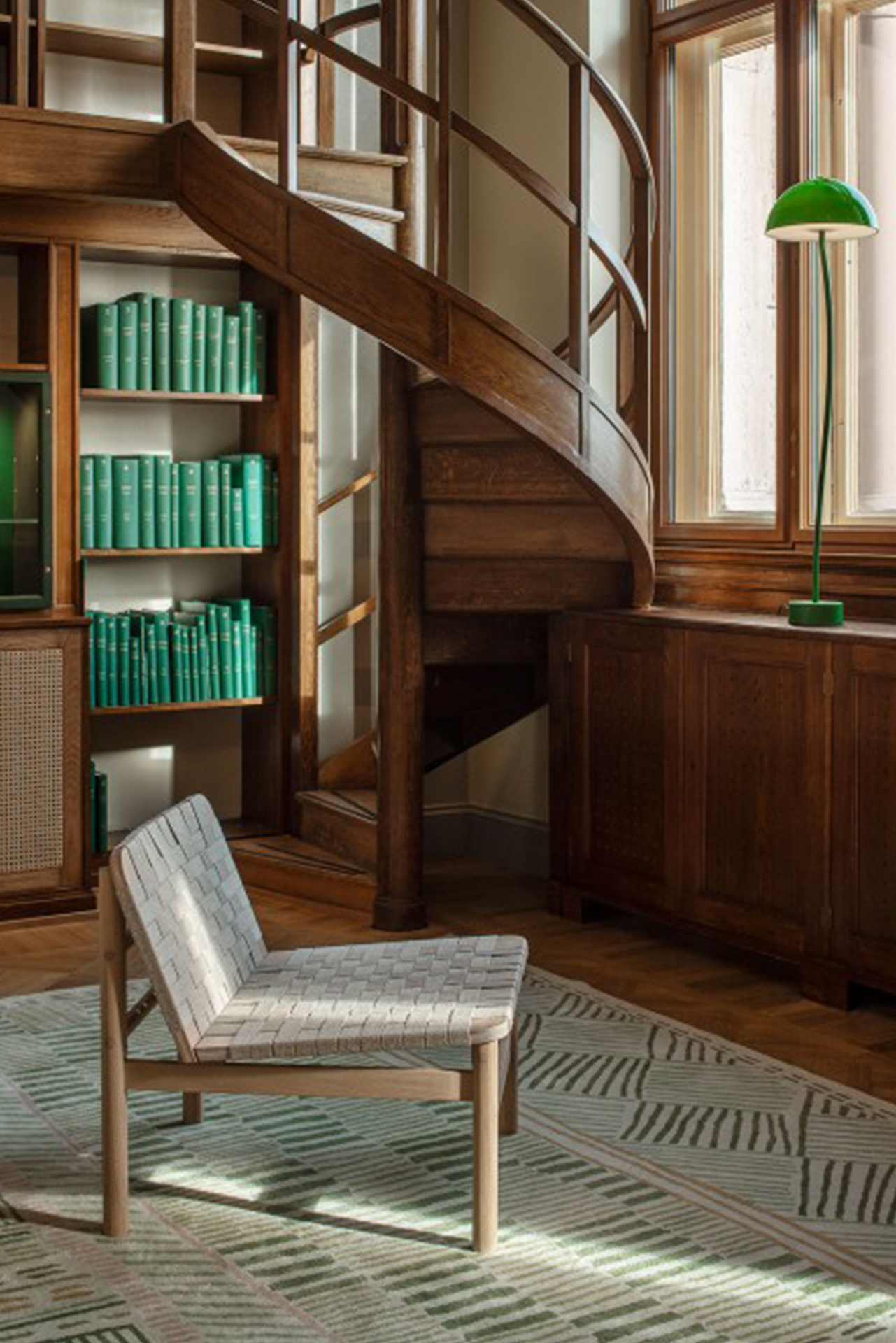
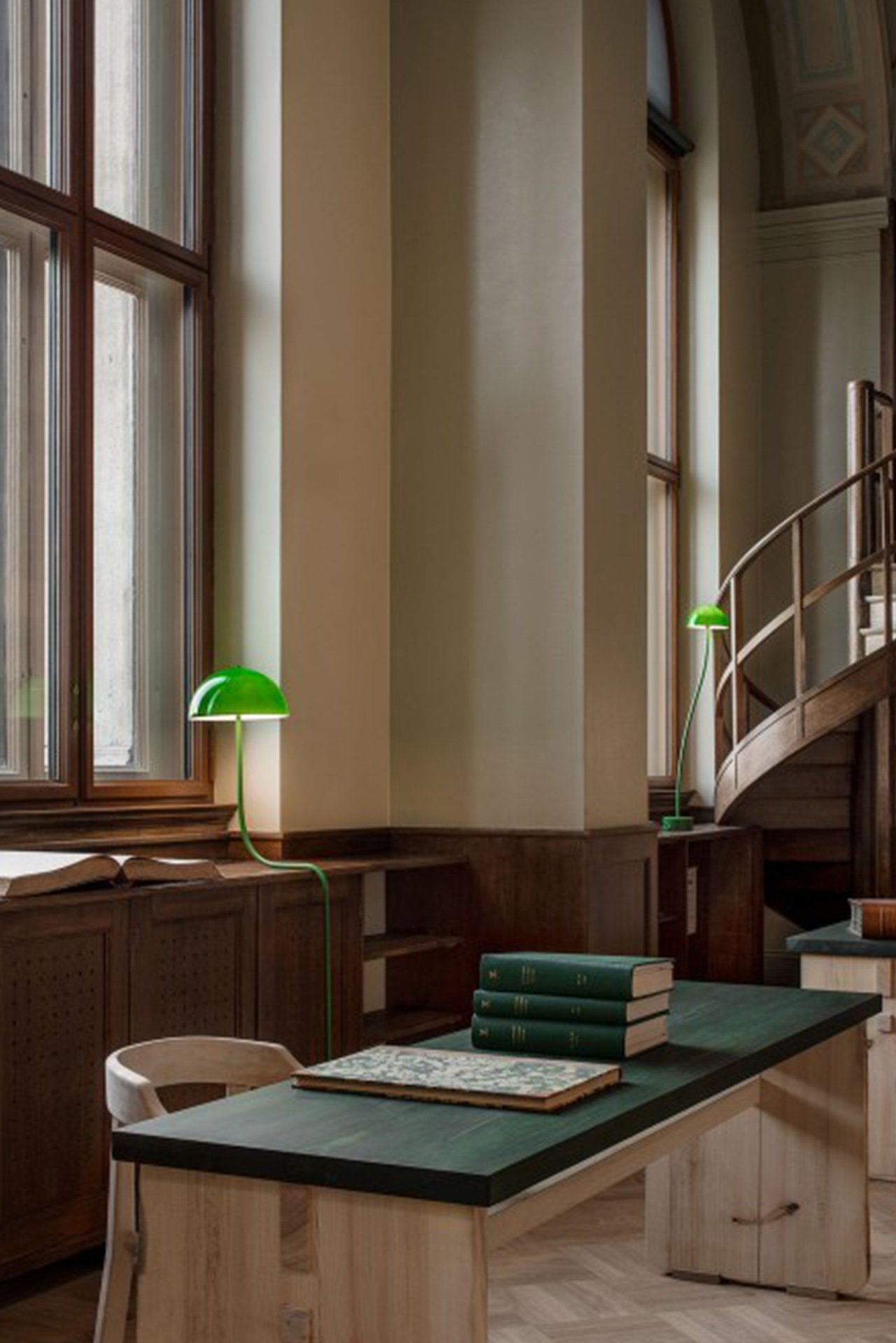
Emma’s methodology has also characterized one of her latest projects; redesigning the old library at the newly refurbished Swedish National Museum. A national heritage that now has been carefully refined with Emma’s contemporary Scandinavian design. Sustainability has run like a red thread throughout the project. Emma chose to use wooden materials with low CO2 footprints for the different chairs, and the seats were produced in fast growing climate positive hemp and seaweed. Carpets were produced in forest-based cellulose.
”As the library is a public environment, I once again had the opportunity to share the knowledge about different materials, their effects on the climate and how different surface treatments can be used to make the materials age beautifully. Using materials such as birch, and hemp and seaweed instead of leather in the seats helped us reduce CO2 emissions 300 times. Considering these chairs have a lifespan of 30 years it really makes a difference.”
Thoughts into action
Over the years Emma has been working with a number of different furniture producers – from multinationals such as IKEA, to small Swedish premium brands. From the start, she has experienced a positive attitude towards her sustainability initiative.
”I’ve always been backed by my customers and architects – now I experience that we also get more feedback from consumers. There is definitely a new awareness in the society and personally I think that there’s been an important change of attitude the last year. The impact of Swedish environmental influencer Greta Thunberg is a great example of this.”
It also seems like people are taking their thoughts into action.
”Buying second hand and mixing old furniture with new is a trend, as is investing in high quality furniture that has a long lifespan and can be inherited by generations. Personally, I love the thought of reusing old quality design furniture, myself I have some really nice 1960’s chairs in my office.”
This kind of long-term thinking can be applied on other industries.
”The fashion industry has started to reinvent itself, developing more sustainable solutions instead of suggesting that the customer should change the entire wardrobe four times a year. Swedish brand Filippa K, for example, has launched a Basics collection with classic basic items that will stand the wear of the eye and the everyday life for several seasons. The garments are produced in recycled or renewable materials.”
What to ask for
As a customer – what’s the most important requirement to set when investing in new interior design?
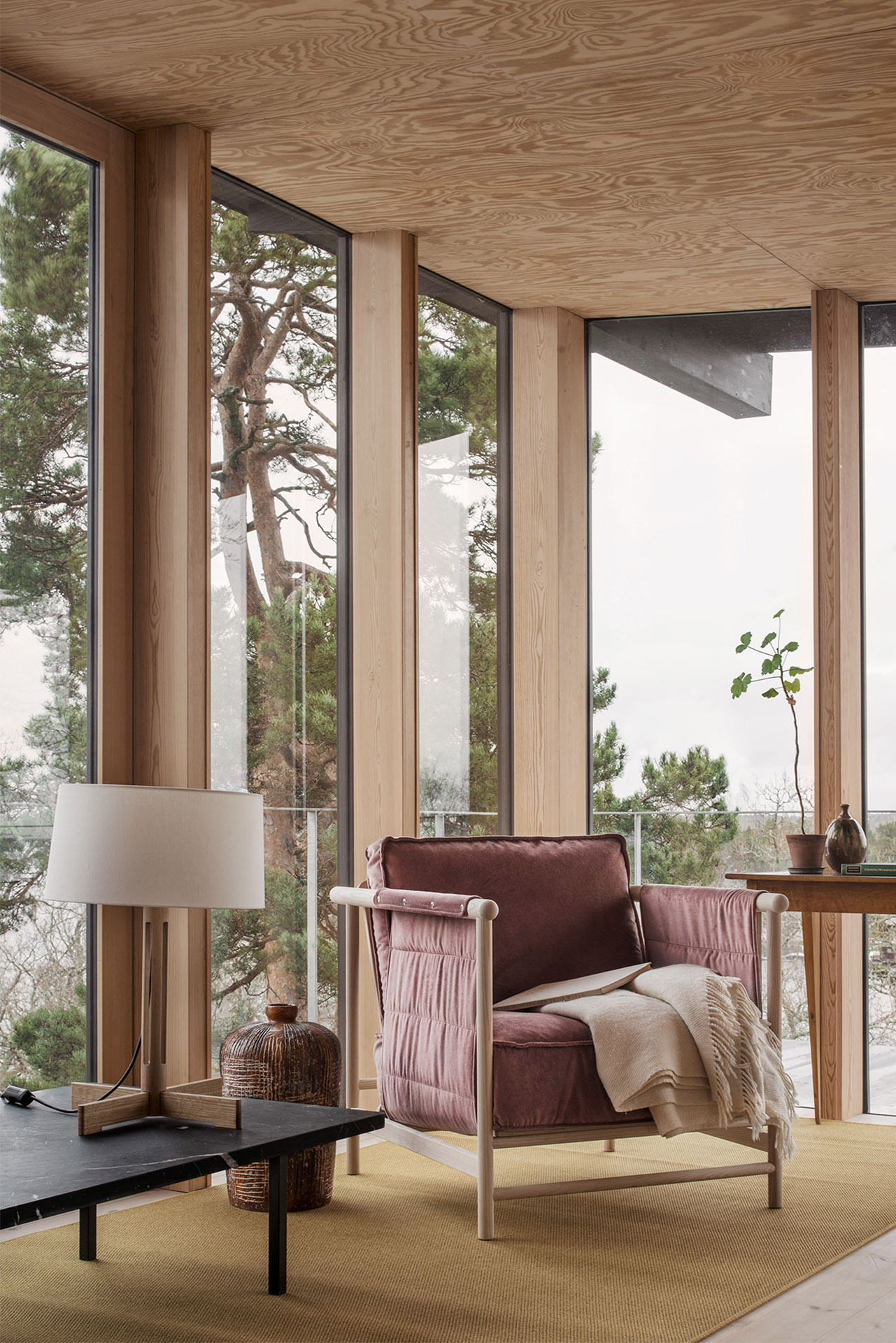
”No matter furniture or lighting, I think that the first step is to take the question seriously – and as said before, material is the key. When choosing furniture, the material stands for up to 50 percent of the environmental impact – I’d recommend you to take a look at the material index. Look for plant-based material like wood, or for recycled materials. Today many companies share this kind of information on their websites. Choose furniture with sustainable surface treatments that is easy to maintain and make the furniture age with pride. Ask the producer where the product is produced and if the energy used in the production facility is renewable. If there is a life cycle analysis available for the product it is a sign that the producer has made an effort.”
Related News

Cuando el material importa: Wrapped aporta una nueva visión de la iluminación sostenible
En un mundo donde cada gramo de material y cada gramo de dióxido de carbono cuenta, Wrapped emerge no solo como una luminaria - sino como una declaración de intenciones. Es la iluminaria suspendida más sostenible de Fagerhult hasta la fecha, y no es por casualidad. Cada detalle, cada decisión, cada material fue elegido a propósito. La sostenibilidad suele empezar con una simple pregunta: ¿De qué está hecho? Para Wrapped, la respuesta es un trío de materiales, cada uno con su propia historia medioambiental. Cartón compacto: un amigo conocido En Fagerhult, conocimos el cartón compacto en 2021 con Multilume Re:Think. Pero para Wrapped, hemos ido más allá. El material consta de tres capas: un núcleo 100 % reciclado, una capa superior renovable con certificación FSC y una fina película protectora de plástico. En total, un material reciclado en un 65 % y una reducción del 89 % de las emisiones de CO₂ en comparación con el aluminio extruido virgen. Galería de imágenes: Cartón compacto Wrapped está fabricada con cartón compacto orgánico, aluminio reciclado y plástico reciclado postconsumo. Reimaginar el plástico El plástico suele ser un tema candente en las conversaciones sobre sostenibilidad. Pero no todos los plásticos son iguales. Wrapped utiliza plástico reciclado postconsumo: del tipo que ha vivido una vida antes, quizá como bote de champú o envase de comida. En cambio, el plástico preconsumo es diferente, ya que nunca ha llegado a los lineales. Cita: Josefin Carlsson Aluminio con pasado En el interior de Wrapped, dos componentes estructurales están fabricados con aluminio 100 % reciclado postconsumo. Este material también forma parte de una infraestructura circular, e incluso puede haber formado parte alguna vez de una luminaria Notor. En comparación con el aluminio virgen, esta elección reduce las emisiones en un 83 %. Diseñar con menos: construido para durar Sin embargo, la sostenibilidad no consiste solo en lo que se usa, sino en cuánto. Con solo 900 mm, Wrapped es más corto que una luminaria suspendida convencional de 1200 mm. Esa reducción de tamaño por sí sola reduce el impacto climático en un 25 %, sin renunciar al rendimiento lumínico de la luminaria. Josefin Carlsson compara el impacto climático de los productos en el Centro de Experiencias de Fagerhult en Habo. Para entender la repercusión de Wrapped, es útil mirar dónde empezamos. En 2021, Notor 65 —fabricada con aluminio virgen— tuvo un impacto climático de 34 kg de CO₂e. En 2024, con un 75 % de aluminio reciclado, esa cifra se redujo a 25 kg de CO₂e. En la actualidad, Wrapped pesa unos 12 kg de CO₂e. «Eso es un tercio de la Notor 65 original y la mitad de la versión actual, y una revolución silenciosa, medida en kilogramos de CO₂e», afirma Josefin Carlsson. Tras su larga vida útil, estimada en 100 000 horas, Wrapped está lista para un adiós igualmente sostenible. Su diseño hace que sea fácil de desmontar, con cada material reciclable y preparado para su siguiente capítulo en la economía circular.
Cerramos el ciclo: y ampliamos el ciclo de vida de las luminarias
El concepto de reconstrucción de luminarias usadas para ahorrar material y energía está en auge. A veces, lo único que necesita una luminaria obsoleta para brillar de nuevo es un poco de cariño y capacidades de ingeniería. Quedamos con Emma Hallman, Mathilda Holl y Andreas Ekslätt, el equipo de ReLight de Fagerhult, para hablar sobre los desafíos de encontrar soluciones que llevarán las luminarias usadas al futuro. En Fagerhult, una cultura de la innovación profundamente arraigada influye en todos los aspectos del trabajo. Posiblemente, surge de la mentalidad del fundador Bertil Svensson de resolver problemas con medios a veces pequeños, y curiosidad y dedicación. A diferencia de lo que pasa hoy en día, la sostenibilidad puede no haber sido una palabra de moda por aquel entonces. Sin embargo, utilizar nuestros recursos de forma consciente y esforzarse por lograr una alta calidad siempre han sido los pilares de Fagerhult. Hoy en día, un nuevo enfoque sobre la circularidad nos ha instado a cuestionar nuestra forma de pensar y nos hace conscientes de la necesidad de encontrar soluciones duraderas El departamento de soluciones de iluminación a medida (BLS, por sus siglas en inglés) de Fagerhult ha desarrollado luminarias únicas y soluciones adaptadas durante muchos años. Por lo tanto, rehabilitar y actualizar las luminarias usadas es algo que nos resulta familiar. Sin embargo, la ambición de reutilizar y reconstruir luminarias usadas para reducir el impacto climático ha aumentado con el tiempo. En este proceso, el diseño y la tecnología de ayer se ponen al día con los avances de hoy para satisfacer los requisitos del mañana. Cita Haga que sus luminarias usadas se vuelvan a encender Para el equipo de ReLight de Fagerhult, no hay preguntas peculiares ni soluciones imposibles. A diario, gestionan consultas sobre soluciones de iluminación especialmente desarrolladas para proyectos de los mercados de Fagerhult. Es un proceso complejo, pero, con el tiempo, han aprendido que algunos proyectos son ideales para reutilizar luminarias usadas en lugar de invertir en otras nuevas. «Para nosotros, las cualidades de la luminaria en cuanto a comodidad, seguridad y estética de la iluminación son el núcleo de cada proyecto ReLight. También calculamos minuciosamente cuánto podemos reducir el impacto climático total de la luminaria a lo largo de su ciclo de vida, en caso de que se pueda reducir. Si se cumplen todos estos requisitos, comenzaremos a desarrollar y diseñar un nuevo kit», afirma Emma Hallman. En ReLight, existe una voluntad abierta de ahorrar materiales y energía, y hacer un esfuerzo medioambiental actualizando las luminarias. Sin embargo, no todas las luminarias usadas pueden vivir para siempre; algunas están obsoletas y es mejor reciclarlas que reacondicionarlas. Img «Si las circunstancias no cumplen con nuestros requisitos y no funciona para reacondicionar la luminaria, no dejaremos que el proyecto avance más. Nunca pondríamos en peligro la comodidad, calidad, seguridad o la expresión de la luminaria si no resulta en una solución final de primera clase», dice Emma Hallman. En Fagerhult, la seguridad y la calidad son los hilos conductores que unen todos los productos. Y ReLight no es una excepción. A lo largo del proceso, el marcado CE y los ensayos son factores cruciales. «Para garantizar la calidad general, no se deben montar piezas sueltas in situ. Queremos que el montaje sea lo más eficaz y rápido posible, y el nuevo kit encajará perfectamente con los orificios de tornillos antiguos. La unidad está lo más cerca posible de ser una luminaria completa», comenta Andreas Ekslätt.