
Myriam Aries is Sweden’s first full professor in Lighting Science at Jönköping University, and assistant professor of Lighting Technology at her alma mater Eindhoven University. She has special expertise in the field of daylight application and simulation, visual comfort, human light and health demands.
Healthy light environments
The fascination for the relationship between light and health runs like a red thread through Myriam Aries’ work. In her PhD research she examined human lighting demands and health requirements in office buildings. During a two-year post-doctoral fellowship with the lighting group of NRC Canada, and later as a professor in Eindhoven, she continued to research the relationship between light and health at work.
”I think it is extremely important that we get lighting in our buildings right. In the Western world we spend up to 90 percent of our time indoors. That’s why we have to create healthy and inspiring lighting. A light that agrees on human visual and non- visual effects, without compromising visual comfort”, she states.
As a building engineer (Myriam holds a MSc in Building Technology from Delft TU and a PhD in Building Physics/Lighting from Eindhoven TU) she is committed to the planning of buildings with respect to human lighting needs.
”Allowing lighting expertise to participate early in the process, architects and developers can ensure that the building will have a healthy and energy efficient lighting environment, where daylight and electric lighting are combined in an effective way.”
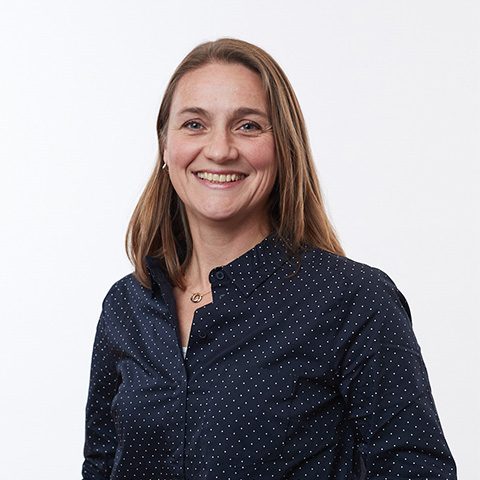 ”It is wise to ask ourselves not only what can we do with light, but what should we do.” Myriam Aries, professor in Lighting Science, Jönköping University
Dynamic daylight
Needless to say, she is happy with the current strong focus on lighting research that takes both visual and non-visual human needs into account.
How can electric light be used and combined with daylight to increase people’s wellbeing? Does a sunny day outside mean that lighting indoors should be boosted or should we save the trick for a cloudy day? And when should, or should not, electric light be used for mimicking daylight?
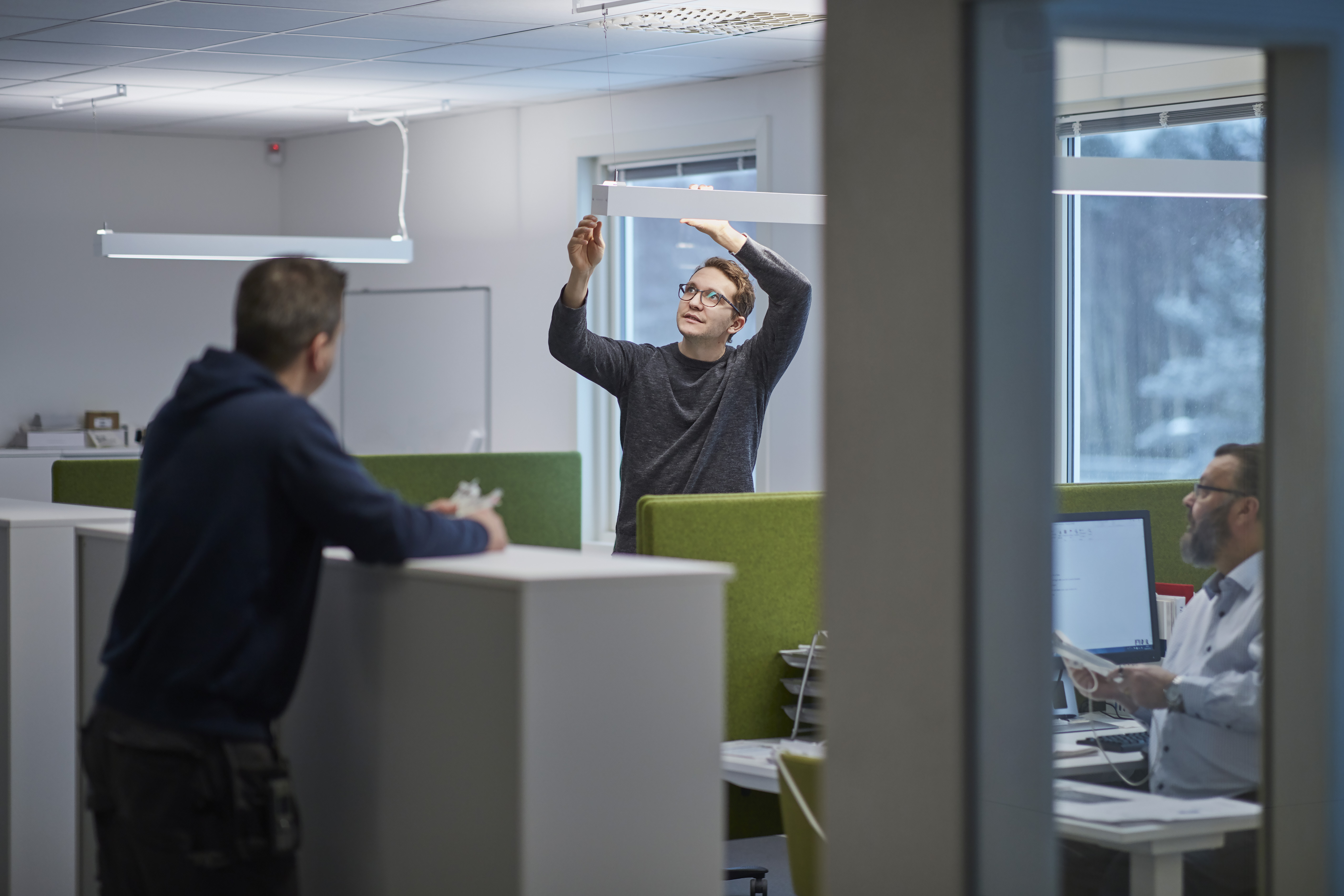
These are some of the questions that Myriam Aries is trying to answer in her ongoing research projects. One of them is funded by the Swedish Bertil and Britt Svenssons Stiftelse for Belysningsteknik and is a collaboration between Jönköping University and Fagerhult Belysning AB. It is investigating how office workers are affected by different combinations of tunable white during the workday. Together with students in a course of the Lighting Design education, she studies their response to dynamic lighting during the day.
”Natural light is unpredictable. It is constantly changing, and not only with the weather and the time of day. The lighting situation of the room can change from one second to another as autumn leaves blow by the window. Daylight is dynamic and it’s endless variations may hold an important key to humans to feel good”, Myriam muses.
”Data still remains to be further analysed, but preliminary results implicate that a light shower in the morning has the most significant effect on people’s alertness and wellbeing. In the afternoon, it seems like it is too late.”
It is also reasonable to assume that electric lighting that's designed to mimic daylight should be programmed in patterns with changes in colour and intensity over the day. We are talking about changes and variations that, at least in some way, reminds of the daylight dynamics, offering an alternative to the static indoors lighting that we’re used to. Daylight can change with rapid changes, but if the sun peaks from behind a cloud there is all of a sudden, a huge change in light amount.
Supporting sleep patterns
Paired with new intelligent software technology, lighting can be adapted to stimulate and control people’s performance, health and wellbeing. What happens if we create optimized lighting conditions in the work or learning environment, but people exposed themselves to high light levels in the evening causing strong sleep disruptions? For example, office and home lighting could be adapted to fit the visual and non-visual needs during the day. As an additional benefit, energy consumption can be optimized and reduced.
Often human centric lighting is thought of as a way to increase performance, but in the 24 hour-society one should not foresee the importance of lighting for reducing stress and improving sleep patterns, she says.
”Electric light can be used to make people feel more awake and alert, by adjusting the amount and the spectral composition of the light. In the same way, lighting can be used to make people relax. Plus, darkness is just as important for our health as light! One third of our lives are actually supposed to be spent sleeping, in dark environments – it’s extremely important to restore and recover.”
Sleep is regulated by the circadian rhythm, that is controlled by daylight and can be manipulated by electric light.
With our increased knowledge and intelligent lighting systems at offices and at home, we should be able to create environments that supports the natural rhythm, helping people to sleep and feel better.
”For example, an intelligent lighting system at home could start dimming down at a certain time at night, preparing the body and mind for sleep, contributing to regulate sleeping patterns; which is the focus of one of the group’s PhD-students in his research.”
Calls for caution
Though, this brave new world of smart, even self-learning, control systems calls for caution. Not only can the wrong type of light, used in the wrong way, lead to increased stress and poor health.
Letting control systems manage lighting at work and home raises questions whether different people at a workplace or in a household may have different preferences and needs. Should individuals then be allowed to override the system?
“One of our focus points is where intelligent lighting systems should and could guide, support and advise us, and where people should and could have freedom to interact with the lighting system. In the laboratory test with students and the field study with employees, we looked both at performance and satisfaction with the system. It is also a matter of privacy and integrity. A worst-case scenario would be a society where you are supposed to benefit from the healthy aspects of a lighting control system and will be questioned when choosing not to use them. What if your insurance company won’t grant your claim just because your log shows that you have not taken your light showers?, Myriam Aries asks rhetorically.
”I think it is wise to ask ourselves not only what can we do with light, but what should we do.”