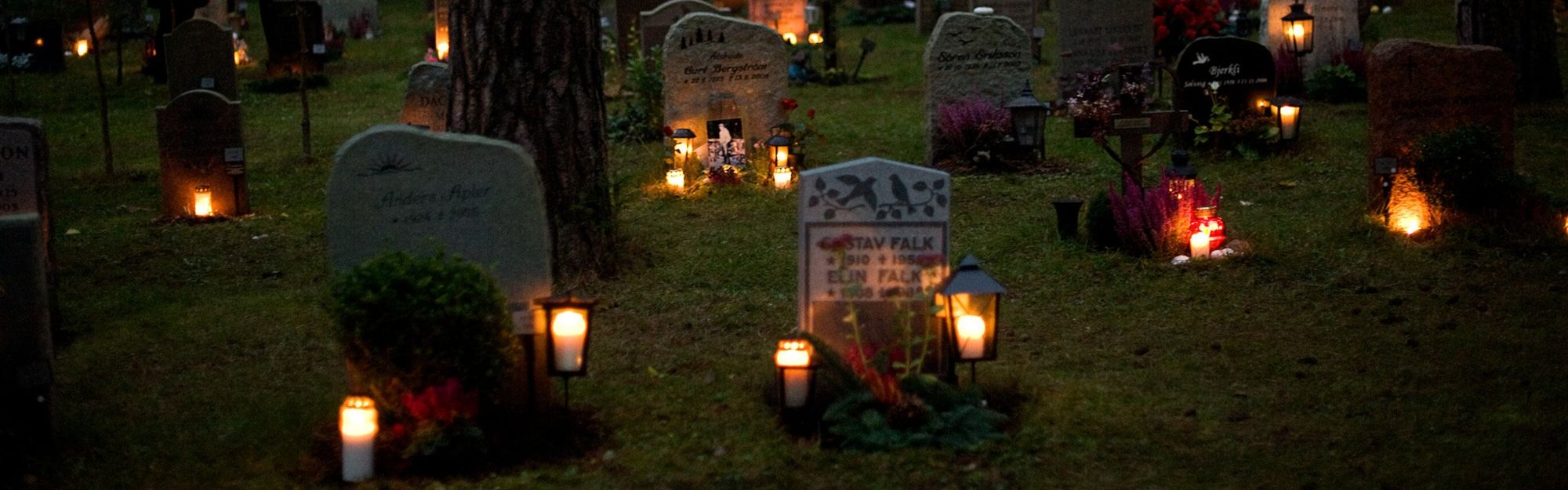
Although it is a resting place for those who have left us, the focus for cemeteries is still the people who visit them. One of the people who has worked on lighting for Swedish cemeteries is Florence Hermansson, a light artist and light designer/light planner, who is based in Uppsala, Sweden.
“Cemeteries are primarily a resting place for the deceased. We always need to remember that is the main purpose of the place,” she explains. “After that, it is a space that belongs to the relatives, and those who manage the cemetery. After that, it is a place for the public. That hierarchy is something that cemetery visitors need to accept and respect.”
‘Semi-public’ and ‘semi-private’ environment
Florence emphasises that there is a valuable focus and purpose to the whole cemetery environment.
“These places are truly unique. They must not and cannot be compared with other public spaces in the municipal environment, such as public parks. I want people to respect the importance these spaces have to others, and to society as a whole. In cemeteries, there is a very thin line between the private burial plots and the ‘public’ paths. It’s important to create a ‘semi-public’ space that is also ‘semi-private’, which is what a cemetery is an example of. We need to take this complexity into account when planning the lighting.”
Jaana Rintala Berndtsson, a planner at the Swedish Church’s cemetery administration in Gothenburg, also encounters challenges in her work in managing the unique type of environment that cemeteries represent.
“We have many different types of areas to illuminate in a cemetery,” she explains. “You have to consider why you are illuminating an area, and who will be visiting it. In environmental terms, you need to avoid having too much lighting, and from a safety aspect, you need enough lighting for visitors to feel safe. On the one hand, we have equipment depots that need to be illuminated in an efficient way – so that visitors and our employees can see and work. On the other hand, we shouldn’t illuminate all parts of the site so as to avoid upsetting the biological circadian rhythm of the wildlife in and around the cemetery.”
Perceived safety in the quiet space
Perceived safety in the area is something that both Florence Hermansson and Jaana Rintala Berndtsson consider a priority when working on cemetery lighting.
“The main paths through cemeteries need to be safe and secure, as some of our cemeteries in Gothenburg are also public thoroughfares or have public footpaths running through them,” says Jaana. “Visitors ought to feel a sense of peace and quiet when they come here, and that’s something that the lighting can contribute to.”
Florence also emphasises the importance of safety and security in cemeteries for visitors.
“A project I undertook in Uppsala included one of the city’s most popular pedestrian and cycle paths,” she explains. “People using them were colliding with one another due to the contrast between their bike lights and the surrounding darkness. Therefore, I want to emphasise the importance of harmony and coherence between the deliberately lit and the ‘spontaneously’ lit areas of the city. When it comes to lighting, it’s the complete picture that counts. Every place has its own darkness and light scale, and we should make use of that, and not simply view the darkness as something to be worried about but rather something reassuring and peaceful. One example of that is stray light from city streetlights. That’s important to use in the light palette when lighting cemeteries. It may sound counterintuitive, but in fact the non-illuminated places, the very darkest places, may be the places that are perceived as safest. From there you have control over what you can see and can adapt to the more strongly lit places.”
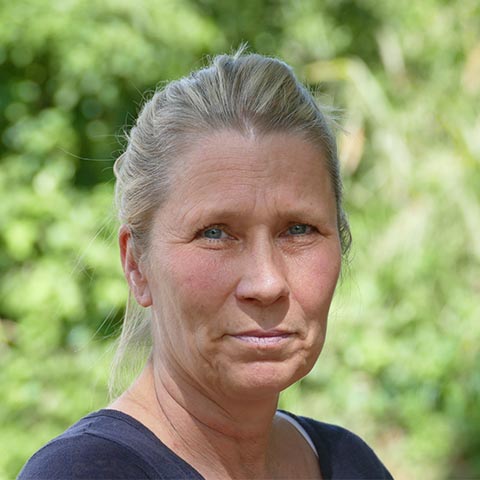 "Visitors ought to feel a sense of peace and quiet when they come here, and that’s something that the lighting can contribute to." Jaana, Rintala Berndtsson, planner, Gothenburg's cemetery administration
‘Tröstefull Lyrik’
Florence mentions her project at the Gamla Kyrkogården cemetery in Uppsala as one example of how she worked on lighting and how the neighbouring surroundings came to influence that work.
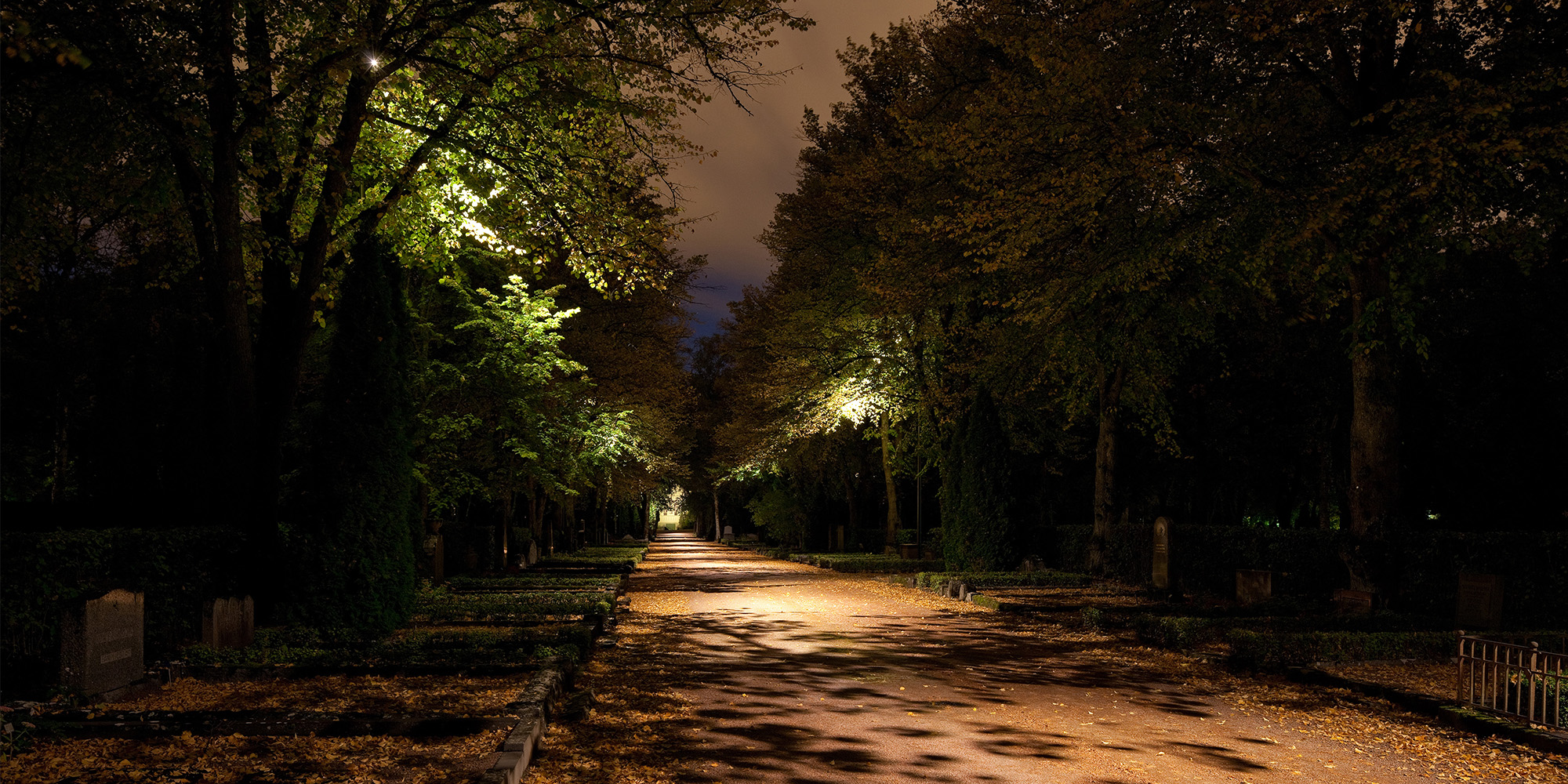
“In Uppsala, I allowed the living light in the lanterns on each grave to control the light level on the nearby footpath,” she explains. “The title of the lighting is ‘Comforting lyricism’. The lighting means, in purely practical terms, that the large artificial light had to take second place to the individual living light.”
“In this project, we made use of the city’s public lighting around the cemetery,” continues Florence. “This created the silhouette effect for those moving around the darker parts of the cemetery. The low light levels on the main footpath, the central artery of the cemetery, enhance visitors’ visual comfort and adaptation to this darker area. Visitors get a more natural view and can see what is happening in the adjoining city space. Another important aspect of cemetery lighting is to allow the entrance into the cemetery to be a lit area, an identity-bearing space between the city lights and the cemetery’s lights. The entrance then becomes a light-visual staircase into the cemetery, something that can help visitors to prepare for their visit.”
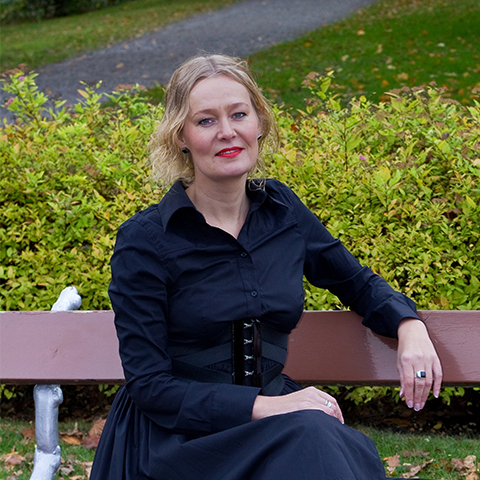 "I think that cemeteries can be a role model for other lighting in public spaces. The lighting becomes more homely, more compassionate and more intimate. Let’s take that sympathetic lighting – and use it in other projects!" Florence Hermansson, artist, lighting designer and light planner
Living and dead involved in the planning
It is not just the living who have opinions on the planning process for the luminaire locations and lighting assembly. The dead must also be included in the process.
“Cemeteries are often lush areas, with lots of greenery and trees,” says Jaana. “When planning lighting, and especially post luminaires, tree roots and other plants can influence what solution we are able to implement. There are also other issues we need to consider. Although here at the cemetery administration in Sweden we are not responsible for the lighting of churches, we do have chapels and memorial parks that are our responsibility. In those cases you have to consider how you light and illuminate cultural and historical buildings to ensure they are in harmony with the architecture and other aesthetics in the area.”
Florence agrees with Jaana’s reflections.
“The graves, the location and the position of trees have in some cases determined the placement of lighting in the projects I have worked on for cemeteries,” she says. “We must never forget what these places are, and I feel that it encourages a more humble and creative approach to lighting. I think that cemeteries can be a role model for other lighting in public spaces. The lighting becomes more homely, more compassionate and more intimate. Let’s take that sympathetic lighting – and use it in other projects!”
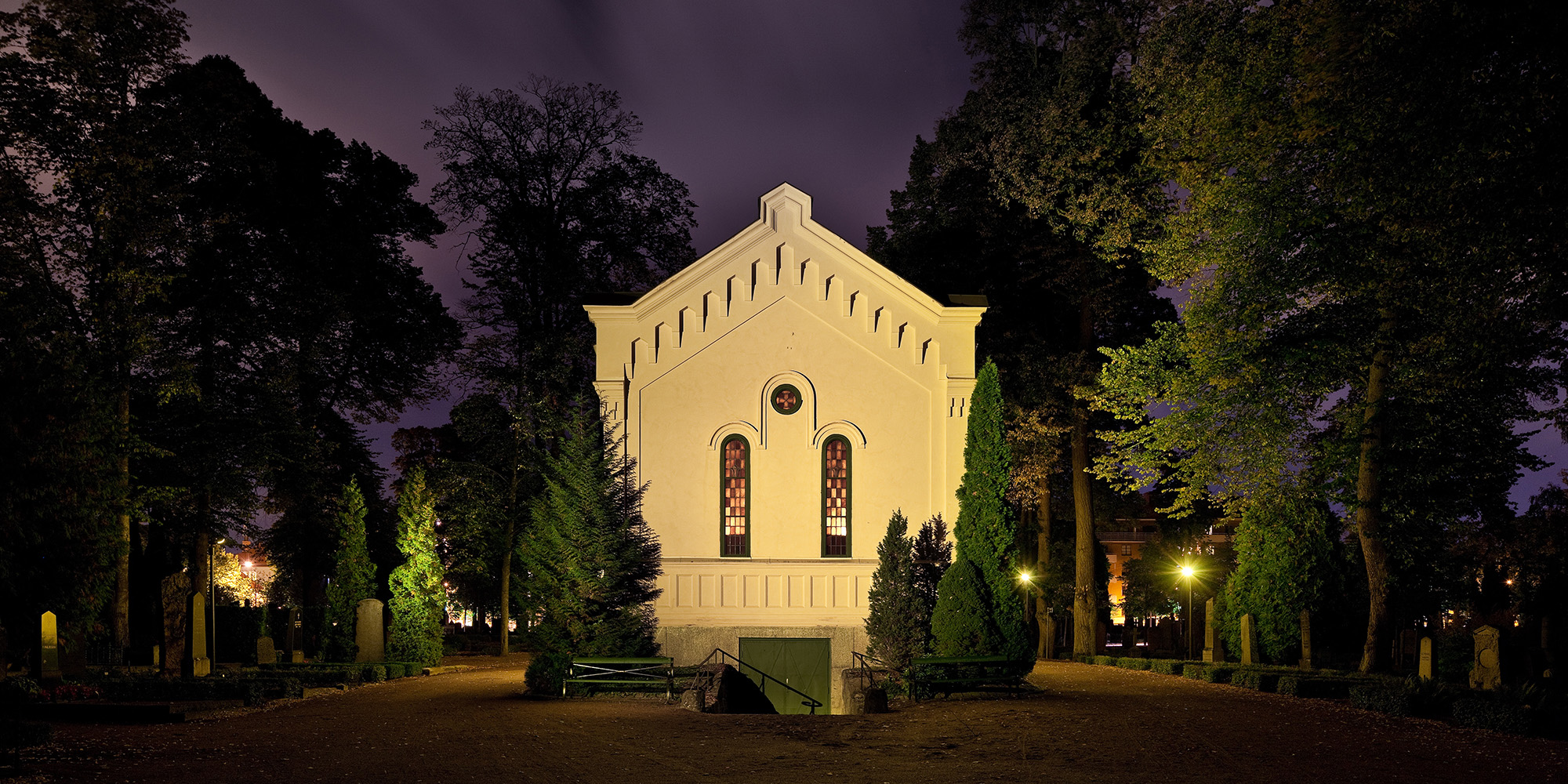
Tröstefull lyrik
Uppsala was named cemetery administration of the year in 2013, the same year that ‘Comforting lyricism’ was installed. The award was received by Tord Engström, head of Uppsala cemetery, and the justification given was the sustainability work that the cemetery had been actively involved in. The impression is reinforced and the sense of security is increased by the illumination of the interior of Gamla Kapellet.
See Florence Hermanssons complete work on her homepage.