Every city wants to be one – but what is it? Opinions on how a “smart city” should be are as many as the aspirants, though there is an end result which counts for them all. By using modern technologies knitted together, the smart city is a step towards a more sustainable society.
The development is driven by urbanisation. In Metropolitan areas the concept is a way to meet the pressures resulting from an increasing population. The EU is an enthusiastic promoter of the movement and is running its own “Smart Cities Initiative” in order to accelerate the transformation of cities into fossil-free and low-resource communities.
Holistic approach
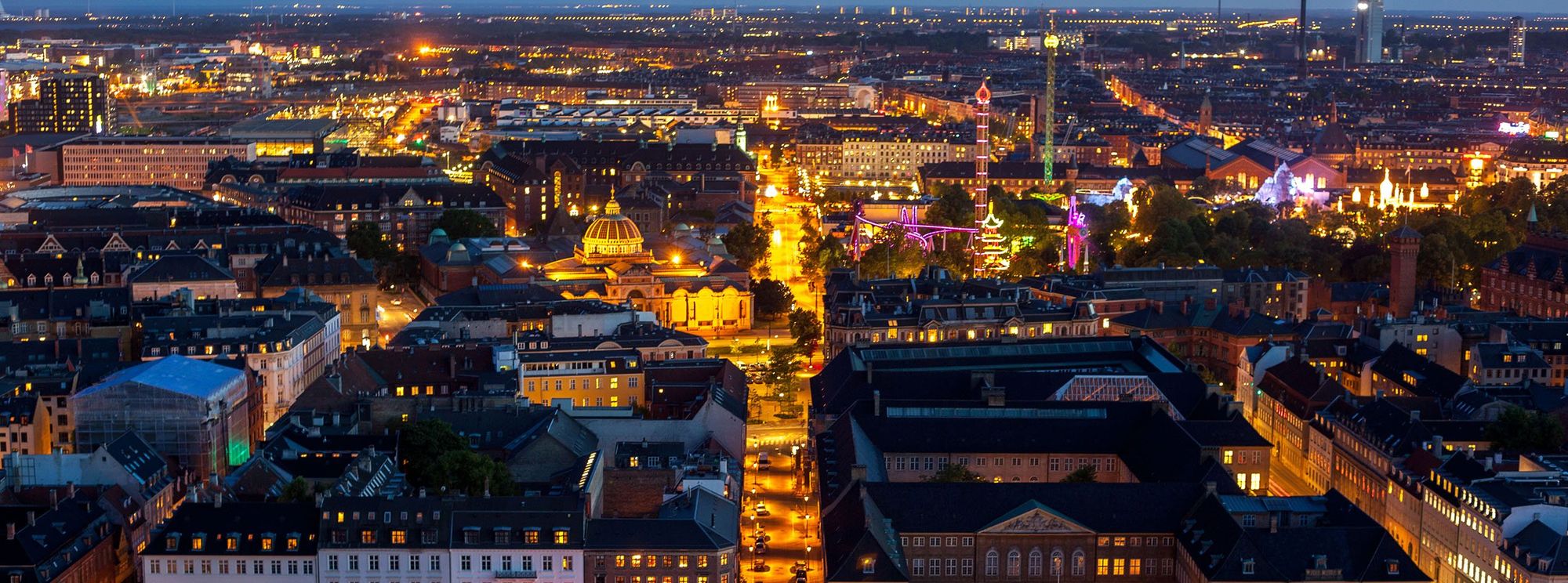
Copenhagen is considered a frontrunner and was recently awarded the Smart Cities Award for its “Copenhagen Connecting”-project.
“It’s extremely important that you don’t embark on this kind of project for technology’s own sake. A smart city should be created for the benefit of the citizens, to improve their quality of life. For Copenhagen this is also an important step to realise our vision of a C02-neutral city in 2025”, says Søren Kvist, spokesperson and Project Manager at Copenhagen Solutions Lab, the City of Copenhagens incubator for smart city initiatives.
Copenhagen Solutions Lab works cross-departmental with the city’s administration, in partnership with local and international companies and knowledge institutions. This task group provides a 360 sounding board to evoke and test new ideas, technologies and solutions to create a more liveable city in Copenhagen.
“The smart city cannot be seen solely as a matter for the community. We need to interact with many different stakeholders: universities, business life and companies related to energy, water, gas, telecom, sanitation and so on… The realisation of a smart city needs a holistic approach and we’ve found this is an easier way to communicate.”
Lighting as infrastructure
And even if the potential is endless, the connected society has to be born according to a plan. Before heading off, experts were hired to identify possibilities and socio-economic effects. Right now, Copenhagen Connecting is entering a new phase. A test area is built for evaluating different solutions and techniques.
“We’re not first to the ball, many of these technologies have been tried in other cities – but we need to make sure that they’ll work in our Nordic climate and environment”, says Søren Kvist.
An innovative twist is how Copenhagen is planning to use outdoor lighting as infrastructure for the smart initiative. Street lighting is everywhere and every luminaire is connected with electricity, something that’s crucial to get all this tech stuff working. In the coming years 20 000 existing streetlights will also be changed into LEDs.
“Of course it’s a good thing for the environment as they are very energy efficient. But it’s interesting how lighting is also turning into an infrastructure solution, as a vital part when building connectivity”, says Søren Kvist.
Every LED-module can be connected to the city’s IT-system where they can interact with each other. The lighting poles are also excellent for housing sensor equipment for water, wind and pollution as well as for traffic sensors.
“LED-luminaires also have an important advantage as they are always operating. They’re never totally switched off, only dimmed to extremely low levels. This means that other equipment will have power supply, regardless of the time of day.”

From traffic to flooding
The ideas are flowing.
“Traffic is a core subject. For example, we can use the system to generate data for traffic lights, in order to create green waves for car drivers, cyclists and pedestrians. This means reduced pollution related to red light starts and stops and a safer traffic environment with less accidents. But it also saves valuable time for our citizens. Parking is crucial. If the system can be used to guide drivers directly to a free parking lot, it will save a lot of driving, irritation and CO2”, Søren Kvist explains.
“Sanitation is another area that we are looking into. With the help of ‘intelligent trashbins’ we can keep the city clean and plan our routes in a more efficient way. Recently we’ve had some problems with heavy rains and flooding and this system could provide us with the information to guide our efforts”
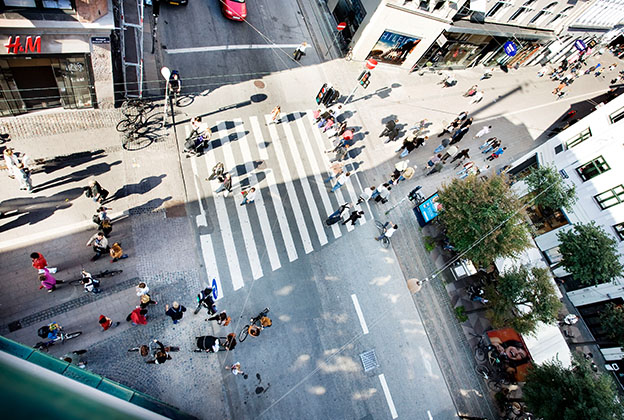
Some of the ideas are already up and running as the municipality of Copenhagen is gifted with an enterprising traffic department. For instance, one has developed a ‘green wave’ application helping commercial traffic to avoid red lights. Copenhagen is known for its well-developed cycling infrastructure and some routes are paved with LEDs shifting between red and green light. This helps the cyclists to keep the right speed and avoid unnecessary stops.
A sharing society
So, what can the lighting industry do to keep up the pace?
“Actually, I think the industry is doing a lot. After many years focusing solely on energy efficiency, producers have started to develop products adapted to network technology. I think it is important to continue on this path, focusing on connectivity and Internet of Things. For us it is also vital that developers within the lighting industry choose to work with open technology”, says Søren Kvist.
Open technology means flexibility and the possibility to share information for the greater good.
“Our vision is to generate open data that can be shared with local entrepreneurs and companies with business ideas that contribute to the smart city and peoples wellbeing. Of course, we carefully consider integrity issues at all times and living in a big data era we have to design all smart city solutions with citizens privacy rights in mind”.
Related News

La oficina flexible: inversión a largo plazo para propietarios de inmuebles
Como propietario de un inmueble, satisfacer las necesidades de los inquilinos a la vez que se crea una gestión sostenible y fluida suele ser una ecuación compleja. Con Control Track Versa, se crean oportunidades nuevas y sostenibles para agilizar el proceso y ofrecer una buena iluminación para los inquilinos. Petter Berg trabaja en el ámbito de la preventa para proyectos inmobiliarios extensos en Fagerhult en Oslo. Las conversaciones con los clientes y los propietarios más prominentes a menudo giran en torno al problema de satisfacer múltiples intereses tanto durante el proceso de construcción como después de que los inquilinos se hayan mudado. «Los intereses de los diversos actores a menudo chocan a costa de la calidad de la iluminación. Y luego a nadie le gusta el proceso o el resultado», dice Petter Berg, director de asesoramiento en iluminación de Fagerhult. Petter Berg quote Petter Berg ha observado de cerca el desarrollo de Control Track Versa y ve oportunidades futuras para los propietarios. No menos importante, aquellos que trabajan activamente con la reutilización y la sostenibilidad y desean crear entornos atractivos para los inquilinos existentes y futuros pueden lograr rápidamente rentabilidad en proyectos más grandes. «Poder ofrecer a los inquilinos una buena iluminación sin reemplazar todo el sistema cada vez que alguien se muda es una gran ventaja de sostenibilidad como propietario de un inmueble. Con Control Track Versa, cada luminaria puede reutilizarse durante todo su ciclo de vida. Además, el propio carril puede adoptar una nueva forma si la oficina cambia de diseño». Los propietarios pueden beneficiarse de las ventajas de Control Track Versa durante la construcción. El carril se puede instalar antes durante la construcción y es completamente independiente del mobiliario futuro y de la elección de luminarias del inquilino. «El hecho de que la instalación se pueda realizar en principio en cualquier momento y no dependa de que las instalaciones se limpien de polvo de construcción o de que tenga lugar justo antes de que se complete el inmueble marca una gran diferencia. Es una forma ingeniosa de comprar tiempo», dice Petter Berg. En paralelo, las instalaciones pueden realizarse en áreas fijas como pasillos, ascensores, baños y lugares públicos que no se vean afectados por las elecciones de los inquilinos. Con menos puntos de instalación, la instalación también es más rápida y sencilla. «El carril tiene un sistema flexible de 230 V, por lo que no hay necesidad de escaleras de cable ni cableado adicional. Por lo tanto, Control Track Versa también es muy adecuado para techos abiertos. Dado que es completamente independiente, el sistema también está preparado para el futuro. Cada luminaria se puede complementar con un sensor para un control inteligente de la iluminación». Según Petter Berg, Control Track Versa tiende puentes entre los consultores eléctricos y los diseñadores de interiores. Ve claramente que el carril puede ser muy útil en proyectos de construcción más grandes en los que muchas piezas necesitan encajar. «Cuando trabajamos juntos, a menudo el resultado es muy bueno. Está claro que se necesita una parte que conecte al desarrollador, consultor eléctrico y diseñador de interiores, y es ahí donde Control Track Versa se está convirtiendo ahora en una parte importante para nosotros en Fagerhult».