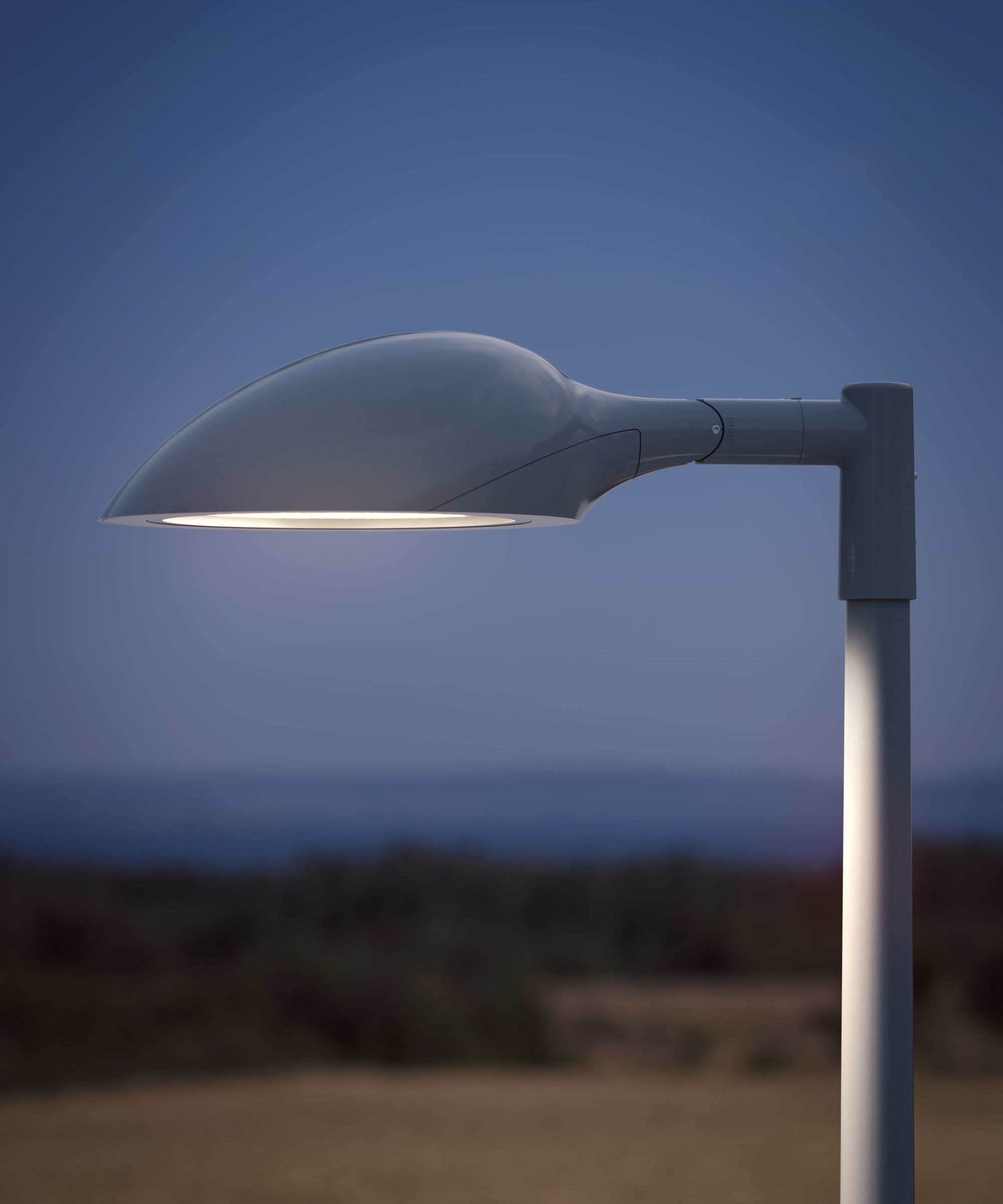
But there is another side to it. Why create the perfect street light luminaire and not do it properly from the start? Why strive to create the perfect light distribution, focus on visual comfort in the outdoor room, work hard with thermal issues and so on and not go all the way? At fagerhult we agree and believe that an outdoor fitting should also be beautiful to look at. If you are going to put the effort in, surely design and shape have to be involved the start of the project!
It stood to reason we would go for LED, and we also had a good idea of how we wanted the luminaire to perform. There was a clear picture about performance, comfort and life length. To realise this vision Fagerhult and Christian Klinge at AF Lighting assembled a strong team, also encompassing Tuxen Design, each bring their own level of expertise to the table.
 "A project like this is not the easiest path to take but if you set your goals high and want to design a luminaire that is one of a kind, instead of just doing like everyone else does, you have to stick with your original idea." Nils Stjernman, Product & Application Manager at Fagerhult
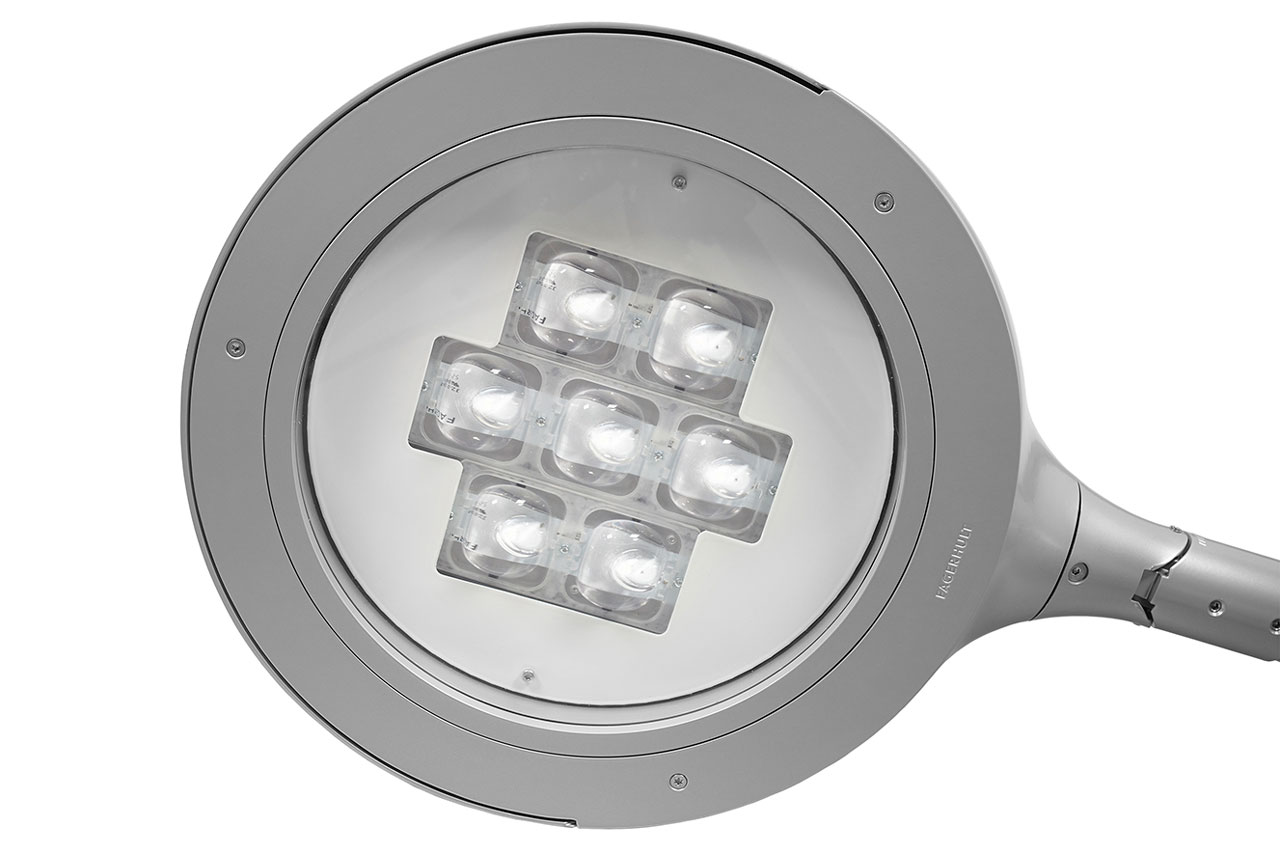
One issue to resolve was the light itself. How many of us in the lighting industry have found ourselves looking at LED street lights wondering what the designers were thinking when designing this fitting, with its glaring diodes? The solution was to develop large lenses, placed closely together, forming a cluster that the eye will see as one lit surface. To take it one step further we raised the lenses within the luminaire, allowing some light spill on the inner part of the luminaire. This created a larger lit surface and also made the luminaire visible from a distance. Flexibility was another advantage to the lenses; different types can be used depending upon the type of street you want to light. There are also several options for the number of diodes and lenses used depending on the light output you want or need.
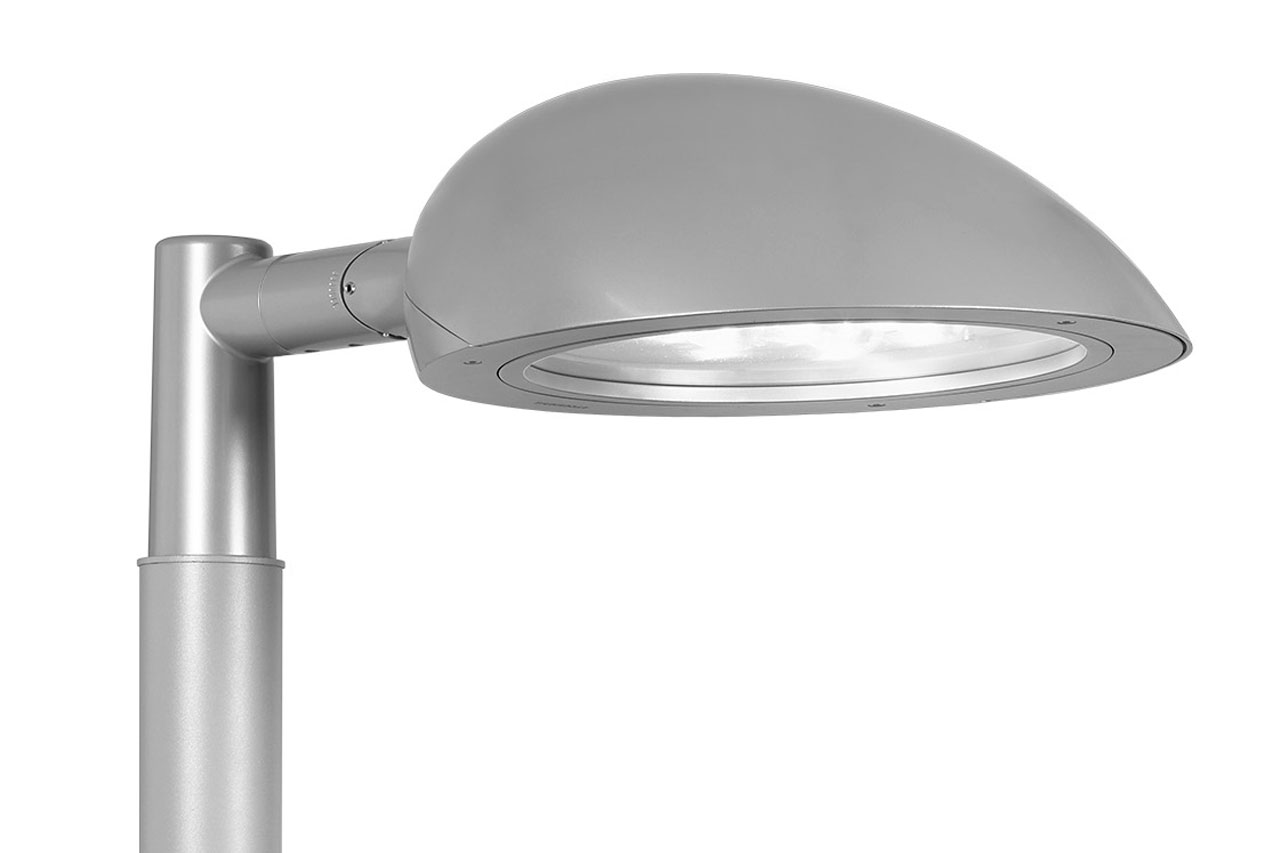
One major issue was the actual shape of this new luminaire. Street lights are expected to have a long service life and a design that feels up-to-date today, may be out of date tomorrow. Also design trends differ in various parts of the world. Christian Klinge from ÅF Lighting explains the difficulties:
“First and foremost the design task consisted of coming up with a luminaire that seemed new and fresh while also clearly expressing the qualities of Nordic luminaire design; simplicity, precision and an eye for detail. A number of crucial design objectives were also set which were intended to guarantee that the luminaire would be perceived as harmonic and suitable for not only a classic Scandinavian urban environment but also a modern urban environment. Equally we wanted to ensure it would immediately be identified as a professional luminaire. What’s more, a tilt function would be integrated without compromising on the design of the luminaire.”
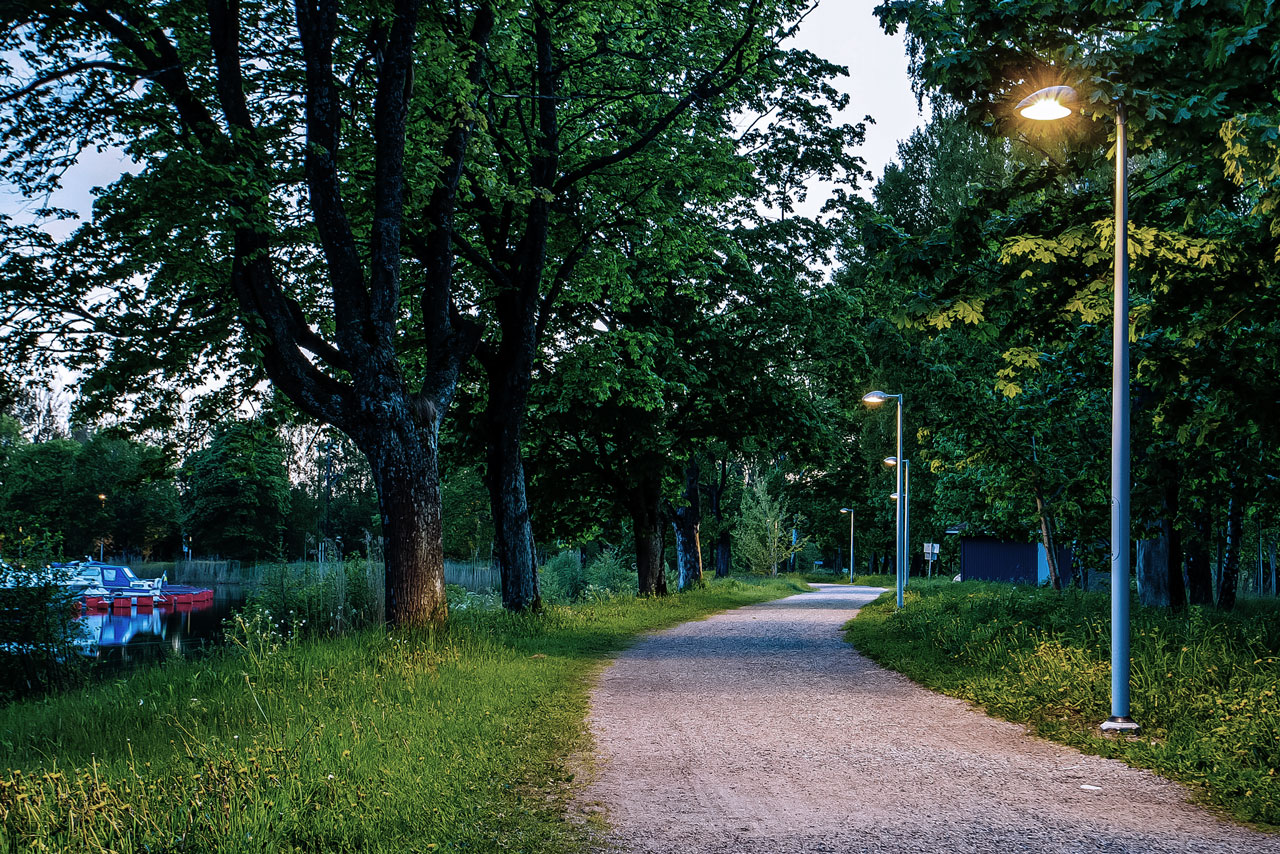
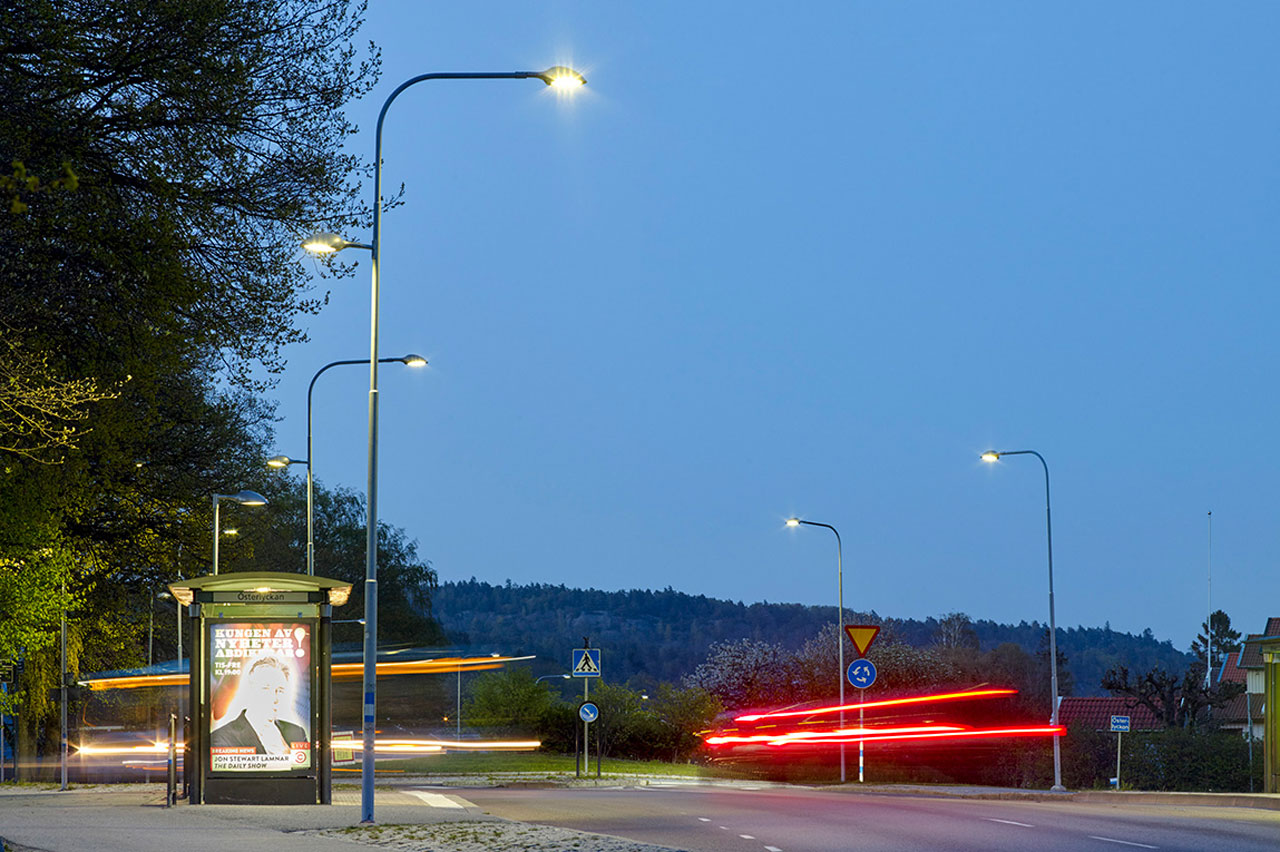
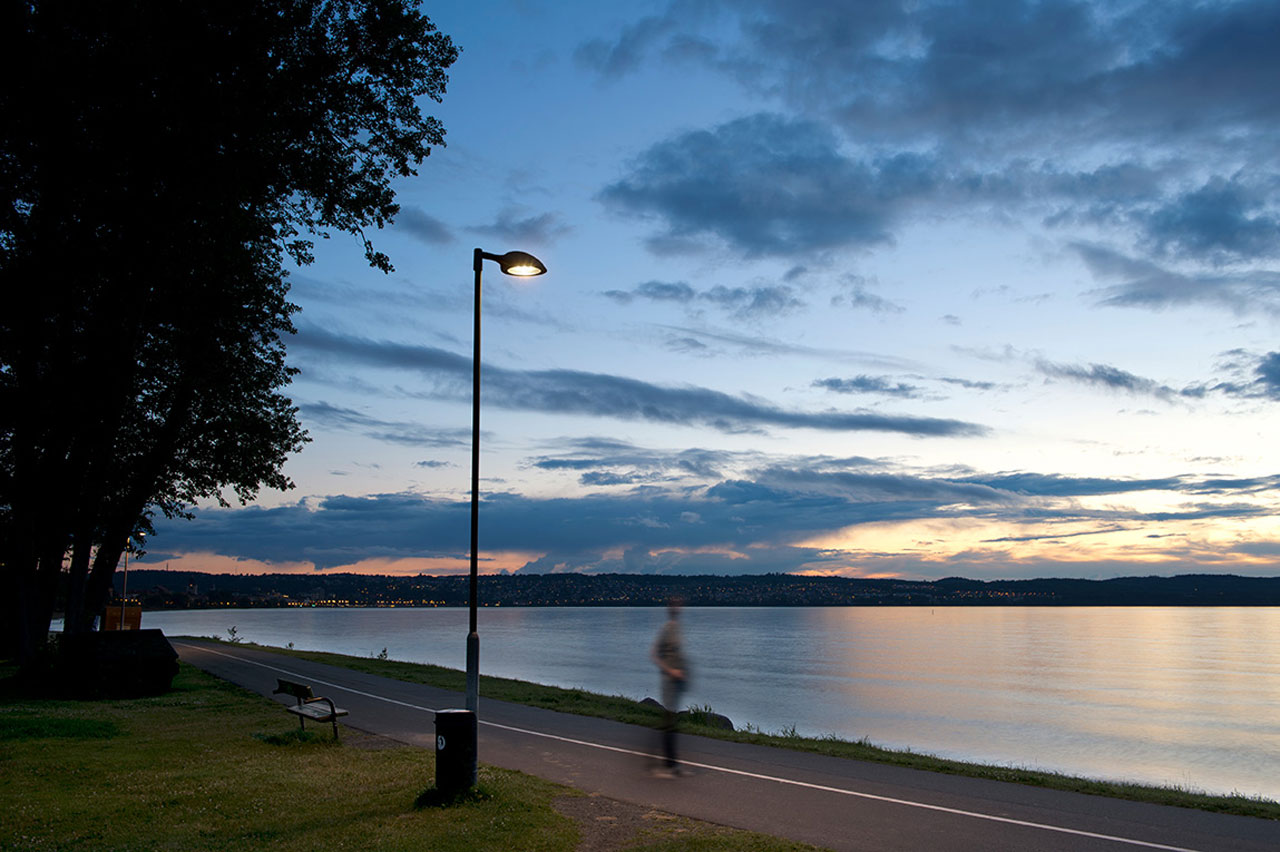
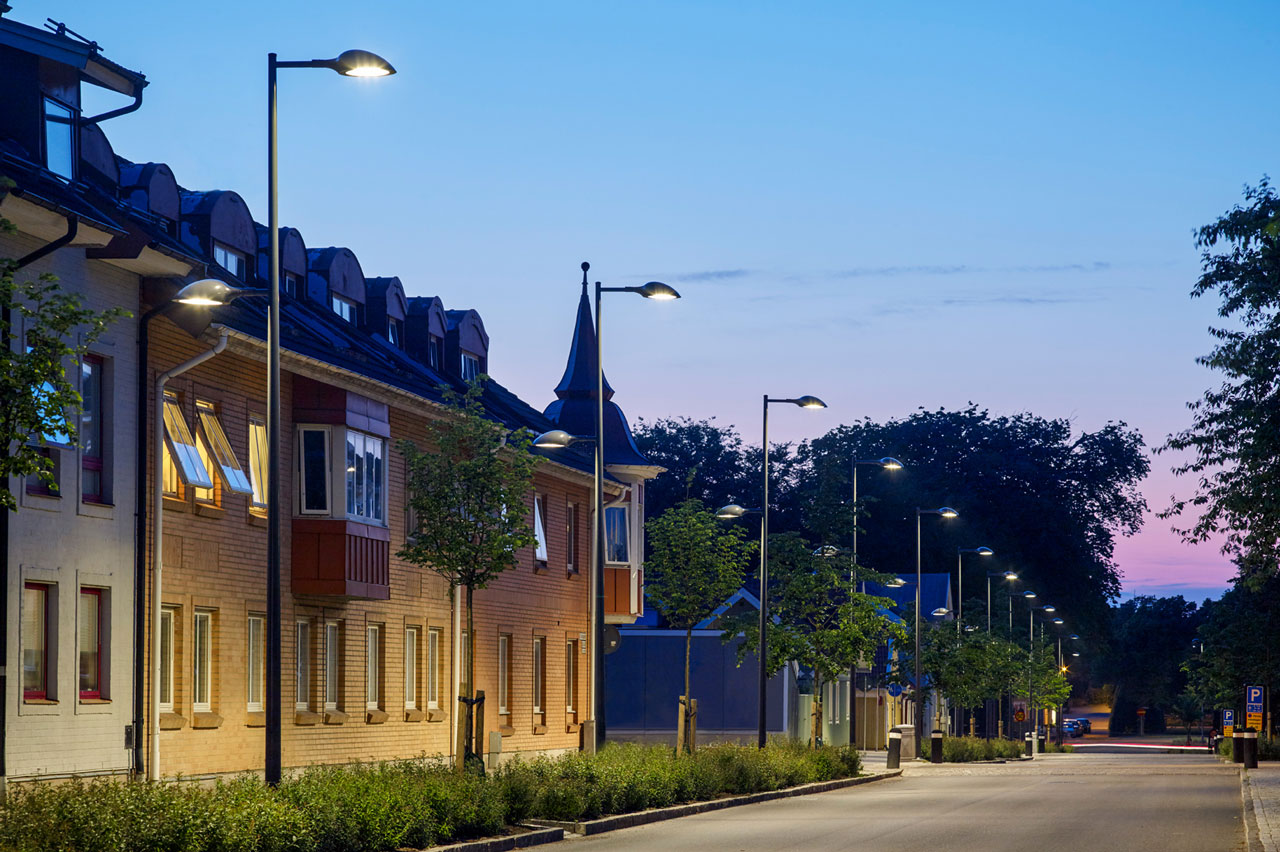
Marianne Tuxen put a lot of work into determining the surfaces and finishes with each detail of the visual appearance carefully considered. The overall shape has an organic feel that seems to change when Vialume is viewed from different angles. Seen directly from below, it appears perfectly round, expressing calmness and balance. Viewed from a distance, it appears elliptical and elongated. This adds interest and evokes the viewer’s curiosity.
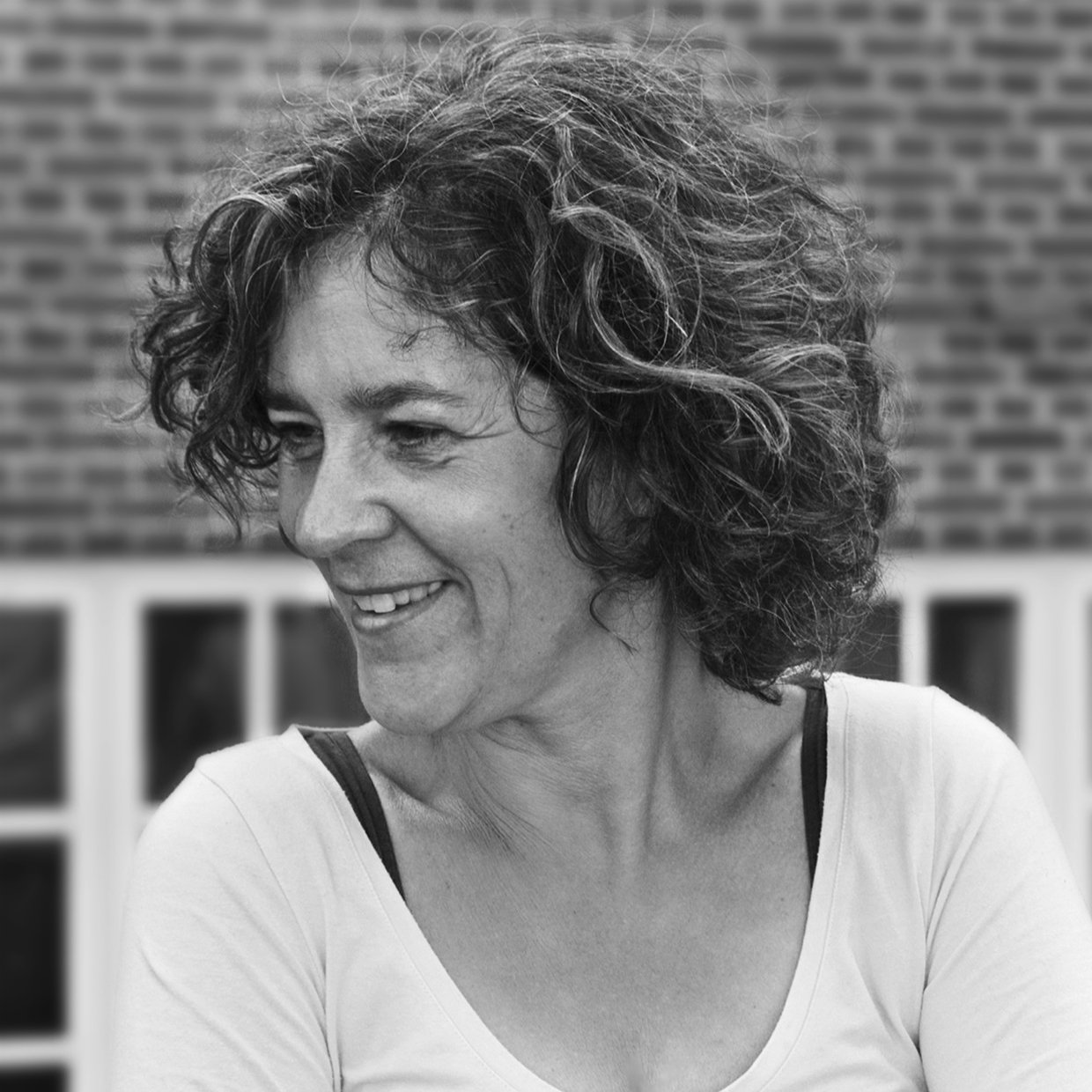 “At daytime, the shape of the luminary is clearly visible and the main point of attention. At night, the luminaire simply becomes the point from where the light radiates. In both situations, the design optimises the experience” Marianne Tuxen, Architect and Industrial designer at Tuxen Design
So, how did the project team succeed with this quite difficult task? Very well based on the early impressions. Vialume 1 was presented to the market at the beginning of this year and received at lot of attention on the Fagerhult stand at the Light and Building Fair in Frankfurt.
“There were high set demands on all the various areas in this project and late changes in one detail created challenges in other parts. We had to develop a holistic knowledge of each intertwined part i.e. regarding materials and how different materials act when they fluctuate in heat in order to keep the tight tolerances required in a high quality optical solution. I’m very proud of the result, the visual comfort of Vialume is well worth experiencing.”, Nils Stjernman says.
“We as a team are just as proud of the actual design as we are of the light. We feel that we have succeeded in finding the exact combination of innovation and classic features to express the essence of Nordic design. A great deal of effort was put into getting the multi-curved shape to appear as a single cohesive and organic shaped entity, just as it took a lot of work to get the soft curves to take on strict geometric shapes. We also succeeded in integrating a stepless tilt function without compromising on the design”, Christian Klinge rounds up.
Related News

Innovación en cada pliegue: Wrapped va más allá de la brillantez en la ingeniería
Dado que la sostenibilidad ya no es una elección sino una necesidad, la innovación debe comenzar con la pregunta: ¿Qué pasaría si hiciéramos las cosas de otra manera? Para el equipo de I+D de Fagerhult, esa pregunta se convirtió en la chispa detrás de Wrapped, la primera luminaria suspendida del mundo hecha de cartón. Tradicionalmente, las luminarias suspendidas se fabricaban con armazones metálicos, es decir, un método duradero, familiar y seguro. Pero el equipo que concibió Wrapped quería explorar otro camino. Juntos, decidieron averiguar si podían crear una luminaria que no solo rindiera a un nivel superior, sino que además tuviera un impacto medioambiental mínimo. Tras un minucioso estudio, el cartón compacto, un material renovable y reciclado que hasta ahora solo se utilizaba en componentes ocultos, salta ahora a la primera plana. Wrapped es más que una luminaria: es una exploración del pensamiento innovador y la creatividad. Sin soluciones prefabricadas en las que apoyarse, el equipo de diseño tuvo que empezar de cero. Se han estudiado todos los elementos, desde la construcción hasta el montaje, y el resultado es una luminaria técnicamente sólida y respetuosa con el medio ambiente. Gallery: Wrapped details El cuerpo de la luminaria está fabricado con hasta un 65 % de cartón reciclado y se pliega con recortes de alta precisión que encajan a la perfección. Ingeniería elegante El cuerpo de Wrapped se compone de dos partes principales: el cuerpo interior y el cuerpo exterior, ambos diseñados para trabajar en armonía en pro de la fuerza y la estabilidad. El cuerpo exterior se mantiene unido mediante una nervadura de aluminio 100 % reciclado postconsumo, que bloquea los pliegues y garantiza la conservación de la forma. Sus tapas finales están fabricadas con plástico 100 % reciclado postconsumo y encajan en cortes de precisión, asegurando la estructura sin necesidad de tornillos. La caja de conexiones encaja en su sitio a presión y el controlador se monta mediante pequeños clips, fabricados con plástico reciclado postconsumo. La placa led está montada en la lente, protegida por una cubierta de cartón sólido, y todo el módulo luminoso se bloquea en su sitio con una rejilla. El resultado es una construcción sin juntas ni tornillos que encarna un diseño que no deja nada al azar. Diseño con un propósito Fredrik Beckius, ingeniero de diseño de I+D, reflexiona sobre el viaje:«El reto era trabajar con un material que nunca habíamos utilizado para una luminaria suspendida. No podíamos montar los componentes de la forma habitual, así que tuvimos que buscar otras soluciones».Martin Gustafsson, también ingeniero de diseño, añade:«Teníamos que encontrar la manera de producir la luminaria de forma rentable, tanto para nosotros como para nuestros proveedores. Cada componente del diseño tenía que servir para más de un propósito». Este doble propósito salta a la vista en todo el diseño de Wrapped. No se trata solo de estética o sostenibilidad, sino de ingeniería brillante y de hacer que cada pieza cuente. Cita: Martin Gustafsson Sostenibilidad sin concesiones Wrapped se fabrica en Fagerhult, Habo, con materiales reciclados y renovables de origen local. Es un producto nacido de la innovación sueca, que hunde sus raíces en el legado de diseños sostenibles anteriores como Multilume Re:Think y Kvisten. A diferencia de muchos productos con conciencia ecológica, Wrapped cumple sin estridencias y, simplemente, es sostenible. Con recortes de alta precisión, una construcción estable y ensayos rigurosos durante todo el proceso, Wrapped cumple todas las normas de calidad sin renunciar a su ética medioambiental.
Fagerhult presenta la primera luminaria suspendida prémium del mundo fabricada en cartón
La nueva luminaria Wrapped de Fagerhult está diseñada y fabricada en Suecia, y combina una iluminación de primera, una elevada eficiencia y un peso bajo, además de ser la luminaria prémium más respetuosa con el medio ambiente de la empresa hasta la fecha. El cuerpo de la luminaria Wrapped está fabricado con cartón reciclado orgánico (cartón compacto), que tiene un 89 % menos de impacto climático por kilogramo que el aluminio. Los pocos detalles de plástico y metal también proceden de materiales reciclados postconsumo. El resultado es una luminaria suspendida con un impacto medioambiental mínimo en todas sus piezas, pero sin renunciar a la calidad de la luz ni al diseño. «Al optar por cartón compacto, ampliamos la idea de que una luminaria suspendida debe estar hecha de aluminio. Simplemente nos hicimos esta pregunta: ¿Podemos utilizar otro material renovable y reciclado que forme parte de una infraestructura circular establecida?», afirma Christer Liljegren, jefe de productos de Fagerhult. La sostenibilidad se une a la asequibilidad Wrapped combina las mejores prestaciones de iluminación con un precio bueno para el bolsillo, y pone las soluciones de iluminación sostenible al alcance de un público más amplio. La elección de un material más ligero también permitió un peso total de 1,6 kg (suspendida, 900 mm). «Creo que los instaladores apreciarán Wrapped tanto como nosotros. Realmente es sorprendentemente ligera y fácil de manejar», asegura Christer Liljegren. El lanzamiento incluye una Wrapped suspendida de 900 mm. La escasa cantidad de material la convierte en una opción realmente sostenible, ya que rinde igual que una luminaria general de 1200 mm en muchas aplicaciones. Está disponible con ópticas Beta Opti y tiene una distribución de la luz directa e indirecta de 50/50. Además, conserva una ergonomía visual excelente. La familia de productos se ampliará con variantes adicionales en 2026. La continuación de un legado de innovación sostenible Wrapped se basa en el innovador trabajo de Fagerhult con materiales sostenibles, tras la Multilume Re:Think (también hecha de cartón compacto) y la luminaria de madera Kvisten. «Wrapped encarna nuestra idea de light for a brighter tomorrow (luz para un mañana más brillante), al combinar una iluminación de primera con una sostenibilidad a un nivel accesible», apunta Paula Backman, directora de productos y marketing de Fagerhult.