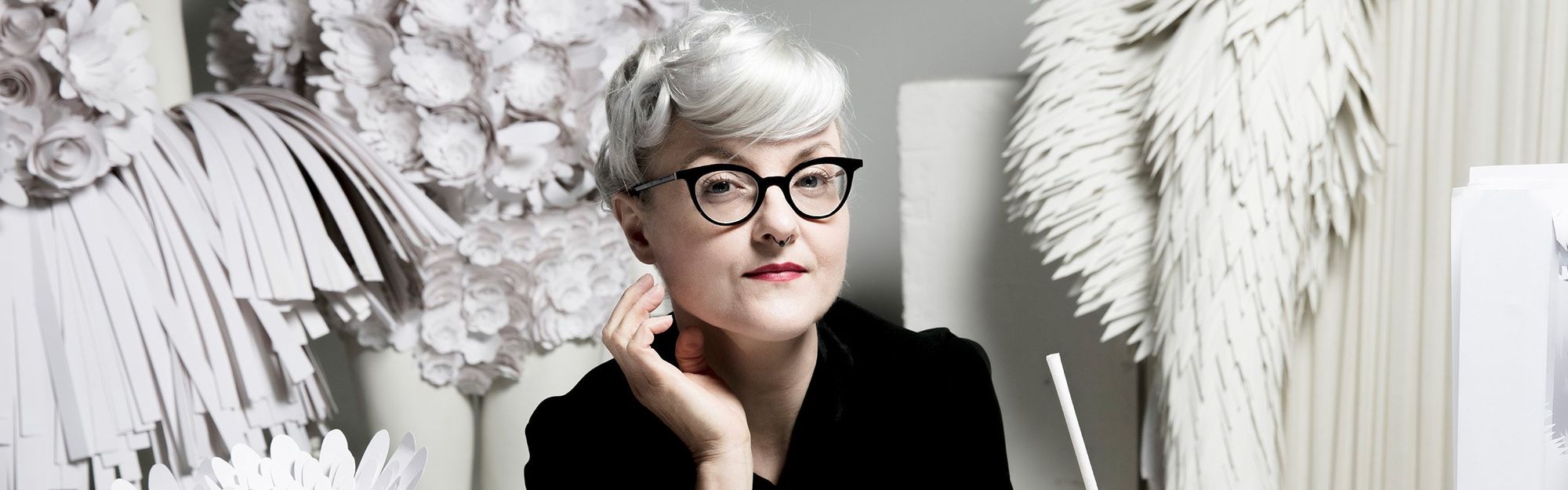
Art, paper, scissors
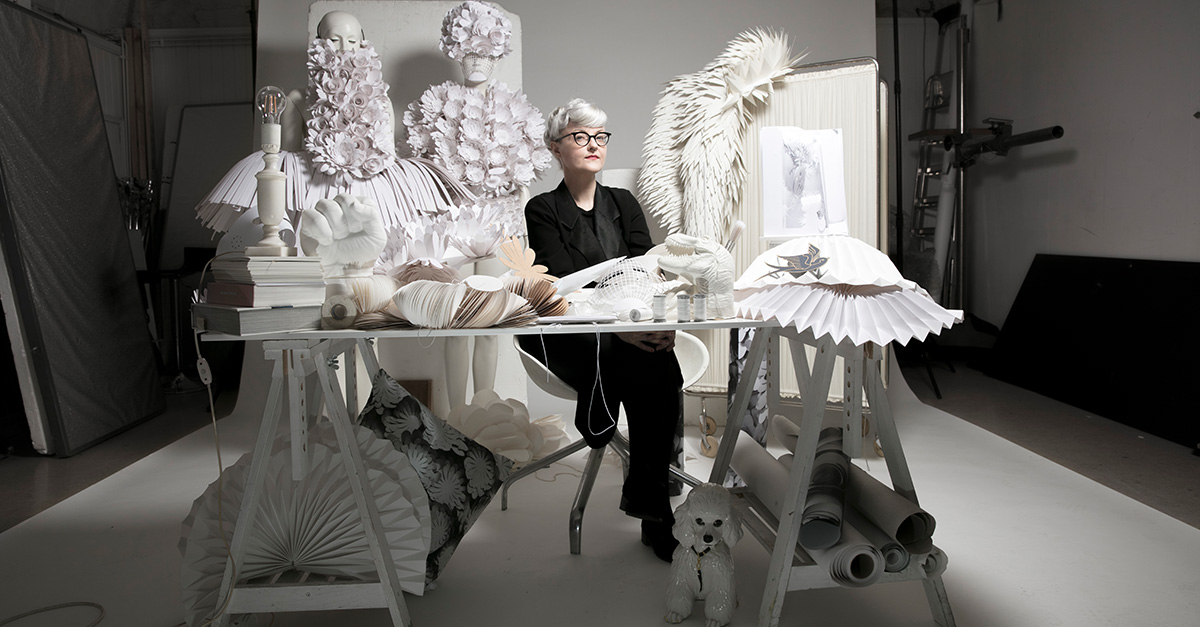
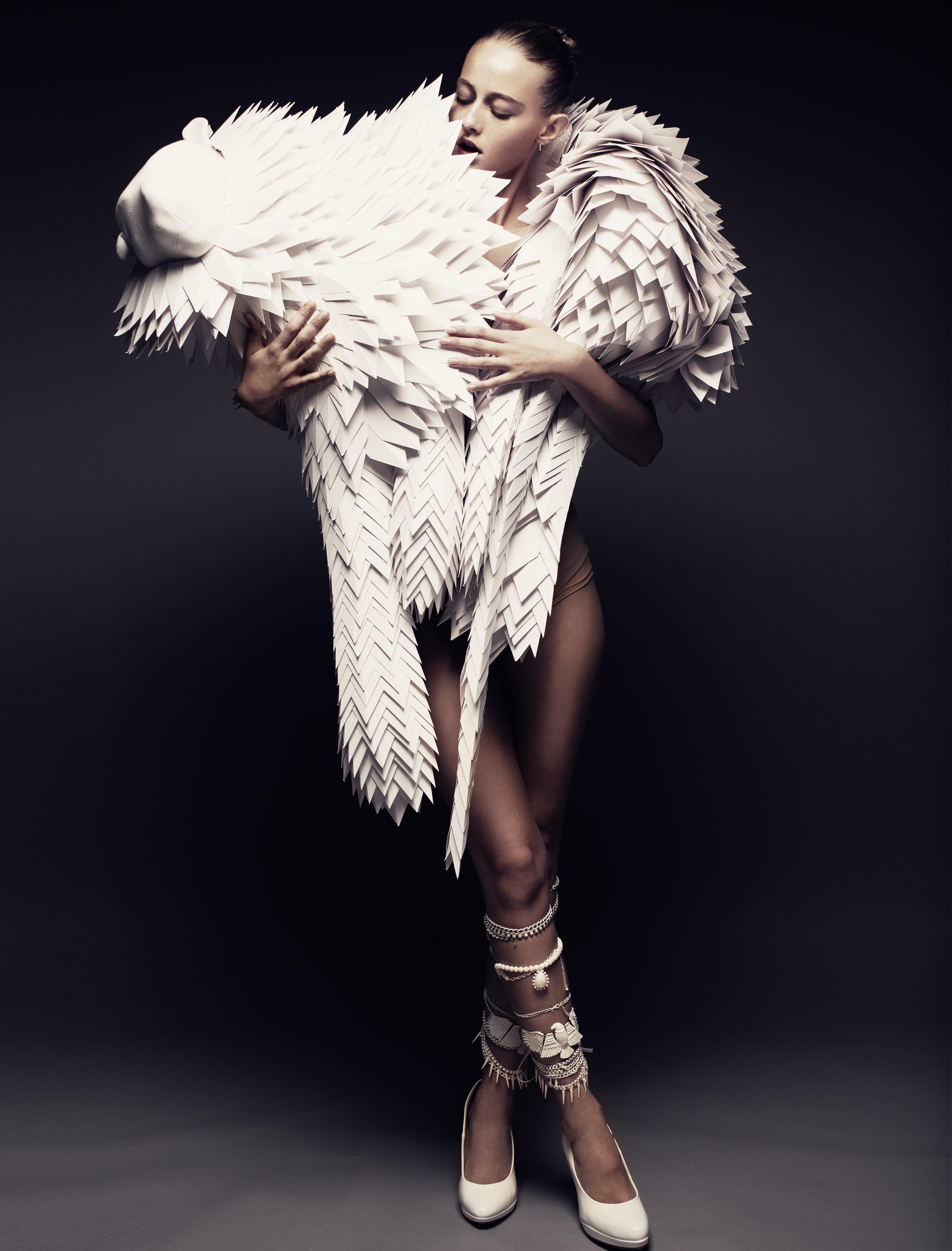
Bea Szenfeld, has always felt an urge to express herself through different types of mediums and materials. She is a trained potter, cutter and fashion designer and has done her trainee at Stella McCartney’s. But she felt out of place working with fashion, and experienced that she came too far away from what she actually loved.
– After my training and education in fashion and design, I started my own brand of clothes, says Bea Szenfeld. But I noticed after some time that the majority of my time was spent on dealing and trading with textiles, or with marketing – and that was not my forte. I love design, and I love the human body. So I started doing some small projects on the side, where I had a more artistic approach to the human form and figure. That is when I began to do clothes in other material than fabric. And I noticed that when I did a dress out of salad or pasta, the focus shifted from “can I get this in another size?” to “oh, this is design – a new way of dressing the body and contouring silhouettes!”.
During this period, Szenfeld describes, she did many trials and errors with different materials, but quite soon discovered the simplicity with paper.
– I did some tests in paper, and thought “this is too good to be true!”, Bea Szenfeld laughs. It was incredibly simple, and paper is such a beautiful material. It's such an easy job, once you play in its league. Once you have learned paper, it is truly so gratifying!
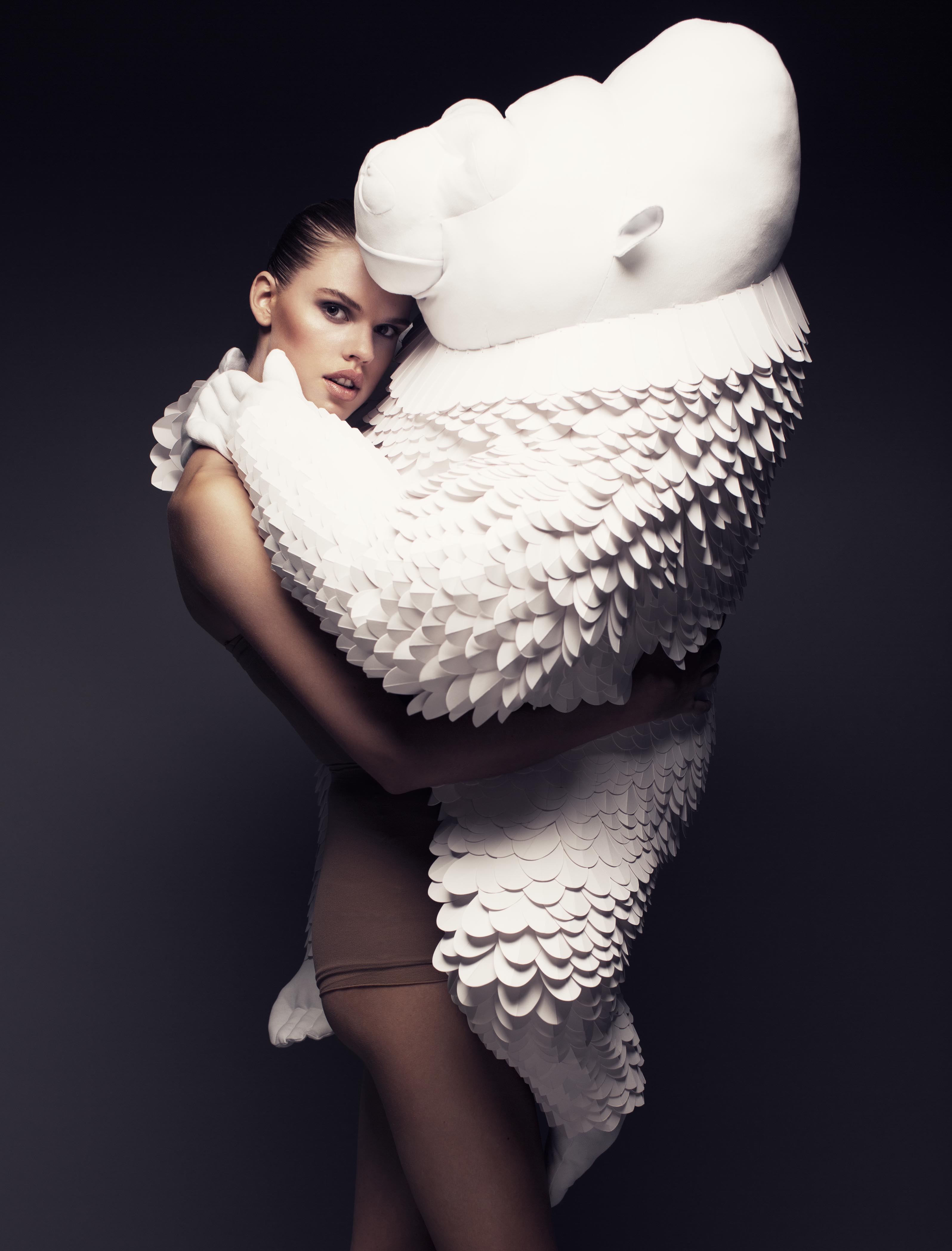

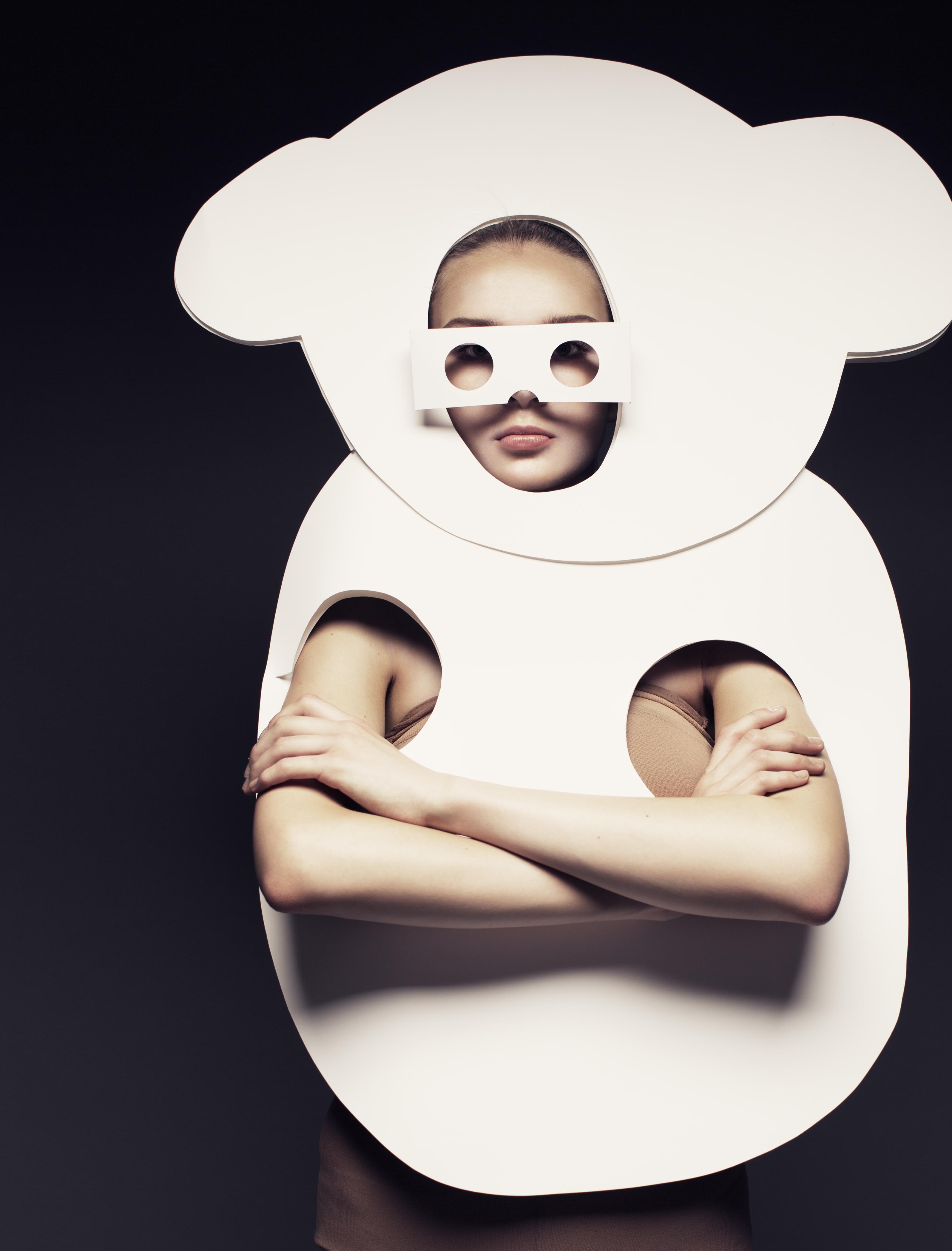
Heavy light-weight
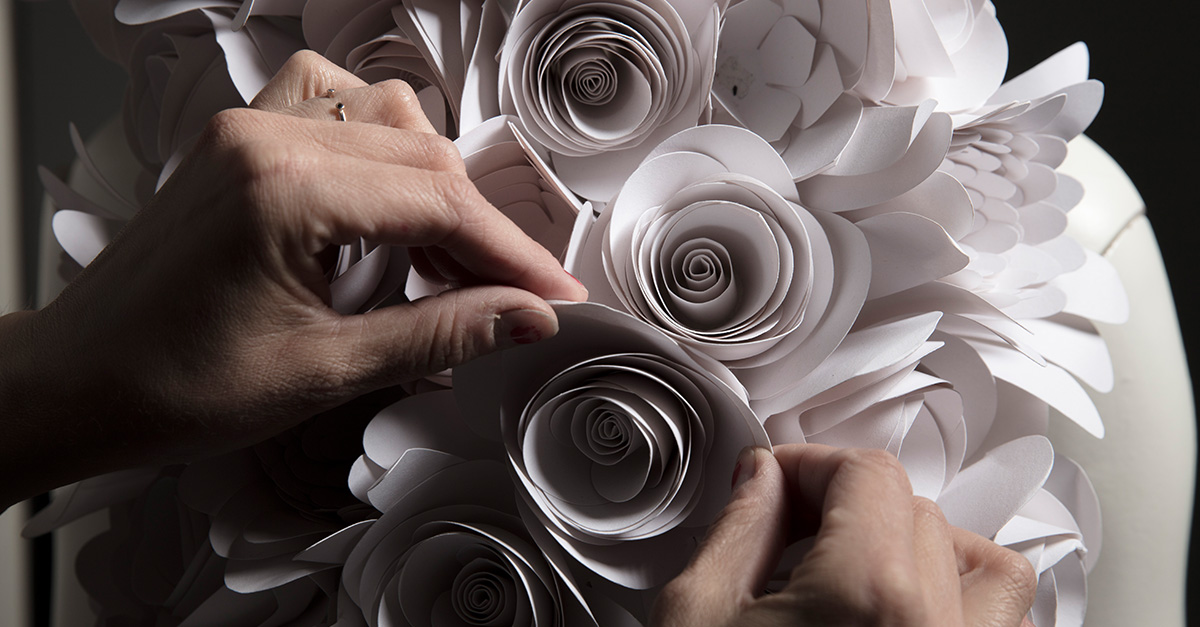
Even though Szenfeld has found her core material, it is still an explorational journey for her creations. Most often, it is the practical conditions that limits the creative possibilities in her work. Despite the light weight material, Szenfeld’s creation are surprisingly heavy, and sometimes hard to transport. Therefore, the garment is shipped in disassembled pieces – and then reassembled on a model when in use.
– The garments I make can often break in shipping or handling, and many of my pieces weigh over 20 kg, Szenfeld explains. So I have found a way to store and transport these creations in small pieces, where I instead dress on every single garment. I build these sculptures and assemble them one by one. Paper can withstand quite a lot, but not too much. Therefore, you need to trick the eye, and also the paper, a little. If I cut a little cardboard and a little tissue paper in between, I can trick the eye into thinking "this feels fragile", but still it is a support in the form of the solid cardboard.
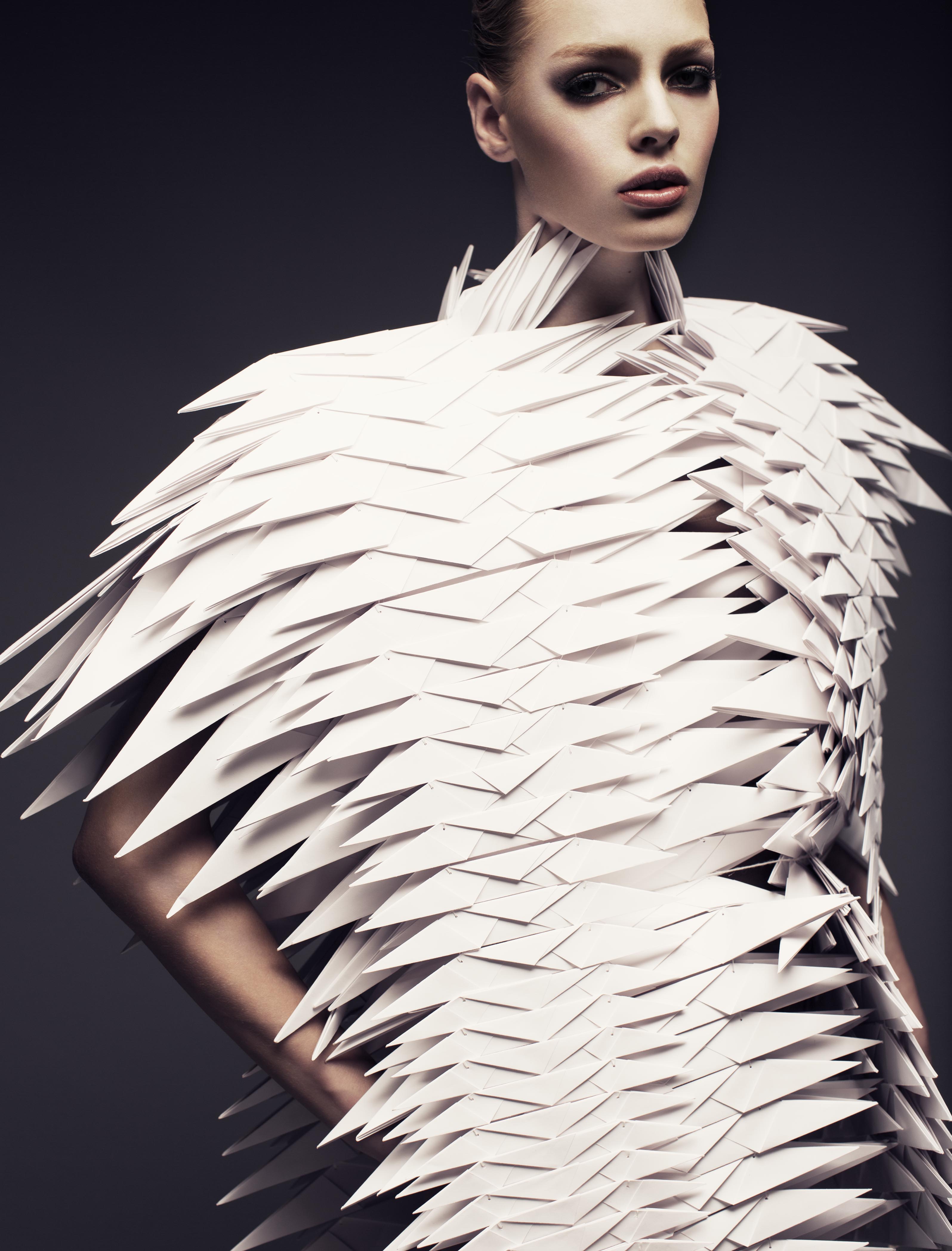
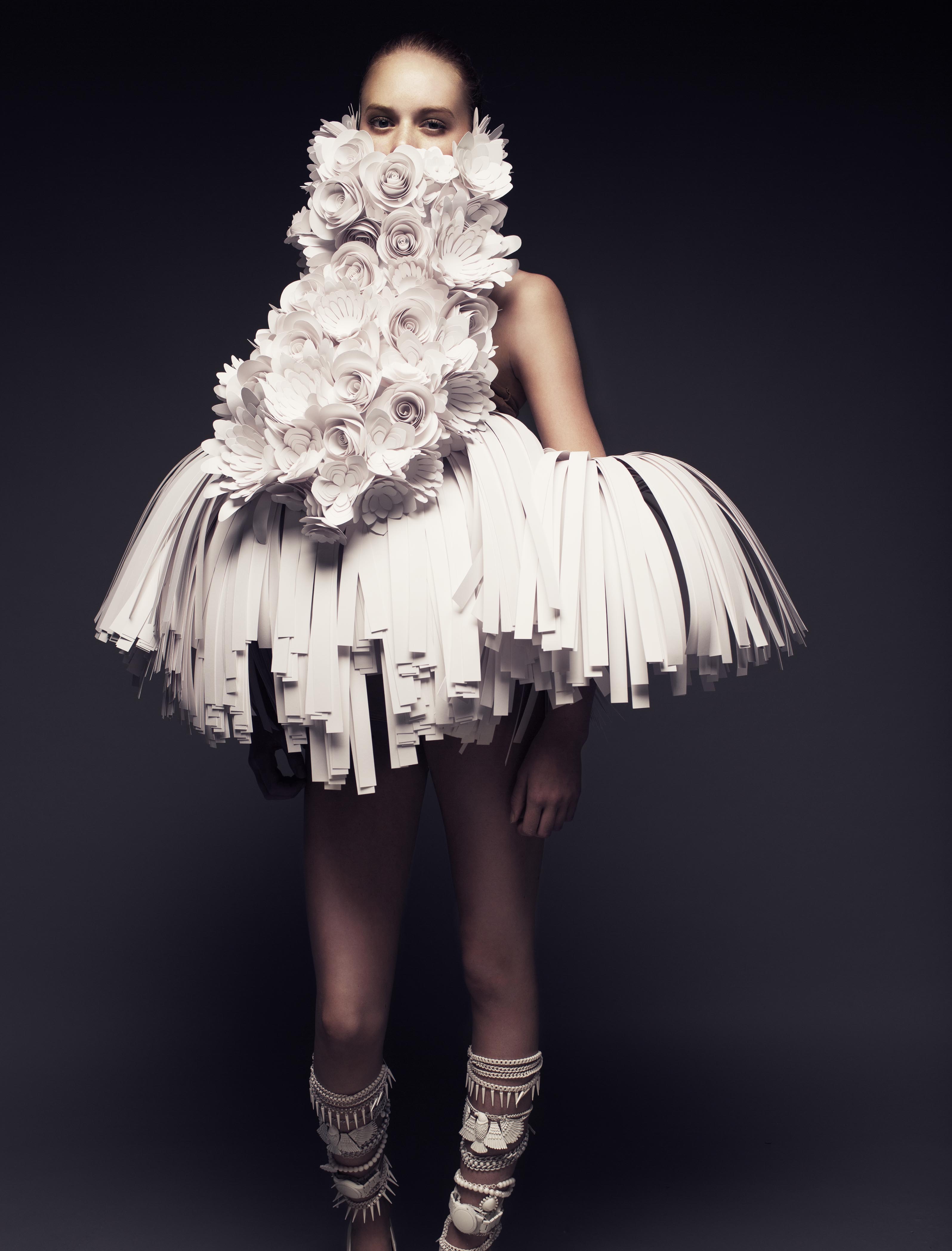
Szenfeld has, with her experimental creations and unusual concepts, proven that sometimes you don’t need to label what you do. You just need to do. Her pieces really leaves no one unimpressed, and that is the intention. A common denominator in her work is emotions – and humor.
– Yes, humor is very important! Szenfeld laughs. I really try to be serious, but despite that, when I had my fashion show in 2015, people laughed when my models came out. Because "here comes the model carrying a 200-kilo gorilla like a handbag". I believe that fashion needs to be paused a bit, because it gets ridiculous when it gets too cool.
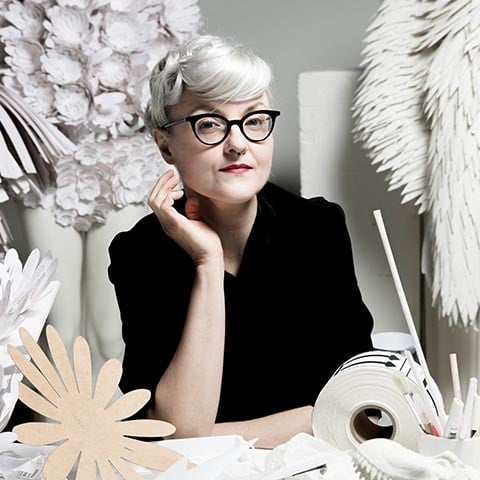 "I believe my strength has been that I have never been still. I am constantly testing my way forward." Bea Szenfeld, artist & designer
Sustainable fashion
As recent times have shown, we need to rethink and challenge given frameworks to find a more durable way forward. Even though the art pieces requires a lot of material, the resources used are environmentally friendly, and most definitely circular.
– I work with plain paper, no special treatments on it or anything, Szenfeld explains. Plain paper, directly from the paper mill here in Sweden. The great thing about paper is that we have been producing and recycling paper for so, so many years. It is one of the oldest materials we reuse, which means that it is not rocket science - we know this, we know how to manage this resource.
All surplus and waste pieces from the art objects can be put straight in the paper recycling. Since no materials are mixed, everything can be pulled apart and recycled or reused. When the lifespan of a garment is finished, the threads are removed and the glass/plastic beads are reused. The paper is just put in the recycling bin. It really is circular art. And for the garments that still lives on, depending on the storage and treatment it can really be long lasting.
– My paper sculptures can be stored and kept for as long as you like, it all depends on how you handle them, Szenfeld explains. They cannot be exhibited in direct sunlight or in a humid room, but if they are handled by me or museum staff, they last for decades.
Different target groups
Apart from exhibiting her art at museums and in fashion magazines, Szenfeld is also a recurrent feature in one of Swedish Televisions most watched TV-magazines, Go’kväll (Good Evening). There she has a standing mission on a reoccurring basis, a DIY-project that is either recycled or upcycled.
– I love those projects, Szenfeld smiles. I have about 7 minutes to show a DIY-craft that people can do themselves at home. In those projects, I find that lamps and luminaires are among the best things to use. You can do simple things and it is always needed at home. And especially now with LED lighting, when the light source does not get hot, the possibilities are so much more and vivid! It really enables you to work with more recycled materials than previously.
Yet another aspect regarding the material is that people from so many different target groups can relate to it. Everyone from pre-schoolers, craftsmen, designers or engineers – they all enjoy the magic and illusions created with regular paper.
– That is truly one of the things I love about my paper clothes, that I can float out without a straight horizon, Bea Szenfeld says. If you like art, you may like my stuff. If you like fashion, you can like my stuff. When I exhibit in cities with paper or forest industry, there are usually visitors who work with paper - who have never seen it used like this. They might work with cardboard and large sheets, and so all of a sudden they see how their material can become something completely different. And those who love crafts, the same thing. You can do so much with paper, scissors, a ruler and some time - it's completely crazy! It's really lovely to find entrances to so many different audiences.
Tabula rasa
So, how does the future looks like for art in general, and more sustainable art in particular? Is there a visible trend for designers and artists to work more circular?
– Yes absolutely! Szenfeld states. I am part of the jury in Ung Svensk Form (Young Swedish Form) and at least half of all projects that contribute are about recycling and reusing. Either they reuse materials or create designs that are easy to reuse.
Not only is sustainability a high awareness among the upcoming artists and designers, so is also the love for crafts and handmade work.
– I love that, but we craftsmen must never relax and think that “this is good, now crafts are in", Szenfeld says with emphasis. We must always fight for recognition, and the time we spend. What we do is not a quick fix, a craft takes time to learn. That's something we need to explain to the new generation, that you have to take time with things. Now we have a world that spins so incredibly fast. From one day as unknown, to another day as world-famous on TikTok. That was not the case before, then you had the chance to grow up a little cautiously. Crafts are really slow techniques, and that is the way it must be.
Fact on Bea Szenfeld:
- She is trained potter and cutter, as well as graduated from Beckmans School of Design.
- After participating in Project Runway, she earned her internship at Stella McCartney.
- Has dressed celebrities such as Lady Gaga, Björk and Loreen.
- Designed the Swedish minister of Culture Alice Bah-Kunkhe’s dress for the Noble Dinner.
- Has explored other materials as well, and made a dress out of pasta for Barilla and clothes entirely of PVC.
Actualités

Quand le matériau compte - Wrapped permet de jeter un nouveau regard sur l'éclairage durable
Dans un monde où chaque gramme de matériau et chaque gramme de dioxyde de carbon e compte, Wrapped émerge non seulement comme un luminaire - mais aussi comme une déclaration. C'est la suspension la plus durable de Fagerhult à ce jour, et il n'est pas arrivé par hasard. Chaque détail, chaque décision, chaque matériel a été choisi avec une intention. La durabilité commence souvent par une simple question : En quoi est-il fabriqué ? Pour Wrapped, la réponse est un trio de matériaux qui ont chacun leur propre histoire environnementale. Solid board : un ami familier Chez Fagerhult, nous avons rencontré Solid board pour la première fois en 2021 avec Multilume Re:Think. Mais pour Wrapped, nous sommes allés plus loin. Le matériau consiste en une construction à trois couches comprenant un noyau 100 % recyclé, une couche supérieure renouvelable certifiée FSC et une fine pellicule de plastique protectrice. Au final, un matériau recyclé à 65 % et une réduction de 89 % des émissions de CO₂ par rapport à l'aluminium extrudé vierge. Galerie d'images : Solid board Wrapped est fabriqué en carton organique Solid, en aluminium recyclé et en plastique recyclé post-consommation. Réimaginer le plastique Le plastique est souvent un thème brûlant dans les conversations sur le développement durable. Mais tous les plastiques ne se valent pas. Wrapped utilise du plastique recyclé déjà utilisé (post-consommation) : le genre de plastique qui a vécu une vie antérieure, peut-être comme bouteille de shampoing ou récipient alimentaire. Le plastique de préconsommation, quant à lui, est différent puisqu'il n'a jamais été mis en rayon. Citation Josefin Carlsson L'aluminium avec un passé À l'intérieur de Wrapped, deux éléments structurels sont fabriqués en aluminium recyclé à 100 % après consommation. Ce matériau fait également partie d'une infrastructure circulaire - et a peut-être même déjà fait partie d'un luminaire Notor. Par rapport à l'aluminium vierge, ce choix permet de réduire les émissions de 83 %. Concevoir avec moins - construire pour durer Toutefois, la durabilité ne se limite pas à ce que vous utilisez, mais aussi à la quantité que vous consommez. Avec seulement 900 mm, Wrapped est plus court qu'un pendentif classique de 1200 mm. Cette réduction de taille permet à elle seule de réduire l'impact sur le climat de 25 %, sans compromettre les performances d'éclairage du luminaire. Josefin Carlsson compare l'impact des produits sur le climat dans l’Experience Center de Fagerhult à Habo. Pour comprendre l'impact de Wrapped, il est utile de regarder d'où nous sommes partis. En 2021, le Notor 65 - fabriqué en aluminium vierge - avait un impact climatique de 34 kg CO₂e. En 2024, avec 75 % d'aluminium recyclé, ce chiffre a été réduit à 25 kg CO₂e. Aujourd'hui, Wrapped ne représente qu'environ 12 kg de CO₂e. "Cela représente un tiers du Notor 65 d’origine et la moitié de la version actuelle, ainsi qu'une révolution tranquille, mesurée en kilogrammes de CO₂e", explique Josefin Carlsson. Après sa longue vie - estimée à 100 000 heures - Wrapped est prêt pour une sortie tout aussi durable. Sa conception le rend facile à démonter, chaque matériau étant recyclable et préparé pour son prochain chapitre dans l'économie circulaire.
Fermer la boucle et prolonger le cycle de vie des luminaires
Le concept de réutilisation des anciens luminaires pour économiser du matériel et de l’énergie remporte de plus en plus de suffrages. Parfois, tout ce dont un luminaire obsolète a besoin pour briller de nouveau est un peu d’amour et des compétences en ingénierie. Nous avons rencontré Emma Hallman, Mathilda Holl et Andreas Ekslätt, l’équipe derrière ReLight à Fagerhult, pour discuter des défis liés à la recherche de solutions qui feront voyager les anciens luminaires à l’avenir. Chez Fagerhult, une culture de l’innovation profondément ancrée influe sur tous les aspects du travail. Elle est peut-être issue de l’état d’esprit du fondateur Bertil Svensson qui consiste à résoudre les problèmes avec des moyens parfois modestes, ainsi que de la curiosité et du dévouement. Contrairement à aujourd’hui, le développement durable n’était peut-être pas un terme à la mode à l’époque. Cependant, l’utilisation délibérée de nos ressources et la quête d’une haute qualité ont toujours été les pierres angulaires de Fagerhult. Aujourd’hui, un nouvel accent mis sur la circularité nous a incités à remettre en question notre réflexion et nous rend résolus à trouver des solutions durables. Le département Bespoke Lighting Solutions (BLS) de Fagerhult développe depuis de nombreuses années des luminaires sans équivalent et des solutions adaptées. La remise à neuf et l’actualisation des anciens luminaires sont des activités familières pour nous. Or, l’ambition de réutiliser et de reconstruire les anciens luminaires pour réduire l’impact climatique a augmenté au fil du temps. Dans ce processus, la conception et la technologie d’hier sont actualisés par les progrès d’aujourd’hui pour répondre aux exigences de demain. Devis Rééclairez vos anciens luminaires Pour l’équipe ReLight de Fagerhult, il n’y a pas de questions inhabituelles ni de solutions impossibles. Chaque jour, elle répond à des demandes portant sur des solutions d’éclairage spécialement développées pour des projets des marchés de Fagerhult. C’est un processus complexe, mais au fil du temps, elle a appris que certains projets sont l’idéal pour réutiliser les anciens luminaires plutôt que d’investir dans des luminaires neufs. « Pour nous, les qualités du luminaire en matière de confort d'éclairage, de sécurité et d'esthétique sont au cœur de chaque projet ReLight. Sur demande, nous calculons également si – et dans quelle mesure – nous pouvons réduire l'impact climatique total du luminaire tout au long de son cycle de vie. », déclare Emma Hallman. Au sein de ReLight, il existe une franche volonté d’économiser des matériaux et de l’énergie, et de faire un effort environnemental en mettant à jour les luminaires. Néanmoins, tous les anciens luminaires ne peuvent pas vivre éternellement ; certains sont obsolètes et il vaut mieux les recycler que les remettre à neuf. Img « Si les circonstances ne répondent pas à nos exigences et qu’il n’est pas possible de reconstruire le luminaire, nous n’allons pas poursuivre le projet. Nous ne ferions jamais de compromis sur le confort lumineux, la qualité, la sécurité ou l’expression du luminaire s’il n’aboutissait pas à une solution finale de première classe », déclare Emma Hallman. Chez Fagerhult, la sécurité et la qualité sont les fils rouges qui relient ensemble tous les produits. Et ReLight ne fait pas exception à la règle. Tout au long du processus, le marquage CE et les tests sont des facteurs cruciaux. « Pour garantir la qualité globale, le luminaire mis à jour est entièrement marqué CE avant la livraison. Nous souhaitons également rendre l'installation sur site à la fois fluide et rapide, et le nouveau kit se rapproche le plus possible d'un luminaire complet », déclare Andreas Ekslätt, Design Engineer.